RO water purification specifications set the flow, recovery, pressure, membrane, and rejection targets that plant engineers use to size systems and check compliance. Industrial units commonly deliver 500–20,000 GPD (about 1.9–76 m³/d) at 75–95% recovery and 200–1,200 psi. Residential point-of-use units typically deliver 50–1,500 GPD at 30–50% recovery and 50–150 psi. TDS rejection of 95–99%, membrane flux of 10–20 GFD, and NSF/ANSI 58 certification remain the core benchmarks for drinking-water RO performance.
What Are RO Water Purification Specifications?
RO specifications define flow in GPD, recovery as permeate divided by feed, TDS rejection across the membrane, flux in GFD, and operating pressure in psi at a stated feed temperature. Point-of-use drinking claims are verified under NSF/ANSI 58. EPA WaterSense is a voluntary efficiency label for POU units, not a mandatory industrial process code.
Higher recovery cuts wastewater volume but raises scaling risk and energy use. Higher rejection improves permeate quality but may need more membrane area or stages. Matching rated GPD to real daily demand prevents idle fouling and chronic overstress on the array.
RO System Specifications by Application: Industrial vs. Residential
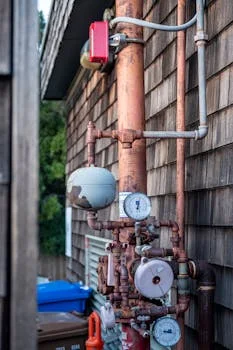
Industrial and residential RO trains diverge because duty cycle, feed quality, and purity targets differ. Industrial skids are built for continuous duty at 500–20,000 GPD with 75–95% recovery. They use spiral-wound thin-film composite (TFC) polyamide membranes, often at 200–1,200 psi on brackish or high-TDS feed. Residential systems serve lower daily demand at 50–1,500 GPD with about 30–50% recovery. They use compact spiral-wound or hollow-fiber elements at roughly 50–150 psi line or booster pressure.
Industrial permeate supports pharmaceutical process water, food and beverage make-up, and boiler feed. Those duties almost always need multi-media filtration, softening or antiscalant dosing, and dechlorination before the membrane. Residential units mainly supply drinking and cooking water, with sediment plus carbon pre-filtration as the usual minimum. For skid-mounted industrial duty, HydropureWater’s industrial RO systems are sized to these higher recovery and pressure bands. Compact plants that combine clarification and membrane stages can also use an Integrated Water Purification System (JY Series) when footprint and pretreatment must share one package.
| Specification | Industrial RO Systems (Typical 2025) | Residential RO Systems (Typical 2025) |
|---|---|---|
| Flow Rate (GPD) | 500–20,000+ | 50–1,500 |
| Recovery Rate (%) | 75–95% | 30–50% |
| Operating Pressure (psi) | 200–1,200 | 50–150 |
| Membrane Type | Spiral-wound (TFC, Polyamide) | Spiral-wound (TFC), Hollow-fiber |
| Typical Use Cases | Pharmaceuticals, F&B, Power, Chemical | Drinking, Cooking, Aquariums, Small Irrigation |
| Pre-treatment | Extensive (MMF, Softeners, Antiscalant) | Basic (Sediment, Carbon) |
| Footprint | Large, skid-mounted | Compact, under-sink or whole-house |
What Operating Parameters Define RO System Ratings?
RO system ratings cover capacity, feed source, temperature band, lifetime purified volume, inlet pressure, and the certification standards applied. Capacity is stated in GPD or m³/d near 25°C (77°F), because colder feed lowers flux. Applicable sources range from municipal potable water to brackish well water; seawater membranes need the high-pressure end of the 200–1,200 psi industrial band. Inlet pressure must stay inside the membrane’s published window. Residential TFC elements typically need 50–150 psi, while standard brackish TFC often runs 100–150 psi at low-to-moderate TDS. Efficiency and recovery ratings for point-of-use drinking systems are reported under NSF/ANSI 58; WaterSense labeling adds a voluntary efficiency screen on top of that certification.
2025 RO Membrane Specifications: Types, Performance & Selection
RO membrane choice sets rejection, flux, chlorine tolerance, and allowable pH. Cellulose acetate (CA), thin-film composite (TFC), and polyamide (PA) elements remain the main families, with nominal pore sizes about 0.0001–0.001 μm. TFC/PA is the industrial default, delivering 95–99% TDS rejection at roughly 100–150 psi on standard brackish feed. Older CA elements typically need 200–400 psi for 90–95% rejection and offer a narrower pH window.
Standard membrane flux is commonly 10–20 GFD; high-flux grades at 25–30 GFD shrink array size but raise fouling risk if pretreatment is weak. TFC elements generally tolerate about 2–45°C and pH 2–11 in service, whereas CA is more sensitive above 30°C and outside pH 6–8. For feed TDS below 1,000 ppm, standard TFC is usually enough; above 5,000 ppm TDS, high-rejection TFC or multi-stage RO is the practical path to target permeate quality.
| Membrane Specification | Thin-Film Composite (TFC/PA) | Cellulose Acetate (CA) |
|---|---|---|
| Pore Size (μm) | 0.0001 | 0.0005–0.001 |
| TDS Rejection (%) | 95–99% | 90–95% |
| Operating Pressure (psi) | 100–150 (standard); up to 1200 (seawater) | 200–400 |
| Membrane Flux (GFD) | 10–20 (standard); 25–30 (high-flux) | 8–15 |
| pH Operating Range | 2–11 | 6–8 |
| Temperature Range (°C) | 2–45 | 5–30 |
| Chlorine Tolerance | Poor (requires pre-treatment) | Moderate (some tolerance) |
Contaminant Removal: What RO Systems Can (and Can’t) Filter

RO membranes typically achieve 95–99% TDS rejection and act as a strong barrier to bacteria (about 99.9%) and viruses (about 99%) when the membrane and seals are intact. Typical inorganic removal ranges remain 90–95% for arsenic, 95–99% for lead, 85–95% for nitrate, and 90–95% for fluoride under well-operated conditions. Chlorine is reduced about 98% when a granular activated carbon (GAC) pre-filter is in service, which also protects polyamide membranes from oxidation.
Dissolved gases such as carbon dioxide and radon pass more readily, and some pesticides or VOCs need carbon post-treatment. Sediment filtration limits particulate fouling; softening or antiscalant limits hardness scale; GAC removes chlorine and many organics before the membrane. NSF/ANSI 58 is the certification path for drinking-water RO contaminant-reduction claims. Pair the RO stage with pre-treatment multi-media filters when turbidity or suspended solids would otherwise foul the array.
| Contaminant Category | Specific Contaminant | Typical RO Removal Rate (%) | Notes/Pre-treatment |
|---|---|---|---|
| Total Dissolved Solids (TDS) | Salts, Minerals | 95–99% | Key performance indicator |
| Pathogens | Bacteria, Viruses, Cysts | 99.9% (Bacteria), 99% (Viruses) | Effective barrier; UV post-treatment for assurance |
| Heavy Metals | Lead, Arsenic, Chromium, Copper | 90–99% | Dependent on metal type and speciation |
| Inorganics | Nitrate, Fluoride, Sulfate, Chloride | 85–98% | Specific rejection varies |
| Chlorine/Chloramines | Chlorine, Chloramines | 98% | Requires GAC pre-filter to protect membrane |
| Emerging Contaminants | PFAS compounds | 90–99% | Pre-treatment (GAC) often recommended for high concentrations (WQA data) |
| Limitations | Dissolved Gases (CO₂, Radon) | Low/Variable | Requires aeration or post-treatment |
| Limitations | Some VOCs, Pesticides | Variable | Requires activated carbon post-treatment |
What Ultrapure Water Standards Apply to Semiconductors?
Semiconductor ultrapure water (UPW) programs commonly reference SEMI F63 as the guide for UPW quality used in semiconductor processing. The current revision is SEMI F63-1224 for facilities making devices at 32 nm line width and smaller. It is intended for use with SEMI F61 (design and operation) and SEMI F75 (quality monitoring). According to SEMI’s published abstract for F63-1224, the guide supports purchase criteria, process-control targets, and quality expectations for supplied UPW, including hot UPW where applicable. UK and other electronics fabs typically adopt these SEMI guides with site-specific specs, not a separate national UPW drinking-water code. RO is usually only the front desalting block; polishers, UV, and ultrafiltration finish the resistivity and TOC targets SEMI programs require.
System Sizing: How to Calculate Flow Rate and Recovery for Your Needs
RO sizing starts from required permeate volume and a realistic recovery. Recovery (%) = permeate flow ÷ feedwater flow × 100. If a process needs 1,000 GPD of permeate at 75% recovery, feedwater capacity is about 1,333 GPD (1,000 ÷ 0.75). Industrial trains often target 75–95% recovery to cut intake and concentrate volume; residential units more often run 30–50% recovery.
Residential rules of thumb still cite about 500–750 GPD for 1–2 people and 1,000–1,500 GPD for 3–4 people. Homes with 5 or more people often need 1,800+ GPD when whole-house or high-peak demand is assumed. Industrial flux targets are application-specific. Pharmaceutical water often uses about 10–20 L/m²·h, food and beverage 15–25 L/m²·h, and power plants 20–30 L/m²·h, always adjusted for feed fouling indices. High-TDS feeds need more membrane area, staging, or high-rejection elements to hold permeate quality.
RO System Components: Specifications and Maintenance Requirements
An RO train pairs pretreatment, membrane pressure vessels, storage, and polishing. Sediment cartridges at 5–20 μm and carbon filters typically last 6–12 months; the RO membrane itself often lasts 2–5 years when pretreatment and CIP are controlled. Residential tanks commonly store 2–10 gallons, and dispensing hardware should be lead-free and NSF-certified where drinking water is produced.
Residential service usually means pre-filter changes every 6–12 months, membrane service every 12–24 months, and annual sanitization. Industrial skids often change pre-filters every 3–6 months and run CIP every 3–6 months, with antiscalant dosing, UV, and online TDS monitoring as standard. Track permeate flow, salt rejection, and differential pressure to catch fouling early. For scale control on hard or high-silica feeds, automatic antiscalant dosing systems keep dose proportional to flow.
Industrial vs. Residential RO Systems: Cost, Efficiency, and ROI Comparison
Industrial RO capital cost typically spans about $10,000 to $500,000+ for 500–20,000 GPD trains. Energy use is often 2–10 kWh/m³ depending on feed TDS and recovery. Payback is driven by purchased-water savings, discharge fees, and product quality; a $100,000 system saving $50,000 per year still illustrates a 2-year simple payback. Residential units usually cost $200–$3,000 for 50–1,500 GPD, use about 0.5–2 kWh/m³, and recover more slowly through bottled-water replacement.
Chemical spend for antiscalant, cleaning, and pH control is a major operating line on industrial plants; see the companion guide to wastewater treatment chemicals for pre- and post-RO treatment when building an OPEX model.
| Parameter | Industrial RO Systems | Residential RO Systems |
|---|---|---|
| Typical Cost (USD) | $10,000 – $500,000+ | $200 – $3,000 |
| Capacity (GPD) | 500 – 20,000+ | 50 – 1,500 |
| Recovery Rate (%) | 75 – 95% | 30 – 50% |
| Energy Consumption (kWh/m³) | 2 – 10 | 0.5 – 2 |
| Primary Cost Drivers | Water usage, wastewater discharge, product quality, regulatory compliance | Bottled water replacement, health, taste |
| Typical Payback/ROI | Often 1–5 years (significant operational savings) | Often 3–7 years (lifestyle & health benefits) |
How to Select the Right RO System: A Step-by-Step Decision Framework
RO selection works best as a feedwater-first checklist, not a catalog pick by GPD alone.
- Test feedwater quality. Measure TDS on site, then run lab analyses for pH, hardness, turbidity, iron, manganese, silica, and target contaminants so pretreatment and membrane type are evidence-based.
- Set daily permeate demand. Residential planning often starts near 75 GPD per person; industrial demand must include process peaks, tank refill, and expansion margin.
- Choose membrane class. Use standard TFC below about 1,000 ppm TDS; use high-rejection TFC or multi-stage RO above about 5,000 ppm TDS or when a single pass cannot meet permeate limits.
- Fix target recovery. Industrial designs commonly aim for 75–95%; residential units more often run 30–50%. Higher recovery cuts concentrate volume but needs stronger scale control.
- Design pretreatment. Combine sediment, softening or antiscalant, and GAC for chlorine. Add multi-media filtration or pH adjustment when silt density or carbonate scaling demands it.
- Decide post-treatment. Add UV, remineralization, or carbon polish when microbiology, taste, or VOC polish is part of the water specification.
- Compare certifications and support. Require NSF/ANSI 58 where drinking-water claims matter, review membrane warranty terms (often 3–5 years), and confirm spare parts plus CIP support. Where pretreatment and RO must share one compact skid, evaluate the Integrated Water Purification System (JY Series) against separate unit operations.
Standards Update: NSF/ANSI 58 and EPA WaterSense for Point-of-Use RO
NSF/ANSI 58 remains the primary U.S. standard for point-of-use reverse osmosis drinking water treatment systems, covering materials, structural integrity, TDS reduction, efficiency and recovery ratings, and optional contaminant-reduction claims. Earlier guidance often cited EPA WaterSense only as a general water-efficiency reference. In November 2024, EPA published the WaterSense Specification for Point-of-Use Reverse Osmosis Systems (EPA, 2024).WaterSense labeling is voluntary and applies to point-of-use drinking systems, not to industrial process RO skids.
Who this is for: plant engineers, EPC designers, and procurement teams sizing industrial or commercial RO against feed TDS, recovery, and documented standards.
Who should look elsewhere: buyers seeking only pitcher filters or ion-exchange softening without dissolved-solids removal.
Next step: send a feedwater analysis and daily permeate target so recovery, pretreatment, and membrane class can be locked before budget approval.
Frequently Asked Questions
What NSF/ANSI standards apply to RO drinking systems?
NSF/ANSI 58 is the core standard for reverse osmosis drinking water treatment systems and their contaminant-reduction claims. NSF/ANSI 42 covers aesthetic chlorine taste and odor claims when carbon stages are certified for that purpose. NSF/ANSI/CAN 372 addresses lead content in drinking-water components. Industrial process RO may reference these for potable tie-ins, but permeate TDS, silica, and conductivity limits usually govern the design.
Is RO water banned in Europe?
No, RO water is not banned in Europe. The EU Drinking Water Directive (98/83/EC) sets contaminant limits for water intended for human consumption. Some member states advise against long-term exclusive use of fully demineralized water because of low mineral content. Those advisories are dietary guidance, not a continent-wide ban on RO technology for drinking or process use.
What capacity should a home RO system provide?
Home capacity should match household size and peak draw, not a single “best” brand rating. Under-sink units at about 50–100 GPD with roughly 95% TDS rejection often serve 1–2 people for drinking and cooking. Whole-house or high-demand homes may need 1,000–1,500 GPD class systems for 3–4 people when multiple taps run at once.
How often should RO membranes be replaced?
Residential RO membranes typically last 2–3 years. Industrial membranes often last 3–5 years when pretreatment, CIP, and differential-pressure monitoring stay in control. Replace sooner if normalized permeate flow falls sharply, salt rejection drops, or feed chlorine or fouling events damage the polyamide layer. Always correct the root cause before installing a new element.
Can RO systems remove PFAS?
Yes, RO membranes typically remove about 90–99% of PFAS compounds when the system is intact and operated within design recovery. For high influent PFAS, granular activated carbon pretreatment is often added to extend membrane life and provide a second barrier. Confirm performance with challenged testing or certified claims rather than TDS meters alone.