Why Water Purification System Specifications Matter: A Compliance and Cost Case Study
Water purification system specifications are defined by ASTM D1193-06, ISO 3696, and USP <1231>, with Type I water requiring ≥18.2 MΩ-cm resistivity at 25°C and <50 ppb TOC for critical applications like semiconductor manufacturing. Industrial systems, such as reverse osmosis + EDI, must meet additional parameters like SDI <3 and 75–95% recovery rates, while lab systems, such as Milli-Q, prioritize flow rates (3–15 L/h) and tank sizes (25–100L). This guide provides 2025-compliant data tables and a decision matrix to match system specs to your application.
A mid-sized semiconductor fabrication plant in East Asia recently reported a failure in ISO 3696 compliance that resulted in an estimated $2.1 million in lost wafer yield over a single quarter. The root cause was the installation of a system designed for Grade 2 water specifications in a process requiring Grade 1 ultrapure water. Grade 2 water (resistivity >1.0 MΩ-cm) is sufficient for general chemistry, but the trace ionic contaminants present were enough to cause catastrophic defects in 7nm lithography processes. This scenario highlights a critical reality for industrial engineers: water specification is not merely a technicality but a fundamental pillar of operational solvency (HydropureWater field data, 2025).
Specification compliance varies significantly across industries. Pharmaceutical manufacturers must adhere to USP <1231> for Purified Water and Water for Injection (WFI), where microbial and endotoxin limits are the primary focus. Clinical laboratories rely on CLSI CLRW standards to ensure diagnostic accuracy, while power generation facilities follow ASTM D5127 to prevent boiler scale and corrosion. Understanding the nuances between ASTM Type I and ISO Grade 1 is essential for selecting equipment that balances purity with capital expenditure. This article deconstructs these standards, provides industrial-scale engineering specifications often missing from lab guides, and offers a framework for calculating the long-term ROI of high-purity water infrastructure.
ASTM, ISO, and USP Water Standards Compared: 2025 Compliance Data Table
ASTM D1193-06 is the most granular standard used in North American industrial and laboratory settings, categorizing water into four distinct types based on resistivity, TOC, and ionic content. In contrast, ISO 3696 is the international benchmark often required for European manufacturing, utilizing a three-grade system. ASTM Type I and ISO Grade 1 are frequently used interchangeably, but their specific allowable limits for parameters like Total Organic Carbon (TOC) and silica differ, which can impact the design of detailed reverse osmosis system specifications and selection criteria.
| Parameter | ASTM D1193 Type I | ASTM D1193 Type II | ISO 3696 Grade 1 | ISO 3696 Grade 2 | USP <1231> Purified Water |
|---|---|---|---|---|---|
| Resistivity (MΩ-cm @ 25°C) | ≥18.2 | ≥1.0 | ≥10.0 | ≥1.0 | >0.77 (Conductivity <1.3 μS/cm) |
| TOC (ppb) | <50 | <50 | Not Specified | <80 | <500 |
| Sodium (ppb) | <1 | <5 | <10 | <10 | Not Specified |
| Chloride (ppb) | <1 | <5 | Not Specified | Not Specified | Not Specified |
| Silica (ppb) | <3 | <3 | <10 | <20 | Not Specified |
| Bacteria (CFU/mL) | <1 (Type A) | <10 (Type B) | Not Specified | Not Specified | <100 |
One critical distinction in these standards is how they handle microbial contamination. USP <1231> for Water for Injection (WFI) requires endotoxin levels to be below 0.25 EU/mL, a parameter not explicitly defined in the core ASTM D1193 table but often added as a "Type A" or "Type B" microbiological requirement. ISO 3696 Grade 1 allows for a lower resistivity (10 MΩ-cm) than ASTM Type I (18.2 MΩ-cm), meaning a system designed strictly for ISO compliance might fail an ASTM-based audit in a semiconductor or high-sensitivity analytical lab. For clinical medical labs, the CLSI CLRW standard acts as a hybrid, requiring resistivity ≥10 MΩ-cm and bacteria <10 CFU/mL, ensuring that reagent water does not interfere with enzymatic assays.
Industrial vs Lab Water Purification Systems: Specifications and Trade-offs
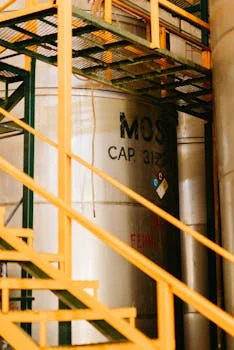
Industrial water purification systems are engineered for continuous high-volume output and high recovery rates, whereas lab-scale systems prioritize "point-of-use" ultrapurity and ease of maintenance. An industrial-scale system typically utilizes a multi-stage process involving industrial RO systems with 75–95% recovery rates for high-volume applications followed by Electrodeionization (EDI). These systems are rated by their Silt Density Index (SDI) requirements, typically requiring an influent SDI <3 to protect the membranes from fouling (HydropureWater field data, 2025).
| Specification | Industrial RO + EDI System | Lab-Scale (Milli-Q / JY Series) |
|---|---|---|
| Flow Rate Range | 1 – 500 m³/h | 3 – 15 L/h (Typical) |
| Recovery Rate | 75% – 95% | 15% – 30% (Reject heavy) |
| Resistivity | 15 – 18 MΩ-cm | 18.2 MΩ-cm |
| Pre-treatment Needs | Extensive (Multimedia, Softener, DAF) | Minimal (Carbon/Depth Cartridges) |
| Maintenance Cycle | Quarterly membrane cleaning/replacement | Bi-annual or Weekly sanitization |
| Cost per Liter | $0.01 – $0.10 | $0.50 – $2.00 |
The trade-offs between these systems center on the "Cost of Quality." A JY Series all-in-one water purification system for lab and small-scale applications is ideal for research environments where 18.2 MΩ-cm water is needed in small batches (25–100L tanks). However, using a lab system to feed an industrial process is economically non-viable due to the high cost of consumable cartridges. Conversely, industrial systems require significant floor space and a dedicated operator to manage chemical dosing and membrane CIP (Clean-In-Place) cycles. For high-turbidity influent water, industrial systems must also integrate DAF pre-treatment systems for high-turbidity influent to ensure the RO membranes do not exceed their SDI limits within the first 100 hours of operation.
How to Select a Water Purification System: 2025 Decision Framework
Selecting the correct water purification system requires a systematic evaluation of influent water quality, required effluent standards, and total volumetric demand. Engineers should follow a six-step framework to ensure compliance while minimizing "over-engineering," which can lead to unnecessary capital expenditure. The first step is always identifying the most stringent standard your application must meet (e.g., ASTM Type I for HPLC vs. USP WFI for injectable drug formulation).
- Identify Required Water Type: Match your application to the standards table (e.g., semiconductor = ASTM Type I; general lab rinse = ISO Grade 3).
- Determine Capacity and Flow: Calculate peak hourly demand. If your demand exceeds 100 liters per day, an industrial RO-based system is generally more cost-effective than a lab-scale unit.
- Assess Influent Water Quality: Test your feed water for SDI, TOC, and hardness. If turbidity is >3,000 mg/L, integrate a DAF pre-treatment system to protect downstream membranes.
- Select Technology Stack: Decide between RO-only (for Type III/IV), RO+EDI (for Type II/Grade 2), or RO+EDI+Ultrafiltration (for Type I/WFI).
- Calculate Cost per Liter: Use the formula: (Capital Cost + Annual Operating Cost) / (Annual Volume × Lifespan). For example, a $50,000 RO system with $5,000 annual OpEx producing 50 m³/day over 10 years results in approximately $0.03/L.
- Verify Regulatory Compliance: Ensure the system design meets local EPA or EU Drinking Water Directives for reject water disposal and material safety.
In 2025, the integration of smart sensors into these frameworks allows for real-time monitoring of resistivity and TOC. If the system detects a drop in resistivity below 18.0 MΩ-cm, automated bypass valves can prevent contaminated water from reaching the production line, a feature now considered standard for high-stakes industrial environments.
2025 Water Purification System Costs: ROI Calculator and Budget Benchmarks
Capital expenditure (CapEx) for water purification systems varies by orders of magnitude depending on the scale and required purity. A standard lab-scale ultrapure system typically ranges from $5,000 to $50,000. In contrast, industrial-scale RO/EDI plants start at $50,000 and can exceed $500,000 for high-capacity installations (e.g., 100 m³/h). Containerized systems, which offer rapid deployment for remote industrial sites, often command a premium, ranging from $100,000 to over $1 million (HydropureWater field data, 2025).
Operating expenditure (OpEx) is the primary driver of the total cost of ownership. For an industrial system, energy consumption typically accounts for $0.01–$0.05 per cubic meter, while chemical dosing (antiscalants, biocides) adds another $0.005–$0.02. Membrane replacement, which should occur every 3–5 years depending on feed water quality, adds a lifecycle cost of approximately $0.01–$0.03 per cubic meter. Procurement managers should use a simple ROI formula to justify these investments: (Annual Savings from Reduced Waste/Reuse) / (Capital Cost + Annual Operating Cost).
"A facility saving $200,000 annually through water reuse, implemented via a $500,000 RO system with $50,000 in annual operating costs, achieves a 3.6-year payback period."
Hidden