
Why Seattle Hotels Need a Dedicated Treatment Strategy in 2026
A Seattle hotel in 2026 typically needs a packaged MBR (membrane bioreactor) or A/O biological plant rated for 100–400 gallons per occupied room per day, with a DAF or grease interceptor upstream for FOG, chlorine dioxide disinfection downstream, and full compliance with SPU Director's Rule SPU 2019-004 and King County Title 13 sewer discharge limits. Properties pursuing ESG goals often add tertiary filtration for laundry or irrigation reuse. That single sentence is the answer an ownership group expects on page one of the basis-of-design memo — the rest of this article is the engineering case behind it.
The compliance pressure starts at the side sewer. Seattle Public Utilities (SPU) reviews every new or expanded hospitality discharge under SPU Director's Rule SPU 2019-004, which carries the FOG sizing tables, peak-factor methodology, and grease-interceptor listing requirements that any in-city hotel must satisfy. The hotel also has to enroll its kitchen in the King County FOG program and meet discharge ceilings under King County Board of Health Code Title 13. If the property sits outside the Seattle service area — a Snoqualmie resort, a boutique inn in unincorporated King County, or a conference property near SeaTac — the design has to clear WAC 173-240 for an on-site sewage system instead, which usually means a tighter effluent envelope and additional dispersal review.
On top of the regulatory layer sits an ESG ceiling. 1 Hotel Seattle's Certified Sustainable Gatherings program is engineered to divert at least 90% of all event waste (source: 1 Hotels Seattle), and the property runs filtered water taps on every floor plus recycled wine-into-water bottles in every room. The Edgewater's waterfront positioning and banquet-heavy mix set a parallel expectation. Owners now read a treatment plant not as a line-item cost but as a permit gate and a brand asset at the same time. The four dominant wastewater streams — guest-room bath and laundry, full-service kitchen FOG, pool and backwash, and HVAC condensate — each carry a different contaminant profile, which is why no single unit operation handles the whole job.
How to Calculate Design Flow and Loadings for a Seattle Hotel
A defensible sizing number comes from layering occupancy on top of the Cornell/Seattle pilot range and then adding the non-room loads that drive the peaks. The Cornell/Seattle hotel water-conservation pilot (April 1999 – April 2001) documented room-level use from under 100 to over 400 gallons per occupied room per day (source: Cornell Hotel Water Conservation Pilot, 1999–2001). In 2026, modern low-flow fixtures trim the low end of that envelope, but food-and-beverate-heavy properties with spa, banquet, and high RevPAR still sit at the upper bound. Treat the 100–400 gpd/room range as the bounding design band, not a single point estimate.
Build the daily flow as: rooms × occupancy factor × gpd/room + restaurant covers × ~10 gal/cover + onsite laundry tons × variable + pool turnover. A 250-room property at 85% occupancy and 200 gpd/room generates ~42,500 gpd from rooms alone; add a 200-cover restaurant operating two seatings, an onsite laundry handling 4 tons/day, and a 30,000-gallon pool with a 6-hour turnover, and the design flow lands near 55,000–60,000 gpd. That figure drives the biological stage sizing and the equalization volume, not the average meter reading.
Typical Seattle hotel influent parameters for a basis-of-design memo:
| Parameter | Typical Influent Range | Design Note |
|---|---|---|
| BOD5 | 250–400 mg/L | Spikes during banquet weekends; size biological stage to upper bound |
| TSS | 200–350 mg/L | Add fine screening to protect membranes |
| FOG (pre-interceptor) | 50–150 mg/L | Higher in banquet-heavy kitchens |
| Oil & Grease (raw banquet) | up to 1,000 mg/L | Grease interceptor + DAF required to meet ≤100 mg/L discharge |
| Temperature | 10–13 °C winter; 18–22 °C summer | Winter temperature pushes biological kinetics slow; size aeration generously |
| pH | 6.5–8.0 | Laundry detergents can push alkaline; equalization smooths excursions |
Diurnal peaking is the second number the SPU reviewer will ask about. Morning checkout, brunch service, and evening banquet stack into a 6–10 hour window that routinely hits 2.5–3.0× the daily average. The standard engineering response is 4–8 hours of equalization volume ahead of the biological stage, which lets the downstream reactors run near their design steady state instead of chasing a moving target. For a comparable urban envelope, see the Phoenix hotel wastewater system guide 2026 and the New York hotel wastewater system guide 2026 — the peaking math is the same, only the loadings differ.
Treatment Train Options: MBR vs A/O Package vs DAF-Fed Activated Sludge
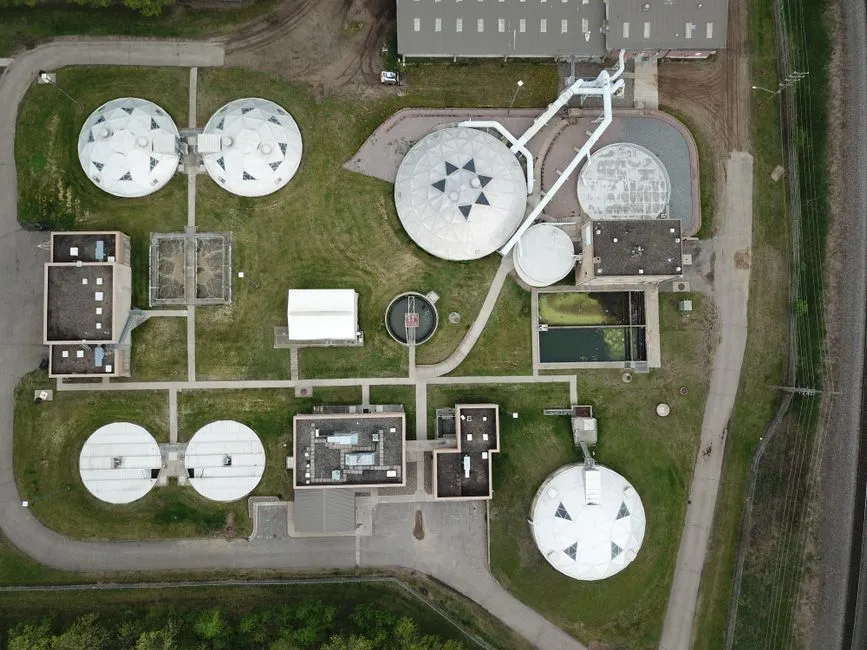
Three packaged topologies realistically clear SPU and King County review for a 100–400 room Seattle property. The choice is driven by site footprint, FOG load, and whether the ownership team intends to pursue water reuse.
| Parameter | WSZ Underground A/O + Sed + ClO2 | MBR (Submerged PVDF) + ClO2 | DAF + Conv. Activated Sludge + Clarifier + ClO2 |
|---|---|---|---|
| Footprint | Smallest (single buried tank) | ~60% smaller than conv. activated sludge | Largest; needs separate DAF, aeration basin, clarifier |
| Effluent BOD5 | ≤20 mg/L (typical) | ≤5 mg/L | ≤20 mg/L |
| Effluent TSS | ≤30 mg/L | ≤1 mg/L (membrane barrier) | ≤30 mg/L |
| Reuse eligibility | Limited (Class B/C with tertiary add-on) | Class A/B with ClO2 polish — irrigation/laundry ready | Class B with tertiary add-on |
| Operator skill | Low (PLC-controlled, buried) | Moderate (membrane cleaning schedule) | High (sludge wasting, clarifier control) |
| Energy use | Low (intermittent aeration) | Moderate (membrane scour air + permeate pump) | Highest (aeration + recirculation + DAF saturator) |
| Best-fit property | <80 m³/d, no full restaurant | 100–400 room infill hotel, courtyard or basement siting, reuse target | Heavy FOG/banquet load, large back-of-house available |
| CAPEX band (relative) | $ | $$ | $$$ |
MBR dominates in Seattle infill because the membrane barrier produces a sub-1 mg/L TSS effluent that meets Washington State reclaimed water Class A/B standards for irrigation when paired with ClO2 — and the train is compact enough to bury under a courtyard or park a mechanical room against a party wall. For a packaged MBR skid sized to the hotel range, the MBR membrane bioreactor system is the typical selection. The cheaper WSZ underground A/O package plant is the right answer for a small inn under 80 m³/d with no on-site restaurant and a single SPU side-sewer tap — fewer moving parts, PLC-controlled, no membrane to clean. The third topology, a dissolved air flotation unit in front of conventional activated sludge, wins when the kitchen is the dominant load and would otherwise foul an MBR membrane within weeks; the DAF strips FOG down to the King County ceiling before the biology, which protects the clarifier and lets the plant run on a longer sludge age.
Pretreatment and Disinfection: FOG, Screen, and ClO2
Headworks is where the King County FOG inspection is won or lost. The standard train is rotary mechanical bar screen → King County-listed grease interceptor → DAF (only if FOG runs above 100 mg/L after the interceptor) → equalization → biological stage → ClO2 contact tank → discharge. The mechanical bar screen protects the downstream equipment from wipes and linen fiber that would otherwise bind an MBR module; a GX rotary mechanical bar screen in the 2–5 mm aperture range is typical for a hotel service flow.
Discharge ceilings for oil and grease are tight. King County and SPU side-sewer permits commonly enforce oil & grease ≤100 mg/L, with some permits written to ≤50 mg/L (per King County Title 13 discharge limits, 2026). A listed grease interceptor alone rarely gets a banquet kitchen below 100 mg/L during a Saturday-night peak; a DAF polisher is what closes the gap. After the biological stage, the disinfection choice is between UV and chlorine dioxide. UV struggles in Seattle because Puget-Sound-sourced cold water (10–13 °C in winter) reduces lamp output at exactly the moment pathogen loading is highest from indoor occupancy. ClO2 is far less temperature-sensitive and leaves a residual that protects the long side-sewer run to the SPU trunk — a real benefit when the building's tap is 200+ feet from the right-of-way. The chlorine dioxide generator is sized from 50 g/h up to 20,000 g/h and is EPA/EU/WHO compliant for potable and wastewater dosing. Pair it with an automatic chemical dosing system so residual is controlled on flow-proportioning rather than a timer.
Sludge Handling and Monitoring in a Hotel Context
Hotel wastewater plants generate a surprising solids load per occupied room, and the facilities team has to have a sludge story before the system is commissioned. In Seattle, the standard practice is to dewater on-site to 18–22% dry solids and hand the cake to a King County-licensed hauler for landfilling or, where the hauler is approved, routing into the SPU commercial organics program. For a hotel up to ~300 rooms, a small plate-and-frame filter press in the 1–10 m² plate area is the conventional pick; the plate-and-frame filter press in that envelope hits the 18–22% DS target with low polymer demand. Properties above 300 rooms, or any site with continuous biological wasting, are better served by a screw press for the lower operating labor.
The 1 Hotel Seattle ethos of "no single-use plastics" extends naturally into the sludge stream: cake with low polymer residual is easier to compost or landfill under SPU's commercial organics diversion rules, and the brand story holds. Operationally, the way to run a hotel plant with zero full-time operators is automated chemical dosing plus a PLC that texts the chief engineer on high level, low dissolved oxygen, or out-of-spec effluent — both are covered by the same automatic chemical dosing and monitoring platform. The benchmark is a weekly site visit, not a daily shift.
Water Reuse Economics in Seattle
Reuse in Seattle is not a scarcity play — it is an ESG and operating-cost play. King County's grid is roughly 80% hydroelectric and other renewables (source: 1 Hotels Seattle, 2026), so the energy savings from offsetting domestic use are modest. The real value is the avoided combined water-and-sewer charge on every reused gallon, and the brand-side leverage when 1 Hotel Seattle and The Edgewater are already telling the sustainability story.
The numbers are concrete. A 250-room hotel at 200 gpd/room generates ~50,000 gpd; a 30% reuse rate for laundry and landscape irrigation offsets ~$40,000–$70,000 per year at Seattle 2026 combined water and sewer rates. To hit a reuse rate that high, the biological stage has to produce an effluent clean enough that downstream RO and a reverse osmosis polishing unit can finish to laundry-quality or Class A irrigation. MBR is the right front end for that target — long-life PVDF modules keep membrane lifecycle impact low and avoid the chemical footprint that drives operating cost. The decision rule: pursue reuse only when Class A or Class B reclaimed water is achievable at a CAPEX payback under 7 years. If the payback stretches past that, the brand team can still claim the ESG story through low-flow fixtures, rainwater, and greywater separation — but the heavy tertiary plant is not justifiable on dollars alone.
2026 Compliance Checklist for a Seattle Hotel Project
- Confirm service-area status. Inside Seattle city limits → SPU side-sewer permit applies. Outside the service area (Snoqualmie, parts of unincorporated King County) → WAC 173-240 on-site system review applies instead, with a tighter effluent envelope.
- Submit the SPU side-sewer application with a documented peaking factor (2.5–3.0×) and a FOG management plan that names the interceptor, the cleaning cadence, and the hauler.
- Enroll the kitchen in the King County FOG program and install a listed grease interceptor sized per Director's Rule SPU 2019-004. Add DAF if banquet cover counts push post-interceptor FOG above 100 mg/L.
- Size the biological stage to the 100–400 gpd/room range from the Cornell/Seattle pilot, with 4–8 hours of equalization upstream.
- Specify MBR or A/O with ClO2 disinfection; commit to a reuse target only if the CAPEX payback on reclaimed water Class A/B is under 7 years, and wire the spec to LEED or the brand's Certified Sustainable Gatherings framework.
Frequently Asked Questions
What size packaged wastewater plant does a 250-room Seattle hotel need?
A 250-room Seattle hotel at 85% occupancy and 200 gpd/room generates roughly 42,500 gpd from guest rooms alone; adding a 200-cover restaurant, onsite laundry, and pool turnover typically lands the design flow at 50,000–60,000 gpd. Size the biological stage to the 100–400 gpd/room range documented by the Cornell/Seattle hotel water-conservation pilot (1999–2001) and add 4–8 hours of equalization for the morning-checkout/banquet peak.
Which Seattle codes govern hotel FOG discharge in 2026?
Two layers apply. SPU Director's Rule SPU 2019-004 governs grease-interceptor sizing, FOG management plans, and side-sewer discharge inside Seattle city limits. King County Board of Health Code Title 13 sets the sewer discharge ceilings, with oil and grease commonly capped at 100 mg/L (and 50 mg/L in tighter permits). Properties outside the Seattle service area additionally clear WAC 173-240 for on-site sewage systems.
MBR or A/O package — which fits an infill Seattle hotel?
For a 100–400 room urban hotel with limited back-of-house and a reuse target, MBR wins. The submerged PVDF membrane train delivers effluent BOD5 ≤5 mg/L and TSS ≤1 mg/L, runs at roughly 60% of the footprint of a conventional activated-sludge plant, and meets Washington State reclaimed water Class A/B with a ClO2 polish. A buried WSZ A/O package is enough only for small inns under 80 m³/d with no full-service restaurant.