Why New York Hotels and Resorts Are a Special Wastewater Case in 2026
New York hospitality projects sit at the intersection of three forces that generic "hotel sewage" guidance rarely addresses: a strict SPDES permitting regime, a Legionella risk profile that the CDC has now quantified, and a site-mix that ranges from Manhattan rooftops to 775-acre Catskills campuses. During 2015-2020, CDC's National Outbreak Reporting System (NORS) recorded 214 drinking water outbreaks, 2,140 illnesses, 563 hospitalizations, and 88 deaths; 98% of biofilm-outbreak deaths were caused by Legionella, and "hotel, motel, lodge, or inn" is an explicitly tracked exposure setting (per CDC NORS 2015-2020, MMWR Surveillance Summaries 2024). Premise plumbing was cited as a contributing factor in 63% of Legionella and other biofilm-associated outbreaks (CDC NORS 2015-2020).
Two real 2025-2026 New York anchors make this concrete. The Esopus Barns Resort Hotel (Ulster County) was issued a draft SPDES permit (NY0280615) on 2025-05-07 for 0.2 MGD of treated sanitary wastewater to Black Creek (Waters Index H-128, Class A) from a tertiary treatment plant serving 43 cabins, 23 hotel units, two restaurants, a conference facility, pool, gym, and retail (NYSDEC Environmental Notice Bulletin, 2025-05-07). The 1 Hotel & Homes Hudson Valley project (Rosendale/Kingston, Ulster County) is planned for approximately 100 keys on 775 acres, targeting LEED Gold, with residences offered from Summer 2026 and a resort opening targeted for 2028 (Starwood Hotels press release, 2026-01-21). Both projects demand tertiary-capable systems — and both must defend the design to NYSDEC, to investors, and, in Esopus's case, through a Type I SEQR review and public comment.
New York's 2026 Regulatory Frame: SPDES, Article 17, and Class A Receiving Waters
Any New York hotel or resort discharging treated wastewater to surface water needs a State Pollutant Discharge Elimination System (SPDES) permit issued under Article 17, Titles 7 and 8 of the NYS Environmental Conservation Law (per NYSDEC, 2025-05-07). Groundwater discharges require a separate SPDES pathway but follow analogous treatment-objective logic. The permit covers effluent limits, monitoring frequency, reporting deliverables, and, where applicable, ambient stream impact.
The Esopus Barns file is the most useful 2025 precedent a project engineer can cite. It is a P/C/I (Private/Commercial/Institutional) surface discharge, with the Department preparing a draft permit and fact sheet, opening a public comment window to 2025-06-06 (NYSDEC, 2025-05-07). Three procedural steps commonly surprise hospitality developers: (1) SEQR review — Esopus was classified Type I with a coordinated review and Negative Declaration on file; (2) SHPA cultural resources clearance — a survey identified resources, and OPRHP confirmed no adverse impact; and (3) Coastal Management review under the Waterfront Revitalization and Coastal Resources Act because the site is in a designated coastal area. Commissioner Policy 29 (CP-29) Environmental Justice permitting applicability was screened and determined not to apply for Esopus; a different site could trigger it.
"Class A" is the key water-quality target. Class A fresh surface waters in New York are designated for potable supply, primary-contact recreation, and aquatic life support, so effluent must reach tertiary treatment levels — typically BOD₅ and TSS at or below 10 mg/L (with permit-specific limits), and often residual disinfection. Tertiary capability is not optional; it is the permit's central engineering ask.
How Much Wastewater Does a New York Hotel or Resort Actually Generate?
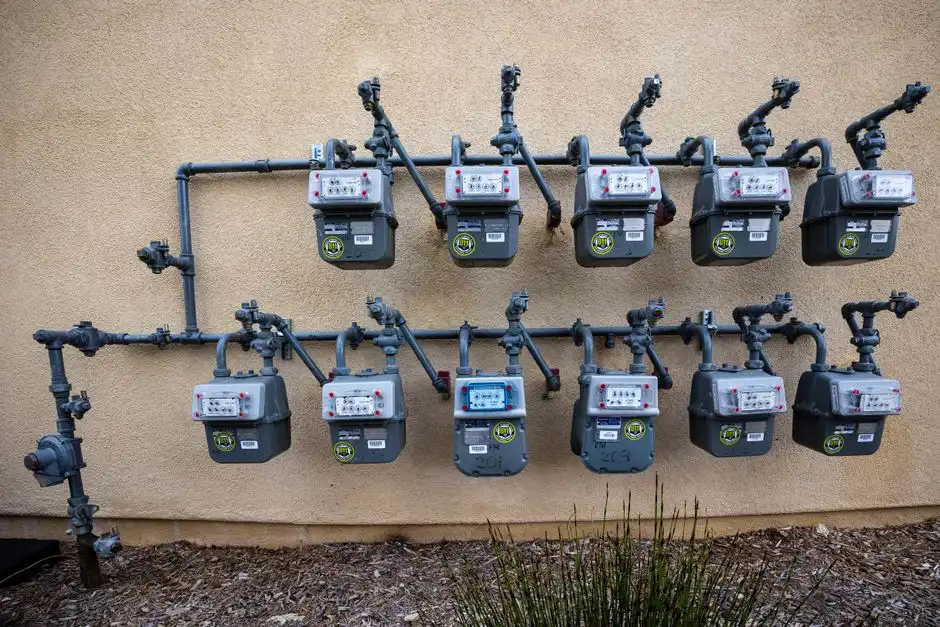
A defensible 2026 design flow for a New York full-service hotel starts at 200-450 L per occupied guest per day. Luxury resorts with spa, laundry, and food-and-beverage load trend higher, 400-600 L/guest/day, because of robes/towels, multi-meal service, and pool backwash. Add staff at roughly 50 L/employee/shift and conference or event space at 30-50 L/m². Equalization is not a luxury item: morning shower peaks (typically 07:00-09:00) and evening F&B peaks (18:00-21:00) can drive instantaneous flows 2.5-3.0× the daily average, and the downstream biological reactor must ride through those swings without losing nitrification.
| Source | Unit | Typical flow | 100-key example |
|---|---|---|---|
| Guest rooms (full-service) | L/guest/day | 200-450 | 35,000 @ 350 L |
| Luxury resort with spa/ laundry/ F&B | L/guest/day | 400-600 | 50,000 @ 500 L |
| Staff | L/employee/shift | ~50 | 4,000 (80 staff) |
| Conference / event space | L/m² | 30-50 | 20,000 (500 m² @ 40 L) |
| Average daily flow (100-key example) | m³/day | — | ~45 (≈ 0.012 MGD) |
| Design peak flow (× 2.5-3.0) | m³/day | — | ~110-135 |
| Esopus Barns permit flow | m³/day | — | ~757 (0.2 MGD, 66 keys + restaurants + conference + pool + gym + retail) |
Cross-check the math against the Esopus Barns permit: 0.2 MGD (≈ 757 m³/day) for 66 keys only makes sense once you add two restaurants, a conference facility, pool/gym backwash, and retail loaders — each multiplier roughly doubles the per-key baseline (NYSDEC, 2025-05-07). An equalization tank sized at 25-40% of the average daily flow is the standard hedge for diurnal peaking.
Process Options: Package A/O, MBR, and Hybrid DAF + Biological Trains
Three realistic 2026 trains cover the New York hospitality design space. A buried package A/O sewage treatment plant (WSZ-series, 1-80 m³/h) integrates anoxic/oxic contact oxidation, sedimentation, and a disinfection stage in a single buried skid — best for small-to-mid hotels, rural resorts, and cost-driven retrofits where the permit allows secondary-plus disinfection discharge. An MBR membrane bioreactor system (10-2,000 m³/day) couples a suspended-growth bioreactor with submerged PVDF ultrafiltration (nominal pore size <1 μm), producing near-reuse effluent on a footprint roughly 60% smaller than a comparable CAS plant and holding stable under load swings — the right call for constrained urban sites, LEED Gold pursuits, and any project targeting on-site water reuse. A DAF system for FOG removal (4-300 m³/h) sits upstream of biology and strips free oil, grease, and suspended solids via micro-bubbles; if banquet or resort kitchens exceed 200 covers per meal period, DAF pretreatment is the difference between a stable reactor and a foaming, bulking one.
Disinfection is paired, not chosen. An on-site chlorine dioxide generator (50 g/h to 20,000 g/h) delivers broad-spectrum microbial control — including Legionella — and is the standard secondary disinfectant for NY surface-discharge permits. UV is often added as a polish step. Sludge is handled with a plate-and-frame filter press for sludge or a lamella clarifier to meet SPDES solids reporting.
| Train | Typical flow range | Effluent BOD₅/TSS | Footprint | Best-fit NY site |
|---|---|---|---|---|
| Package A/O (WSZ) | 1-80 m³/h | ≤20 / ≤20 mg/L | Small (buried) | Rural resorts, secondary discharge, budget retrofits |
| MBR | 10-2,000 m³/day | ≤5 / ≤5 mg/L | ~60% of CAS | Manhattan additions, LEED Gold, reuse intent |
| DAF + A/O or MBR | 4-300 m³/h (DAF) | Inherits downstream | Adds 1 stage | Any site with F&B >200 covers/meal |
| ClO₂ (on-site generated) | 50 g/h - 20,000 g/h | Disinfection residual 0.2-0.5 mg/L | Skid | All surface discharges; Legionella control |
| Plate-and-frame press | — | 18-22% dry solids cake | — | Solids handling for any train |
Designing for Legionella and Premise Plumbing Risk in 2026
CDC NORS 2015-2020 is unambiguous: Legionella caused 786 illnesses, 544 hospitalizations, and 86 deaths in U.S. drinking-water outbreaks during the period, and premise plumbing was the contributing factor in 63% of biofilm-associated cases (CDC MMWR Surveillance Summaries, 2024). Hotels are an explicitly tracked exposure setting, which means the wastewater plant is only half the engineering problem — the hot-water distribution system, cooling towers, decorative water features, and spa pools are the other half.
Specify a layered control set. At the treatment plant, hold an effluent ClO₂ residual of 0.2-0.5 mg/L using an on-site chlorine dioxide generator to control Legionella and other biofilm pathogens before water ever enters the building loop. Inside the building, design the hot-water system for circulation at 55-60°C with cold-water delivery held below 25°C, and avoid dead legs larger than the run to the fixture served. Adopt a Water Management Program aligned with ASHRAE 514 and the CDC WMP toolkit, with annual monitoring as a permit deliverable. In New York specifically, cooling-tower registration, decorative-feature design, and spa-pool hydraulics each add biofilm surface that interacts with — and can be reduced by — a well-controlled treatment-plant discharge profile.
Sizing a Real New York Resort: 2026 Worked Example
Take a hypothetical 80-key Hudson Valley resort: 120 staff, 400 m² of conference and event space, a full-service restaurant, spa, and pool. Average flow computes to roughly 50 m³/day, dominated by guest rooms (~28 m³), staff (~6 m³), and events (~16 m³). Apply a 2.5-3.0 peaking factor and size the biological reactor to 150 m³/day.
Recommended train: rotary bar screen → equalization (~20 m³, ~40% of ADF) → DAF system for FOG removal sized at 10-15 m³/h to handle kitchen peak loads → MBR membrane bioreactor system at 150 m³/day capacity with PVDF membranes → on-site ClO₂ to a 0.2-0.5 mg/L residual → UV polish → sand filter for landscape irrigation. The sludge line runs MBR wasting → lamella thickener → plate-and-frame filter press for sludge, producing an 18-22% dry-solids cake for off-site disposal. Reusing treated effluent for on-site landscape irrigation — the same LEED Gold alignment that 1 Hotel Hudson Valley has committed to (Starwood Hotels, 2026-01-21) — typically reduces the project's potable draw by 30-50% and strengthens the water-reuse credit pathway.
2026 Costs and Decision Framework for New York Hospitality Projects
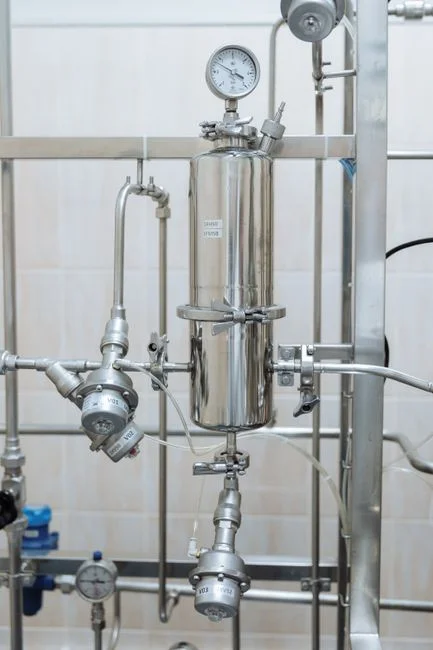
CAPEX for a New York hospitality plant in 2026 tracks roughly with train complexity. A small buried package A/O sewage treatment plant under 80 m³/day installed runs $300K-$900K. An MBR membrane bioreactor system in the 100-500 m³/day band runs $1.2M-$4M. Adding DAF pretreatment and on-site ClO₂ generation typically adds 25-40% to the biological CAPEX line. OPEX is electricity-dominated (MBR aeration is the largest line), followed by ClO₂ chemical, sludge hauling, and lab/permit reporting. A reasonable 2026 benchmark for a mid-size resort is $0.8-$1.6 per m³ treated — for a 50 m³/day average plant, that is roughly $15K-$30K per year in operating cost (per industry OPEX benchmarks, 2026).
| Plant size / train | CAPEX band (USD) | OPEX ($/m³) | Notes |
|---|---|---|---|
| Package A/O <80 m³/day | $300K-$900K | $0.5-$1.0 | Buried; secondary-plus discharge |
| MBR 100-500 m³/day | $1.2M-$4M | $0.8-$1.6 | Aeration is the largest OPEX line |
| Full tertiary (DAF + A/O or MBR + ClO₂) | Biological CAPEX × 1.25-1.40 | +20-35% vs. biological-only | Required for Class A / NYSDEC |
Decision rule of thumb: choose package A/O for rural sites with simple discharge, low flows, and budget pressure; choose MBR for constrained sites, LEED targets, or any water-reuse intent; always add DAF pretreatment where F&B exceeds 200 covers per meal period. In every case, plan for tertiary treatment to meet Class A and verify the train against the permit's specific effluent limits rather than a generic spec.
Frequently Asked Questions
What wastewater system does a New York hotel or resort need in 2026?
A tertiary-capable biological train — typically a package A/O plant or MBR at 200-450 L per guest per day, followed by on-site ClO₂ or UV disinfection — designed to meet an NYSDEC SPDES permit under Article 17, Titles 7 and 8 for discharge to a Class A water (per NYSDEC, 2025-05-07).
How long does a New York SPDES permit for a hotel wastewater discharge take?
Allow 9-15 months from complete application to draft permit, based on the Esopus Barns NY0280615 timeline (complete application 2025-05; comment window to 2025-06-06) plus a coordinated SEQR Type I review (NYSDEC Environmental Notice Bulletin, 2025-05-07).
What Legionella controls belong in a New York hotel's wastewater and water system?
Hold 0.2-0.5 mg/L ClO₂ residual at plant effluent, circulate hot water at 55-60°C with cold <25°C, and operate a Water Management Program per ASHRAE 514 and the CDC toolkit (CDC NORS 2015-2020, MMWR 2024).
Can treated wastewater from a New York resort be reused for landscape irrigation?
Yes. MBR effluent followed by ClO₂ and a sand filter can typically meet non-potable reuse limits for on-site irrigation, supporting LEED Gold credits (as planned for 1 Hotel & Homes Hudson Valley, 775 acres; per Starwood Hotels, 2026-01-21).
What is the realistic design-to-commissioning timeline for an 80-key New York resort?
Plan 18-24 months: roughly 3-6 months for SPDES pre-application, 9-15 months for permit issuance, then 6-9 months for fabrication, install, and commissioning of the biological and disinfection trains.