Why Underground Sewage Treatment Systems Are Gaining Traction in 2025
Land-use restrictions affect approximately 70% of new industrial parks in China's Tier 1 cities as of 2024, forcing engineers to move wastewater infrastructure below the surface to maximize revenue-generating area. An underground sewage treatment system is a buried, compact wastewater treatment plant that combines biological processes, such as anoxic/aerobic or MBR, with sedimentation and disinfection to remove 95%+ of contaminants, including COD, BOD, and TSS, from domestic or industrial effluent. Unlike conventional above-ground plants, these systems save 60-80% of land space, operate silently, and can be installed beneath parking lots or green spaces. For example, HydropureWater's Underground Package Sewage Treatment Plant (WSZ Series) achieves effluent quality of <30 mg/L BOD and <10 mg/L ammonia-nitrogen, meeting China's GB 18918-2002 Class 1A standards for reuse or discharge.
The shift toward underground modularity is driven by more than just square footage. Stringent noise and odor regulations in urban zones require facilities to maintain noise levels below 45 dB and odor emissions under 10 OU/m³, benchmarks that are difficult to achieve with open-air tanks but inherent to buried designs. 2023 field data from HydropureWater's WSZ series recorded 99% uptime, largely due to the system's climate resilience; being buried provides natural insulation against freezing temperatures and protection from surface-level flooding. This aesthetic and functional integration allows industrial facilities, hospitals, and luxury resorts to maintain high-capacity treatment without compromising the site's visual appeal or acoustic environment.
How Underground Sewage Treatment Systems Work: Process Flow and Engineering Specs
The biological contact oxidation process used in modern underground systems relies on a multi-stage process flow designed to maximize contaminant removal within a minimal footprint. By using an anoxic/aerobic sequence, these systems carry out both carbonaceous removal and nitrogen reduction through controlled microbial environments. The following engineering stages define the standard operation of high-efficiency buried units:
- Step 1: Pretreatment (Screening and Grit Removal): Raw influent passes through mechanical bar screens to remove solids >1 mm. According to ISO 16075-2:2020 standards, effective screening is critical to prevent downstream pump clogging and protects the biological media.
- Step 2: Anoxic Zone (Denitrification): In this stage, facultative bacteria reduce nitrate-nitrogen to nitrogen gas. The hydraulic retention time is typically maintained between 2 to 4 hours, targeting a nitrate-nitrogen reduction to <10 mg/L.
- Step 3: Aerobic Zone (Oxidation): This is the core of the biological process where submerged blowers provide oxygen to aerobic microbes. 2024 field data from HydropureWater WSZ series indicates a COD removal rate of 92-97% when handling influent concentrations between 50 and 500 mg/L.
- Step 4: Secondary Sedimentation: Using inclined-plate settlers, the system achieves TSS removal of 95%+. The surface loading rate is engineered between 0.8-1.2 m³/m²·h to ensure clear effluent separation from the activated sludge.
- Step 5: Disinfection and Discharge: Final treatment via chlorine dioxide or UV radiation achieves a 99.99% pathogen kill rate, aligning with WHO drinking water guidelines for non-potable reuse.
To help procurement managers evaluate system capacity, the table below outlines the primary engineering specifications for the WSZ series.
| Parameter | Engineering Specification | Effluent Standard (GB 18918-2002 Class 1A) |
|---|---|---|
| Footprint Requirement | 0.5 - 2.0 m² per m³/h | N/A |
| Energy Consumption | 0.2 - 0.4 kWh/m³ | N/A |
| COD Removal Rate | 92% - 97% | < 50 mg/L |
| BOD₅ Removal Rate | 95% - 98% | < 10 mg/L |
| Ammonia Nitrogen (NH₄-N) | < 5 mg/L (achieved) | < 5 (8) mg/L |
| Total Suspended Solids (TSS) | < 10 mg/L | < 10 mg/L |
For projects requiring even higher clarity, an MBR membrane bioreactor system for high-quality effluent can be integrated, replacing the sedimentation tank with membrane filtration to achieve near-zero TSS and enhanced nutrient removal.
Underground vs. Above-Ground Sewage Treatment: Performance, Cost, and Land Use Comparison
Underground sewage treatment systems require 60-80% less surface area than conventional above-ground plants, making them the only viable option for sites where surface land is valued at a premium. For a plant with a capacity of 50 m³/h, a traditional above-ground facility might require 2,500 m² to account for tank spacing, access roads, and buffer zones. A buried WSZ system can be housed within 500 m², often directly beneath a parking lot or landscaped area. This higher land-use efficiency is a primary driver for industrial parks optimizing their floor area ratio (FAR).
While the initial CAPEX for underground systems is typically 10-20% higher due to excavation and structural reinforcement, the long-term ROI is often superior. OPEX is generally 5-10% lower because buried tanks benefit from stable subterranean temperatures, which optimizes microbial activity and reduces the energy needed for heating or cooling process water. The absence of UV exposure significantly slows the degradation of plastic components and coatings, reducing maintenance intervals.
| Metric | Underground STP (Integrated) | Above-Ground STP (Conventional) |
|---|---|---|
| Land Area (for 1,000 m³/day) | ~300 - 500 m² | ~1,500 - 2,500 m² |
| CAPEX (Est. 2024) | $1,200 - $1,800 / m³/h | $1,000 - $1,500 / m³/h |
| OPEX (Energy/Maint) | $0.10 - $0.20 / m³ | $0.15 - $0.25 / m³ |
| Noise Profile | < 45 dB (Silent) | 65 - 85 dB (Requires barriers) |
| Temperature Stability | High (Subsurface insulation) | Low (Seasonal fluctuations) |
| Permitting Complexity | Lower (Urban/Residential zones) | Higher (Zoning/Odor restrictions) |
Detailed engineering process and efficiency data for underground STPs confirms that while the structural shell is more expensive, the operational stability leads to more consistent compliance with GB 18918-2002 Class 1A, particularly regarding nitrogen removal during winter months.
Selecting the Right Underground Sewage Treatment System: A 2025 Decision Framework
Choosing the correct system requires a systematic evaluation of influent chemistry and site-specific constraints. Engineers must first define the influent quality by measuring COD, BOD, TSS, NH₄-N, and Total Phosphorus. While domestic sewage typically ranges between 200-500 mg/L COD, industrial influent can exceed 5,000 mg/L. For high-load industrial scenarios, a standard A/O process may require DAF pre-treatment for high-COD industrial wastewater to remove fats, oils, and greases before biological treatment.
The second stage of the framework involves assessing land constraints and effluent requirements. If the treated water is intended for urban greening or toilet flushing, it must meet GB/T 18920-2020 standards, which often necessitates an MBR-based underground system. Finally, compare suppliers based on 2024 field performance data rather than theoretical maximums. A reliable supplier should provide an ROI calculator and cost breakdown for wastewater treatment systems to help justify the CAPEX to stakeholders.
Supplier Evaluation Checklist: 10 Critical Questions
- What is the maximum influent COD and BOD concentration the system can handle without pre-treatment?
- Does the system include internal recirculation for denitrification, and what is the ratio?
- What is the expected sludge production rate (kg TSS/m³ treated)?
- Is the tank constructed from carbon steel with epoxy coating, stainless steel, or HDPE?
- What is the design life of the submerged aeration blowers and pumps?
- How does the system manage H₂S gas buildup in the underground vault?
- Can the system be monitored remotely via PLC/SCADA integration?
- What is the specific footprint (m²) for a 100 m³/day capacity unit?
- Are there 2024 case studies available for similar influent types?
- What are the specific pH adjustment systems for industrial wastewater pretreatment required for this model?
Real-World Performance: Case Study of an Underground STP in a Shanghai Industrial Park
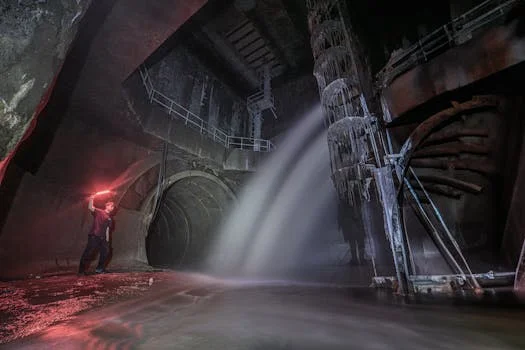
In 2023, an electronics manufacturing park in Shanghai faced a critical challenge: a mandated 30 m³/h sewage treatment expansion with only 500 m² of available land adjacent to a residential boundary. The influent was characterized by high COD and strict discharge limits requiring compliance with GB 18918-2002 Class 1A. Traditional above-ground options were rejected due to noise concerns and the lack of surface space.
The solution implemented was a HydropureWater WSZ series underground system using a reinforced A/O process and chlorine dioxide disinfection. The entire plant was installed 3 meters below ground, with the surface repurposed as a park for employees. After 12 months of operation, the results demonstrated 96% COD removal and 98% NH₄-N removal. TSS levels remained consistently below 10 mg/L. From a financial perspective, the CAPEX was $1,500/m³/h, but the OPEX was recorded at only $0.15/m³, which was 20% lower than the projected costs of an above-ground alternative. A key lesson learned was the necessity of a robust ventilation system; underground plants require at least 10-15 air changes per hour in the equipment room to prevent the accumulation of corrosive and hazardous gases like H₂S.
Frequently Asked Questions
What is the lifespan of an underground sewage treatment system?
Most high-quality underground systems have a design life of 20-30 years. Durability depends on the use of corrosion-resistant materials such as 304/316 stainless steel or heavy-duty HDPE. HydropureWater's WSZ series includes a 10-year structural warranty and uses multi-layer anti-corrosion coatings to withstand soil moisture and internal chemical exposure.
Can underground systems handle industrial wastewater?
Yes, provided the influent profile is matched to the biological stage. Industrial streams above 5,000 mg/L COD typically need pre-treatment such as DAF or equalization before the anoxic/aerobic zone. Once paired correctly, underground units can deliver the same 95%+ BOD removal as a domestic installation while keeping the surface footprint under 500 m² for a 50 m³/h plant.
How much land does an underground STP save compared to a conventional plant?
A buried system uses 60-80% less surface area than an equivalent above-ground plant. For a 1,000 m³/day capacity, the underground STP typically occupies 300-500 m² versus 1,500-2,500 m² for a conventional layout, freeing the surface for parking, landscaping, or production space.
What is the typical CAPEX and OPEX for an underground sewage treatment system?
2024 estimates put CAPEX at $1,200-$1,800/m³/h, roughly 10-20% higher than above-ground due to excavation and structural reinforcement. OPEX runs $0.10-$0.20/m³, which is 5-10% lower because stable subterranean temperatures reduce heating/cooling loads and slow equipment degradation.
How is the underground working-principle and component selection documented?
Process flow, blower and pump sizing, and tank materials are typically documented in a working-principle datasheet covering the anoxic/aerobic sequence, HRT (2-4 h denitrification), and disinfection stage. For a side-by-side review of working-principle specs and component options, see the Underground Sewage Treatment System Working Principle: Engineering Specs reference.