An industrial brackish water RO system design guide applies to feed water with total dissolved solids (TDS) of 1,000–15,000 mg/L—above typical freshwater and well below seawater. Industrial units run at about 10–16 bar on brackish membranes, remove 95–99% of TDS, and usually recover 75–85% of the feed as permeate for process water, boiler makeup, or potable blending. Core hardware is the membrane array, high-pressure pump, pressure vessels, pretreatment train, and automated controls sized to the feed chemistry. The pressure physics behind each stage are covered in our Brackish Water RO System Working Principle: 2026 Engineering guide.
Industrial Brackish Water RO System Design Guide
Feed pressure on an industrial BWRO train is 10–16 bar when TDS is 1,000–15,000 mg/L, with a 75–85% recovery target and 95–99% salt rejection if SDI stays under 3.0. Pretreatment, membrane flux, and concentrate chemistry decide whether that recovery stays stable. Tuned plants use about 0.5–1.5 kWh/m³ of permeate when pretreatment holds.
USGS Fact Sheet 2017–3054 defines brackish groundwater as 1,000 to 10,000 mg/L dissolved solids, freshwater as less than 1,000 mg/L, and highly saline water as greater than 10,000 mg/L. Seawater in that assessment is about 35,000 mg/L. This hardware guide still sizes trains for 1,000–15,000 mg/L because many inland wells sit above the USGS brackish ceiling and below seawater. According to USGS (2017), the EPA secondary maximum contaminant level advises 500 mg/L dissolved solids for public water systems, and water above 1,000 mg/L is generally undesirable for drinking.
Across the United States, USGS (2017) found about 70 percent of sampled wells between 1,500 and 3,000 ft produced brackish or highly saline groundwater. Less than 20 percent of sampled wells between 0 and 50 ft fell in those categories. Median dissolved solids were 334 mg/L in wells from 0 to 50 ft and 3,692 mg/L in wells from 1,500 to 3,000 ft. Most plants we size for deep inland wells therefore sample the producing interval, not only a shallow screen.
What Is Brackish Water and Why Does It Need RO Treatment?
Brackish water carries 1,000–15,000 mg/L TDS, versus freshwater below about 1,000 mg/L and seawater above about 30,000 mg/L. Common sources are deep aquifers, coastal estuaries, and some industrial discharges rich in sodium, chloride, calcium, and magnesium. Untreated, that salinity scales boilers, shifts food and beverage taste, destabilizes pharmaceutical recipes, and accelerates corrosion in metal piping.
High TDS raises boiler scale that cuts heat transfer and raises fuel use. Dissolved ions also shorten piping life and raise replacement cost. In cooling towers and rinse loops, rising conductivity forces more blowdown and freshwater makeup. Particle filters such as multi-media filters for RO pretreatment cut suspended solids and turbidity, but they leave dissolved salts in solution.
Reverse osmosis is required because a semi-permeable membrane separates those ions from water under pressure at molecular scale. USGS (2017) describes the same barrier: a thin semipermeable film passes water under pressure and excludes solutes. Most plants we size for inland wells see hardness and sulfate as the first scaling limits, not sodium chloride alone. A full ion analysis beats a handheld TDS reading when you set recovery.
If barium or strontium is present even at low milligrams per liter, antiscalant selection and concentrate chemistry controls become part of the design basis, not an afterthought. USGS modeling of brackish samples flags calcite, barite, and chalcedony as scaling minerals, which matches that pattern. Barite risk is why a barium result belongs in the design basis even when the handheld TDS looks moderate.
Brackish Water RO Membrane Selection and Pretreatment
Brackish water RO membrane selection and pretreatment hold the Silt Density Index (SDI) under 3.0 before any element sees the feed. Industrial BWRO plants use a multi-stage train: condition the feed, raise pressure above osmotic pressure, split permeate from concentrate, then finish the product for the end use. Pretreatment usually combines multi-media filtration with automated antiscalant dosing for RO pretreatment against calcium carbonate and sulfate scale. Operators often hold feed pH near 6.5–7.5 to protect polyamide membranes and stabilize rejection.
High-pressure pumps for brackish duty typically deliver 10–16 bar. Most plants we size for inland wells run toward the lower end of that band when TDS sits near 2,000–5,000 mg/L; higher brackish feeds push the upper end. Duplex stainless steel or equivalent alloys are common on the high-pressure side because chloride-bearing brackish water pits lesser steels. Spiral-wound polyamide elements such as Filmtec BW30-400 force water through the membrane; salt rejection can reach about 99.5% under rated conditions.
The split streams are permeate (product) and concentrate (brine). Design recovery is typically 75–85% when silica and sparingly soluble salts allow it. According to the US Bureau of Reclamation (2012), a brackish pilot could not raise recovery once silica scaled the pressure exchangers, and isobaric energy-recovery benefits stayed modest versus seawater. Those benefits were most promising on low-silica water. The brackish leg of that work ran at the Kay Bailey Hutchison Desalination Plant in El Paso, Texas.
Post-treatment ensures the water meets the application: remineralization for corrosivity control, pH correction for process recipes, or UV disinfection for potable blending. Cartridge filters ahead of the membranes remain the last mechanical barrier for particles that break through multimedia beds. Instrument loops for conductivity, flow, and differential pressure must be normalized for temperature, or operators will chase false fouling alarms. Select a brackish element only when the cold-water projection still meets permeate TDS inside 10–16 bar.
Standard flow path: Influent → Pretreatment (filtration and dosing) → High-pressure pump → RO membrane array → Permeate storage → Post-treatment → Distribution.
| Process Step | Key Parameter | Industrial Target Value |
|---|---|---|
| Pretreatment | Silt Density Index (SDI) | < 3.0 |
| High-Pressure Pump | Operating Pressure | 10–16 bar |
| Membrane Stage | Salt Rejection Rate | 98.5% – 99.5% |
| Concentrate Stream | Recovery Rate | 75% – 85% |
| Post-Treatment | Permeate pH | 6.5 – 8.5 (application dependent) |
Brackish Water Reverse Osmosis Engineering Specifications
Brackish water reverse osmosis engineering specifications center on 10–16 bar operating pressure and spiral-wound polyamide thin-film composite (TFC) membranes. Seawater trains need about 55–80 bar; brackish elements are built for higher flux at lower energy. Spec sheets often list Hydranautics CPA3 or Toray TM720-400 class elements when high rejection at industrial duty is required. FRP vessels rated at least 300 psi and 316L or duplex high-pressure piping reduce pitting risk on chloride feeds.
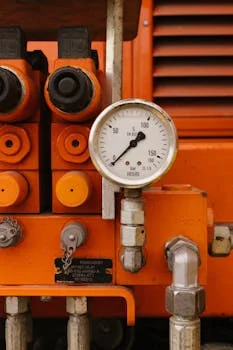
Energy use for a well-tuned plant is typically 0.5–1.5 kWh/m³ of permeate (HydropureWater field data, 2025). Variable frequency drives on the high-pressure pumps and low-energy membrane elements keep that band. Membrane life is usually 3–5 years when pretreatment stays on target and Clean-In-Place (CIP) runs every 3–6 months. Skip either, and salt passage rises long before the calendar life ends.
Compare that energy band with seawater duty at 3.0–5.0 kWh/m³ and the CAPEX case for inland wells becomes clear. Pressure vessels, manifolds, and instrumentation still dominate mechanical scope, but the electrical service is far smaller than an SWRO hall. When vendors quote only nameplate pump power, ask for specific energy at your design temperature and fouling factor, not clean-membrane catalog conditions. Most plants we size for inland wells land in the 0.5–1.5 kWh/m³ band only after the drive is tuned to the real fouling factor.
The same pilot’s cost point was 6.81 kilowatt hours per thousand gallons at 50 percent recovery and a flux of 9 gallons per square foot per day. Those points do not replace the 3.0–5.0 kWh/m³ band used to plan a full seawater hall. They show what an energy-recovery skid can reach when recovery and flux are both derated.
The comparison table lists brackish operating pressure as 10 – 25 bar because some higher-TDS feeds leave the 10–16 bar band used on milder wells.
| Specification | Brackish Water RO (BWRO) | Seawater RO (SWRO) |
|---|---|---|
| Feed TDS Range | 1,000 – 15,000 mg/L | 30,000 – 45,000 mg/L |
| Operating Pressure | 10 – 25 bar | 55 – 80 bar |
| Energy Consumption | 0.5 – 1.5 kWh/m³ | 3.0 – 5.0 kWh/m³ |
| Standard Recovery | 75% – 85% | 35% – 50% |
| Membrane Material | Polyamide TFC (Spiral) | Polyamide TFC (High Pressure) |
BWRO vs Electrodialysis for Industrial Water Treatment
BWRO vs electrodialysis for industrial water treatment depends on feed TDS, silica risk, waste-heat availability, and the recovery target. Electrodialysis reversal (EDR) can suit high-silica feeds or recoveries up to about 94%, but electrode-stack maintenance cost is usually higher. Multi-effect distillation (MED) and multi-stage flash (MSF) fit large seawater plants with nearby steam, not most inland brackish wells. According to USGS (2017), reverse osmosis is the most common desalination treatment in the United States.
For manufacturing and municipal projects below about 15,000 mg/L TDS, BWRO usually wins on CAPEX and OPEX. At roughly 5,000 mg/L TDS, a BWRO train uses about 70% less energy than a comparable distillation unit. Decision rule: choose BWRO when feed TDS is under 15,000 mg/L and recovery must stay above 70% with low permeate salinity. Compare EDR only when silica or selective-ion limits rule out standard BWRO.
Thermal options stay relevant only when low-grade steam is already paid for by a power block or when very high purity condensate chemistry is required. Even then, many sites still place a BWRO polishing step downstream because membrane CAPEX scales in smaller modules than a new evaporator train. Most plants we size for inland industry install membrane trains, not evaporators, unless steam is already on site.
| Feature | BWRO | Electrodialysis (ED/EDR) | Distillation (MED/MSF) |
|---|---|---|---|
| Primary Energy | Electricity (Pumps) | Electricity (DC Power) | Thermal (Steam/Heat) |
| TDS Removal | 99%+ | 80% – 90% | 99.9% |
| CAPEX | Moderate | High | Very High |
| Scalability | Excellent (Modular) | Good | Poor (Large footprint) |
BWRO System Cost and Payback Calculator
A BWRO system cost and payback calculator starts from total cost of ownership, which splits into CAPEX and OPEX, and energy often accounts for about 40% of lifetime cost. For a medium industrial train at 50 m³/h, CAPEX commonly falls between $150,000 and $250,000 depending on automation and pretreatment depth. Membranes are about 30% of initial equipment cost; high-pressure pumps about 25%; pressure vessels about 15%. For a deeper commercial price walk-through, see brackish water reverse osmosis: system guide, costs & how it works (2026) — commercial water lab.
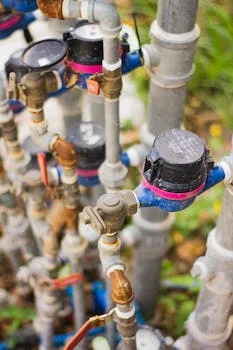
Budget OPEX near $0.30–$0.50 per cubic meter of permeate. That typically covers energy ($0.15–$0.25), antiscalant and CIP chemicals ($0.05–$0.10), and membrane replacement reserves ($0.06–$0.10). Simple payback uses this formula: ROI (Years) = CAPEX / (Annual Water Savings − Annual OPEX). In many industrial districts that compare against trucked or municipal supply, full payback lands in 18–36 months when utilization stays high.
Main cost drivers to challenge in a vendor bid are electricity tariff, fouling rate (which sets CIP and membrane life), duplex versus 316L metallurgy, and how much pretreatment the raw water actually needs. A cheap skid with weak multimedia and no redundant dosing often costs more over five years than a correctly pretreated train. Run the formula only after you insert your own water-purchase price; this page does not assume a municipal tariff. Most plants we size for two-shift factories land inside the 18–36 months band only when the skid runs most days.
| Cost Category | Percentage of Total | Key Drivers |
|---|---|---|
| Energy (OPEX) | 40% | Electricity rates, pump efficiency |
| Membranes (CAPEX/OPEX) | 25% | Feed water quality, fouling rate |
| Maintenance & Labor | 15% | Automation level, operator skill |
| Chemicals (OPEX) | 10% | Antiscalant dosing, CIP frequency |
| Pumps & Hardware | 10% | Material grade (e.g., Duplex SS) |
Common Problems and Field Troubleshooting
Common BWRO upsets show up as falling permeate flux or rising salt passage from fouling or scale. Low permeate flow often tracks biological or colloidal fouling on the membrane surface. When normalized flow drops more than 10–15% from baseline, run an alkaline CIP to lift organics before flux collapses further. High permeate TDS usually points to chlorine attack on polyamide, physical membrane damage, or leaking O-rings in the pressure vessels.
A stage differential pressure rise above about 15% is a scaling flag—often calcium carbonate or sulfate—after antiscalant loss or an aggressive recovery setpoint. Operators should review a detailed guide on RO membrane technology when ion balances look borderline. Preventive work is unglamorous: daily normalized flow and rejection logs, monthly TDS probe calibration, and annual inspection of high-pressure pump seals and valves.
If CIP frequency collapses from months to weeks, stop raising pressure to chase flow. Fix pretreatment first. Free chlorine breakthrough from an upstream oxidant residual will open salt passage permanently; confirm ORP or residual chlorine before every membrane fill. USGS (2017) warns that mineral scale can impede pipes and membranes, and that RO fails if source water is not treated to cut scaling potential.
On the samples USGS modeled, only 4 percent of 14,380 groundwater samples at 1,000 mg/L dissolved solids or more had a Langelier index above 1. Only 2 percent had an index below -1. Most plants we size for carbonate wells still clean for calcite even when the average index looks mild, because concentrate, not feed, is the scaling fluid.
"Consistent monitoring of the Silt Density Index (SDI) and differential pressure is the only way to extend membrane life beyond the 3-year mark in high-TDS applications." (HydropureWater Engineering Manual, 2025).
How to Select the Right Brackish Water RO System
Selection of a brackish water RO system starts with a full ion analysis, not a single TDS number. Silica, barium, strontium, and TOC set pretreatment and the safe recovery ceiling. High silica often caps recovery near 70% to avoid irreversible scale. Next size the array on flux as well as capacity: for brackish feeds, a conservative 14–16 gfd (gallons per square foot per day) limits fouling versus chasing the highest catalog flux.
Modern Industrial Reverse Osmosis (RO) Water Treatment System packages should use PLC controls with remote alarms for low pressure and high permeate TDS. Ask vendors for a performance guarantee that states salt rejection and specific energy at your feed temperature and TDS, not at a catalog standard water. Match vessel rating, alloy class, and CIP design to the worst-case concentrate chemistry, not the average well sample.
Use this selection checklist before purchase. Confirm seasonal ion and SDI data, a permeate target with units, and a recovery limit from a scaling model. Keep design flux at or below 14–16 gfd on brackish elements. Specify duplex or 316L high-pressure materials where chlorides demand it, plus a CIP skid and antiscalant redundancy.
Require written energy and rejection guarantees at your feed temperature. Also check whether the well is inside the USGS brackish window of 1,000 to 10,000 mg/L or already in the highly saline band above 10,000 mg/L. Most plants we size for the upper band add a second stage or a lower recovery before they buy extra membrane area.
Who This Is For / Next Step
Plant engineers, EPC firms, and procurement teams sizing inland or coastal brackish feeds between 1,000 and 15,000 mg/L TDS are the readers for this page. Look elsewhere if your feed is true seawater above about 30,000 mg/L TDS, or if waste heat already makes thermal desalination the lower-cost path. When you have a water analysis and a permeate target, request a sized proposal through our industrial BWRO inquiry form so pressure, recovery, and pretreatment can be matched to your chemistry.
Frequently Asked Questions
What TDS range can a brackish RO unit treat?
Most standard BWRO trains are designed for about 10,000–15,000 mg/L TDS in the feed, while the wider industrial envelope in this guide is 1,000–15,000 mg/L. Above that band, osmotic pressure rises and the duty moves toward seawater-class membranes. USGS (2017) calls 1,000 to 10,000 mg/L brackish and water above 10,000 mg/L highly saline, with seawater near 35,000 mg/L. If your well sits near the top of the brackish range, model both BWRO and hybrid arrays before locking CAPEX.
How often should industrial RO membranes be cleaned?
With sound pretreatment, CIP every 3–6 months is typical for industrial BWRO. Cleaning every few weeks usually means pretreatment failure, wrong antiscalant dose, or recovery set above the scaling limit. Track normalized permeate flow; a 10–15% drop from baseline is the usual trigger to clean before irreversible fouling sets in. Membrane life is usually 3–5 years only when that cadence holds and SDI stays under 3.0.
Can BWRO remove arsenic and fluoride from well water?
Yes, BWRO commonly removes about 95%+ of arsenic and 90–98% of fluoride under normal industrial pH. According to WHO (7 December 2022), the provisional drinking-water guideline for arsenic is 10 μg/L. Arsenic(V) rejects more readily than Arsenic(III), so pre-oxidation may be required when arsenite dominates. USGS (2017) also notes arsenic can exceed the EPA primary standard of 10 micrograms per liter in brackish groundwater. Always confirm with a pilot or projection using your full ion list.
What is the difference between recovery and salt rejection?
Recovery is the share of feed that becomes permeate, typically 75–85% on brackish plants. Salt rejection is the share of dissolved solids the membrane blocks, typically 99%+ on intact BWRO elements. Raising recovery saves water and concentrate volume but increases scaling risk on the concentrate side. A US Bureau of Reclamation seawater pilot in 2012 used 42.5% recovery to reach 1.58 kWh/m³, which is an optimized point inside a wider seawater planning band.
Is pretreatment always required before brackish RO?
Yes, without filtration and antiscalant control, membranes can foul or scale within days, or within hours on difficult wells. Pretreatment quality is the strongest driver of membrane life, CIP frequency, and ROI. Hold feed SDI under 3.0 and keep dosing online before you raise recovery targets. USGS (2017) states that reverse osmosis systems can fail without source-water treatment that reduces scaling potential. Most plants we size for silt-heavy wells fail the SDI limit before they fail the salt projection.