Integrated Circuit Acid-Alkaline Wastewater Treatment: 2026 Hybrid ZLD System Design with 99.9% pH Stability & Cost Breakdown
Integrated circuit acid-alkaline wastewater is the highest-volume stream in semiconductor fabs, typically 40–60% of total wastewater volume, with pH swinging between 1.5 and 12.5 from etching, stripping, and cleaning steps. A 2026 hybrid ZLD train combining dual-stage pH neutralization, coagulation/DAF, UF, RO, and evaporative crystallization holds pH at 6.5–8.5 (SEMI S23-0718) with ±0.1 accuracy and returns more than 95% of the water for reuse. Most plants we size for 50–500 m³/h run at the lower end of CAPEX and OPEX once influent equalization is properly designed.
Why Acid-Alkaline Wastewater Is the #1 Risk in Semiconductor Fabs
Acid-alkaline wastewater makes up 40–60% of total fab wastewater volume, with pH extremes from 1.5 to 12.5 across etching, stripping, and cleaning operations. Three failure modes dominate when this variation is left unmanaged. First, RO membrane scaling from calcium carbonate precipitation at high pH or silica polymerization under acidic conditions cuts membrane life and recovery. Second, heavy metals such as copper (Cu), arsenic (As), and chromium (Cr) precipitate prematurely in biological stages when pH drifts, loading the sludge and complicating downstream treatment. Third, extreme pH accelerates corrosion of pipes, pumps, and valves, driving unplanned maintenance. In a 2024 Taiwan fab case, stabilizing acid-alkaline pre-treatment cut annual membrane replacement cost by 35% and avoided three unplanned shutdowns.
Compliance tightens the design envelope. SEMI S23-0718 sets discharge pH at 6.5–8.5, and ZLD operation makes that band even more critical because pH deviation inside an evaporator can trigger calcium carbonate scaling or silica polymerization, dropping water recovery by up to 20% and lifting energy use. Unplanned shutdowns in semiconductor fabs are estimated at $50K–$200K per hour under 2025 industry benchmarks, which is why pre-treatment pH control usually pays for itself before the evaporator is even commissioned.
2026 Engineering Specs: Process Flow & Hybrid ZLD Design
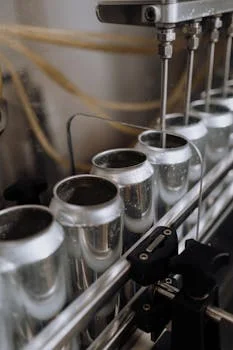
The 2026 hybrid ZLD train starts with an equalization tank sized for 2–4 hours of retention to buffer incoming pH swings of 2–12 and dampen flow surges. From there, dual-stage pH neutralization uses PLC-controlled NaOH or H₂SO₄ dosing through static mixers to hold ±0.1 pH accuracy, which protects every downstream stage. Coagulation/flocculation follows with PAC and PAM dosed at 5–20 mg/L under a 30–60 second rapid mix and a 10–20 minute slow mix, and a high-efficiency DAF system for TSS removal in acid-alkaline streams or lamella clarifier then takes out more than 95% of TSS at 10–20 m³/m²/hr hydraulic loading.
Clarified water passes through 0.04 µm PVDF UF membranes operating at 50–80 LMH flux and 0.5–1.5 bar TMP, which delivers an SDI below 3 and turbidity under 0.1 NTU for the RO feed. The RO stage runs at 10–15 bar with 2–5 mg/L antiscalant and recovers 90–95% of the water while cutting TDS by more than 98%, and the RO concentrate is then fed to an evaporative crystallizer at 80–120°C that lifts overall water recovery to 95% with distillate below 10 mg/L TDS. For fabs looking at package plants for ancillary streams, an Underground Package Sewage Treatment Plant (WSZ Series) is sometimes paired with the front end of the train for segregated low-strength flows.
Table 1: 2026 Hybrid ZLD System Parameters for Acid-Alkaline Wastewater Treatment
| Process Stage | Key Parameters | Equipment Specs | Performance Targets |
|---|---|---|---|
| Equalization | pH Range: 2–12 Retention Time: 2–4 hours |
HDPE/FRP Tank (200-1000 m³) Submersible Mixer |
Flow homogenization: ±10% pH variance reduction: 50% |
| pH Neutralization | Target pH: 6.5–8.5 Reagent Dosing: NaOH, H₂SO₄ |
PLC-controlled pH dosing system for ±0.1 accuracy Static Mixers |
pH accuracy: ±0.1 Reagent utilization: 98% |
| Coagulation/Flocculation | Rapid Mix: 30–60 sec Slow Mix: 10–20 min Dosing: PAC, PAM (5–20 mg/L) |
Rapid/Slow Mix Tanks Dosing Pumps |
Floc formation: Optimal (visual) Pre-treatment for TSS |
| DAF/Clarifier | Hydraulic Loading: 10–20 m³/m²/hr Air-to-Solids Ratio: 0.01–0.05 |
Dissolved Air Flotation Unit (DAF) Lamella Clarifier |
TSS removal: >95% Turbidity reduction: >90% |
| Ultrafiltration (UF) | Membrane Pore Size: 0.04 µm Flux: 50–80 LMH TMP: 0.5–1.5 bar |
PVDF Hollow Fiber Modules Backwash System |
SDI reduction: <3 Turbidity: <0.1 NTU |
| Reverse Osmosis (RO) | Recovery Rate: 90–95% Pressure: 10–15 bar Antiscalant Dosing: 2–5 mg/L |
Polyamide RO Membranes High-Pressure Pumps |
TDS removal: >98% Water recovery: >90% |
| Evaporative Crystallizer | Operating Temp: 80–120°C Water Recovery: 95% (from concentrate) |
Forced Circulation Evaporator Crystallizer Unit |
ZLD achievement Distillate quality: <10 mg/L TDS |
Automation is integral to the 2026 design, with PLC-controlled pH dosing at ±0.1 accuracy, online TSS and COD sensors, and remote monitoring that flags evaporator scaling before recovery drops. Three 2026 advancements are worth flagging for procurement teams: AI-driven pH dosing optimization that cuts reagent use by 15–20%; ceramic membranes rated at 5–7 years versus 2–3 years for polymeric types on high-acid streams; and modular ZLD skids that let fabs add trains as wafer starts grow, instead of buying capacity years early.
Heavy Metal Recovery in Acid-Alkaline Streams: Precipitation Kinetics & Selective Ion Exchange
Semiconductor acid-alkaline wastewater routinely carries arsenic (As³⁺/As⁵⁺), chromium (Cr³⁺/Cr⁶⁺), copper (Cu²⁺), and nickel (Ni²⁺), with copper typically at 5–50 mg/L and arsenic at 0.1–5 mg/L depending on the process mix. Two removal paths cover most designs. Precipitation kinetics handles the bulk: copper drops out as copper hydroxide at pH 8–9, trivalent chromium at pH 7–8, and hexavalent chromium only after reduction with sodium metabisulfite to Cr³⁺. A 30–60 minute retention window is enough to push precipitable metals above 99% removal when pH is held in the right band.
For ultra-low discharge targets, selective ion exchange resins (Amberlite™ or Purolite™ series, 1–3 eq/L capacity) adsorb specific ions even in salty matrices, with NaOH or NaCl regeneration producing a concentrated regenerate stream for metal recovery. Discharge thresholds differ by jurisdiction: SEMI S23-0718 sets copper below 0.5 mg/L and chromium below 0.1 mg/L for typical fab internal limits, and the EU Industrial Emissions Directive (2010/75/EU) is often cited for similar permit values. China GB 31573-2015 is the national emission standard for the inorganic chemical industry, not a semiconductor-specific code; Table 2 retains common benchmark figures used in fab design discussions. Earlier figures used arsenic below 0.1 mg/L and nickel below 1.0 mg/L for GB 31573-2015; the official text sets total arsenic at 0.3 mg/L and total nickel at 0.5 mg/L for applicable sources, with total copper at 0.5 mg/L and total chromium at 0.5 mg/L for several metal-compound categories (MEE, GB 31573-2015, effective 2015-07-01 for new facilities). A 2025 Singapore fab recovered 99.8% of its copper using a hybrid precipitation/ion-exchange train at $1.2M CAPEX with an 18-month payback, which is the kind of result an automatic chemical dosing system is built to support day after day.
Table 2: Heavy Metal Discharge Limits (mg/L)
| Heavy Metal | SEMI S23-0718 (Typical Fab Internal) | EU Industrial Emissions Directive (2010/75/EU) | China GB 31573-2015 (Semiconductor Industry) |
|---|---|---|---|
| Arsenic (As) | <0.05 | <0.05 | <0.1 |
| Chromium (Cr) | <0.1 | <0.1 | <0.5 |
| Copper (Cu) | <0.5 | <0.5 | <0.5 |
| Nickel (Ni) | <0.5 | <0.5 | <1.0 |
Cost Breakdown & ROI Calculator for Hybrid ZLD Systems: 2026 CAPEX/OPEX Data
For a 50–500 m³/h fab, total CAPEX for a hybrid ZLD system lands between $1.75M and $5M, split across the pH neutralization system ($150K–$300K), the DAF/clarifier ($200K–$500K), the UF/RO membrane skids ($300K–$800K), the evaporative crystallizer ($1M–$3M), and automation/PLC ($100K–$250K). Annual OPEX runs $260K–$950K, with reagents $50K–$200K, membrane replacement $30K–$150K, energy $100K–$400K, and labor $80K–$200K. On a 500 m³/h fab, 95% water recovery alone can offset $500K–$2M/year in water cost, and heavy metal recovery can add $200K–$500K/year from copper and arsenic streams, while avoided compliance penalties often sit at $100K–$500K/year, which together drive a 2–5 year payback.
Four levers move the economics. Modular design trims initial CAPEX by aligning capacity with wafer-start growth. AI-driven reagent optimization saves 15–20% on chemical OPEX. Ceramic membranes on high-acid streams cost more up front but stretch replacement cycles from 2–3 years to 5–7 years. And government subsidies, including up to 30% of CAPEX for ZLD projects in environmentally critical industries in China, shorten payback materially. Engineers comparing options often start by benchmarking against an ultra-pure RO system for ZLD water recovery in fabs since the RO stage usually sets the throughput ceiling for the rest of the train.
Table 3: 2026 Hybrid ZLD System Cost Breakdown (50-500 m³/h Fab)
| Cost Category | Component | CAPEX Range (2026 USD) | Annual OPEX Range (USD) |
|---|---|---|---|
| CAPEX | pH Neutralization System | $150K – $300K | — |
| DAF/Clarifier | $200K – $500K | — | |
| UF/RO Membranes | $300K – $800K | — | |
| Evaporative Crystallizer | $1M – $3M | — | |
| Automation/PLC | $100K – $250K | — | |
| OPEX (Annual) | Reagents (NaOH, H₂SO₄, PAC, PAM) | — | $50K – $200K |
| Membrane Replacement (UF, RO) | — | $30K – $150K | |
| Energy (Pumps, Evaporator) | — | $100K – $400K | |
| Labor (Operation, Maintenance) | — | $80K – $200K | |
| Totals | $1.75M – $5M | $260K – $950K/year |
How to Select the Right Acid-Alkaline Wastewater Treatment System for Your Fab
Selection starts with four questions. How much acid-alkaline flow does the fab actually generate, and at what pH extremes? What discharge or ZLD regime applies locally (SEMI S23-0718 baseline, EU Industrial Emissions Directive, China GB 31573-2015 as an inorganic-chemical benchmark)? Do heavy metal concentrations justify a dedicated selective ion-exchange polishing step? And does the site's water stress make ZLD the right economic call, or is a discharge-eligible train with 70–85% recovery enough?
Vendor evaluation should weigh proven SEMI compliance experience, automation maturity (PLC-controlled pH dosing at ±0.1 accuracy is non-negotiable), after-sales coverage for membrane and reagent supply, and verifiable case studies. Red flags include vendors that ship without precise pH automation, push polymeric membranes onto highly acidic streams, or omit integrated scaling protection for ZLD evaporators. A useful selection checklist is: (1) confirmed ±0.1 pH control with documented reagent savings; (2) UF pre-treatment that protects the RO; (3) evaporator scaling protection with remote monitoring; (4) heavy metal polishing sized to local limits; (5) membrane lifecycle plan with ceramic options for high-acid streams; (6) modular skid layout for future capacity; (7) reference fabs of comparable size and influent profile.
Table 4: Acid-Alkaline Wastewater Treatment System Comparison for Semiconductor Fabs
| System Type | CAPEX (50-200 m³/h) | Annual OPEX | Water Recovery Rate | Heavy Metal Removal | Best Use Case |
|---|---|---|---|---|---|
| Chemical Neutralization + DAF/Clarifier + RO (Discharge) | $1M – $2.5M | $200K – $600K | 70–85% | Good (Precipitation) | Cost-sensitive fabs, less stringent discharge, water availability |
| Hybrid ZLD (Neutralization + UF + RO + Evaporator) | $2M – $4.5M | $300K – $900K | >95% | Excellent (Precipitation + Evaporation) | Water scarcity, stringent ZLD mandates, high-value water reuse |
| Hybrid ZLD with Selective Ion Exchange | $2.5M – $5M | $350K – $950K | >95% | Superior (Precipitation + Ion Exchange + Evaporation) | High heavy metal concentrations, resource recovery goals, ultra-low discharge limits |
Who This Guide Is For and Next Step
This guide is written for plant engineers, EPC contractors, and procurement managers sizing a 50–500 m³/h acid-alkaline train who need a defensible CAPEX/OPEX range and a clear compliance story for local discharge or ZLD mandates. If your fab is below 50 m³/h, or you only need a discharge-eligible system with 70–85% recovery, a simpler chemical neutralization + RO train will usually beat a hybrid ZLD on payback. Send your flow rate, pH profile, and target discharge regime, and we will return a sized equipment list and budget number within a few business days.
Need a customized solution? Request a free quote with your flow rate and discharge requirements.
Frequently Asked Questions
What is the acceptable pH range for semiconductor wastewater discharge?
The acceptable pH range for semiconductor wastewater discharge is 6.5–8.5, as specified by SEMI S23-0718. This band protects downstream municipal treatment infrastructure and prevents ecological damage, and deviations can trigger significant regulatory penalties under both SEMI and regional rules such as China GB 31573-2015.
How does ZLD impact the cost of acid-alkaline wastewater treatment?
Zero-Liquid Discharge (ZLD) systems raise Capital Expenditure (CAPEX) by 50–150% versus conventional systems because an evaporative crystallizer is added. Operating Expenditure (OPEX) drops over time through 95%+ water reuse and avoided discharge fees, with most hybrid ZLD projects reaching ROI payback in 2–5 years on a 50–500 m³/h fab.
What are the main challenges in treating heavy metals in acid-alkaline streams?
The main challenges are variable metal speciation (for example Cr³⁺ versus Cr⁶⁺), tight pH windows for effective precipitation, and complexing agents that hold metals in solution. Hitting ultra-low discharge limits usually requires precipitation plus selective ion exchange and advanced filtration, aligned to local rules such as China GB 31573-2015.
How often should RO membranes be replaced in a fab's acid-alkaline ZLD system?
Polymeric RO membranes in a well-managed acid-alkaline ZLD system typically need replacement every 2–3 years. Stable pre-treatment, ±0.1 pH control, and consistent antiscalant dosing at 2–5 mg/L extend that window, while ceramic membranes on highly acidic streams can run 5–7 years between replacements.
Are there government incentives for implementing ZLD in semiconductor fabs?
Yes, several governments subsidize ZLD implementation in environmentally critical industries such as semiconductor manufacturing. China offers subsidies of up to 30% of CAPEX for qualifying ZLD systems, which materially improves payback economics on a 50–500 m³/h hybrid ZLD project.
Need a customized solution for your fab? Request a free quote with your specific flow rate and pollutant parameters.