HydropureWater Specifications Activated Carbon: Mechanisms and Design Numbers
For buyers comparing datasheets, HydropureWater specifications activated carbon choices come down to four numbers. Use 8x30 mesh GAC, an empty bed contact time of 3–10 minutes, hydraulic loading of 5–15 m³/m²/hr, and a bed depth of 0.6–1.8 m. Backwash near 1.5× service flow is what fluidizes that bed.
GAC of 0.5–4 mm (8x30 mesh) serves continuous flows of 5–50 m³/hr and can reach 90–98% COD removal when those numbers are met. Particle size, contact time, and vessel diameter have to be read together. A short bed at a high flux will miss the removal the mesh size implies on a datasheet.
Adsorption is a surface phenomenon: dissolved ions or molecules adhere to the carbon surface rather than dissolving into the bulk solid. One gram of high-quality activated carbon provides about 500 to 1,500 m² of internal surface area (HydropureWater technical data, 2025). Physisorption via Van der Waals forces drives most liquid-phase removals. Chemically impregnated grades support chemisorption for gases such as ammonia or hydrogen sulfide.
Engineers use the iodine number, typically 600–1200 mg/g, as a proxy for micropore volume and capacity for low-molecular-weight organics such as free chlorine and many VOCs. In industrial wastewater service, activated carbon often achieves about 99% free-chlorine removal, 90–95% VOC removal, 80–95% COD reduction, and 50–70% turbidity reduction when upstream solids are controlled. Three parameters dominate breakthrough risk: EBCT of 3–10 minutes, hydraulic loading of 5–15 m³/m²/hr, and minimum bed depth of 0.6–1.8 m. Most plants we size for chlorine residual sit at the 3-minute end of that band, not at 10 minutes.
Adsorption efficiency is pH-sensitive, with an optimal range of 6.0 to 8.0. Temperatures above 43°C can weaken physisorption and promote desorption. Oil and grease coat pores and blunt capacity regardless of surface area. High-turbidity or oily streams therefore need primary clarification, such as DAF systems for high-turbidity wastewater, before the carbon bed.
Dissolved oxygen can foster a biological activated carbon (BAC) effect that aids some organics yet raises backwash frequency as biofilm accumulates. That biofilm helps only when the permit cares about biodegradable COD and the backwash system can keep up. Oily food waste usually loses the BAC benefit because grease fills the pores first.
What COD Removal Can Carbon Filtration Achieve?
Activated carbon filtration commonly removes 80–95% of COD in industrial wastewater when EBCT, mesh size, and pretreatment match the influent organics. Companies specifying carbon for COD polishing still verify isotherms or pilot data because soluble, low-molecular-weight fractions breakthrough earlier than color bodies or larger dyes. Coal-based mesoporous carbons often outperform microporous coconut grades on large color-causing molecules, while coconut shell carbons excel on small VOC and disinfectant residuals.
COD targets alone do not size a filter. Hydraulic loading above 15 m³/m²/hr shortens contact and can strip fines into the effluent. Influent oils, suspended solids above about 10 NTU, or pH outside 6.0–8.0 cut effective capacity even when the iodine number looks adequate on the datasheet. Most plants we size for dye or food COD still fail the bed on oil, not on a low iodine number.
HydropureWater Activated Carbon 8x30 Mesh Sizing
An 8x30 mesh grade passes a No. 8 sieve (2.38 mm opening) and is retained on a No. 30 sieve (0.595 mm opening). That band remains the industrial default for continuous liquid service because it balances surface area against pressure drop. Mesh ratings define which U.S. sieves the media pass and which retain them.
| Carbon Type | Mesh Size | Particle Size Range | Primary Application |
|---|---|---|---|
| Powdered (PAC) | -325 Mesh | 1 – 150 μm | Batch treatment, pharmaceutical purity, emergency odor control |
| Granular (GAC) | 8x30 / 12x40 | 0.5 – 4.0 mm | Continuous industrial wastewater, municipal water, COD reduction |
| Extruded (EAC) | 4 mm Pellets | 0.8 – 4.0 mm | High-flow gas phase, low-pressure-drop liquid systems |
Finer 12x40 mesh speeds intraparticle diffusion but raises headloss and shortens runs between backwash. Coarser 8x30 mesh supports higher flow and longer cycles, yet may need greater bed depth for the same effluent quality. A 5 μm rating on a carbon block describes mechanical straining, not molecular adsorption inside the pores.
Raw-material pore architecture matters as much as mesh. Coconut shell carbon is highly microporous and suits chloroform, pesticides, and similar small molecules. Coal-based carbon spans more mesopores and handles tannins and color better. Uniformity coefficients below about 1.6 reduce fines migration into underdrains. Wood-based grades remain niche for high-molecular-weight decoloring.
Powdered carbon is dosed into a reactor and removed by flocculation when influent quality swings hard. Fixed-bed GAC fits continuous duty. One textile plant cut media replacement cost about 40% by moving from 12x40 to 8x30 mesh for dye removal without losing color performance, because terminal pressure drop arrived later. Upstream multi-media filters for pre-treatment keep suspended solids from blinding the bed so the carbon surface stays available for dissolved organics.
Which Mesh Size Fits Continuous Liquid Service?
Continuous liquid service should specify 8x30 mesh GAC unless the plant accepts higher headloss and needs faster diffusion from 12x40 mesh. The particle band is about 0.5–4 mm, which is the same 0.5 – 4.0 mm range in the table. Hold the uniformity coefficient below about 1.6 so fines do not pack the underdrain. Most plants we size for 5–50 m³/hr stay on 8x30 mesh and deepen the bed instead of going finer.
Flow Rates, Vessel Dimensions, and System Sizing
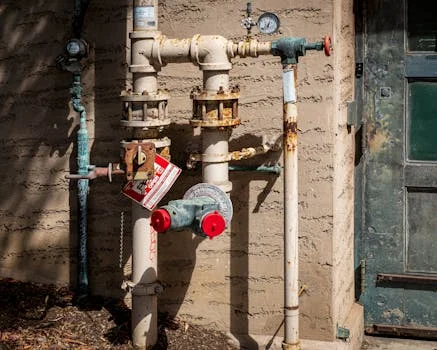
Standard industrial vessels hold linear velocity and contact time across the SACF service range of 0.5 m³/hr for pilots to over 10 m³/hr for plant units. The table below links service flow, backwash flow, diameter, and overall height for footprint and utility planning.
| Model | Service Flow Rate (m³/hr) | Backwash Flow Rate (m³/hr) | Vessel Diameter (Inch) | Total Height (mm) |
|---|---|---|---|---|
| SACF05 | 0.50 | 0.75 | 10” | 1582 |
| SACF10 | 1.00 | 1.50 | 14” | 1855 |
| SACF22 | 2.25 | 3.00 | 21” | 2010 |
| SACF50 | 5.00 | 7.50 | 30” | 2670 |
| SACF100 | 10.00 | 15.00 | 42” | 2635 |
Hub-and-lateral or header-and-lateral underdrains with wedge-wire nozzles keep service and backwash distribution even and limit unused dead zones. Read diameter and total height from the table before reserving a pad, because SACF100 at 10.00 m³/hr is 42” in diameter and 2635 mm tall. According to US EPA (2024), usual drinking-water GAC surface loading is 2 to 10 gpm/ft², and the cost model warns outside 0.5 to 10 gpm/ft². The industrial band used here remains 5–15 m³/m²/hr when oils and COD swing.
HydropureWater Backwash 1.5x Service Flow Design
Backwash for these industrial vessels is designed near 1.5× service flow so the bed fluidizes instead of compacting. A SACF50 at 5 m³/hr needs about 7.5 m³/hr of backwash water. SACF22 is the short row: 3.00 m³/hr of backwash on 2.25 m³/hr of service flow sits under the 1.5× rule. Inadequate backwash causes compaction, channeling, and a 20–30% drop in adsorption efficiency over time.
Clean-bed pressure drop typically sits at 0.1–0.3 bar per meter of bed depth (Envirogen data, 2025). Most plants we size accept that clean-bed loss and backwash on a rising differential, not on a fixed clock. The EPA 2024 cost model assumes a different basis: a backwash rate of 12 gpm/ft² for 10 minutes and bed expansion of at least 50 percent. Gravity designs in that model add 2 feet of freeboard above the expanded bed.
According to US EPA (2024), backwash is often every 24 to 72 hours, 14 to 30 days on filtered surface water, and 7 days or more on groundwater. If spent backwash returns to the head of the plant, US EPA (2024) limits that recycle to 5 to 10 percent of total system flow. Industrial wastewater with oil or dye usually needs a shorter interval than filtered drinking water.
When influent turbidity exceeds 10 NTU, enlarge the carbon stage or add pre-filtration so the bed does not act as a mechanical strainer. Chlorine residual control still needs a minimum EBCT of about 3 minutes; at 2.5 gpm that equates to 7.5 gallons of media. Air scour ahead of water backwash loosens biofilm and inorganic scale. For particulate protection ahead of carbon, review sand filter specifications for pre-treatment.
Lifetime OPEX after sizing is covered in the sibling note on Activated Carbon Filter Operating Cost: 2026 OPEX Breakdown, while maintenance line items appear under hydropurewater https://hydropurewater.com/blog/5233-activated-carbon-filter-operating-cost-2026-opex-breakdown.html.
HydropureWater EBCT 3 10 Minutes Industrial Wastewater
Industrial wastewater activated carbon should use an EBCT of 3–10 minutes when the duty is chlorine, COD polish, or ordinary VOCs. Media volume follows that contact time. The working formula is EBCT (min) = [Media Volume (m³) / Flow Rate (m³/hr)] × 60.
For 5 m³/hr and a 3-minute EBCT, volume = 0.25 m³ (250 L). VOC duty at a 10-minute EBCT on the same flow needs about 0.83 m³ (830 L).
Industrial beds usually start at 0.6 m depth, with 1.2–1.8 m preferred for high VOC or mixed organics. Carbon usage rate (CUR) = mass of carbon in the bed (kg) divided by water volume treated to breakthrough (m³). If 500 kg of carbon treats 2,000 m³ before effluent exceeds the limit, CUR = 0.25 kg/m³. Plotting the breakthrough curve lets operators schedule change-out before discharge limits are breached.
Hydraulic loading rate (HLR) = flow (m³/hr) / cross-sectional area (m²). A 1.0 m diameter vessel (area 0.785 m²) at 10 m³/hr yields HLR 12.7 m/hr, inside the usual 5–15 m/hr band for industrial GAC. Excessive HLR raises attrition and fines; very low HLR risks maldistribution and stagnant zones. Where pH or coagulant trim is needed upstream of carbon, an automatic chemical dosing system keeps feed chemistry inside the adsorption window.
According to US EPA (2024), EBCT equals bed volume divided by volumetric flow rate, and typical values for organic chemicals are 5 to 25 minutes. The VOC standard design in that 2024 cost model uses 7.5 minutes, inside the industrial 3–10 minute band. Purpose-built PFAS systems in the same report use a total EBCT of 7.6 to 26 minutes, and the model standard design uses 20 minutes. Do not stop a PFAS contactor at 10 minutes.
According to US EPA (2024), series vessels suit pressure trains once EBCT is above 10 minutes. Lead-lag operation can raise total capacity by about 10 to 30 percent. Atrazine designs in that model use 15 minutes EBCT and 12 months of carbon life. Radon designs use 30 minutes and 24 months.
Industrial COD or chlorine duty should not copy the radon bed. According to US EPA (2024), typical pressure-contactor bed depth is 2 to 8.5 feet, and typical gravity bed depth is 3 to 10 feet. The industrial range of 0.6–1.8 m sits in the shallow-to-mid part of that pressure range. Most plants we size for mixed organics move from the 0.6 m start toward 1.2–1.8 m once a pilot shows early VOC breakthrough.
How Long Should Empty Bed Contact Time Be?
Industrial wastewater carbon should use an EBCT of 3–10 minutes, and longer when the pollutant is PFAS or a stubborn VOC mix. Datasheets sometimes print the same limits as an EBCT of 3-10 minutes, loading of 5-15 m3/m2/hr, and iodine numbers of 600-1200 mg/g. At 5 m³/hr, 3 minutes is 0.25 m³ (250 L) and 10 minutes is about 0.83 m³ (830 L). Most plants we size for free chlorine run at the lower end and only stretch toward 10 minutes when pilot data show early VOC breakthrough.
HydropureWater Activated Carbon Iodine Number 600 1200
The iodine number, typically 600–1200 mg/g, is the proxy for micropore volume on low-molecular-weight organics such as free chlorine and many VOCs. An iodine number of 600–1200 mg/g ranks that pore volume, while mass transfer inside an activated carbon filter for wastewater treatment still depends on EBCT and pretreatment. A high iodine number does not rescue a bed blinded by oil or by turbidity above about 10 NTU.
According to US EPA (2024), set carbon life with a pilot study or a rapid small-scale column test. A Freundlich isotherm ignores fouling and competing organics, so it can overstate bed life. The model assumes 10 percent per year makeup carbon for on-site regeneration and 30 percent per year when regeneration is off-site. Most plants we size still change out on the breakthrough curve rather than on those makeup percentages.
What Ultrapure Water Standards Apply for Semiconductors?
Semiconductor ultrapure water (UPW) programs in the UK and globally reference SEMI F63 together with ASTM D5127 rather than a single national UPW statute. According to SEMI, the current guide is SEMI F63-1224 for facilities making devices at 32 nm line width and smaller. Engineers use that guide with SEMI F61 for system design and operation and with SEMI F75 for quality monitoring. The SEMI catalog still lists SEMI F63-1224 as current, marks SEMI F63-0521 as superseded, and includes hot ultrapure water in the F63-1224 scope.
According to ASTM D5127-13(2018), reapproved 15 October 2018, seven electronic-grade water types are defined at the point of distribution. Type E-1.3 covers line widths down to 0.032 μm, with on-line resistivity about 18.2 MΩ·cm at 25°C and TOC of 1 µg/L. According to ASTM, D5127-13(2018) is still the active standard, and the store page was last updated on 13 November 2018. The scope still describes seven classifications and line widths as low as 0.032 μm at the point of distribution, and Table 1 figures are guidelines because results can depend on the instrument.
ASTM D5127 lists activated carbon among pretreatment adsorbent options that remove selected organic and inorganic impurities before desalination and polishing. Carbon alone does not deliver UPW resistivity; it sits upstream of RO, electrodeionization, and mixed-bed polishers. For integrated pretreatment-to-polish trains, the Integrated Water Purification System (JY Series) packages clarification and filtration stages that protect downstream membranes and ion exchange.
Who This Guide Is For
Plant engineers, EPC designers, and procurement teams use this page to size liquid-phase GAC for COD, VOC, chlorine, or color polishing. Look elsewhere if you need only household pitcher cartridges, gas-phase odor beds without liquid hydraulics, or a PFAS package that needs more than the 3–10 minute EBCT above. Most plants we size send the seven items below before anyone picks a vessel diameter.
- Influent COD, VOC, chlorine, oil/grease, turbidity, pH, and temperature
- Required EBCT (3–10 min typical; longer for stubborn organics)
- Mesh grade (8x30 vs 12x40) and raw-material pore type
- Service and 1.5× backwash flow, freeboard, and underdrain type
- Pretreatment for solids and oils ahead of the carbon bed
- CUR estimate and media change-out logistics
- Discharge or UPW polish targets that define breakthrough
Need a vessel matched to your flow and pollutant list? Send flow rate, EBCT target, and key analytes with a Request a free quote.
Frequently Asked Questions
What mesh size should I specify for industrial wastewater GAC?
Most continuous industrial liquid systems specify 8x30 mesh GAC (0.5–4 mm) to balance kinetics against pressure drop. Choose 12x40 mesh when faster intraparticle diffusion matters more than headloss, and plan shorter runs between backwash. Hold the uniformity coefficient below about 1.6 so fines do not blind the underdrain. Coarser 8x30 mesh supports higher flow but may need more bed depth, and a 5 μm carbon-block rating is straining rather than pore adsorption.
How do I calculate activated carbon media volume from EBCT?
Media volume in cubic meters equals flow in m³/hr times EBCT in minutes, divided by 60. At 5 m³/hr and 3 minutes EBCT you need 0.25 m³ (250 L), and at 10 minutes about 0.83 m³ (830 L). Pair the volume with at least 0.6 m of bed depth and hydraulic loading of 5–15 m³/m²/hr. US EPA (2024) cites 5 to 25 minutes for drinking-water organics, so 3 minutes is a chlorine bed, not PFAS.
When is powdered carbon better than granular carbon?
Powdered activated carbon fits batch reactors and emergency odor or spill response, where the dose can change with each batch. Granular beds fit continuous flows that need a defined EBCT, backwash, and a predictable change-out. PAC in the sizing table is -325 mesh at 1 – 150 μm, and it still needs solids separation after dosing. Fixed-bed 8x30 or 12x40 mesh GAC is the default once the plant runs every shift.
What pretreatment protects an activated carbon filter?
Keep feed turbidity near or below 10 NTU and strip free oil before the carbon bed, or the pores blind and capacity collapses. Sand filtration, multi-media filtration, or DAF for oily waste keeps the carbon surface free for dissolved contaminants. Dosing may be required to hold pH between 6.0 and 8.0, because adsorption is weaker outside that window. Most plants we size also watch temperatures above 43°C, where physisorption weakens and desorption starts.
How often is industrial GAC media replaced?
Many industrial beds run 12–24 months between media changes when CUR, EBCT, and pretreatment stay in control. Life follows the breakthrough curve and the contaminant mass loaded, not the calendar alone. If 500 kg of carbon treats 2,000 m³ before the limit, CUR is 0.25 kg/m³. US EPA (2024) points to pilot tests or RSSCTs for that life, because one isotherm ignores competing organics and fouling.
Further Reading
Explore these in-depth articles on related wastewater treatment topics to build a comprehensive understanding of the treatment train:
- post-treatment disinfection options — essential for ensuring microbial safety after organic removal.
- pH adjustment for optimal adsorption — explains how to stabilize influent chemistry to maximize carbon life.
Understanding the synergy between these different treatment stages allows for the design of a more resilient and cost-effective water purification system, reducing the total cost of ownership over the equipment's lifecycle.