Water disinfection equipment specifications for industrial and municipal plants set measurable targets for microbial log reduction, hydraulic capacity, dose or residual, and byproduct limits. Chlorine dioxide generators commonly target 4-log (99.99%) virus and Giardia inactivation under EPA LT2ESWTR CT rules. UV systems sized to NSF/ANSI 55 Class A deliver 40 mJ/cm² for Cryptosporidium control when UVT and turbidity allow. Ozone trains often hold 0.4–1.0 mg/L residual for about 4 minutes per WHO practice. Flow duties span roughly 1–20,000 m³/h, with chemical dosing near ±1% and UV intensity control near ±5%.
Why Water Disinfection Equipment Specifications Matter
Water disinfection equipment specifications define the log reduction, peak flow, dose or residual, and byproduct limits a plant must meet before purchase. Typical packages target 3- to 4-log pathogen inactivation, size units on peak hourly flow rather than average flow, and document CT, UV dose, or ozone residual under stated temperature and water-quality conditions for regulatory compliance.
Purchase specs also convert those targets into hardware data: precursor purity, lamp life, energy use, footprint, and audit logging. Clear numbers let operators prove compliance after startup and avoid undersizing during hydraulic surges.
In 2023, a high-volume dairy plant in Wisconsin faced EPA enforcement with fines exceeding $250,000 after E. coli violations traced to undersized UV units. The plant had sized units on average flow rather than peak hydraulic load, so contact time collapsed during cleaning surges. According to the 2024 WHO Waterborne Disease Report cited in prior plant reviews, over 15% of industrial disinfection failures start with weak procurement specs. Failures drive recalls and lost permits as well as fines.
Municipal specs emphasize lasting residual to limit biofilm in distribution networks. Industrial specs for food, medical, or high-purity water emphasize kill rate, low DBPs, and product chemistry. Specs should cover five pillars: microbial log reduction, hydraulic capacity, dosing precision, footprint, and regulatory proof. Ignoring turbidity effects on UV transmittance or ozone energy use can raise total cost of ownership by 30–50% over the equipment life.
Core Water Disinfection Parameters: What Every Specification Must Include
Engineers must replace vague labels such as "high capacity" with numbers tied to conditions. State average flow and peak hourly flow (PHF) in m³/h so surge events do not cause breakthrough. For chlorine dioxide, dosing accuracy near ±1% helps hold residual without exceeding chlorite limits. UV intensity control near ±5% supports dose delivery as lamps age.
Microbial kill is stated in log reduction units. A 3-log cut is 99.9% removal; a 4-log cut is 99.99%. Under the EPA Long Term 2 Enhanced Surface Water Treatment Rule (LT2ESWTR), many surface-water systems must show 4-log virus and Giardia inactivation credit. Contact time (CT)—disinfectant concentration C times time T—is the standard chemical efficacy metric and must be tabulated for temperature and pH.
| Parameter | Engineering Benchmark (2025) | Standard/Reference |
|---|---|---|
| Flow Capacity | 1 – 20,000 m³/h (application dependent) | Plant Hydraulic Profile |
| Microbial Log Reduction | 3-log (99.9%) Bacteria; 4-log (99.99%) Viruses | EPA LT2ESWTR |
| Dosing Accuracy | ±1% (Chemical); ±5% (UV Intensity) | NSF/ANSI 55 / Manufacturer Data |
| Residual Concentration | 0.2 – 1.0 mg/L (Cl); 0.4 – 1.0 mg/L (O³) | WHO Guidelines |
| Power Consumption | 0.1 – 0.3 kWh/m³ (UV); 10 – 15 kWh/kg (Ozone) | 2024 DOE Benchmarks |
| Equipment Footprint | 1.2 – 6.0 m² (skid-mounted) | HydropureWater Specs |
Chlorine Dioxide Generators: Specifications, Performance, and Compliance
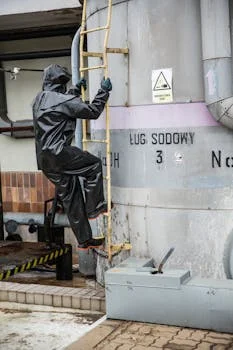
Chlorine dioxide (ClO₂) is widely specified for industrial water because it works across pH 4–10 and penetrates biofilms better than free chlorine. It forms far fewer trihalomethanes (THMs) and haloacetic acids (HAAs) than chlorination. Specs for a Chlorine Dioxide (ClO₂) Generator for Water Disinfection should state production rate in g/h, ClO₂ purity, precursor conversion, and PLC dosing range.
High-purity generators such as HydropureWater’s use multi-stage reaction trains to reach ClO₂ purity between 95% and 99%. Lower purity raises chlorite and chlorate. Under EPA 40 CFR 141.64, the chlorite MCL remains 1.0 mg/L. Capacities typically run from 50 g/h for small industrial loops to 20,000 g/h for municipal works. PLC dosing of 0.1 to 5.0 mg/L with ORP feedback supports residual control in real time.
A 2024 textile plant case in Bangladesh reported a 60% THM cut after switching from liquid bleach to high-purity ClO₂ while holding 4-log pathogen reduction. Maintenance specs should require quarterly pump calibration and annual check-valve or membrane service. Annual maintenance often falls between $1,200 and $4,500 by capacity. For residual protection on long pipe runs, specify the same Chlorine Dioxide (ClO₂) Generator for Water Disinfection with containment and leak detection.
| Specification Item | 500 g/h Unit Data | 10000 g/h Unit Data |
|---|---|---|
| Production Capacity | 500 g/h | 10,000 g/h |
| ClO² Purity | >95% | >98% |
| Power Supply | 220V, 1.5 kW | 380V, 8.5 kW |
| Footprint | 1.2 m² | 3.8 m² |
| Control Interface | Siemens PLC / Touchscreen | Siemens PLC / SCADA Integration |
UV Disinfection Systems: Specifications, Dose Requirements, and Limitations
Ultraviolet disinfection inactivates microbes by damaging DNA and RNA. The core UV specification is dose in millijoules per square centimeter (mJ/cm²). NSF/ANSI 55 Class A still requires a minimum dose of 40 mJ/cm² for systems treating microbiologically unsafe water, including Cryptosporidium and Giardia targets. The 2024 edition of NSF/ANSI 55 keeps that Class A dose and the Class B supplemental dose of 16 mJ/cm². For resistant viruses such as adenovirus, the EPA Ultraviolet Disinfection Guidance Manual lists doses up to 186 mJ/cm² for 4-log credit.
UV performance depends on UV transmittance (UVT) and turbidity. Specs usually cap turbidity near <1 NTU; above that, solids can shield pathogens and cut efficacy by as much as 50%. Pre-filtration to about 5 microns is common when UVT falls. Low-pressure high-output amalgam lamps typically last 9,000 to 12,000 hours. A German brewery report linked strict UV dose control to 99.99% microbial reduction and about 40% lower chemical spend.
| UV System Parameter | Standard Specification | Operational Limit |
|---|---|---|
| Design Dose | 40 mJ/cm² (Standard); 186 mJ/cm² (High) | Min 16 mJ/cm² for basic bacteria |
| UV Transmittance (UVT) | >95% (Optimal) | <75% requires pre-treatment |
| Turbidity | <1 NTU | >5 NTU causes shielding failure |
| Lamp Technology | Amalgam LPHO | 9,000-hour replacement cycle |
| Flow Range | 1 – 5,000 m³/h (Modular) | Velocity <3 m/s to prevent vibration |
Which UV systems meet Class A reuse standards?
NSF/ANSI 55 Class A UV systems deliver a validated 40 mJ/cm² dose for Cryptosporidium, Giardia, bacteria, and viruses at the stated UVT and flow. That Class A label covers point-of-entry and point-of-use drinking-water units, not every municipal reuse permit by itself. For onsite or Title-style Class A reuse trains, buyers still size reactors to EPA UVDGM pathogen credits, require sensor alarms, and add filtration so turbidity stays below about 1 NTU at peak flow.
How do I select compact UV for onsite reuse?
Compact UV for onsite reuse should be selected on peak reuse flow in m³/h, measured UVT, target log credits, and sleeve-cleaning access in a small footprint. Prefer amalgam LPHO reactors with intensity sensors, automatic wipers, and spare capacity of 10–20% for lamp aging. If UVT is below about 75% or turbidity exceeds 1 NTU, add 5-micron pre-filtration before the reactor. Compare energy at 0.1–0.3 kWh/m³ against chemical residual needs downstream.
Ozone Disinfection Systems: Specifications, Byproduct Risks, and Applications

Ozone (O₃) is a strong oxidant that can inactivate pathogens far faster than chlorine under the same residual. Specs state generator capacity in g/h and gas-phase concentration, commonly 6–12% by weight with oxygen feed. For 4-log virus work, WHO practice still points to 0.4–1.0 mg/L residual held for about 4 minutes. That profile suits high-purity duties such as Medical Wastewater Treatment Systems with Ozone Disinfection (99%+ Kill Rate).
Ozone energy use is high, often 10–15 kWh per kilogram of ozone produced including cooling and feed-gas prep. If bromide exceeds about 50 µg/L, bromate can form. EPA 40 CFR 141.64 keeps the bromate MCL at 0.010 mg/L. Specs must then include bromate control such as pH adjustment or ammonia addition. Contact tanks and off-gas destruct units push footprints toward 2.0–6.0 m².
| Ozone Specification | Industrial Grade Benchmark | Application Note |
|---|---|---|
| Ozone Dose | 0.5 – 2.0 mg/L | Target 0.4 mg/L residual |
| Generation Method | Corona Discharge | Requires dried air or oxygen feed |
| Contact Time | 4 – 10 minutes | Dependent on water temperature |
| Energy Efficiency | 12 kWh/kg O³ | Includes cooling and feed gas prep |
| Byproduct Control | Bromate <0.01 mg/L | Required for bromide-rich waters |
Disinfection Method Comparison: Chlorine Dioxide vs. UV vs. Ozone
Technology choice trades CAPEX, OPEX, residual need, and DBP risk. Chlorine dioxide suits municipal and large industrial loops that need lasting residual in long pipe runs. UV fits food and beverage lines where chemical taste or residual is unwanted. Ozone fits pharma and semiconductor water where TOC reduction must accompany disinfection.
The matrix below compares the three methods using the same 2025 engineering benchmarks used in plant bid packages.
| Feature | Chlorine Dioxide | Ultraviolet (UV) | Ozone (O³) |
|---|---|---|---|
| Residual Protection | Excellent (Long-lasting) | None | Minimal (Short-lived) |
| Biofilm Control | Superior | Poor (Surface only) | Good |
| Byproduct Risk | Low (Chlorite) | Zero | High (Bromate) |
| Energy Demand | Low (1.5 - 15 kW) | Moderate (0.1 kWh/m³) | High (15 kWh/kg) |
| Maintenance | Moderate (Calibration) | High (Lamp cleaning) | Complex (Generators) |
| Best Application | Municipal / Cooling Towers | Food & Beverage / Reuse | Pharma / Bottled Water |
If residual protection is mandatory and turbidity is high, chlorine dioxide is usually the viable primary choice. If the duty is one-pass clear water, UV often yields the lowest lifecycle cost. Choose ozone only when oxidation demand exceeds what ClO₂ or UV can deliver.
Compliance Standards for Disinfection Equipment: EPA, WHO, and EU Requirements

EPA LT2ESWTR still sets Cryptosporidium bin credits from Bin 1 to Bin 4, where Bin 4 can require up to 5.5-log Crypto treatment. Stage 2 DBPR limits remain TTHM at 80 µg/L and HAA5 at 60 µg/L, which often pushes plants away from free chlorine alone. According to 40 CFR 141.64, bromate MCL stays 0.010 mg/L and chlorite MCL stays 1.0 mg/L.
Earlier EU guidance referenced Directive 98/83/EC, including a 0.2 mg/L ClO₂ residual figure used in many bid sheets. The 2020 recast, Directive (EU) 2020/2184, now sets bromate at 10 µg/L (0.010 mg/L) and sets chlorite and chlorate at 0.25 mg/L, or 0.70 mg/L where chlorine dioxide disinfection is used. Validate compliance with challenge testing—MS2 coliphage for UV or Bacillus subtilis spores for chemical systems—plus continuous residual or intensity logging for audits.
| Regulation | Key Requirement | Validation Method |
|---|---|---|
| EPA LT2ESWTR | 4-log Virus / 3-log Giardia | CT Tables / Log Reduction Study |
| EPA Stage 2 DBPR | THM <80 µg/L; HAA5 <60 µg/L | Quarterly DBP Sampling |
| WHO Guidelines | 0.5 mg/L Free Chlorine Residual | Amperometric Sensors |
| NSF/ANSI 55 | 40 mJ/cm² (Class A) | Biodosimetry Challenge Test |
| EU 98/83/EC | 0.2 mg/L ClO² Residual | Colorimetric DPD Testing |
How to Select Disinfection Equipment: A Step-by-Step Decision Framework
Procurement teams should run a six-step check before awarding a disinfection package. The sequence below reduces undersizing and wrong-technology risk.
- Define the Application: Separate municipal residual duty from food process water or industrial reuse. Cross-check hygiene overlap using how healthcare-grade wastewater systems ensure compliance in food processing.
- Analyze Water Quality: Measure turbidity, UVT, pH, temperature, and bromide. Turbidity above 1 NTU disqualifies bare UV without pre-filtration.
- Determine Required Log Reduction: Map pathogen credits to local rules such as Minnesota’s 2025 industrial wastewater treatment standards and compliance requirements.
- Size Based on Peak Flow: Design on Peak Hourly Flow, not average flow. Keep 10–20% spare for growth and lamp or catalyst aging.
- Evaluate Lifecycle Costs: Compare CAPEX with 10-year OPEX for energy, chemicals, lamps, and labor. Ozone often leads both CAPEX and OPEX; ClO₂ is usually more balanced.
- Verify Compliance Documentation: Require EPA/NSF validation reports and PLC data logging for permit audits.
Selection checklist: (1) pathogen and log target, (2) PHF and redundancy, (3) UVT or bromide risk, (4) residual vs one-pass duty, (5) DBP MCLs, (6) maintenance access, (7) validation package. Avoid skipping secondary containment for ClO₂ precursors and underestimating UV sleeve cleaning in hard water.
Who this is for: plant engineers, EPC designers, and procurement managers writing bid specs for municipal or industrial disinfection. Who should look elsewhere: buyers seeking only residential POU filters without industrial flow or compliance documentation. Next step: send peak flow, water quality, and pathogen targets so a duty sheet can be sized against ClO₂, UV, or ozone options.
Frequently Asked Questions
What is the most effective water disinfection method for industrial wastewater?
Chlorine dioxide is usually the strongest practical choice for industrial wastewater because it sustains 4-log kill in turbid water and attacks biofilm inside piping. Ozone can outperform on high-purity streams but often costs more in energy and bromate control. UV works when the water is clear and no distribution residual is required.
How do I calculate the required UV dose for my application?
UV dose equals intensity times exposure time: Dose (mJ/cm²) = UV Intensity (mW/cm²) × Exposure Time (seconds). For many municipal and food-grade duties, NSF/ANSI 55 Class A still targets 40 mJ/cm² for Cryptosporidium control. Higher virus credits may need doses approaching 186 mJ/cm² per EPA UVDGM tables at the design UVT.
What are the primary byproducts of chlorine dioxide disinfection?
The main byproducts are chlorite and chlorate. Generators should hold ClO₂ purity above 95% to limit those ions. The EPA chlorite MCL remains 1.0 mg/L under 40 CFR 141.64. Directive (EU) 2020/2184 sets chlorite and chlorate at 0.25 mg/L, or 0.70 mg/L when chlorine dioxide is the disinfectant.
Can UV disinfection replace chlorine in municipal water treatment?
UV can provide the primary inactivation step, but it leaves no lasting residual in the distribution network. Most municipal plants therefore pair UV with a low chlorine or chlorine dioxide residual for pipe protection. One-pass industrial reuse loops can rely on UV alone when downstream storage risk is low.
What is the expected lifespan of a chlorine dioxide generator vs. UV lamps?
A well maintained chlorine dioxide generator typically lasts 10–15 years with quarterly calibration. UV lamps are consumables rated about 9,000 to 12,000 hours, or roughly 12–14 months of continuous duty. Lamp replacement on schedule is required to keep the validated design dose.