Healthcare-Grade Wastewater Systems for Food Processing: 2025 Engineering Guide with Compliance, Costs & Equipment Checklist
Healthcare-grade wastewater systems for food processing must achieve 99.99% microbial reduction (per FDA 21 CFR Part 110) while removing pharmaceutical residues, PFAS, and organic loads (BOD/COD up to 5,000/10,000 mg/L in meat processing). Key challenges include pH swings (3–12 during sanitation cycles), high FOG content (up to 3,000 mg/L in dairy), and overlapping regulatory requirements: FDA pretreatment standards, EPA 40 CFR Part 405 (for dairy/meat), and local sewer district limits (e.g., 250 mg/L BOD). Systems typically combine dissolved air flotation (DAF) for FOG removal, biological treatment for BOD/COD reduction, and advanced disinfection (chlorine dioxide or ozone) for healthcare-grade effluent.
Why Food Processing Plants Need Healthcare-Grade Wastewater Systems
FDA 21 CFR Part 110 mandates that facilities handling ready-to-eat (RTE) foods implement wastewater controls capable of 99.99% microbial reduction to prevent cross-contamination within the production environment. Conventional municipal pretreatment often fails to address the specific microbial risks found in food process wastewater (FPWW). A study published in PMC documented that 48% of FPWW samples contained bacteria resistant to third-generation antibiotics, despite receiving some form of disinfection. This highlights the gap between standard industrial pretreatment and the healthcare-grade standards required to mitigate biological risks in high-sensitivity food sectors.
Beyond microbial control, EPA 40 CFR Part 405 establishes categorical limits for dairy and meat processing that are significantly more stringent than general industrial standards. For dairy plants, the EPA sets BOD limits near 110 mg/L and TSS at 60 mg/L, while meat processing limits are typically 250 mg/L for BOD and 125 mg/L for TSS. Failure to meet these targets results in aggressive sewer surcharges. For example, a Wisconsin-based cheese plant recently reported paying $12,000 per month in surcharges for consistently exceeding a 300 mg/L BOD threshold. These financial penalties often exceed the monthly operational cost of a dedicated healthcare-grade treatment system.
Modern food processing also introduces emerging contaminants that bypass conventional systems. PFAS concentrations as high as 185 μg/L and pesticide transformation products like methomyl oxime at 40 μg/L have been detected in food plant effluents. These "healthcare-grade" risks require advanced oxidation or membrane filtration to prevent environmental liability. internal plant operations create volatile conditions; a Scottish brewery was fined £10,000 for a caustic waste discharge that caused a municipal sewer overflow. Managing pH swings from 3 to 12 during Clean-in-Place (CIP) cycles is a technical prerequisite for compliance.
| Risk Factor | Conventional Standard | Healthcare-Grade Requirement | Impact of Non-Compliance |
|---|---|---|---|
| Microbial Load | 90% Reduction | 99.99% (4-Log) Reduction | FDA violations; RTE product recalls |
| PFAS/Chemicals | Not Monitored | <1 μg/L Target | Long-term environmental litigation |
| BOD/COD | <300 mg/L BOD | <110 mg/L BOD (Dairy) | Surcharges ($5k–$15k/month) |
| pH Variability | 6.0–9.0 | 3.0–12.0 (Resilience) | Fines; Equipment corrosion |
Healthcare-Grade Wastewater Standards: FDA, EPA, and Local Limits Compared

Regulatory compliance in food processing requires navigating a hierarchy where FDA safety mandates for pathogens often override more lenient local sewer limits. While a municipal district might allow 250 mg/L of BOD, the FDA focus remains on the elimination of Listeria, Salmonella, and E. coli to prevent aerosolized pathogens from entering food prep areas. Validation of these systems often requires EPA Method 1603 for E. coli monitoring, ensuring that the effluent meets healthcare-grade disinfection standards before discharge or reuse.
The conflict between authorities often surfaces in the management of mixed waste streams. In many jurisdictions, if a plant produces both processed food and pharmaceutical-grade additives, the more stringent healthcare-grade standards take precedence. For instance, a California-based plant faced surcharges for exceeding 200 mg/L TSS despite being within its original permit, because a new local ordinance reclassified its waste stream as "high-strength." Effective compliance strategies involve proactive negotiation with regulators, using healthcare-grade wastewater treatment standards and compliance strategies to demonstrate that on-site treatment exceeds municipal capabilities.
| Parameter | FDA 21 CFR Part 110 | EPA 40 CFR Part 405 (Dairy) | Local Sewer Limits | Healthcare-Grade Target |
|---|---|---|---|---|
| BOD (mg/L) | N/A (Safety Focus) | 110 mg/L | 250–350 mg/L | <50 mg/L |
| TSS (mg/L) | N/A | 60 mg/L | 200–300 mg/L | <20 mg/L |
| E. coli | 99.99% Kill | N/A | <200 CFU/100ml | Non-detectable |
| PFAS (μg/L) | Monitoring Suggested | Emerging | Varies (0.07–10) | <1 μg/L |
| pH Range | N/A | 6.0–9.0 | 5.5–10.0 | 6.5–8.5 (Stable) |
For facilities in regions with evolving regulations, such as those looking at wastewater compliance for healthcare-standard facilities, the priority is establishing a validated disinfection log reduction. This involves real-time monitoring of Oxidation-Reduction Potential (ORP) or residual disinfectant levels to prove that every gallon of water has been treated to a healthcare-grade microbial baseline.
Wastewater Treatment Technologies for Healthcare-Grade Effluent
Selecting the appropriate technology depends on the food sub-sector’s specific waste profile, such as the high fat, oil, and grease (FOG) content in dairy or the high microbial load in ready-to-eat meat facilities. A high-efficiency DAF system for FOG and TSS removal in food processing is the industry standard for primary treatment, utilizing micro-bubble technology (40–60 μm) to achieve 92–97% TSS removal and up to 80% FOG removal. This is critical for meat and dairy plants where FOG concentrations can reach 3,000 mg/L, which would otherwise blind secondary biological membranes.
For secondary and tertiary treatment, Membrane Bioreactor (MBR) systems provide the highest level of organic and microbial removal. An MBR system for 99.99% pathogen kill and BOD/COD removal utilizes PVDF membranes with a 0.1 μm pore size, effectively acting as a physical barrier to bacteria and many viruses. MBRs are particularly suited for beverage and RTE food plants because they produce high-quality effluent with 99% BOD removal and energy consumption profiles of 0.8–1.2 kWh/m³. For disinfection, an on-site ClO₂ generator for 99.99% microbial reduction in food processing wastewater offers superior residual control compared to UV, especially in streams with high turbidity.
| Technology | BOD Removal | Pathogen Kill | FOG Removal | CapEx ($/m³/day) | Best For |
|---|---|---|---|---|---|
| DAF | 30–50% | Low | 90%+ | $500–$1,500 | Dairy, Meat (Primary) |
| MBR | 99% | 99.99% | Moderate | $2,000–$5,000 | Ready-to-Eat, Beverage |
| Biological A/O | 90–95% | Low | Low | $1,500–$3,000 | Large Beverage Plants |
| ClO₂ / Ozone | N/A | 99.999% | N/A | $200–$800 | All (Healthcare-Grade) |
| RO / GAC | 99%+ | 99.999% | N/A | $3,000–$7,000 | PFAS/Pharmaceuticals |
Advanced disinfection choices are often a trade-off between capital and operational costs. Chlorine dioxide (ClO₂) provides 99.99% kill rates at a cost of $0.05–$0.15/m³, whereas ozone offers a 99.999% kill rate with no chemical residuals but higher capital and energy costs ($0.20–$0.40/m³). For facilities required to remove PFAS, Granular Activated Carbon (GAC) or Reverse Osmosis (RO) must be integrated. RO provides 99%+ efficiency for PFAS and pharmaceutical residues, though it requires significant energy and produces a concentrate stream that must be managed.
Cost Breakdown: Healthcare-Grade Wastewater Systems for Food Processing
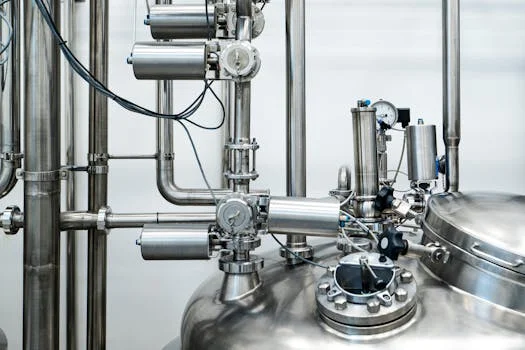
Capital investment for healthcare-grade systems is driven by capacity and the required log reduction for pathogens. A standard DAF system for a medium-sized plant (up to 300 m³/h) typically ranges from $50,000 to $300,000, with operational costs hovering between $0.10 and $0.30 per cubic meter. In contrast, MBR systems require a higher initial outlay, often $100,000 to $1,000,000 for capacities between 10 and 2,000 m³/day, but they significantly reduce the need for downstream disinfection and tertiary filtration.
Operational ROI is most visible in the elimination of municipal surcharges. Consider a 100,000 L/day dairy plant that pays $8,000 monthly in BOD and TSS surcharges. By installing a combined DAF and ClO₂ system, the plant can reduce its BOD from 2,000 mg/L to under 250 mg/L. With an estimated total project cost of $180,000 and monthly operational costs of $1,200, the plant achieves a payback period of approximately 26 months. This calculation does not account for the additional value of risk mitigation against FDA violations or product recalls. For more detailed regional benchmarks, engineers can consult the wastewater treatment plant ROI and cost calculator.
| System Component | Capacity (m³/day) | Capital Cost ($) | OpEx ($/m³) | Lifespan (Years) |
|---|---|---|---|---|
| DAF (Primary) | 100–5,000 | $50k–$300k | $0.15 | 15–20 |
| MBR (Secondary) | 50–1,000 | $150k–$750k | $0.55 | 10–15 (Membranes 5) |
| ClO₂ Generator | Up to 20,000 g/h | $20k–$150k | $0.08 | 10–12 |
| Ozone System | Varies | $50k–$500k | $0.30 | 10–15 |
| GAC Filter | 100–1,000 | $30k–$120k | $1.25 | Media: 1 |
Maintenance costs for healthcare-grade systems generally average 3–5% of the capital cost per year. For MBRs, the primary maintenance expense is membrane cleaning and eventual replacement every 3 to 5 years. For disinfection systems, the cost is centered on precursor chemicals (for ClO₂) or electricity and oxygen supply (for ozone). Understanding how DAF systems remove FOG from food processing wastewater can help engineers optimize chemical dosing, which is the largest variable in operational expenditure.
Compliance Checklist: Meeting Healthcare-Grade Standards in Food Processing
Achieving healthcare-grade compliance is a multi-stage process that begins with rigorous waste stream characterization. Engineers must test not only for standard parameters like BOD and TSS but also for FOG, pH variability, and specific pathogens. Sampling should be performed weekly for organic loads and quarterly for emerging contaminants like PFAS to build a defensible data set for regulators.
- Step 1: Waste Stream Characterization – Conduct a 24-hour composite sampling to identify peak BOD/COD loads and pH swings during CIP cycles.
- Step 2: Regulatory Mapping – Determine which authority takes precedence. For RTE foods, FDA 21 CFR Part 110 requirements for pathogen reduction usually trump local sewer limits.
- Step 3: Technology Selection – Match the equipment to the waste stream. Use DAF for high FOG (dairy/meat) and MBR for high microbial reduction (RTE foods).
- Step 4: Disinfection Validation – Conduct third-party microbial challenge tests using EPA Method 1603. Ensure the system achieves a 4-log (99.99%) reduction of E. coli.
- Step 5: Monitoring and Reporting – Install online sensors for pH, TSS, and ORP. Maintain digital logs for FDA/EPA audits, ensuring 24-hour data availability.
- Step 6: Contingency Planning – Develop automated protocols for pH excursions. For example, if pH exceeds 10.0, the system should trigger an emergency acid dosing or divert flow to an equalization tank.
Choosing the Right System for Your Food Processing Plant
The decision framework for selecting a healthcare-grade system depends on plant size and the primary regulatory driver. Small plants (under 50 m³/day) typically benefit from compact, automated solutions such as a DAF-4 combined with a small-scale ClO₂ generator. These systems require less than 10 m² of footprint and are PLC-controlled, making them ideal for facilities with limited specialized wastewater staff.
Medium-sized plants (50–500 m³/day) often require modular scalability. An MBR system is frequently the preferred choice here, as it can be expanded by adding membrane cassettes as production volume increases. Large facilities (over 500 m³/day) generally require a multi-stage approach: DAF for primary FOG removal, biological A/O or MBR for secondary treatment, and RO or GAC for PFAS removal. Redundancy is critical at this scale; dual disinfection systems (e.g., UV followed by ClO₂) ensure that the plant remains in compliance even during equipment maintenance.
A case study of a 200 m³/day meat processing plant in Texas illustrates the effectiveness of this approach. The facility was facing $6,000 per month in surcharges due to BOD levels of 2,500 mg/L. By installing a DAF followed by a healthcare-grade disinfection unit, they reduced effluent BOD to 150 mg/L and achieved a 5-log microbial reduction. The surcharges were eliminated entirely, providing a full return on investment in under two years while satisfying all FDA safety audits.
Frequently Asked Questions
What is the difference between food-grade and healthcare-grade wastewater?
Standard food-grade wastewater treatment focuses on meeting municipal BOD and TSS limits. Healthcare-grade treatment adds a focus on 99.99% pathogen kill rates, removal of pharmaceutical residues (like antibiotics used in livestock), and elimination of emerging contaminants like PFAS, aligning with FDA safety standards for ready-to-eat food environments.
Can DAF systems alone meet healthcare-grade standards?
No. While DAF is highly effective at removing FOG and TSS, it does not provide the microbial reduction or dissolved organic removal required for healthcare-grade effluent. It must be paired with biological treatment (like MBR) and advanced disinfection (like Chlorine Dioxide).
How do pH swings affect healthcare-grade disinfection?
High or low pH can significantly reduce the efficacy of disinfectants like chlorine or UV. Healthcare-grade systems include automated neutralization tanks to stabilize pH between 6.5 and 8.5 before the disinfection stage to ensure a consistent 4-log pathogen kill.
Is MBR better than traditional activated sludge for food processing?
Yes, for healthcare-grade requirements. MBR provides a physical barrier (0.1 μm) that traditional clarifiers lack, ensuring much higher TSS removal and pathogen retention, which is essential for meeting FDA 21 CFR Part 110 standards.