Punjab’s Hospital Wastewater Problem: Why Treatment is Urgent
Hospitals in Punjab are critical hubs for public health, yet they generate significant volumes of wastewater laden with pathogens, pharmaceuticals, and heavy metals. On average, Punjab’s hospitals produce between 5 and 15 cubic meters of wastewater per 100 beds daily, according to a 2023 EPD Punjab survey of 47 facilities. This effluent is not merely water; it’s a complex cocktail of contaminants. Influent characteristics frequently show Biochemical Oxygen Demand (BOD) levels exceeding 300 mg/L, Chemical Oxygen Demand (COD) between 300–1,200 mg/L, Total Suspended Solids (TSS) from 200–800 mg/L, and fecal coliform counts soaring above 106 Colony Forming Units (CFU) per 100 mL. A 2022 study in Faisalabad, confirmed by top SERP data, also highlighted the presence of pharmaceutical residues like ciprofloxacin (0.5–5 µg/L) and paracetamol (10–50 µg/L). The implications for public health are dire; a 2024 Punjab Health Department report revealed that 62% of hospital wastewater samples in Lahore exceeded World Health Organization microbial limits. Non-compliance with environmental regulations carries severe financial penalties, with the EPD Punjab levying fines of up to Rs500,000 for violations under Section 17 of the Environment Protection Act 2012. This necessitates an urgent upgrade of wastewater treatment systems to meet stringent standards and protect both community health and the environment.
Punjab EPD Regulations: What Hospitals Must Achieve in 2025
The Punjab Environment Protection Department (EPD Punjab) has established clear effluent standards for hospital wastewater, effective from 2024, to safeguard water bodies and public health. Hospitals must ensure their treated wastewater consistently meets the following parameters: Total Suspended Solids (TSS) below 30 mg/L, Chemical Oxygen Demand (COD) below 100 mg/L, Biological Oxygen Demand (BOD) below 30 mg/L, and zero fecal coliform (0 CFU/100 mL). The pH of the discharged effluent must also be maintained within a neutral range of 6 to 9. Beyond these core effluent quality parameters, EPD Punjab mandates specific disinfection requirements. This can be achieved either through maintaining a chlorine residual of 1–2 mg/L or by applying a UV disinfection dose of at least 40 mJ/cm², as detailed in the EPD Punjab 2023 guidelines. Crucially, effective waste segregation is a cornerstone of hospital waste management. The EPD Punjab Hospital Waste Rules 2022 specify a color-coding system: red for infectious waste, yellow for sharps, and black for chemical waste. Non-risk waste is categorized separately, with blue bins for paper and green bins for organic materials. To operate legally, hospitals must obtain EPD Punjab authorization by submitting Form HW-1 through the EPD Punjab’s Hospital Waste Authorization portal (https://epd.punjab.gov.pk/authorization-form), including detailed treatment system specifications, a waste inventory, and a Rs5,000 application fee. EPD Punjab conducts unannounced audits every six months, as per a 2024 compliance memo, to ensure ongoing adherence to these regulations.
| Parameter | Standard | Unit |
|---|---|---|
| Total Suspended Solids (TSS) | < 30 | mg/L |
| Chemical Oxygen Demand (COD) | < 100 | mg/L |
| Biological Oxygen Demand (BOD) | < 30 | mg/L |
| Fecal Coliform | 0 | CFU/100 mL |
| pH | 6 – 9 | - |
| Disinfection (Chlorine Residual) | 1 – 2 | mg/L |
| Disinfection (UV Dose) | ≥ 40 | mJ/cm² |
Treatment Technologies for Punjab Hospitals: Engineering Specs and Costs
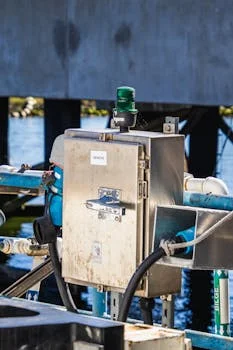
Selecting the appropriate wastewater treatment technology is paramount for achieving EPD Punjab compliance efficiently and cost-effectively. Several technologies offer distinct advantages for hospital effluent, each with specific engineering specifications and cost implications relevant to the Punjab market. Membrane Bioreactors (MBR) are highly effective, achieving 95–98% COD removal and 99% TSS removal, requiring a compact footprint of 0.5 m²/m³/day. Capital costs for MBR systems range from Rs1.8 million to Rs4.2 million for capacities of 10–50 m³/day, based on 2025 Punjab market rates. Dissolved Air Flotation (DAF) is excellent for TSS removal (90–95%) and fats, oils, and grease (FOG) removal (95%), with capital costs between Rs800,000 and Rs2.5 million for 10–50 m³/day systems. Annual O&M for DAF typically runs around Rs120,000, covering chemicals and power. For disinfection, on-site Chlorine Dioxide (ClO₂) generators offer 99.9% pathogen kill with a residual of 1–2 mg/L, with capital costs from Rs300,000 to Rs1.2 million and O&M around Rs80,000 annually for chemicals and maintenance. Ozone disinfection provides superior pathogen kill (99.99%) with no chemical residual, at a capital cost of Rs500,000 to Rs2 million and O&M of Rs150,000 per year, primarily for power and oxygen supply. Constructed wetlands, while requiring a larger land area of 1–2 m²/m³/day, offer a more natural and low-O&M solution, with COD removal of 70–85% and TSS removal of 80–90%. Their capital cost is relatively low, Rs500,000–Rs1.5 million, with minimal O&M of about Rs20,000 per year for landscaping and labor. For effective sludge management, EPD Punjab requires dewatering to less than 30% moisture content for landfill disposal. Technologies like plate-and-frame filter presses (Rs400,000–Rs1.2 million) or screw presses (Rs300,000–Rs900,000) are suitable for achieving these dewatering targets.
| Technology | Typical COD Removal (%) | Typical TSS Removal (%) | Footprint (m²/m³/day) | Capital Cost (10-50 m³/day) (PKR) | Annual O&M (PKR) |
|---|---|---|---|---|---|
| MBR | 95–98 | 99 | 0.5 | 1.8M – 4.2M | ~200K – 400K (energy, maintenance) |
| DAF | 70–85 (if pre-treated) | 90–95 | 0.3 – 0.6 | 800K – 2.5M | ~120K (chemicals, power) |
| Chlorine Dioxide (ClO₂) Generator | N/A (Disinfection) | N/A (Disinfection) | Compact | 300K – 1.2M | ~80K (chemicals, maintenance) |
| Ozone Disinfection | N/A (Disinfection) | N/A (Disinfection) | Compact | 500K – 2M | ~150K (power, oxygen) |
| Constructed Wetlands | 70–85 | 80–90 | 1–2 | 500K – 1.5M | ~20K (landscaping, labor) |
| Sludge Dewatering (Filter/Screw Press) | N/A (Sludge) | N/A (Sludge) | Compact | 300K – 1.2M | ~50K (power, maintenance) |
Funding and Costs: How to Secure Punjab Government Support
Recognizing the critical need for improved hospital waste management, the Government of Punjab has allocated a substantial Rs309 million through the Punjab Hospital Waste Management Fund for the 2023–2025 period. This funding aims to support hospitals in upgrading their wastewater treatment systems and waste handling infrastructure. For public hospitals, the fund covers up to 70% of eligible capital costs, while private hospitals can receive up to 50% of their capital expenses. Eligibility for this grant is contingent upon several factors: the hospital must have more than 50 beds, possess a valid EPD Punjab authorization, and commit to installing a treatment system that meets the 2025 effluent standards. The application process involves submitting Form HW-2 to the Punjab Health Department, accompanied by detailed system specifications, comprehensive cost estimates, and the EPD authorization certificate. Processing typically takes 4–6 weeks. This funding structure necessitates a hospital’s commitment to cost-sharing; for example, a hospital investing in a Rs2.4 million MBR system might receive a Rs1.2 million grant, covering 50% of the capital cost. Beyond capital expenditure, the 2024 Punjab budget also provides an annual allocation of Rs50,000 to Rs200,000 specifically for operational and maintenance (O&M) costs, including essential staff training and system upkeep, ensuring the long-term sustainability of the treatment facilities.
Step-by-Step Equipment Selection Framework for Punjab Hospitals
Selecting the most appropriate hospital wastewater treatment system requires a systematic approach that considers both technical requirements and local Punjab-specific factors. Follow this framework to ensure optimal system selection and compliance:
- Calculate Wastewater Volume and Characterize Influent: Begin by accurately estimating your hospital’s daily wastewater generation. Use the 5–15 m³/day per 100 beds metric and conduct influent analysis to determine key parameters like COD, TSS, BOD, pH, and pathogen load. This data is fundamental for sizing the treatment system.
- Match Technology to Effluent Standards: Based on EPD Punjab's stringent standards (<30 mg/L TSS, <100 mg/L COD, 0 CFU/100 mL fecal coliform), identify technologies capable of achieving these targets. For instance, MBR systems are ideal for meeting the TSS requirement, while a combination of DAF and robust disinfection (like on-site chlorine dioxide generator) is effective for COD and pathogen reduction.
- Assess Site Constraints: Evaluate your hospital’s physical and operational limitations. Land availability is critical; constructed wetlands require significant space (1–2 m²/m³/day), whereas MBR systems offer a compact solution. Consider power supply reliability, as some disinfection methods (e.g., ozone) are energy-intensive. The availability of skilled operators for maintenance and operation is also a key factor.
- Compare Capital and O&M Costs: Obtain detailed quotes for shortlisted technologies, including installation and commissioning. Factor in ongoing O&M expenses such as chemicals, energy, consumables, and labor. Utilize the available Rs309 million Punjab government funding to offset 50–70% of the initial capital investment, making advanced treatment systems more accessible.
- Select a Certified and Supported Vendor: Prioritize vendors with a proven track record in Punjab and EPD Punjab certification for their equipment. Local service and spare parts availability are crucial for minimizing downtime. HydropureWater offers a range of solutions, including the MBR system for high-efficiency hospital wastewater treatment and the compact medical wastewater treatment system for Punjab hospitals.
- Submit for Authorization and Funding: Once a system is selected, submit the detailed technical proposal and equipment specifications to the EPD Punjab for authorization using Form HW-1. Concurrently, apply for the Punjab Hospital Waste Management Fund by submitting Form HW-2 to the Punjab Health Department.
| Scenario | Wastewater Volume | Key Influent Parameters | Primary Technology Recommendation | Disinfection Method | Sludge Handling | Considerations |
|---|---|---|---|---|---|---|
| Small Hospital/Clinic | <10 m³/day | Moderate COD/TSS, High Pathogens | DAF + Biological Treatment (e.g., SBR) | Chlorine Dioxide or UV | Sludge drying beds or small filter press | Space constraints, budget limitations |
| Medium Hospital | 10-50 m³/day | High COD/TSS, Pharmaceuticals | MBR System | Chlorine Dioxide or Ozone | Plate-and-frame or screw press | High effluent quality required, compact footprint |
| Large Hospital/Tertiary Care | >50 m³/day | Highly variable, complex contaminants | MBR or Advanced Oxidation Processes (AOPs) | Ozone or advanced disinfection | Automated filter press or centrifuge | Robustness, energy efficiency, advanced monitoring |
| Remote/Low-Budget Facility | Variable | Moderate COD/TSS, Pathogens | Constructed Wetlands | UV or Chlorination | Natural drying and composting | Land availability, minimal O&M focus, lower effluent quality |
Compliance Checklist: How to Pass EPD Punjab Inspections
Maintaining consistent compliance with EPD Punjab regulations requires diligent operational practices and thorough documentation. Hospitals can ensure they are inspection-ready by adhering to the following checklist:
- Waste Segregation: Ensure all waste streams are correctly segregated using the prescribed color-coded bins (red, yellow, black for risk waste; blue, green for non-risk waste). Use labeled liners and maintain daily collection logs.
- Treatment System Operation: Implement a rigorous daily logging system for influent and effluent quality parameters (COD, TSS, pH, chlorine residual). For MBR systems, schedule weekly membrane cleaning. Maintain monthly records of sludge generation and disposal.
- Staff Training: Conduct annual training for all personnel involved in waste handling and wastewater treatment. EPD Punjab mandates a minimum of 8 hours of training per year. Keep detailed records of attendance, training topics, and trainer qualifications.
- Documentation Management: Retain all essential documents for a minimum of three years. This includes the EPD authorization certificate, the comprehensive treatment system operation and maintenance manual, all maintenance logs, and waste disposal receipts.
- Emergency Preparedness: Develop and maintain a robust emergency response plan for wastewater spills or system failures. Ensure backup power is available for critical treatment system components and keep an up-to-date contact list for EPD Punjab officials and local emergency waste disposal vendors.
Frequently Asked Questions
How is hospital wastewater treated in Punjab?
Hospitals in Punjab typically employ a multi-stage treatment process. This often includes primary treatment stages like screening and Dissolved Air Flotation (DAF) to remove solids and FOG. Secondary treatment commonly uses biological processes such as Membrane Bioreactors (MBR) or activated sludge systems to reduce organic pollutants. Finally, disinfection, using methods like chlorine dioxide or ozone, eliminates pathogens before discharge, meeting EPD Punjab standards. Sludge generated during treatment is dewatered and disposed of in EPD-approved landfills.
What is the largest hospital in Punjab Pakistan?
Mayo Hospital Lahore is the largest hospital in Punjab, Pakistan, with 2,399 beds. It is followed by Jinnah Hospital Lahore (1,150 beds) and Allied Hospital Faisalabad (1,000 beds). These large institutions generate substantial wastewater volumes, requiring treatment systems capable of handling 100–300 m³/day, according to 2024 Punjab Health Department data.
How do hospitals in Punjab dispose of their waste?
Hospitals in Punjab segregate waste into risk and non-risk categories. Risk waste, including infectious materials and sharps, is typically incinerated or autoclaved to neutralize hazards before being sent to designated landfills. Non-risk waste, such as paper and packaging, is managed through recycling or landfilling. Wastewater is treated on-site to meet EPD standards before discharge, or if pre-treated adequately, it may be sent to municipal sewer systems.
What are the color codes for hospital waste in Punjab?
As per the EPD Punjab Hospital Waste Rules 2022, the color codes for hospital waste segregation are: Red for infectious waste, Yellow for sharps, and Black for chemical waste. Non-risk waste is categorized with Blue for paper/cardboard and Green for organic waste.
How much does a hospital wastewater treatment plant cost in Punjab?
The cost of a hospital wastewater treatment plant in Punjab varies significantly based on capacity and technology. Capital costs can range from approximately Rs1.2 million for a smaller system (e.g., 10 m³/day DAF with chlorine dioxide disinfection) to Rs8.5 million for a larger, more advanced system (e.g., 50 m³/day MBR with integrated sludge dewatering). Annual O&M costs are estimated to be between Rs120,000 and Rs500,000, covering energy, chemicals, maintenance, and staffing, based on 2025 Punjab market rates.