Underground Sewage Treatment System Specifications: 2025 Engineering Data, Standards & Selection Guide
Underground sewage treatment systems combine biological treatment, sedimentation, and disinfection in a single buried unit, achieving effluent quality of BOD ≤20 mg/L, SS ≤30 mg/L, and Ammoniacal Nitrogen ≤20 mg/L—meeting China GB 18918-2002 Class 1A standards and EU Urban Waste Water Directive requirements. Designed for flow rates from 1 to 80 m³/h, these systems occupy 60–80% less surface area than conventional plants, making them ideal for urban sites, hospitals, and industrial facilities with space constraints. Key specifications include hydraulic retention time (8–12 hours), MLSS (3,000–5,000 mg/L), and aeration intensity (0.1–0.3 m³/m³·min).
What Is an Underground Sewage Treatment System? (And When to Use One)
An underground sewage treatment system is a fully buried, prefabricated wastewater treatment plant that integrates multiple treatment stages into a compact, subterranean unit. These systems are engineered to perform biological treatment, sedimentation, and disinfection, often employing advanced processes like A/O (Anaerobic-Anoxic-Oxic), MBR (Membrane Bioreactor), or SBR (Sequencing Batch Reactor) to achieve high effluent quality. For a typical 20 m³/h system, core components include an inlet screening chamber (approximately 1.5m x 1.0m x 2.0m), anoxic/aerobic chambers (each around 4.0m x 2.5m x 2.5m), a secondary clarifier (2.0m diameter x 2.5m depth), a sludge return system, and a UV or chlorine disinfection unit (1.0m x 0.8m x 0.8m).
These compact wastewater treatment systems are ideally suited for applications where surface space is severely limited or where aesthetic considerations are paramount. Urban residential communities, hotels, hospitals, factories, and rural areas frequently deploy underground systems due to their minimal visible footprint. HydropureWater’s WSZ series underground sewage treatment system, for example, demonstrates a footprint reduction of 60–80% compared to conventional above-ground plants of similar capacity. This makes them particularly valuable for projects in densely populated areas or environmentally sensitive sites where preserving green space is critical. While highly versatile, underground systems are generally not suitable for treating high-strength industrial wastewater with COD levels exceeding 1,000 mg/L without significant pre-treatment, nor are they recommended for sites with high groundwater tables where a minimum 1.5m clearance between the system base and the highest recorded groundwater level cannot be maintained, due to potential buoyancy and structural integrity challenges.
Underground Sewage Treatment System Specifications: Engineering Parameters by Process Type
Selecting the optimal underground sewage treatment system requires a detailed understanding of its engineering parameters, which vary significantly by process type. The three primary biological treatment processes adapted for underground integration are A/O (Anaerobic-Oxic), MBR (Membrane Bioreactor), and SBR (Sequencing Batch Reactor). Each offers distinct advantages in terms of footprint, effluent quality, and operational complexity, making them suitable for different applications.
The following table provides a side-by-side comparison of critical engineering parameters for these processes when integrated into underground systems:
| Parameter | A/O Process (Anaerobic-Oxic) | MBR Process (Membrane Bioreactor) | SBR Process (Sequencing Batch Reactor) |
|---|---|---|---|
| Flow Rate Range | 1–80 m³/h | 10–2,000 m³/day | 5–100 m³/h |
| Hydraulic Retention Time (HRT) | 8–12 hours | 4–6 hours | 6–8 hours |
| MLSS Concentration | 3,000–5,000 mg/L | 6,000–12,000 mg/L | 3,500–5,500 mg/L |
| Aeration Intensity | 0.1–0.3 m³/m³·min | 0.2–0.5 m³/m³·min | 0.15–0.35 m³/m³·min |
| Footprint (per m³·d capacity) | 0.5–1.2 m² | 0.2–0.5 m² | 0.6–1.0 m² |
| Effluent Quality (BOD) | ≤20 mg/L | ≤10 mg/L | ≤15 mg/L |
| Effluent Quality (SS) | ≤30 mg/L | ≤1 mg/L | ≤10 mg/L |
| Effluent Quality (TN) | ≤25 mg/L | ≤10 mg/L | ≤15 mg/L |
For a 50 m³/h system, typical chamber volumes illustrate these differences. An A/O system often features an anoxic tank (approx. 20 m³) followed by an aerobic tank (approx. 40 m³), then a secondary clarifier (approx. 15 m³), and finally disinfection. The flow path is sequential: influent enters the anoxic zone for denitrification, then flows to the aerobic zone for BOD/COD removal and nitrification, followed by sedimentation to separate biomass from treated water, and finally disinfection. The WSZ series underground sewage treatment system exemplifies this robust, cost-effective approach.
MBR systems, in contrast, integrate membranes directly into the aerobic tank, eliminating the need for a secondary clarifier and enabling higher MLSS concentrations. This compact design results in a smaller footprint and superior effluent quality. For a 50 m³/h MBR system, the bioreactor might be around 30-35 m³, housing the membrane modules. The MBR membrane bioreactor for high-quality effluent is particularly effective where space is a premium and water reuse is desired. SBR systems operate in batches within a single tank, cycling through fill, react (aeration), settle, decant, and idle phases, with typical cycle times of 4–6 hours. A 50 m³/h SBR system would typically have a single reactor volume of 35-45 m³.
Critical design considerations further differentiate these systems. For A/O processes, the sludge return ratio, typically 50–100%, is crucial for maintaining active biomass in the anoxic zone. MBR systems, due to their higher MLSS and membrane filtration, often employ a 100–200% sludge return ratio to optimize biological activity and membrane performance. Membrane flux for MBR systems, per HydropureWater’s DF series module specifications, typically ranges from 15–25 L/m²·h, a key parameter for sizing and operational efficiency.
Effluent Quality Standards and Compliance: Global Benchmarks for Underground Systems
Meeting stringent effluent quality standards is a primary driver for investing in underground sewage treatment systems. Regulatory compliance varies significantly by region and country, necessitating a clear understanding of local discharge limits for any project. Underground systems are engineered to achieve specific pollutant removal efficiencies, ensuring compliance with diverse environmental directives.
The following table outlines key effluent quality standards for underground sewage treatment systems across major global regions:
| Region/Country | Standard Reference | BOD (mg/L) | SS (mg/L) | TN (mg/L) | TP (mg/L) | NH₄-N (mg/L) |
|---|---|---|---|---|---|---|
| China | GB 18918-2002 Class 1A | ≤10 | ≤10 | ≤15 | ≤0.5 | ≤5 (winter: ≤8) |
| EU | Urban Waste Water Directive 91/271/EEC (for <2,000 PE) | ≤25 | ≤35 | N/A | N/A | N/A |
| USA | EPA NPDES (e.g., California) | ≤30 | ≤30 | Varies | Varies | Varies |
| India | CPCB General Standards (Inland Surface Water) | ≤30 | ≤100 | N/A | N/A | ≤50 |
Discharge options also dictate the required effluent quality. Direct discharge into a watercourse typically imposes stricter limits, such as BOD ≤20 mg/L and NH₄-N ≤5 mg/L, to protect aquatic ecosystems. Conversely, discharge via soakaway or ground infiltration may have less stringent requirements (e.g., BOD ≤40 mg/L, SS ≤60 mg/L), but critically demands thorough soil percolation tests to ensure adequate drainage and prevent groundwater contamination. A minimum percolation rate of 15 minutes per inch is often required for effective soakaway systems.
Real-world applications demonstrate the compliance capabilities of modern underground systems. A hotel in Shanghai successfully achieved China GB 18918-2002 Class 1A standards using a HydropureWater WSZ-30 m³/h A/O system, consistently producing effluent with BOD 18 mg/L and SS 8 mg/L. Similarly, a hospital in Barcelona utilized an MBR-based compact medical wastewater treatment system to comply with EU Directive 91/271/EEC, with reported effluent quality of BOD 9 mg/L and SS 2 mg/L. Achieving and proving compliance requires specific documentation, including environmental impact assessments and discharge consents, with typical lead times ranging from 3–6 months in China to 6–12 months in the EU, depending on local permitting processes.
Underground vs. Above-Ground Sewage Treatment: Cost, Footprint, and Performance Trade-offs
The decision between an underground and an above-ground sewage treatment system involves evaluating a complex interplay of capital costs, operational expenditures, site footprint, installation timelines, and long-term maintenance. While underground systems typically have a higher initial capital cost, their advantages in land utilization and rapid deployment can lead to significant long-term savings and operational benefits.
For a 50 m³/h wastewater treatment plant, the following comparison highlights the trade-offs between HydropureWater’s WSZ series underground systems and conventional above-ground activated sludge plants:
| Parameter | Underground System (WSZ Series) | Above-Ground System (Conventional Activated Sludge) |
|---|---|---|
| Capital Cost | ¥800,000 – ¥1,200,000 | ¥600,000 – ¥900,000 |
| Operating Cost (per m³) | ¥0.80 – ¥1.20 | ¥0.60 – ¥0.90 |
| Footprint | 100 – 150 m² | 250 – 350 m² |
| Installation Time | 7 – 15 days | 30 – 60 days |
| Lifespan (System) | 20 – 25 years | 25 – 30 years |
| Maintenance (Primary) | Annual membrane replacement (for MBR), general component checks | Quarterly sludge wasting, general component checks |
An ROI calculation for a 100-bed hospital requiring 50 m³/day (2.08 m³/h) of treatment illustrates the financial benefits of underground systems. An underground system might incur a capital cost of ¥1.2M, with an annual operating cost of approximately ¥14,600 (¥0.80/m³ * 50 m³/day * 365 days), and a minimal footprint of 150 m². An equivalent above-ground system, while costing ¥900K upfront, would demand a 350 m² footprint and an annual operating cost of ¥10,950 (¥0.60/m³ * 50 m³/day * 365 days). The payback period for the underground system, driven by significant land savings and faster installation, can be as short as 5.2 years, especially in regions with high land values. For further insights into wastewater treatment plant cost benchmarks for 2025, detailed analyses are available.
Beyond direct costs, hidden expenses can influence the overall project budget. For underground systems, these include excavation (typically ¥50,000–¥100,000 for a 50 m³/h plant), specialized waterproofing (around ¥30,000), and integrated ventilation systems (approximately ¥20,000). Above-ground systems, conversely, may incur costs for structural reinforcement (up to ¥80,000), noise mitigation measures (around ¥40,000), and significant landscaping to integrate the visible plant into its surroundings (around ¥60,000).
How to Select the Right Underground Sewage Treatment System: A 5-Step Decision Framework
Selecting the appropriate underground sewage treatment system requires a systematic approach that aligns project-specific needs with system capabilities. This 5-step decision framework guides engineers and procurement teams through the evaluation process, ensuring optimal system selection.
- Step 1: Define Influent Characteristics. Accurately characterize the raw wastewater entering the system. This includes flow rate (e.g., 50 m³/h), Biochemical Oxygen Demand (BOD), Chemical Oxygen Demand (COD), Suspended Solids (SS), pH, and temperature. For residential wastewater, typical ranges are BOD 150–250 mg/L, COD 300–500 mg/L, and SS 100–300 mg/L. Hospital wastewater often shows higher BOD (200–350 mg/L) and includes specific contaminants, while industrial wastewater can vary widely (e.g., HydropureWater’s typical influent data for WSZ series shows industrial COD up to 800 mg/L).
- Step 2: Determine Effluent Requirements. Identify the required treated water quality based on the discharge location and local regulations. Discharge to a sensitive watercourse will demand stricter limits (e.g., China GB 18918-2002 Class 1A) than discharge to a less sensitive soakaway or for non-potable reuse. Refer to the effluent quality standards table from the previous section to pinpoint applicable benchmarks.
- Step 3: Assess Site Constraints. Evaluate physical limitations of the site, including available footprint, groundwater levels, soil type, and any noise restrictions. MBR systems are ideal for extremely tight spaces due to their compact footprint (0.2–0.5 m²/m³·d), while A/O systems offer more flexibility for sites with slightly larger available areas and can better handle variable loads. High groundwater levels necessitate robust waterproofing and dewatering solutions.
- Step 4: Compare Process Types. Utilizing the engineering parameters table (A/O, MBR, SBR) provided earlier, compare the suitability of each process based on the defined influent characteristics and effluent requirements. Consider:
- Effluent quality needs: MBR for superior quality, suitable for water reuse (e.g., irrigation, toilet flushing). A/O for general discharge where cost-efficiency is a priority.
- Maintenance capacity: MBR systems require regular membrane cleaning (chemical and physical) every 3-6 months, while A/O and SBR systems primarily involve sludge management.
- Energy efficiency: MBR systems typically consume 0.8–1.2 kWh/m³, largely due to aeration and membrane scouring. A/O systems are generally more energy-efficient at 0.4–0.6 kWh/m³.
- Step 5: Request Supplier Proposals. Prepare a standardized request for proposal (RFP) checklist for potential suppliers. This template should include fields for required flow rate, desired effluent quality, maximum allowable footprint, detailed capital and operating costs, power consumption, warranty terms, and after-sales support. This ensures direct comparability between different vendor offerings and facilitates a transparent evaluation process.
Common Challenges and Solutions for Underground Sewage Treatment Systems
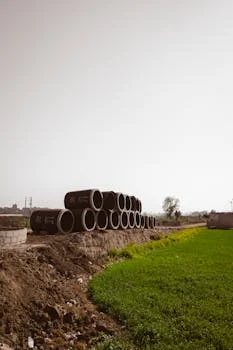
While underground sewage treatment systems offer significant advantages, their unique buried nature presents specific operational and installation challenges. Proactive planning and the integration of appropriate solutions are crucial for long-term reliability and performance.
- Challenge 1: High Groundwater Levels. Installation in areas with high groundwater can lead to buoyancy issues and structural stress on the buried tanks.
- Solution: Implement a robust dewatering system during installation, utilizing sump pumps with capacities ranging from 200–500 L/min to keep the excavation dry. The system structure itself should be constructed with waterproof concrete (e.g., C30 grade with a 5% waterproofing admixture) and anchored with anti-flotation measures (e.g., concrete ballast or anchoring straps) to prevent uplift.
- Challenge 2: Odor Control. Confined spaces and anaerobic conditions can lead to the generation of odorous gases like hydrogen sulfide (H₂S).
- Solution: Enclose the system with proper ventilation and air treatment. Activated carbon filters with capacities of 1,000 m³/h for a 50 m³/h plant are effective for removing H₂S. Biofilters can also achieve high removal efficiencies (e.g., 95% H₂S removal) for exhaust air, converting odors biologically.
- Challenge 3: Sludge Management. Accumulated sludge requires periodic removal and dewatering.
- Solution: Integrate a sludge thickener to reduce sludge volume, typically achieving 2–4% solids concentration. For further dewatering, connect to a HydropureWater plate-frame filter press, which can achieve up to 90% dewatering efficiency, significantly reducing disposal costs and volume. An automatic chemical dosing system can optimize flocculation for improved dewatering.
- Challenge 4: Power Outages. Interruption of power can disrupt critical treatment processes, leading to non-compliance.
- Solution: Install a backup generator with sufficient capacity (e.g., 10–30 kVA for a 50 m³/h plant) to power essential components like aeration blowers, pumps, and control systems. Design for a 4-hour battery backup for critical instrumentation and controls to ensure continuity during short outages.
- Challenge 5: Membrane Fouling (MBR systems). Accumulation of solids and organic matter on membrane surfaces reduces flux and increases energy consumption.
- Solution: Implement a rigorous membrane cleaning protocol. This includes weekly maintenance cleaning with a 0.5% NaOCl solution and quarterly recovery cleaning with a 2% citric acid solution. Daily monitoring of transmembrane pressure (TMP) is essential, with an alarm set at 30 kPa to indicate impending fouling and trigger cleaning actions.
Frequently Asked Questions
Prospective buyers and operators often have specific questions regarding the long-term performance, applicability, and operational aspects of underground sewage treatment systems. Here are answers to common inquiries:
Q: What is the typical lifespan of an underground sewage treatment system?
A: The typical lifespan for an A/O-based underground system is 20–25 years. MBR systems generally have a lifespan of 15–20 years, with the membrane modules themselves requiring replacement every 5–8 years depending on influent quality and maintenance. Factors significantly affecting lifespan include influent wastewater characteristics, the frequency and quality of maintenance, and environmental conditions such as temperature and humidity.
Q: Can underground systems handle industrial wastewater?
A: Yes, underground systems can treat industrial wastewater, but only if the influent COD is ≤1,000 mg/L and the pH remains within the biological treatment range of 6–9. For higher-strength industrial wastewater or those with extreme pH, pre-treatment steps such as equalization tanks, pH neutralization, or physical-chemical processes like DAF pre-treatment for industrial wastewater are required. For instance, a textile factory in Zhejiang successfully used a WSZ-50 m³/h system with a DAF pre-treatment stage to reduce COD from 1,200 mg/L to 500 mg/L before the biological treatment process. Further information on pressure flotation systems for industrial pre-treatment can be found in our detailed guide.
Q: How much space is needed for an underground system?
A: Underground systems are highly space-efficient. A/O systems typically require 0.5–1.2 m² per m³/day of capacity, while MBR systems are even more compact, needing only 0.2–0.5 m² per m³/day. For example, a 50 m³/h WSZ system, which treats approximately 1,200 m³/day, would require an approximate footprint of 60 m² (1,200 m³/day * 0.05 m²/m³/day), including access hatches and ventilation points.
Q: What are the energy requirements for underground systems?
A: Energy requirements vary by process. A/O systems typically consume 0.4–0.6 kWh/m³ of treated wastewater, primarily for aeration. MBR systems, due to their higher MLSS and membrane scouring, have higher energy demands, typically 0.8–1.2 kWh/m³. Energy costs can be significantly reduced, by 20–30%, through the implementation of variable-frequency drives (VFDs) for aeration blowers and optimizing SBR cycle times for intermittent operations.
Q: Are underground systems compliant with China’s GB 18918-2002 standards?
A: Yes, HydropureWater’s WSZ series of underground integrated sewage treatment systems are specifically designed and proven to meet China GB 18918-2002 Class 1A discharge standards. This includes stringent limits such as BOD ≤10 mg/L, SS ≤10 mg/L, TN ≤15 mg/L, and TP ≤0.5 mg/L. Third-party testing of a HydropureWater WSZ-30 m³/h system in Hangzhou demonstrated effluent quality achieving BOD 8 mg/L, SS 6 mg/L, and TN 12 mg/L, confirming full compliance.