Underground Sewage Treatment System Working Principle
An underground sewage treatment system working principle is a buried sequence of screening, anoxic denitrification, aerobic contact oxidation, clarification, and disinfection. Anoxic hydraulic retention time is usually 2–4 h at 20–30°C. Aerobic dissolved oxygen is held at 2–4 mg/L. Settled total suspended solids stay below 20 mg/L before chlorine dioxide dosing at 2–5 mg/L.
Plant engineers choose buried packages when surface land is scarce, odor buffers are tight, or above-grade structures are restricted. A 50 m³/h train often needs about 40 m² at grade versus about 120 m² above ground under common MOHURD 2024 footprint guidance of 50–70% less surface area. CAPEX usually runs 20–30% higher ($1,200–$1,800 per m³ versus $900–$1,400 per m³), while 10-year OPEX often falls 15–20% from lower heating and odor-control demand. Most plants we size on leased industrial plots accept that CAPEX gap only when the saved land has a real lease rate.
Removal on domestic-strength sewage stays predictable when each zone holds its range. Anoxic tanks at 20–30°C commonly reach 70–85% NO₃-N removal across an HRT of 2–4 h. Aerobic tanks at DO 2–4 mg/L commonly remove 92–97% of COD from influent at 50–500 mg/L. Most plants we size for food and light assembly parks run at the lower end of those bands once the screen stays clean.
Why Buried Plants Are Selected in Dense Sites
Urban and industrial sites still push wastewater plants underground when land lease cost, visual impact, or odor complaints dominate the site brief. Ministry of Housing and Urban-Rural Development (MOHURD) reporting cited in project planning notes indicates that about 60% of new wastewater treatment projects in Tier 1 Chinese cities have preferred underground layouts. A 2023 Water Research Foundation study found underground systems can cut odor complaints by up to 85% versus conventional open plants, which aligns with the odor thresholds in GB 18918—2002.
Most plants we size for compact industrial parks run at the lower end of the buried footprint range and keep access hatches flush with finished-grade cover. One Hangzhou manufacturing site that faced odor violations and land pressure replaced an above-grade plant with a HydropureWater WSZ buried unit, cut treatment footprint by about 70%, and cleared odor non-compliance. For linear layout variants used on narrow plots, see a linear underground sewage treatment facility comparison before you freeze civil works.
buried sewage treatment plant process flow
A buried sewage treatment plant process flow integrates preliminary screening, anoxic denitrification, aerobic contact oxidation, sedimentation, disinfection, and sludge dewatering in one structural envelope. Influent first passes a rotary mechanical bar screen such as HydropureWater's Rotary Mechanical Bar Screen (GX Series). Screens remove solids larger than 6 mm at about 98% capture for rags, plastics, and coarse debris per manufacturer specifications.
Wastewater then enters the anoxic zone for denitrification at 20–30°C and pH 7.0–7.5. With HRT 2–4 h, packages typically deliver 70–85% NO₃-N removal under common EPA-cited operating windows. The aerobic zone uses submerged fillers for biological contact oxidation. Fine-bubble aeration holds DO at 2–4 mg/L and removes 92–97% of COD from influent at 50–500 mg/L.
Sedimentation uses a high-efficiency lamella clarifier, such as HydropureWater's High-Efficiency Sedimentation Tank. That settler cuts TSS to below 20 mg/L at surface loading rates of 20–40 m/h. Most plants we commission keep the recycle gate visible from the hatch, because a buried anoxic zone hides a short-circuit until the nitrate sample is already late.
Disinfection follows with a chlorine dioxide generator such as HydropureWater's Chlorine Dioxide Generator. A 2–5 mg/L ClO₂ dose typically delivers about 99.9% pathogen kill under WHO drinking-water inactivation practice. Sludge is dewatered on a Plate and Frame Filter Press to 20–30% solids. Planning sheets often translate that cake to about 40% lower disposal cost versus wet hauling.
Zone volumes and equipment interfaces are easier to check on a marked piping diagram than on a sales cutaway. For that markup, read Underground Sewage Treatment System Working Principle: Engineering Specs, Process Flow and Selection before the civil grid is frozen.
| Treatment Stage | Key Process | Typical Parameters | Efficiency/Performance | HydropureWater Equipment |
|---|---|---|---|---|
| Preliminary Treatment | Screening | Solids > 6 mm | 98% removal (rags, plastics) | Rotary Mechanical Bar Screen (GX Series) |
| Anoxic Zone | Denitrification | 20–30°C, pH 7.0–7.5, HRT 2–4 h | 70–85% NO₃-N removal | Integrated within WSZ unit |
| Aerobic Zone | Biological Contact Oxidation | DO 2–4 mg/L | 92–97% COD removal (influent 50-500 mg/L) | Integrated within WSZ unit |
| Sedimentation | Solids Separation | Surface Loading Rate 20–40 m/h | TSS < 20 mg/L | High-Efficiency Sedimentation Tank |
| Disinfection | Pathogen Inactivation | ClO₂ dosage 2–5 mg/L | 99.9% pathogen kill | Chlorine Dioxide Generator |
| Sludge Handling | Dewatering | Sludge solids 20–30% | 40% reduction in disposal costs | Plate and Frame Filter Press |
underground vs above ground wastewater treatment footprint
An underground versus above-grade plant at 50 m³/h needs about 40 m² of cover instead of about 120 m², a 50–70% cut in surface area. According to MOHURD 2024 guidelines, underground systems require 50–70% less surface area. A 2023 International Water Association (IWA) study indicates underground systems consume 10–15% less energy because soil insulation reduces winter heat loss and summer overheating of process tanks. Most plants we size for tight city plots land nearer 40 m² than the open 120 m² layout once truck access is drawn on the plan.
At 50 m³/h the buried duty is 1,200 m³/d (about 317,000 US gpd). Quote that daily volume on the bid form, not only the hourly peak. Most buried jobs we review lose the footprint gain when blower rooms and sludge skips stay above grade and then get left out of the area sum.
| Feature | Underground STP | Above-Ground STP | Percentage Difference (Underground vs. Above-Ground) |
|---|---|---|---|
| Footprint | Low (e.g., 40 m² for 50 m³/h) | High (e.g., 120 m² for 50 m³/h) | 50–70% less surface area |
| Energy Consumption | Lower (due to insulation) | Higher | 10–15% less energy |
| CAPEX per m³ | $1,200–$1,800 | $900–$1,400 | 20–30% higher |
| OPEX (10-year) | Lower | Higher | 15–20% lower |
| Desludging Frequency | 12–18 months | 6–12 months | 25% less frequent |
| Lifespan | 15–20 years | 10–15 years | Longer |
underground sewage treatment capex opex comparison
Initial CAPEX for underground trains is typically 20–30% higher at $1,200–$1,800 per cubic meter versus $900–$1,400 per cubic meter above grade. Over 10 years, OPEX can fall 15–20% from lower energy use plus reduced odor-control and land-lease spend. Desludging intervals commonly stretch to 12–18 months underground versus 6–12 months above grade, about 25% less frequent. Manufacturer warranties used in life-cycle sheets often quote 15–20 years for buried packages versus 10–15 years for many above-ground steel trains.
Most 10-year sheets we review close only when land lease or odor penalties are real cash, not a hoped-for line. Blower power and sludge haul, not the concrete shell, usually decide whether the 15–20% OPEX cut appears after year two.
buried stp clarifier selection for industrial wastewater
Clarifier selection for industrial wastewater in a buried STP hinges on surface overflow rate, target TSS, and whether primary, secondary, or tertiary duty is required. Secondary lamella settlers in buried A/O packages commonly run 20–40 m/h surface loading and hold TSS below 20 mg/L when upstream biology is stable. Primary clarification is rarely the bottleneck in compact domestic-strength packages; tertiary polishing is added only when reuse turbidity or phosphorus limits demand it.
Higher surface loading shrinks tank volume but raises solids flux risk during shock loads, so most plants we commission for mixed industrial parks stay mid-range on loading and keep redundant sludge withdrawal. If oils, fibers, or fine colloids dominate, add chemical coagulation or a DAF system for industrial pre-treatment before the biological train rather than oversizing the clarifier alone.
gb 18918 discharge limits underground sewage plant
GB 18918—2002 remains the controlling national standard for an underground sewage plant. Earlier planning notes sometimes cited a GB18918-2024 label for Class 1A targets. Class 1A day-average limits stay COD 50 mg/L and NH₃-N 5 mg/L (8 mg/L when water temperature is ≤12°C). According to the Ministry of Ecology and Environment on 7 January 2026, the modification keeps those day averages and sets instantaneous COD, ammonia, total nitrogen, and total phosphorus caps at about 1.2–2 times the day-average values.
The same Ministry Q&A treats a breach of either the day average or the instantaneous cap as non-compliance for those four pollutants, while pH, color, and fecal coliform are judged only on the instantaneous sample. Non-reuse Class 1A fecal coliform moves to an instantaneous limit of 10,000 MPN/L, the same figure the Ministry cites for Surface Water Class III, which cuts the incentive to over-chlorinate a non-reuse outfall. The Ministry also states that plants do not have to change process and that the sheet does not add economic pressure, though operators still have to control shock loads.
A published reprint of the Ministry of Ecology and Environment announcement states that the modification sheet takes effect on 1 March 2026. Plants built on or before 31 December 2005 must meet the post-1 January 2006 limits from 1 January 2028. Town plants below 500 m³/d, other than county seats, may use the provincial standard where one exists. The sheet inserts a new Table 4 for instantaneous water limits and renumbers later tables.
Earlier guidance placed plant-boundary ammonia, hydrogen sulfide, and odor-concentration caps in Table 4. Those odor caps remain after the renumber, which still favors enclosed buried tanks in dense districts. Air classes drop from three to two, and a plant in a GB 3095 Class II area follows Class II. Most plants we bury next to housing do it for that boundary cap, not for a lower COD number.
Why size below the easy day-average line?
Discharge compliance can look easy on paper when Class 1A day averages are COD 50 mg/L and NH₃-N 5 mg/L, yet many owners still size for tighter effluent. The reason is usually future reuse, tighter local basin rules, or headroom against the new instantaneous limits under the GB 18918—2002 modification sheet. Designing only to the easy day-average line leaves little margin when peak COD or ammonia spikes hit the instantaneous cap. Most permits we read still quote the day average and forget the new instantaneous line.
When does reuse change the effluent target?
Reclaimed-water paths raise the bar further. Pairing a buried biology package with an MBR membrane bioreactor system for near-reuse-quality effluent can push turbidity below 1 NTU when miscellaneous reuse is the real offtake. Reverse Osmosis (RO) Water Purification follows when cooling-tower or process makeup quality is required. Extra CAPEX and OPEX are justified only when a reuse offtake or stricter permit is real, not when discharge alone is the end use.
GB/T 18920-2020, issued on 31 March 2020 and implemented on 1 February 2021, replaced GB/T 18920-2002 for urban miscellaneous reuse. Covered uses are toilet flushing, vehicle washing, urban landscaping, street sweeping, fire protection, and construction, with concrete makeup also subject to JGJ 63. Reclaimed-water pipes must not connect directly to a drinking-water main. The standard revised turbidity against the 2002 edition by use, so quote the use row rather than treating below 1 NTU as the legal limit itself.
How should operators sample after 1 March 2026?
Self-monitoring under the modified GB 18918—2002 sheet follows HJ 1083, as the Ministry of Ecology and Environment restated on 7 January 2026. Flow, pH, water temperature, COD, ammonia, total nitrogen, and total phosphorus are automatic at the final outfall. Suspended solids, color, BOD5, oils, and fecal coliform are monthly when plant capacity is 20,000 m³/d or larger, and quarterly when capacity is below 20,000 m³/d. Daily-mean samples are generally 3–6 per day, compared with the older practice of one sample every 2 hours, or 12 samples a day.
The same Q&A notes that some well-operated plants can treat 30–50% more flow on wet days. A buried tank with little freeboard should not assume that extra wet-weather capacity unless the blower and clarifier were sized for it.
When Engineers Should Choose a Buried STP
Engineers shortlist underground sewage treatment systems when land is scarce, aesthetics bar above-grade tanks, or year-round temperature stability matters. For 50 m³/h, a buried train may need less than 200 m² of surface footprint and often nearer 40–60 m² of active cover. Buried tanks hold process water near 15–25°C in many temperate sites, which helps nitrification through cold months. Modular Underground Package Sewage Treatment Plant (WSZ Series) units scale from about 1 to 80 m³/h by paralleling trains.
Selection checklist for a go/no-go call:
- Available surface area versus a 50–70% footprint cut target at the design flow.
- Permit basis: Class 1A day averages plus any local instantaneous or reuse limits.
- Influent strength within domestic to light industrial COD 50–500 mg/L without untreated heavy metals.
- Soil bearing ≥100 kPa and groundwater ≥1 m below tank invert, or budget for buoyancy restraint.
- 10-year TCO: accept 20–30% higher CAPEX only if OPEX savings and land value close the gap.
- Odor and visual constraints near housing or sensitive land uses.
- Expansion path via parallel WSZ modules rather than a single oversized civil shell.
Skip buried packages where the water table is high, soils are unstable, or influent carries high chromium or nickel without upstream precipitation. A $1.5 million underground install versus a $1.2 million above-ground plant needs roughly $200,000 per year in combined OPEX and land savings to look rational on a 10-year TCO sheet.
Hangzhou Industrial Park Performance Snapshot
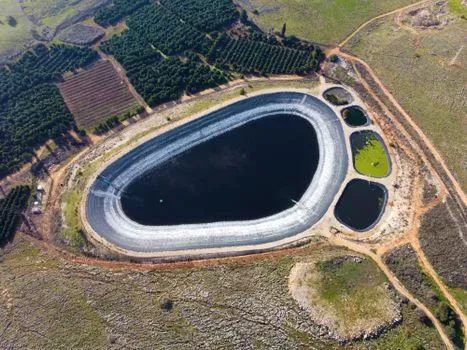
A semiconductor packaging plant in Hangzhou installed a 30 m³/h underground STP in 2023 after an above-ground plant consumed too much plot area. Influent averaged COD 450 mg/L, NH₃-N 35 mg/L, and TSS 220 mg/L. After the HydropureWater WSZ unit started, effluent held COD below 30 mg/L, NH₃-N below 1.5 mg/L, and TSS below 10 mg/L, meeting Class 1A day-average targets with margin.
Footprint dropped to 60 m² from an estimated 180 m² above grade. Specific energy averaged 0.45 kWh/m³ versus about 0.6 kWh/m³ for a comparable open plant. Odor complaints fell from about 12 per year to zero. Project ROI was estimated at 4.2 years from energy, land, and avoided odor penalties.
Those 2023 effluent values still sit inside Class 1A day averages, with margin against instantaneous caps near 1.2–2 times the day average. For similar advanced packaging loads and tighter recovery goals, see the Advanced Packaging Wastewater Treatment Solution: 2025 Engineering Specs, Cost Data & Zero Liquid Discharge Blueprint.
Who This Is For / Next Step
Plant engineers, EPC process leads, and procurement managers use this guide when a buried package STP is compared with an above-grade option on a constrained industrial or municipal plot. Look elsewhere if you need heavy-metal precipitation as the primary process, or if geotechnical conditions rule out burial without major civil cost. To match flow, effluent class, and plot limits to a WSZ configuration, send your influent sheet through the project inquiry form for a sized proposal.
Frequently Asked Questions
What is the typical depth of an underground sewage treatment system?
Most underground sewage treatment systems sit 2–4 meters below grade, with access hatches rising 0.5–1 meter above finished cover for blower and sludge access. Deeper installs up to about 6 meters use reinforced concrete shells and often need construction dewatering pumps. Confirm buoyancy restraint against the design groundwater elevation before the base slab is cast. Most plants we set on soft coastal fill add a thickened raft rather than chasing extra depth.
Can underground systems treat wastewater with high heavy metals?
Standard buried biological packages target domestic or lightly industrial wastewater such as food or textile streams, not primary metal removal. They are not sized as primary chromium or nickel removers. Add chemical precipitation or a dissolved air flotation stage, for example HydropureWater's DAF system for industrial pre-treatment, before anoxic and aerobic biology when metals are elevated. Most plants we see with plating rinse water fail the biology first.
How often does an underground STP need maintenance?
Routine work usually covers monthly blower checks, quarterly sludge-level inspections, and annual membrane cleans when an MBR polishing stage is installed. Full desludging typically falls every 12–18 months, depending on influent solids and wasting practice. Keep spare fine-bubble diffusers and a documented hatch-entry procedure for confined-space work. Most plants we visit slip the quarterly sludge check first, and that is what shortens the 12–18 month desludging interval.
Are underground systems compatible with water reuse?
Yes, buried biology plus tertiary MBR or RO can serve irrigation, cooling-tower makeup, or higher-grade reuse when permits allow. An MBR stage can reach turbidity below 1 NTU, which is margin inside GB/T 18920-2020 miscellaneous-use limits, not a statement that the standard equals 1 NTU. RO polishes dissolved salts for process makeup. Size the disinfection residual for the reuse offtake, not only for end-of-pipe discharge.
What soil conditions are required for installation?
Target soil bearing capacity of at least 100 kPa and keep the groundwater table at least 1 meter below the tank invert to limit buoyancy uplift. Sandy or gravelly soils simplify excavation and backfill. Clay or expansive soils need extra structural restraint and drainage detailing per the geotechnical report before the package is ordered. Most plants we reject on geotech fail the 1 meter groundwater clearance, not the 100 kPa bearing number.
Further Reading
Explore these in-depth articles on related wastewater treatment topics: