Why UAE Hospitals Need Specialized Wastewater Treatment Systems
Hospitals in the UAE must treat wastewater to meet Federal Ministry of Energy and Infrastructure (MOEI) standards, which mandate effluent with <10 mg/L BOD, <10 mg/L TSS, and <100 CFU/100 mL fecal coliforms (Stantec 2020). Advanced systems like MBR (Membrane Bioreactor) achieve 99% pathogen removal and 95% COD reduction, while chlorine dioxide generators provide 99.99% disinfection efficacy for pharmaceutical residues. With 75+ municipal WWTPs treating 2 billion liters daily, hospitals face strict monitoring—non-compliance risks fines up to AED 50,000 per violation (MOEI 2023).
UAE hospital wastewater contains 10–100× higher concentrations of pathogens such as E. coli and Pseudomonas, pharmaceuticals including antibiotics and hormones, and heavy metals like mercury from dental amalgam than standard municipal sewage (Environmental Footprint study 2023). This high-toxicity profile means that discharging raw or under-treated medical waste into the municipal grid is no longer a viable operational strategy. MOEI regulations now require hospital effluent to meet Class A recycled water standards: <10 mg/L BOD, <10 mg/L TSS, <100 CFU/100 mL fecal coliforms, and <1 mg/L residual chlorine to protect the UAE’s limited groundwater resources.
Consider a typical 300-bed hospital in Dubai: such a facility generates approximately 300–500 m³/day of wastewater with Chemical Oxygen Demand (COD) levels ranging from 800 to 1,200 mg/L. To comply with MOEI limits, the facility requires a treatment efficiency of 90–95% removal. Standard municipal treatment processes are often bypassed by the specific recalcitrant compounds found in medical waste, necessitating on-site compact hospital wastewater treatment systems for UAE clinics and larger medical centers. Failure to reach these benchmarks triggers penalties under the 2023 MOEI framework, which includes fines up to AED 50,000 per violation and mandatory, immediate system upgrades. Compliance is now tracked in real-time via the MOEI’s digital monitoring tool, developed by Stantec, which integrates sensor data from hospital discharge points directly into federal databases.
Engineering Specs: How Hospital Wastewater Differs from Municipal Sewage
Hospital wastewater carries a pathogen load of 10⁵–10⁷ CFU/mL of antibiotic-resistant bacteria, such as MRSA and VRE, compared to just 10³–10⁵ CFU/mL found in typical municipal sewage (WHO 2022). This biological density requires a higher Log Reduction Value (LRV) than standard domestic sewage treatment plants (STPs) can provide. UAE hospital samples have revealed significant concentrations of pharmaceutical residues, including 50–500 μg/L of antibiotics like ciprofloxacin and amoxicillin, and 10–100 μg/L of hormones such as estradiol (Environmental Footprint study). These substances are endocrine disruptors and require advanced oxidation or membrane filtration to neutralize effectively.
Physical contaminants also pose a challenge for facility engineers. Dental and surgical units contribute 300–800 mg/L of Total Suspended Solids (TSS) and 50–200 mg/L of fats, oils, and grease (FOG), which can rapidly foul sensitive downstream components. This necessitates robust pre-treatment, such as DAF systems for hospital wastewater pre-treatment, to protect secondary treatment stages. Heavy metals are another critical differentiator; mercury from dental amalgam (0.5–5 mg/L) and silver from X-ray film processing (1–10 mg/L) frequently exceed MOEI limits of <0.01 mg/L for mercury. Removal typically requires specialized chemical precipitation or ion exchange modules integrated into the treatment train.
Operational stability is further complicated by temperature and pH variability. Hospital discharge temperatures range from 15°C to 35°C, and pH levels can fluctuate between 5 and 11 due to the heavy use of alkaline cleaning agents and acidic laboratory reagents. Engineering designs must incorporate equalization tanks with a minimum 8–12 hour hydraulic retention time (HRT) to buffer these fluctuations before biological treatment. The following table outlines the specific engineering parameters required to bridge the gap between raw hospital effluent and MOEI standards.
| Parameter | Raw Hospital Effluent (UAE) | Municipal Sewage (Avg) | MOEI Class A Limit | Required Removal Rate |
|---|---|---|---|---|
| BOD5 (mg/L) | 300 – 600 | 150 – 250 | < 10 | 97% – 98% |
| COD (mg/L) | 800 – 1,200 | 400 – 500 | < 50 | 94% – 96% |
| TSS (mg/L) | 300 – 800 | 200 – 300 | < 10 | 97% – 99% |
| Fecal Coliforms (CFU/100mL) | 10⁶ – 10⁸ | 10⁴ – 10⁶ | < 100 | > 99.99% |
| Mercury (mg/L) | 0.5 – 5.0 | < 0.001 | < 0.01 | 99% + |
| Antibiotics (μg/L) | 50 – 500 | < 5 | Trace / N/A | Advanced Treatment Required |
MOEI Compliance Checklist: Step-by-Step Guide for UAE Hospitals

The UAE Federal Ministry of Energy and Infrastructure (MOEI) requires all healthcare facilities to submit a comprehensive wastewater characterization study as the first step toward regulatory approval. This study must be conducted by an accredited third-party laboratory and cover primary parameters including BOD, COD, TSS, and fecal coliforms, as well as secondary medical-specific contaminants like heavy metals and pharmaceutical markers. Referencing the MOEI’s effluent quality standards table (Stantec 2020) is essential during this phase to establish the baseline for system design.
Once characterization is complete, procurement officers must select a treatment technology that aligns with the hospital's specific flow rate and effluent requirements. For many urban facilities, compact sewage treatment units for space-constrained hospitals are preferred due to their small footprint and high automation levels. The subsequent step involves submitting a detailed System Design Report to the MOEI. This report must include a Process Flow Diagram (PFD), Piping and Instrumentation Diagrams (P&ID), detailed equipment specifications, and a hydraulic calculation report to ensure the system can handle peak surge loads from laundry and surgical departments.
Installation must be accompanied by the integration of real-time monitoring tools. MOEI standards now emphasize "active compliance," requiring online sensors for TSS, pH, and residual chlorine. These sensors must be capable of transmitting data to the MOEI’s compliance dashboard (the Stantec tool). Following installation, hospitals are required to perform monthly effluent testing through an accredited facility, such as the Dubai Central Laboratory (DCL) or similar municipal labs in Abu Dhabi and Sharjah. Quarterly inspections by MOEI officials will verify sensor calibration and logbook accuracy. It is mandatory to maintain all operational records, including maintenance logs and lab results, for a minimum of 5 years. Common violations identified during MOEI audits include sensor calibration failures and incomplete daily operational logs, both of which can lead to immediate fines.
Treatment Technology Comparison: MBR vs DAF vs Chlorine Dioxide for UAE Hospitals
Membrane Bioreactor (MBR) technology achieves a 99% pathogen removal rate and 95% COD reduction, making it the gold standard for hospitals seeking to exceed MOEI Class A standards for water reuse. MBR systems combine biological treatment with membrane filtration (typically 0.04 μm pore size), effectively acting as a physical barrier to bacteria and many viruses. While the CAPEX is higher—ranging from AED 1.2 to 1.8 million for a 100 m³/day system—the footprint is 50–60% smaller than conventional activated sludge systems. Energy consumption typically sits between 0.8 and 1.2 kWh/m³, with an OPEX of AED 0.5–0.8/m³, primarily driven by membrane replacement cycles every 5 to 7 years.
Dissolved Air Flotation (DAF) is primarily utilized as a pre-treatment stage to remove 90–95% of TSS and 80–90% of FOG. In a hospital setting, DAF is essential if the facility operates a large commercial laundry or heavy surgical load that contributes high lipid content to the waste stream. DAF systems are more affordable in terms of CAPEX (AED 300,000–500,000 for 100 m³/day), but they do not provide sufficient biological or pathogen reduction on their own. They must be paired with secondary treatment and disinfection. OPEX for DAF remains low at AED 0.2–0.4/m³, though chemical polymer costs must be factored in at approximately AED 0.1–0.2/m³.
For high-level disinfection, Chlorine Dioxide (ClO₂) generators are increasingly favored over traditional sodium hypochlorite. ClO₂ provides 99.99% disinfection efficacy against pathogens and is significantly more effective at oxidizing pharmaceutical residues without forming harmful trihalomethanes (THMs). These generators allow for on-site production, ensuring the chemical remains at peak potency. CAPEX for a 50–200 g/h system ranges from AED 150,000 to 300,000, with an OPEX of AED 0.1–0.3/m³. Many UAE hospitals are now adopting hybrid systems—combining DAF for pre-treatment, MBR for biological processing, and ClO₂ for final polishing. This configuration, while higher in initial cost (AED 1.5–2.2 million for 100 m³/day), ensures total compliance and allows for 100% water reuse in landscaping and cooling towers. For more information on these configurations, consult global best practices for hospital wastewater treatment.
| Technology | Pathogen Removal | CAPEX (100 m³/d) | OPEX (per m³) | Footprint |
|---|---|---|---|---|
| MBR | 99.9% + | AED 1.2M – 1.8M | AED 0.5 – 0.8 | Minimal |
| DAF | Low (TSS focus) | AED 300k – 500k | AED 0.2 – 0.4 | Moderate |
| ClO₂ Generator | 99.99% | AED 150k – 300k | AED 0.1 – 0.3 | Small |
| Hybrid System | 99.99% + | AED 1.5M – 2.2M | AED 0.6 – 1.0 | Integrated |
Cost Breakdown and ROI: Hospital Wastewater Treatment in UAE
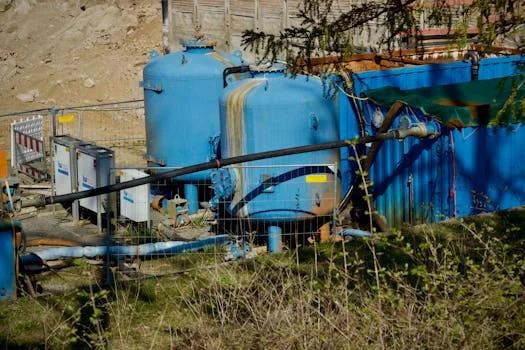
Capital Expenditure (CAPEX) for a 100 m³/day hospital wastewater treatment system in the UAE typically ranges from AED 800,000 to AED 2.2 million, depending on the complexity of the treatment train and the level of automation required. This figure includes the equipment cost, as well as installation and commissioning, which generally account for 15–20% of the total project budget. While MBR systems sit at the higher end of the CAPEX spectrum, their ability to produce high-quality effluent suitable for reuse often results in a more favorable long-term financial profile compared to cheaper systems that require frequent maintenance or fail to meet MOEI standards.
Operating Expenditure (OPEX) is influenced by energy (40%), chemicals (30%), and specialized labor (20%). For a modern MBR or hybrid system, OPEX averages between AED 0.6 and 1.0 per cubic meter treated. The Return on Investment (ROI) is driven by three primary factors: avoidance of MOEI fines, savings from water reuse, and reduction in municipal sewer fees. In Dubai and Abu Dhabi, where desalinated water costs are high, reusing treated effluent for irrigation or cooling towers can save a hospital AED 5–10/m³. For a 200-bed hospital, this can translate to annual savings of over AED 300,000 in water procurement alone.
hospitals can leverage green financing options to offset initial costs. Several UAE banks, including Emirates NBD and ADCB, offer sustainability-linked loans for projects that demonstrate significant water conservation. The MOEI also occasionally provides grants for hospitals adopting advanced water reuse technologies, sometimes covering up to 50% of the CAPEX. Leasing programs and ESCO (Energy Service Company) models are also becoming available, allowing hospitals to pay for the equipment through the savings generated by reduced water and sewer bills. The table below summarizes the financial outlook for a standard 100 m³/day installation.
| Cost Category | Estimated AED (100 m³/day) | Notes |
|---|---|---|
| Equipment CAPEX | 800,000 – 1,800,000 | Depends on MBR vs. Conventional |
| Installation & Commissioning | 150,000 – 350,000 | Includes MOEI certification support |
| Annual Energy Costs | 30,000 – 45,000 | Based on 0.8-1.2 kWh/m³ |
| Annual Chemical Costs | 20,000 – 35,000 | Includes ClO₂ reagents and polymers |
| Total Potential Annual Savings | 250,000 – 400,000 | Reuse savings + Fine avoidance |
Frequently Asked Questions
What are the specific MOEI limits for hospital effluent reuse? The MOEI mandates Class A standards for any recycled water intended for irrigation or cooling. This includes BOD <10 mg/L, TSS <10 mg/L, and Fecal Coliforms <100 CFU/100 mL. For hospitals, additional monitoring for heavy metals (Mercury <0.01 mg/L) and residual chlorine (<1 mg/L) is strictly enforced to prevent environmental toxicity and ensure public safety.
How does MBR technology handle pharmaceutical residues? MBR systems provide superior pharmaceutical removal compared to traditional STPs due to their longer Sludge Retention Time (SRT), which allows for the growth of specialized nitrifying bacteria capable of degrading complex organic molecules. When paired with a final disinfection stage like chlorine dioxide, MBR systems can remove over 95% of common hospital antibiotics and endocrine disruptors.
Can we reuse treated hospital wastewater for landscaping in the UAE? Yes, provided the effluent meets MOEI Class A standards. Most UAE hospitals utilize treated water for non-potable applications such as landscape irrigation, cooling tower make-up water, and toilet flushing. This not only supports UAE's Water Security Strategy 2036 but also provides a significant reduction in monthly utility expenditures.
What is the typical lead time for a compliant STP installation? A standard hospital STP project in the UAE takes approximately 16 to 24 weeks. This timeline includes 4 weeks for characterization and design approval, 8–12 weeks for equipment manufacturing and shipping, and 4–8 weeks for on-site installation, commissioning, and final MOEI compliance testing.
What happens if our hospital fails an MOEI effluent inspection? Initial failures usually result in a formal warning and a 30-day window to rectify the issue. Persistent non-compliance or failure to meet critical pathogen limits can result in fines of AED 50,000 per violation. In extreme cases, the MOEI may order the suspension of discharge privileges, forcing the hospital to haul wastewater via tanker at a significantly higher cost until the system is upgraded.