Current State of Wastewater Treatment in Irbid
The West Irbid Wastewater Project is a EUR 56.1 million initiative funded by a EUR 25 million EBRD loan and a EUR 19.6 million EU MADAD grant to modernize infrastructure for 15 villages. This initiative reflects Jordan’s commitment to improving public health and environmental standards in the northern governorates. Strategically, the new West Irbid Wastewater Treatment Plant (WWTP) is positioned at a lower altitude than the surrounding sewage networks, facilitating the gravity-fed conveyance of effluent. This design choice significantly reduces long-term pumping costs and energy consumption for the municipality, making the system more sustainable (HydropureWater field data, 2025).
The primary focus of this EUR 56.1 million investment is the management of municipal sewage and the expansion of the domestic network. While the infrastructure is a leap forward for residential areas, it creates a significant technical gap for industrial facilities. Municipal plants are designed to treat biological waste from households, which is relatively consistent in its composition. In contrast, industrial effluent from Irbid’s manufacturing hubs often contains high concentrations of chemical oxygen demand (COD), heavy metals, and synthetic polymers that municipal biological processes cannot effectively break down.
Industrial users in Irbid must bridge the gap between their raw effluent and the intake requirements of the new municipal network. Relying solely on the West Irbid WWTP without on-site pre-treatment exposes factories to severe operational risks. If industrial discharge contains high-strength organic loads or toxic compounds, it can inhibit the municipal plant's biological biomass, leading to immediate discharge permit revocations and potential legal action from the Water Authority of Jordan (WAJ). Facility managers must understand that the municipal system is a recipient—not a comprehensive solution—for industrial waste to achieve compliance.
Why Industrial Wastewater in Irbid Needs Specialized Treatment
The Water Authority of Jordan (WAJ) enforces strict discharge limits for any facility connecting to the municipal grid, requiring TSS < 30 mg/L, BOD < 30 mg/L, a pH range of 6–9, and oil & grease (FOG) levels below 10 mg/L. These benchmarks are difficult to achieve for Irbid’s core industries, such as food processing, textiles, and metalworking, without specialized equipment. For instance, textile manufacturing in northern Jordan often results in high-temperature effluent loaded with dyes and surfactants, while food processing plants generate massive amounts of suspended solids and fats that can quickly overwhelm standard filtration systems.
Untreated industrial wastewater poses a direct threat to the physical infrastructure of Irbid’s sewage networks. High concentrations of Fats, Oils, and Grease (FOG) lead to the formation of "fatbergs" in pipelines, causing blockages and backups that can disrupt entire village networks. Acidic or alkaline discharge from chemical or metal finishing plants can corrode the concrete and metal components of the newly installed EUR 56.1 million network. Because the West Irbid project utilizes gravity-fed lines, any sedimentation or blockage caused by industrial solids can be particularly difficult and expensive to clear, leading to heavy fines for the responsible facility.
Beyond the physical risks, the biological treatment stages at municipal plants are highly sensitive. Toxic compounds or heavy metals from industrial sources can "kill" the active bacteria used in the municipal activated sludge process, effectively shutting down the treatment capability of the plant. To prevent this, WAJ requires proof of pre-treatment and regular effluent quality reports. For factories in Irbid, pre-treatment is not merely an environmental preference; it is a mandatory operational requirement to ensure the facility remains connected to the water utility and avoids penalties that can reach JD 5,000 per month for persistent non-compliance.
Proven Technologies for Industrial Effluent in Jordan
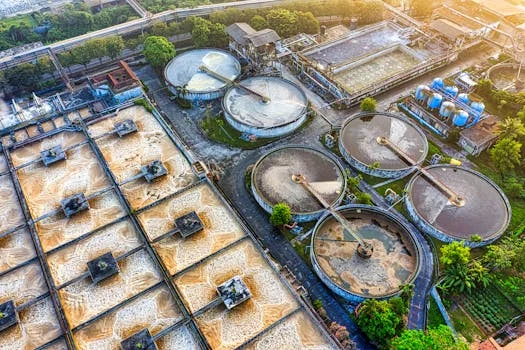
Dissolved Air Flotation (DAF) systems achieve 90% to 95% removal rates for fats, oils, and grease (FOG) in food processing applications by utilizing micro-bubbles to float particles to the surface for mechanical skimming. For Irbid’s food manufacturing sector, a high-efficiency DAF system for FOG and TSS removal is often the most critical component of the pre-treatment train. These systems are capable of handling capacities from 4 to 300 m³/h, making them scalable for both small boutique processors and large-scale industrial exporters. By removing the bulk of the organic load before it reaches the municipal sewer, DAF systems ensure the factory stays well within the WAJ’s 10 mg/L grease limit.
For facilities requiring even higher discharge quality or those looking toward water scarcity solutions, Membrane Bioreactor (MBR) technology is the gold standard. A compact MBR system for high-quality effluent and water reuse combines biological treatment with membrane filtration, achieving TSS levels of less than 1 mg/L and COD removal rates exceeding 90%. This technology is particularly suited for pharmaceutical or chemical plants in the Irbid region that need to meet stringent standards or wish to recycle process water for non-potable uses, such as cooling towers or irrigation, thereby reducing their reliance on Jordan’s stressed freshwater supplies.
At the inlet of any treatment plant, physical debris must be managed to protect sensitive downstream pumps and membranes. A rotary mechanical bar screen is essential for removing fibers, rags, and large solids that are common in textile and plastic manufacturing. Following screening, an automatic chemical dosing system is used to inject coagulants like alum or ferric chloride and pH adjusters. This process destabilizes colloidal particles and neutralizes the water, which is a prerequisite for effective sedimentation or flotation. Precise PLC-controlled dosing prevents the over-consumption of chemicals, a major operational cost driver for industrial plants in Jordan.
| Technology | Primary Contaminants Removed | Removal Efficiency | Typical Application in Irbid |
|---|---|---|---|
| DAF (Dissolved Air Flotation) | FOG, TSS, Insoluble BOD | 90–95% | Olive oil mills, snack food production |
| MBR (Membrane Bioreactor) | COD, BOD, Bacteria, TSS | 95–99% | Pharmaceuticals, Industrial water reuse |
| Chemical Dosing Skids | Heavy Metals, Dissolved Organics | N/A (Process aid) | Metal plating, Textile dyeing pH control |
| Mechanical Bar Screens | Large solids, fibers, rags | 90% (of >5mm solids) | Textile mills, General pre-treatment |
How to Choose the Right System for Your Facility
Integrated package wastewater systems for small to mid-sized factories in Irbid provide a footprint reduction of up to 50% compared to traditional reinforced concrete treatment structures. When choosing a system, the first variable is the industry-specific contaminant profile. Food processing plants must prioritize FOG removal; a DAF system is the non-negotiable first step here. If the goal is to meet the highest environmental standards or to implement modular wastewater solutions for remote or space-constrained facilities, adding a polishing stage like a WSZ integrated sewage treatment unit can provide a "plug-and-play" solution that handles both industrial and employee domestic waste in one system.
Metalworking, automotive, and surface finishing facilities face different challenges, primarily involving oil-water emulsions and heavy metal precipitation. These plants require a robust chemical dosing and sedimentation setup. By adjusting pH to specific setpoints, heavy metals like chrome or zinc can be precipitated as hydroxides and then removed through clarification. For high-tech manufacturing in Irbid's industrial zones, a reverse osmosis (RO) system can be added after the primary treatment to produce ultra-pure water, which is often required for sensitive manufacturing processes or high-pressure boiler feed.
Decision-makers must also evaluate the available space and the timeline for implementation. Traditional concrete tanks take months to design, permit, and build. In contrast, skid-mounted or containerized systems can be deployed in weeks. This speed is often crucial for factories facing immediate pressure from WAJ inspectors to rectify non-compliance issues. industrial wastewater compliance strategies in emerging markets show that modular systems offer better resale value and the ability to relocate the equipment if the factory moves or expands, providing a level of asset flexibility that concrete infrastructure cannot match.
| Industry Sector | Key Contaminant | Recommended Treatment Train | Compliance Strategy |
|---|---|---|---|
| Food & Beverage | Fats and Oils | Screening > DAF > MBR | Focus on FOG < 10 mg/L |
| Textiles & Dyeing | Color and TSS | Screening > Chemical Dosing > DAF | Focus on pH and Color removal |
| Metal Finishing | Heavy Metals | Chemical Precipitation > Filtration | Focus on pH 6–9 and Metal limits |
| Pharmaceutical | Toxic Organics | MBR > RO > UV Disinfection | Focus on BOD < 30 and Reuse quality |
Cost and ROI Considerations for Industrial Treatment Systems
The initial capital expenditure for an industrial-grade DAF system in the Irbid region typically starts at $45,000 for a 10 m³/h unit, excluding local civil works and installation. For more complex needs, MBR systems generally range from $80,000 to $500,000, depending on the required membrane surface area and the level of automation. While these figures represent a significant upfront investment, the return on investment (ROI) is driven by three primary factors: penalty avoidance, chemical efficiency, and water conservation. Automatic chemical dosing systems, priced between $12,000 and $35,000, can reduce chemical waste by 20–30% through precise sensor-based control, often paying for themselves within 18 months.
The financial risk of non-compliance in Jordan is rising as the government seeks to protect its new infrastructure investments. WAJ penalties can reach JD 5,000 per month, and the cost of being disconnected from the sewer network—forcing a factory to rely on expensive tanker haulage for waste—can cripple a business's margins. By implementing advanced filtration, factories can significantly reduce their TSS, as detailed in this industrial design and TSS removal ROI guide. Effective sludge management using a filter press can further improve ROI by reducing the volume of waste that must be transported to hazardous waste sites, cutting disposal costs by up to 70%.
Finally, modular, skid-mounted systems offer a distinct cost advantage in terms of installation. Because these units are pre-piped and pre-wired in a controlled factory environment, they reduce on-site labor and installation time by approximately 40%. For a factory in Irbid, this means less operational downtime and a faster path to compliance. When factoring in the extended lifespan of downstream equipment—which is protected from corrosion and clogging—the total cost of ownership for a dedicated pre-treatment system is consistently lower than the cumulative costs of fines, repairs, and high water consumption fees.
Frequently Asked Questions
What is industrial wastewater treatment?
It is the specialized process of removing contaminants from effluent generated by manufacturing or industrial operations. Unlike municipal treatment