Why Concepción Operators Are Retrofitting ETPs in 2026
An effluent treatment plant in Concepción in 2026 must clear a double bar: D.S. MINSEGPRES 609/1998 general limits — pH 6.0–8.5, SS ≤ 80 mg/L, BOD₅ ≤ 35 mg/L — plus site-specific caps issued under Bio-Bío Dirección General de Aguas Resolución Exenta 117355 for the fishmeal, pulp & paper, and steel clusters. A typical 50–500 m³/day train pairs screening, DAF for FOG/TSS, MBR polishing, and chlorination, delivering reuse-grade permeate at 92–97% COD removal.
Bio-Bío Res. Exenta 117355/2024 has tightened sectoral limits progressively over the last two cycles, and Concepción operators are now feeling the pinch. The fishmeal cluster around Talcahuano and the Itata coast produces a high-COD, high-ammonia, high-FOG signature that old dissolved-air flotation cells with no biological polish cannot clear under the new caps. Pulp & paper operations at Nueva Aldea and Arauco face stricter color and AOX targets, while Huachipato and downstream metalfinishers are being pushed on heavy metals and zinc. Regional plant data show roughly 40% of mid-size industrial discharges still exceed general D.S. 609 limits at the first sampling point after Res. Exenta 117355 took effect (waterandwastewater.com 2025-08 cites a comparable ~40% non-compliance rate for North American municipal plants as an analogous benchmark for the same compliance gap pattern).
Climate is the second forcing function. Bio-Bío rainfall runs 1,100–1,300 mm/yr, and Concepción winter wastewater temperature drops to 12–14 °C from May through August. Nitrification rates halve across that swing, and conventional activated sludge basins sized for summer MLSS lose margin in winter. Operators who want a year-round, permit-stable design are converging on MBR-based trains with extended SRT, DAF pre-treatment, and a documented reuse-grade permeate target — a stack that holds even when the river basin is in spate.
2026 Discharge Limits That Apply to a Concepción ETP
Two regulatory layers govern a 2026 ETP in Concepción: the national D.S. MINSEGPRES 609/1998 general table for discharges to watercourses, and the Bio-Bío Res. Exenta 117355 sectoral overlay for the fishmeal, pulp, and steel clusters. Plants that discharge to the ESSBIO sewer fall under D.S. MINSEGPRES 90/2000 instead, which carries its own set of caps negotiated with the utility. The table below reproduces the 609/1998 general limits that every Concepción ETP must meet as a floor before any site-specific tightening is layered on top.
| Parameter | D.S. 609/1998 limit (discharge to watercourse) | Notes for 2026 Concepción permit |
|---|---|---|
| pH | 6.0–8.5 | Continuous monitoring; fishmeal acid-cracking steps can pull below 6 without neutralization |
| Temperature | < 35 °C | Condensate from pulp digesters can exceed; equalization required |
| Suspended solids (SS) | ≤ 80 mg/L | DAF + MBR routinely delivers < 5 mg/L |
| BOD₅ | ≤ 35 mg/L | MBR permeate typically < 5 mg/L |
| Oils & greases | ≤ 20 mg/L | Critical for fishmeal; DAF alone insufficient |
| Total nitrogen | ≤ 50 mg/L | Res. Ex. 117355 has tightened for fishmeal cluster |
| Total phosphorus | ≤ 10 mg/L | Biological P removal recommended for new builds |
| COD | No fixed cap (regulated via BOD) | Reuse contracts increasingly call for COD < 50 mg/L |
Res. Exenta 117355 sits on top of the 609 table and tightens sector-by-sector. For the fishmeal cluster, the practical effect is lower ammonia and stricter FOG caps than the general 20 mg/L oils & greases ceiling. For pulp, expect tighter color and adsorbable organic halide (AOX) targets. For the steel cluster, the overlay pushes zinc, lead, and total heavy metals below the 609 default. The single most common permit mistake is assuming 609 compliance is enough — it is not, and Res. Exenta 117355 caps can be 20–40% stricter on the contested parameters.
Plants that pipe to the ESSBIO sewer use D.S. 90/2000 instead. Those limits are negotiated with the utility and are typically 10–15% tighter on SS and BOD than 609 because the downstream municipal plant adds load. If the project team is weighing a rivercourse vs sewer discharge, the DAF + MBR + RO train described later comfortably meets both envelopes. RO or nanofiltration polishing is increasingly used to meet the reuse-grade effluent suitable for agricultural or indirect potable usage that tighter contracts now demand (per Schrader 2016, University of Twente, on direct nanofiltration of WWTP effluent).
Matching the Process Train to Your Influent
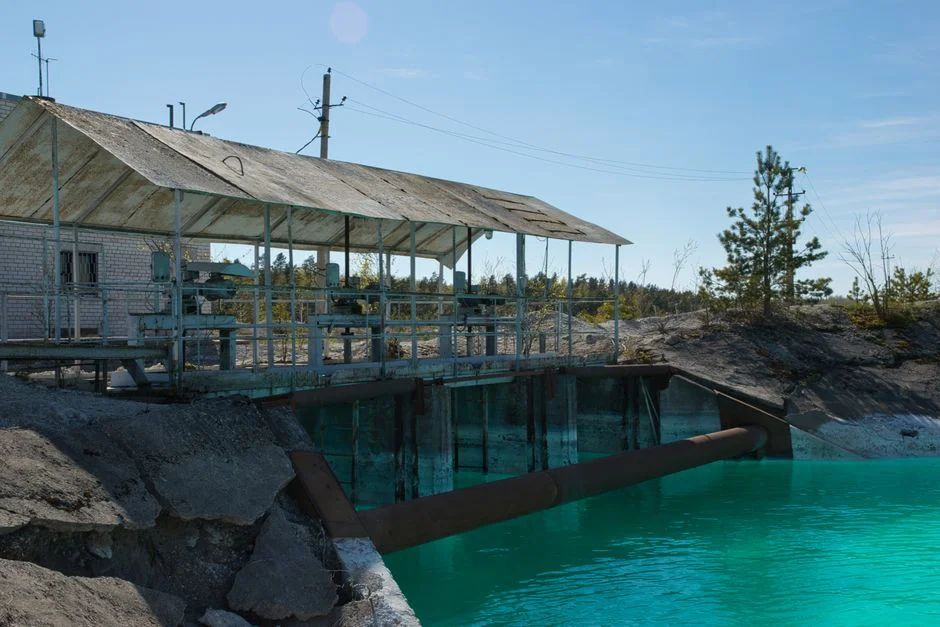
Influent signature drives the train. Concepción's three dominant industries — fishmeal, pulp & paper, and steel — produce radically different wastewaters, and a one-size-fits-all DAF + MBR + ClO₂ line works only after the upstream is matched to the load.
Fishmeal (Itata, Talcahuano, Coronel): High FOG (often 800–2,000 mg/L), high ammonia (200–400 mg/L N), and high salinity from cook water. The working train is screening with a GX series rotary mechanical bar screen, equalization, then a dissolved air flotation system that delivers 85–95% FOG removal and 90–95% TSS removal at 4–6 m³/m²·h hydraulic loading, followed by an anoxic-aerobic HydropureWater MBR membrane bioreactor system for nitrification and COD cut. Equalization is not optional — without a 12–24 h buffer, the DAF polymer dose chases the load and the MBR nitrifiers wash out.
Pulp & paper (Nueva Aldea, Arauco): High COD (1,500–4,000 mg/L), dark color from lignin, variable pH 4–9 across the batch, and high temperature from digester condensates. The working train is neutralization, primary clarification, and MBR polishing — pH buffering is mandatory because MBR nitrifiers stall below pH 6.5. Color removal benefits from MBR retention of high-MLSS biomass, which adsorbs color bodies. For tertiary polishing on the cleanest mills, a sand filter + RO polish brings the permeate to boiler-feed spec. The Choudhury 2018 tertiary case study documents 98% contaminant removal across a properly sequenced physicochemical + biological + RO train (per Choudhury & Veeraraghavan, IJESNR 2018-06), which is a defensible benchmark for the Concepción pulp tertiary stage.
Steel and metalworking (Huachipato corridor): Cutting oils, rolling emulsions, and heavy metals. The working train is DAF for oil + TSS, chemical precipitation for metals (lime + sulfide at pH 9–10), multimedia filtration, and RO if zero liquid discharge is the target. Equalization is again the first unit, and the polymer dose on the DAF must be tuned for oil, not just TSS, or the float load overwhelms the scraper.
The generic process flow that fits all three, with industry-specific unit operations upstream, is: rotary bar screen → equalization → DAF → biological reactor → MBR membrane module → ClO₂ disinfection → optional RO polish.
MBR vs Conventional Activated Sludge for 50–500 m³/day
For the 50–500 m³/day mid-size segment that dominates the Concepción industrial park market, the procurement question is MBR or conventional activated sludge plus secondary clarifier. Below is the head-to-head a procurement committee will ask for.
| Criterion | MBR (submerged PVDF, 0.1 μm) | Conventional AS + secondary clarifier |
|---|---|---|
| Effluent COD | < 50 mg/L directly | 60–80 mg/L; needs tertiary polish for < 50 |
| Effluent TSS | < 5 mg/L directly | 15–30 mg/L; sand filter needed for reuse |
| Sludge retention time (SRT) | 20–60 days | 5–15 days |
| Footprint | ~60% smaller than AS + clarifier at same load | Larger aeration basin + clarifier + sand filter |
| Winter nitrification (12–14 °C) | Holds at SRT 30+ days | Needs 2–3× larger aeration tank to compensate |
| Aeration energy | 10–20% higher than AS | Baseline |
| CAPEX envelope (100 m³/day) | Higher by ~USD 80–120K vs AS | Lower CAPEX; higher tertiary polish cost |
| OPEX pattern | Membrane replacement every 5–7 years | More sludge hauling, more tertiary media |
For Concepción specifically, the MBR advantage compounds in three places. First, footprint: Huachipato-adjacent sites and Talcahuano retrofits are space-constrained, and the DF series PVDF flat sheet membrane module cuts the biological section by roughly 60% versus an AS basin plus clarifier. Second, winter nitrification: at 12–14 °C, an SRT of 20–30 days is the working minimum for full ammonia oxidation, and MBR holds that SRT reliably while conventional AS drifts into partial nitrification by August. Third, effluent stability: the 0.1 μm PVDF membrane acts as an absolute barrier, so sludge washout events that plague clarifier-based plants do not occur. The trade-off is membrane replacement on a 5–7 year cycle and 10–20% more blower energy — both are line items, not deal-breakers, and the OPEX delta is typically recovered inside three years on avoided sludge hauling alone.
Sludge Handling and Reuse Options
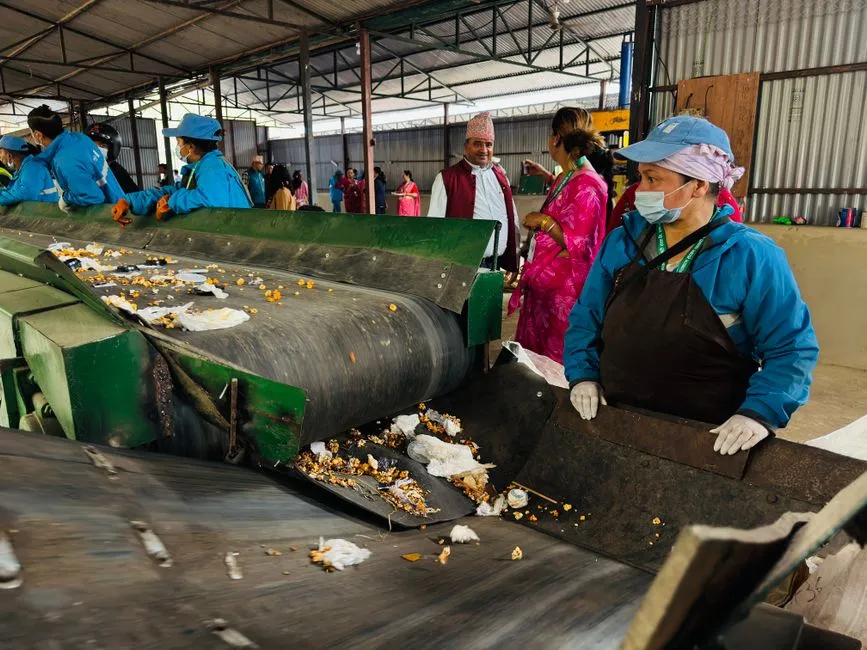
Sludge handling is the line item that gets missed in early CAPEX boards and bites during commissioning. Across the SBR/AS benchmark plants, sludge dewatering and disposal runs 15–25% of total annual OPEX (HydropureWater field data, 2026). On a 100 m³/day Concepción ETP, that translates to USD 25,000–55,000 per year in polymer, hauling, and landfill fees, depending on cake dryness.
For the 50–500 m³/day range, the working dewatering unit is a HydropureWater plate and frame filter press sized at 1–500 m² filtration area, fed by a polymer-conditioned sludge at 2–4% DS. A well-tuned press delivers 25–35% dry-solids cake, which cuts hauled sludge volume by roughly 80% versus a decanter or drying bed. For plants that want to skip DAF and run a primary clarifier instead — typically a steel or paper mill with lower FOG — a high-efficiency sedimentation tank operating at 20–40 m/h surface loading rate is the cheaper primary stage and feeds the press directly.
End-of-pipe, biosolids from Concepción fishmeal and pulp ETPs are most commonly sent to an authorized sanitary landfill, with limited composting for pulp-derived biosolids. Zero liquid discharge is rare unless the site is water-stressed or the reuse contract demands it; for most mid-size plants, the press + landfill route is the OPEX-optimal answer.
2026 CAPEX and OPEX Ranges for Concepción
For a 100 m³/day reference plant sized to the Concepción industrial park segment, the working CAPEX band in 2026 is USD 380,000–620,000 for a complete DAF + MBR + ClO₂ system. At a 950 CLP/USD reference rate, that is roughly 360–590 million CLP. The spread is driven by influent variability (fishmeal needs larger equalization), automation level, and whether the build is greenfield or a retrofit.
OPEX for the same reference plant runs USD 1.8–3.2 per cubic meter treated. Energy dominates at 45–60% of the OPEX stack, followed by sludge handling at 15–25% (per the HydropureWater SBR OPEX breakdown and the DAF operating cost guide, 2026). Membrane replacement budgets should carry USD 8,000–15,000 per year for a 100 m³/day MBR, amortized over a 5–7 year module life. Polymer and chlorine dioxide chemicals add another 5–10%.
Adding an RO polish costs roughly USD 120,000–180,000 in additional CAPEX and recovers around 70% of the MBR permeate as reuse-grade water suitable for boiler feed or cooling-tower make-up. For energy benchmarking on the polish step, the Brazil off-grid GH₂ study reports 27.54 kg H₂O/kg H₂ and 75.90 kWh/kg H₂ as the water-and-power intensity floor for an electrolyzer fed by reclaimed water (ACS Omega 2025); while not a 1:1 comparator, it gives an engineer a defensible lower-bound energy number when sizing the RO concentrate management train.
Frequently Asked Questions
What is the Bio-Bío discharge standard for BOD and SS in 2026?
The floor is D.S. MINSEGPRES 609/1998: BOD₅ ≤ 35 mg/L, SS ≤ 80 mg/L, pH 6.0–8.5, oils & greases ≤ 20 mg/L, total N ≤ 50 mg/L, total P ≤ 10 mg/L. Bio-Bío Res. Exenta 117355 layers sectoral caps on top, tightening FOG and ammonia for the fishmeal cluster, color and AOX for the pulp cluster, and heavy metals for the steel cluster. Plants discharging to the ESSBIO sewer use D.S. 90/2000 limits instead, which are typically 10–15% tighter on SS and BOD than 609.
Does an MBR system meet Chilean reuse standards without RO?
For non-potable reuse (cooling-tower make-up, irrigation, boiler feed at moderate pressure), yes — a properly designed MBR with submerged 0.1 μm PVDF membranes delivers COD < 50 mg/L and TSS < 5 mg/L directly, which clears the 609 envelope and most reuse contracts. For boiler feed at higher pressure or potable reuse, an RO or nanofiltration polish is needed; Schrader 2016 (University of Twente) documents direct nanofiltration of WWTP effluent as a viable route to potable-grade reuse under tightening reuse standards.
How much does a 100 m³/day ETP cost in Concepción?
USD 380,000–620,000 CAPEX for a complete DAF + MBR + ClO₂ system, or roughly 360–590 million CLP at 950 CLP/USD. OPEX runs USD 1.8–3.2 per cubic meter treated, dominated by energy (45–60%) and sludge handling (15–25%). Adding an RO polish costs an extra USD 120,000–180,000 and recovers about 70% of the MBR permeate as reuse-grade water.
Can DAF alone reach D.S. 609 limits?
No. DAF delivers 85–95% FOG removal and 90–95% TSS removal at typical polymer doses, which is enough to clear the SS ≤ 80 mg/L cap, but the BOD₅ ≤ 35 mg/L cap requires a biological step. DAF must be paired with an MBR, SBR, or conventional activated sludge basin to bring BOD and ammonia into compliance.
What is the winter nitrification risk and how is it mitigated?
Concepción winter wastewater drops to 12–14 °C from May through August, and nitrification rates halve across that swing. A conventional activated sludge plant at 5–15 day SRT drifts into partial nitrification by August. The mitigation is either an MBR at 20–60 day SRT, which holds full ammonia oxidation year-round, or a 2–3× larger conventional aeration basin to compensate. MBR is the more compact answer for space-constrained retrofits in the Concepción industrial park.
Related Equipment
- Chlorine dioxide generator — specifications, capacity range, and technical data