Why Brasília Needs Its Own ETP Engineering Approach
An effluent treatment plant in Brasília in 2026 is not solved by a generic Latin American ETP spec sheet. Federal floor limits are set by CONAMA Resolution 430/2011, Article 16, but on top of that, industrial discharges inside the Distrito Federal pass through a second gate: CAESB rules for any connection or indirect discharge to the public sewer, plus an IBRAM environmental licensing process (often via a LFLO or LAO for the plant itself, and a separate outorga for reuse). The 2023 MDPI case study on Brazilian industrial effluent treatment states directly that "the effluent treatment techniques used in Brazil are old and inefficient due to the importation of technologies that were optimized for companies located in countries with a non-tropical climate" (MDPI, Water, vol. 15, no. 3, p. 400, 2023-01). That is the engineering justification for a Brasília-specific design: a CAS basin sized in Hamburg or a UF rack commissioned in Tianjin will underperform in a 28 °C average, 1,500 mm/year rainfall regime.
The legal exposure is real. Brazilian Criminal Code, Article 54, sets 1–5 years' imprisonment for a company whose discharge makes an urban or rural area unfit, with the same range applying when precaution measures are omitted in the face of serious or irreversible damage (MDPI, 2023). For a procurement lead justifying CAPEX, the ETP decision is not a sustainability line item — it is a compliance gate. The Sabin Group NTO plant, operational since October 2021, treats and reuses 3,128,000 m³/year at its Brasília administrative headquarters, demonstrating that high-recovery ETPs are operationally proven in the federal capital (brasilpelomeioambiente.com.br, 2022).
CONAMA 430 and Local Brasília Discharge Limits
CONAMA 430/2011 Article 16 is the federal binding table; the table below is reproduced verbatim from the parameters quoted in the MDPI analysis and applies to any industrial source discharging to a receiving body in Brazil.
| Parameter | CONAMA 430/2011 limit (Art. 16) |
|---|---|
| pH | 5–9 |
| Temperature | < 40 °C |
| Settleable solids | ≤ 1 mL/L (1-h Inmhoff cone) |
| Discharge flow | ≤ 1.5× average daily activity flow |
| Mineral oils | ≤ 20 mg/L |
| Vegetable oils and animal fats | ≤ 50 mg/L |
| Floating materials | Absent |
| BOD₅ removal | ≥ 60% (reducible only with self-purification study) |
The 60% BOD removal is a minimum removal efficiency, not a fixed effluent concentration — the receiving body's assimilative capacity can be invoked through a self-purification study, but only with supporting hydro-geochemical modelling accepted by the environmental agency. In practice, CAESB and IBRAM commonly require stricter values at the point of connection: a COD ceiling of around 120 mg/L and TSS ≤ 30 mg/L are typical industrial-discharge thresholds applied in the DF for indirect discharge to the public sewer, although exact numbers must be confirmed against the current CAESB technical normative at the time of permitting. This is a procurement fact that Brazilian and Asia-based head offices often miss: the federal floor and the local DF ceiling are not the same number.
The oil-and-grease split also matters. Food, pharma, and cosmetics plants in Brasília generate both mineral oils (lubricants, compressor condensate) and vegetable/animal fats (cleaning, formulation residues), and the two limits are enforced separately. A single FOG monitor downstream of a DAF unit covers both, but the pre-treatment train must be sized for the higher of the two expected loads.
Technology Options That Work in the Cerrado Climate
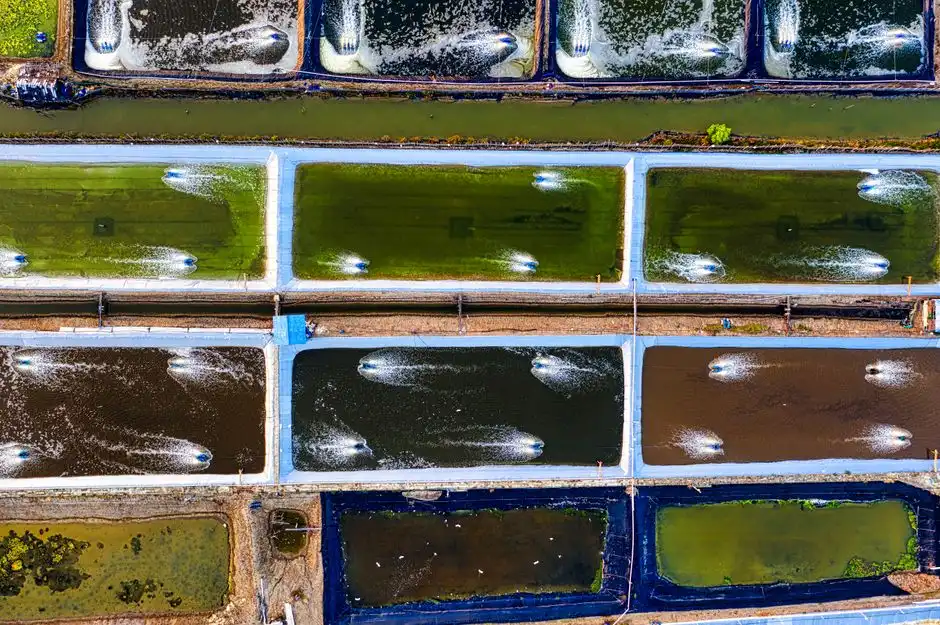
Four trains cover most industrial cases in Brasília: conventional activated sludge (CAS), DAF + CAS, MBR, and constructed wetlands for polishing. The table below compares them on footprint, removal, CAPEX band, and Cerrado fit. The data bands are planning estimates for a mid-sized industrial plant in the 50–500 m³/day range; site-specific quotes are required before any budget submission.
| Technology | Footprint (relative) | BOD / TSS removal | Indicative CAPEX (USD/m³/day) | Cerrado fit |
|---|---|---|---|---|
| CAS (conventional) | Large (1.0× baseline) | 85–95% BOD, 85–90% TSS | 200–450 | Acceptable; aeration tower must be derated for 25–32 °C influent |
| DAF + CAS | Medium (0.8×) | 90–95% BOD, 90–95% TSS, FOG down to <20 mg/L | 350–600 | Strong fit for food, dairy, cosmetics pre-treatment |
| MBR (membrane bioreactor) | Small (≈0.4× CAS) | 95–99% BOD, >99% TSS, <1 µm filtration | 600–1,100 | Best for reuse and small sites; membrane fouling needs tropical management |
| Constructed wetlands (polishing) | Very large (3–5× CAS) | 50–80% BOD polish; strong micropollutant removal | 80–200 | Low OPEX but land-hungry; limited in central Brasília |
For most food, pharma, and cosmetics plants in the DF, a MBR membrane bioreactor system sized at 10–2,000 m³/day covers the main biological step with reuse-grade permeate. Upstream, a DAF pre-treatment unit rated at 4–300 m³/h takes out FOG and floatables — this is the standard combination for meat, dairy, and personal-care facilities where oil and grease swings are daily. For sites with more land — satellite campuses, agro-industrial parks at the edge of DF — polishing through constructed wetlands is supported by Wageningen thesis work on Removal of micropollutants from wastewater treatment plant effluent by constructed wetlands (WUR thesis 8189, 2024) as a low-OPEX finishing step, and a constructed wetland polishing guide covers the design equations. If the goal is 100% reuse like the Sabin NTO plant, nanofiltration after the biological stage is the polishing path; the University of Twente thesis by Schrader, Direct nanofiltration of wastewater treatment plant effluent (2020), demonstrates that direct NF can polish WWTP secondary effluent to potable standards. A package sewage treatment plant engineering guide is worth a parallel read for plants below 50 m³/day, where a skid-mounted WSZ unit often replaces a custom concrete basin.
CAPEX and OPEX Bands for a 2026 Brasília ETP
The table below converts the technology comparison into procurement-ready bands. They are framed for three flow tiers and assume civil works, equipment, instrumentation, and commissioning as a single EPC scope, with FOB Asia equipment and inland trucking to DF included.
| Flow tier | CAS CAPEX (USD/m³/day) | DAF + CAS CAPEX | MBR CAPEX | Indicative OPEX (USD/m³ treated, MBR) |
|---|---|---|---|---|
| Small (<50 m³/day) | 350–600 | 500–800 | 800–1,300 | 0.45–0.75 |
| Mid (50–500 m³/day) | 250–500 | 400–700 | 600–1,100 | 0.30–0.55 |
| Large (>500 m³/day) | 200–400 | 350–600 | 500–900 | 0.25–0.45 |
Energy is the dominant OPEX line on an MBR, and aeration alone typically accounts for 45–60% of electricity at the plant, so blower selection and DO control drive the operating budget more than membrane replacement. Chemical dosing for pH correction, nutrient removal, and CIP is a controlled cost on a PLC-controlled chemical dosing system, but on poorly tuned sites chemical OPEX can rival energy. The Sabin benchmark is the cleanest published Brasília case: a 22.8% reduction in total water consumption and a 26.5% reduction in litres per exam at the NTO clinical-laboratory plant after the ETE was commissioned (brasilpelomeioambiente.com.br, 2022). For high-water-cost facilities — pharma, clinical labs, cosmetics — that is a payback frame of 3–6 years on the reuse credit alone, before any CONAMA/CAESB non-compliance risk is priced in. Brasília's landlocked location adds roughly 8–15% to logistics costs versus coastal Brazilian states for imported skids, a number worth carrying into an Asian-sourced vendor comparison.
Tropical-Climate Design and Commissioning Checklist
Six items belong on every Brasília ETP commissioning punch-list because imported European and northern Chinese designs miss them systematically.
- Influent temperature 25–32 °C year-round. Biological kinetics are accelerated; denitrification rates roughly double between 15 °C and 28 °C, so aeration tank volume can be reduced, but oxygen-transfer efficiency drops, and blowers must be derated for the warm liquor. A rotary mechanical bar screen ahead of the biological stage keeps rags and plastics out of the MBR cassette, which directly extends cleaning intervals.
- Seasonal rainfall Oct–Apr. A 1:5-year storm can deliver 2–3× dry-weather inflow; equalization must hold at least 8 hours of peak, and overflow routing must be physically separate from the reuse tank.
- Sludge handling. Tropical sludge degrades and generates odour within hours; covered dewatering on a plate and frame filter press and rapid off-site disposal to a CAESB-licensed receiver is standard practice.
- Ventilation and corrosion. FRP, coated carbon steel, or 316L stainless for any tank, panel, or walkway in the headworks and chemical room; aluminium enclosures fail in the Cerrado humidity within 18–24 months.
- Reuse storage. If the goal is garden irrigation or toilet flush, a covered reuse tank with at least 24 h residence reduces pathogen regrowth in 28–32 °C water.
Supplier Evaluation Framework for Brasília Projects
A shortlist of three vendors is enough to defend a 2026 procurement; the criteria below are the ones that have separated successful projects from warranty-claim cases in the DF.
- Documented CONAMA 430 compliance: a reference plant in Brazil with published influent and effluent data, not just a sales brochure in Portuguese.
- Tropical-climate references: at least one operating plant in Brazil or a comparable tropical site; vendors whose entire base is in northern Europe or northern China should be downgraded per the MDPI 2023 finding on imported-inefficient technology.
- Service radius and Portuguese documentation: a service engineer in Brasília or São Paulo within 24 h, and full schematics, P&IDs, and O&M manuals in Portuguese — not machine-translated.
- FAT testing and pre-commissioning: a witnessed Factory Acceptance Test on the skids before inland truck dispatch; this catches instrumentation and panel-wiring faults before they become Brasília site delays.
- Shipping and inland logistics: proven capability to ship skid-mounted, pre-wired units to Santos or Itaguaí and truck them to DF under CAESB-compliant containment. A lamella clarifier or underground package sewage treatment plant is typically the heaviest single item and dictates the trucking plan. For tropical projects outside Brazil, a parallel read on the Lagos industrial wastewater guide offers a useful cross-tropical benchmark.
Frequently Asked Questions
What are the binding CONAMA 430/2011 discharge limits for an ETP in Brasília?
pH 5–9, temperature below 40 °C, settleable solids ≤1 mL/L in a 1-h Inmhoff cone, mineral oils ≤20 mg/L, vegetable/animal fats ≤50 mg/L, no floating materials, and BOD₅ removal ≥60% (reducible only via a self-purification study accepted by the environmental agency) (CONAMA 430/2011 Art. 16, quoted in MDPI 2023).
How much does an effluent treatment plant in Brasília cost per m³/day in 2026?
Planning estimates range from USD 200–600/m³/day for a CAS or DAF + CAS train and USD 500–1,300/m³/day for an MBR, depending on flow tier and effluent target; site-specific EPC quotes are required before submission to head office (HydropureWater planning data, 2026).
What permits does an industrial ETP need in Brasília-DF?
Industrial discharges need an IBRAM environmental license (LFLO/LAO scope) for the plant, a CAESB technical approval for any connection or indirect discharge to the public sewer, and an outorga de direito de uso de recursos hídricos from ANA/ADASA if water reuse exceeds the licence thresholds.
Which technology is best for a food or cosmetics plant in Brasília?
DAF for FOG pre-treatment followed by an MBR biological stage is the standard combination for food, dairy, and personal-care facilities, giving sub-1 µm permeate suitable for garden irrigation or toilet flush and meeting CONAMA 430 limits in a single compact skid (HydropureWater application data, 2026).
Why do imported European ETPs underperform in Brasília?
The MDPI 2023 case study on Brazilian industrial effluent treatment concluded that treatment techniques are "old and inefficient due to the importation of technologies that were optimized for companies located in countries with a non-tropical climate", with 25–32 °C influent temperatures, 1,500 mm/year rainfall, and high organic loading breaking design assumptions inherited from temperate-climate vendors (MDPI, Water, vol. 15, no. 3, p. 400, 2023-01).