What Actually Drives Dissolved Air Flotation Operating Cost
Dissolved air flotation operating cost in 2026 typically runs $0.08–$0.45 per m³ treated, broken into four line items: recycle-pump energy (35–50%), coagulant + polymer chemicals (25–40%), sludge handling and dewatering (15–25%), and labor plus maintenance (5–15%). The single largest swing factor is influent TSS and FOG load — a 1,000 mg/L oily influent can push OPEX 2–3× higher than a 200 mg/L TSS stream at identical flow.
The four buckets behave differently. Energy scales with hydraulic load and recycle ratio, not with how dirty the water is. Chemicals scale with mass of contaminant — doubling influent TSS roughly doubles coagulant and polymer dose. Sludge handling scales with float-solids production. Labor is largely fixed per shift, so OPEX per m³ drops as flow rises until the next operator is needed. A 200 mg/L TSS stream typically costs 40–60% less to treat than a 1,000 mg/L oily stream at the same flow, all else equal (HydropureWater field data, 2026).
Two engineering knobs dominate the OPEX equation. The A/S (air-to-solids) ratio, normally 0.005–0.060, controls how much air you pressurize into the recycle stream relative to the solids load; undersize it and effluent quality suffers, oversize it and you waste pump kWh. Recycle ratio, typically 20–50%, controls how much clarified water you re-pressurize — 20% for low-TSS polishing, 40–50% for high-FOG streams such as dairy or meat-processing effluent. Both knobs are set by Henry's-law physics at saturation pressures of 4–6 bar, the standard range for industrial DAF units (per the ScienceDirect DAF overview, 2024 ed.). The HydropureWater dissolved air flotation system is rated across that 4–6 bar envelope, which is why the benchmarks below apply directly to it.
Energy Cost: The Largest Single Line in 2026 DAF OPEX
Recycle-pump energy is the single largest OPEX line for almost every industrial DAF: 35–50% of the total bill, driven by a pump that must pressurize 20–50% of the clarified effluent flow to 4–6 bar before reinjecting it through the nozzle manifold. Measured at the meter, the recycle pump typically draws 0.05–0.18 kWh per m³ of treated flow; at 2026 industrial electricity of $0.08–$0.14/kWh, that is $0.004–$0.025/m³ of energy alone — small on its own, but multiplied by annual flow it dwarfs every other line item (HydropureWater field data, 2026).
The trade-off is mechanical. Saturation pressure follows Henry's law: doubling pressure roughly doubles dissolved air mass, which is what builds the micro-bubble cloud. Going from 4 bar to 6 bar raises dissolved air by ~50% and improves float solids marginally, but the pump kWh scales linearly with pressure rise. The practical ceiling is 6 bar — beyond that, the marginal bubble gain no longer pays for the energy penalty.
Recycle ratio is the bigger lever. At 20% recycle, pump throughput is 0.2 × influent flow; at 50% recycle it is 0.5 × influent flow. A high-FOG stream from a poultry or edible-oil plant may need 40–50% recycle to lift the float, while a low-TSS polishing application runs cleanly at 20%. The cheapest defensible DAF bill starts with the lowest recycle ratio the effluent quality will tolerate. A variable-frequency drive (VFD) on the recycle pump is the single fastest-payback retrofit in this category: typical 25–35% kWh reduction, 2–3 year simple payback at $0.10/kWh (HydropureWater field data, 2026).
| Parameter | Low-load (polishing) | Mid-load (general industrial) | High-load (oily/FOG) |
|---|---|---|---|
| Recycle ratio | 20% | 30% | 40–50% |
| Saturation pressure | 4 bar | 5 bar | 6 bar |
| Pump kWh per m³ treated | 0.05–0.08 | 0.08–0.12 | 0.12–0.18 |
| Energy cost @ $0.10/kWh | $0.005–$0.008/m³ | $0.008–$0.012/m³ | $0.012–$0.025/m³ (pre-VFD) |
| VFD retrofit kWh reduction | 15–20% | 25% | 30–35% |
Chemical Cost: Coagulants, Polymers, and pH Adjusters
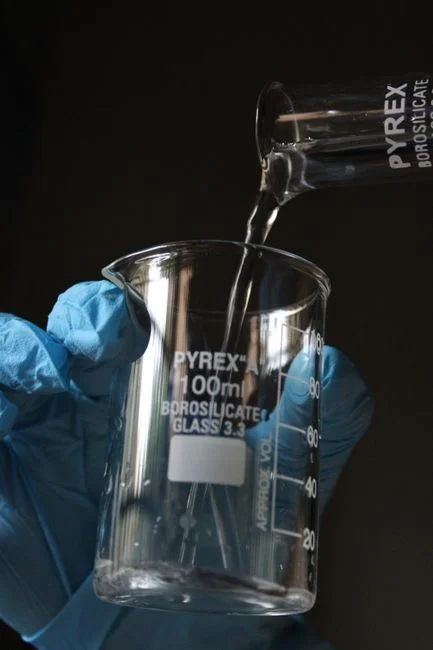
Chemicals are the second-largest OPEX bucket at 25–40% of the 2026 DAF bill, and the line where vendors most often undersell. Three sub-lines drive the total: coagulant (PAC or ferric chloride), flocculation polymer (anionic polyacrylamide), and pH adjustment.
Poly aluminum chloride (PAC) is the 2026 workhorse for most industrial streams, dosed at 50–150 mg/L. Springer research (10.1007/s11270-014-2140-5) recorded 98% chromium removal using PAC in a coagulation-DAF system on plating wastewater — proof that dose-response is real and steep at the lower end. Ferric chloride at 30–100 mg/L is the alternative for higher-TSS or chrome-bearing streams; it generates less demand for downstream polymer but produces roughly 3 kg of additional Fe(OH)₃ dry solids per kg of Fe dosed, which raises the sludge line.
Anionic polyacrylamide (PAM) at 1–5 mg/L is the standard flocculation aid. At 2026 bulk pricing of $3–$6/kg, polymer alone runs $0.005–$0.030/m³. The legacy 1975 algae-removal paper (Middlebrooks et al., 1975) cited 175 mg/L of alum as the working dose — a 51-year-old number that no longer reflects modern practice. PAC at 50–150 mg/L has displaced alum because it works across a wider pH window (6.0–9.0 vs. 6.5–7.5 for alum), generates 30–50% less sludge mass per unit contaminant removed, and avoids the alkalinity depression that forces extra caustic dosing downstream.
pH adjustment is the line most operators forget. Streams outside the 6.5–7.5 sweet spot need sulfuric acid or caustic to keep coagulant hydrolysis efficient; typical cost is $0.002–$0.010/m³, but on a stream that swings between pH 4 and pH 10 it can climb to $0.025/m³ and become the largest chemical sub-line. An automatic polymer and coagulant dosing system tied to a pH loop typically cuts this category 10–20% by killing the manual over-dose that operators apply as a safety margin.
| Chemical | 2026 dose range | 2026 bulk price | Per-m³ cost | Notes |
|---|---|---|---|---|
| PAC (polyaluminum chloride) | 50–150 mg/L | $0.30–$0.60/kg active | $0.015–$0.090/m³ | Workhorse for 6.0–9.0 pH |
| Ferric chloride (FeCl₃) | 30–100 mg/L | $0.40–$0.80/kg active | $0.012–$0.080/m³ | Adds ~3 kg dry solids per kg Fe |
| Anionic PAM polymer | 1–5 mg/L | $3–$6/kg | $0.005–$0.030/m³ | Dose strongly flow- and TSS-dependent |
| Alum (historical baseline) | 175 mg/L (1975) | ~$0.25/kg | ~$0.044/m³ | Largely displaced by PAC |
| Sulfuric acid / caustic (pH adj.) | As needed | $0.15–$0.40/kg | $0.002–$0.025/m³ | Spikes on pH-volatile streams |
Sludge Handling: The Hidden 15–25% of DAF OPEX
DAF float is mostly water. Raw float typically runs 2–6% dry solids (94–98% water content), and hauling it off-site in that state is the most expensive mistake a plant can make. The disposal bill is driven by mass and hauling distance, both of which collapse when the float is dewatered on-site first (HydropureWater field data, 2026).
A plate-and-frame filter press for DAF float sludge takes the same float to 18–25% dry cake — a 4–6× reduction in mass and hauling cost. CAPEX is higher than a screw press, but polymer demand is lower and the cake is drier, which matters for landfill tipping fees that price wet waste at a premium. Screw presses and decanters deliver 15–20% dry cake at lower CAPEX; the trade-off is more polymer and a wetter cake that still incurs a leachate surcharge at most disposal sites.
Integrating DAF directly with on-site dewatering — same building, same operator, shared polymer feed — typically cuts sludge-disposal OPEX 30–50% versus hauling liquid float (per HydropureWater field data, 2026). The downstream high-efficiency sedimentation tank integration also recovers fines that escape the float, sending them back to the press rather than to drain. On a 50 m³/h food-processing DAF producing 800 kg/d of dry float, integrated dewatering is typically the single largest absolute-$ saving on the entire OPEX sheet.
Labor, Maintenance, and Hidden Overheads
The 5–15% labor-and-maintenance line is the one operators under-budget most often because it never shows up on a chemical invoice. A typical 2026 two-shift DAF operation runs 0.25–1.0 person-hours per 100 m³ treated; at a loaded skilled-operator wage of $25–$45/h, that is $0.063–$0.450/m³ — wide, because the line is dominated by fixed shift cost. A 200 m³/h plant dilutes labor across more flow than a 20 m³/h plant, but each still needs a daily rounds visit, a chemical top-up, and a sample run (HydropureWater field data, 2026).
Planned maintenance runs 2–4% of DAF CAPEX per year. The recurring line items are pump mechanical seals (replaced every 12–18 months on continuous duty), saturation-tank inspection, scraper blade wear parts, and PLC servicing. Spare-parts holding cost — micro-bubble nozzles, polymer feed-pump diaphragms, level transmitters, pressure transmitters — amortizes to $0.005–$0.015/m³ across the typical DAF service life.
The hidden line nobody flags is reject-water recycle from sludge dewatering. The filtrate from a filter press or screw press is typically sent back to DAF head, and it is rarely clean — it carries 200–800 mg/L of suspended solids and residual polymer. If filtrate flow is 5–10% of DAF influent, the DAF is effectively treating 1.05–1.10× its nameplate flow and the chemical dose drifts up accordingly. Audit the recycle stream before chasing other levers; it is often the reason a "stable" DAF keeps overshooting its polymer budget.
DAF OPEX Compared With Sedimentation and Electrocoagulation in 2026
DAF does not compete on per-m³ cost alone. It competes on per-m³ cost plus footprint plus removal efficiency for light, buoyant particles — exactly the fraction that defeats gravity settling. The 2026 per-m³ benchmark for a mid-load industrial DAF is $0.18–$0.28/m³; for a comparable gravity clarifier it is $0.13–$0.22/m³, so DAF runs 10–30% higher on OPEX. What the buyer gets back is roughly one-fifth the footprint and 2–3× the FOG and suspended-solids removal on light, buoyant streams (HydropureWater field data, 2026).
Versus electrocoagulation (EC), the gap widens. Springer 2024 work on landfill-leachate EC (10.1007/s11356-024-31937-7) reports current densities of 15–25 mA/cm² with energy and electrode costs that put EC at $0.30–$0.55/m³ for oily streams below 50 m³/h scale — typically 50–70% more expensive than DAF on the same stream. EC wins only when influent conductivity is high and target contaminant is dissolved metal, not buoyant solids. For a deeper head-to-head, the electrocoagulation operating cost 2026 comparison covers the electrode-wear and pH-adjustment lines that swing EC economics.
Hybrid coagulation-DAF beats chemical precipitation alone on personal-care wastewater — the 2010 Desalination paper by El-Gohary et al. recorded 20–35% OPEX reduction by adding a DAF cell downstream of coagulation, mostly because float sludge dewaters more cleanly than chemical-precipitation sludge.
| Technology | 2026 OPEX per m³ (mid-load) | Footprint | FOG removal | Best-fit stream |
|---|---|---|---|---|
| DAF (coagulation + flotation) | $0.18–$0.28 | Compact | 80–95% | Oily, low-DS, FOG-bearing |
| Gravity sedimentation | $0.13–$0.22 | 5× DAF area | 30–50% | High-DS, low-FOG |
| Electrocoagulation | $0.30–$0.55 | Compact | 60–80% | Dissolved metals, high conductivity |
| Coagulation + sedimentation | $0.15–$0.24 | Large | 40–60% | Hard TSS, modest FOG |
How to Lower DAF Operating Cost in 2026: Six Proven Levers
These six retrofits are ranked by typical absolute-$ savings for a 50–200 m³/h industrial DAF, with payback math a CFO can sign off on.
- Sludge dewatering integration (largest $ saving). Pair the DAF with a filter press and route the filtrate back to head. Typical 30–50% reduction in sludge-disposal line. Payback 12–24 months on most sites; details in our 2026 sludge dewatering cost-reduction tactics guide.
- VFD on recycle pump. 25–35% kWh reduction; 2–3 year payback at $0.10/kWh. The single fastest electrical retrofit.
- Inline TSS/FOG sensor feedback to polymer dosing. Cuts polymer spend 10–20% by killing the manual safety-margin overdose. CAPEX $8K–$25K, payback under 12 months.
- Polymer prep automation. Eliminates 20–40% of polymer overuse from inconsistent manual make-down (age, concentration, mixing energy). The automatic polymer and coagulant dosing system from a single supplier typically pays back in 6–10 months on labor + chemical savings alone.
- Heat recovery from saturated recycle water. Pre-warms cold influent in winter, reducing biological-stage heating load downstream. Useful above 45° latitude; payback 2–4 years on energy savings.
- Bundle DAF with chemical dosing from one supplier. Avoids interface engineering markup (typically 8–15% of CAPEX) and reduces startup chemistry waste by 5–10% because the dosing curve ships pre-tuned to the specific DAF.
For regional cost-and-compliance context — including electricity tariffs, polymer pricing, and discharge limits that move the per-m³ math — the regional DAF system cost and compliance guide shows how a 2026 budget is built in a representative Asian market.
Frequently Asked Questions
What is the typical dissolved air flotation operating cost per cubic meter in 2026?
A mid-load industrial DAF runs $0.18–$0.28/m³ in 2026, with the all-in envelope spanning $0.08/m³ for low-TSS polishing up to $0.45/m³ for high-FOG streams. Energy is the largest line at 35–50%, followed by chemicals at 25–40%, sludge handling at 15–25%, and labor plus maintenance at 5–15%.
How much electricity does a DAF recycle pump use per cubic meter?
0.05–0.18 kWh per m³ of treated flow, depending on recycle ratio (20–50%) and saturation pressure (4–6 bar). At $0.10/kWh that is $0.005–$0.018/m³; a VFD retrofit typically cuts this 25–35% with a 2–3 year payback.
What polymer dose is normal for a DAF in 2026?
Anionic polyacrylamide at 1–5 mg/L is the standard flocculant, paired with 50–150 mg/L of poly aluminum chloride (PAC) as coagulant. Bulk polymer at $3–$6/kg means this line runs $0.005–$0.030/m³, but it can climb to $0.05/m³ on high-TSS streams if dosing is not tied to an inline TSS sensor.
How can I cut DAF sludge disposal cost the fastest?
Integrate a plate-and-frame filter press downstream of the DAF to take float from 2–6% dry solids to 18–25% dry cake. That single change typically cuts the sludge-disposal line 30–50% and is the largest absolute-$ saving available on most sites, with 12–24 month payback.