Why Gelatin Wastewater Sludge Is Its Own Problem
Gelatin wastewater sludge cannot be sized with generic food-industry numbers because the feed is simultaneously hot, acidic, protein-rich, and loaded with emulsified fat. Raw gelatin liquor typically runs COD 8,000–25,000 mg/L with a BOD/COD ratio of 0.45–0.65, TKN 400–1,500 mg/L, sulfate 200–1,500 mg/L, and chlorides 500–3,000 mg/L (per IFAS for Gelatin Wastewater: 2026 Engineering Design Guide); the hot side of the process (liming, washing, demineralization) discharges at 40–60 °C, and pH swings between 4 and 6 are common as acid and alkali wash waters alternate. Under those conditions the waste activated sludge (WAS) that exits the biological stage is dense, greasy, and unusually hard to dewater: bone fines, emulsified fat, and surfactant carry-through coat the floc, blind filter cloth, and consume 20–40% more polymer than a comparable municipal WAS at the same DS%. The handling problem is amplified by peak batch discharges — a single cook or liming wash can push combined MLSS swings of more than 2,000 mg/L inside the aeration basin, so sludge generation is bursty rather than steady. The same biosolids stream that frustrates dewatering also carries meaningful energy value: dried gelatin-plant biosolids run roughly 12 MJ/kg, comparable to low-grade coal (per International Plasma Technology Center, 2024), which means stabilization or thermal valorization is a real option, not a marketing line.
From Cooker to Clarifier: The Process Train Behind the Sludge
Every kilogram of dry solids leaving the sludge line can be traced back to a specific unit operation upstream, and the train is consistent across gelatin, ossein, and collagen-hydrolysate plants. The standard layout runs rotary bar screen → DAF for fat and protein → equalization (cooled to <38 °C) → IFAS or UASB+MBR → clarifier → disinfection. Four sludge streams leave that train and they behave very differently downstream. A rotary bar screen at headworks pulls bone fragments and paunch solids before they hit the biological stage. A DAF unit for fat and protein removal generates a skimmings stream of emulsified fat, floatable protein, and fine bone particles; on a well-tuned gelatin retrofit this stream is 5–8% DS directly off the unit, with oil removal above 95% at hydraulic load 5.5–9 m³/m²·h and an air-flotation return ratio not less than 40% (per the Jorsun case snapshot, 2026). The biological stage produces the dominant stream: waste activated sludge generated under the IFAS design window of combined MLSS 6,000–8,000 mg/L, BOD removal 98.2%, and TSS removal 97.1% (per HydropureWater field data, 2026). A final clarifier or humus tank adds a small humus-sludge stream that is normally returned to the head of the biological stage. Quantifying each stream separately is the only way to produce a defensible mass balance, because DAF skimmings are often sold as industrial oil rather than routed to the digester.
How Much Sludge a Gelatin Plant Actually Generates
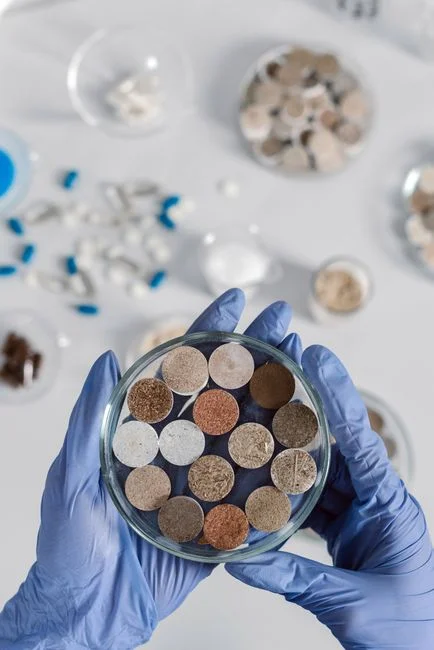
Observed yield for a protein-rich IFAS or ASP system on gelatin wastewater runs 0.30–0.45 kg DS per kg CODremoved at a standard SRT, with an additional 0.05–0.10 kg DS per kg CODremoved for biological fat that is captured by the biomass when DAF underperforms (per HydropureWater field data, 2026). For a worked example, take a 2,000 m³/day gelatin plant at influent COD 12,000 mg/L and 95% removal: the plant removes roughly 22.8 t COD/day, which translates to 7–10 t DS/day of WAS plus 1–2 t DS/day of DAF skimmings. Gelatin plants rarely have primary clarifiers because the high feed temperature (40–60 °C) and emulsified fat defeat gravity settling, so the WAS stream dominates the solids budget rather than a thickened primary stream. DAF skimmings are an asset, not a liability, when oil recovery is in scope: at >95% oil removal and a recovered-oil market price in the typical industrial-tallow range, the sidestream revenue routinely offsets a meaningful share of pretreatment OPEX (per the Jorsun case snapshot, 2026). Treat that stream as a sidestream revenue line in the mass balance, not as a sludge input to the digester. The table below consolidates the parameters an engineer needs to drop into a design basis.
| Parameter | Typical value | Source / note |
|---|---|---|
| Influent COD | 8,000–25,000 mg/L | Per HydropureWater field data, 2026 |
| COD removal (IFAS) | ~95% (BOD 98.2%) | Per HydropureWater field data, 2026 |
| Yield (Yobs) | 0.30–0.45 kg DS/kg CODremoved | Add 0.05–0.10 for fat capture |
| WAS at 2,000 m³/d, COD 12,000 mg/L | 7–10 t DS/day | Worked example |
| DAF skimmings | 1–2 t DS/day, 5–8% DS off unit | Per Jorsun case snapshot, 2026 |
| MLSS (combined IFAS) | 6,000–8,000 mg/L | Per HydropureWater field data, 2026 |
| Thickened DS target (pre-dewatering) | 4–6% WAS; 5–8% DAF | Gravity belt / DAF direct |
| Cake DS target (filter press) | 22–28% | Per HydropureWater field data, 2026 |
Thickening, Stabilization, and the Case for Anaerobic Digestion
Thickening is the lowest-cost step on the sludge line and the easiest to get right. A gravity belt thickener (GBT) or rotary drum thickener (RDT) on the WAS stream should reach 4–6% DS at polymer dose 3–5 kg/t DS; DAF skimmings typically leave the unit at 5–8% DS without further thickening. Whether to invest in anaerobic digestion is an economic call: when influent COD is consistently above 15,000 mg/L and the plant has a reliable low-grade heat source — cooker condensate routinely runs 50–60 °C — a mesophilic UASB or CSTR digester pays back through biogas and mass reduction. Biogas yield for protein-rich WAS runs 0.30–0.35 m³ CH₄ per kg CODremoved at 35 °C and a 20-day HRT, with methane content 60–70% (per Metcalf & Eddy, 5th ed., 2014, applied to gelatin-plant feed). A defensible digester sizing rule is 0.05–0.08 m³ digester volume per kg COD/day for high-protein feed, and UASB reactors on brewery and food protein wastewater provide a long operational precedent (per the Proteiniphilum UASB isolate history, IJSEM 2005). Two inhibitors will shut a gelatin-plant digester down if the equalization basin is not designed for them: chloride from pickling/demineralization stages begins to inhibit methanogens above roughly 5,000 mg/L Cl⁻, and sulfate from acid-wash waters drives sulfide toxicity above 200–300 mg/L S²⁻ in the digester. Specify equalization blending and a sulfide management step (iron dosing or biological sulfide oxidation) before the reactor, not after. For context on how comparable protein-wastewater plants handle their biological stage, the JBS meat plant wastewater treatment 2026 guide is a useful reference for high-strength, high-temperature protein streams.
Dewatering: Filter Press, Centrifuge, or Screw Press?
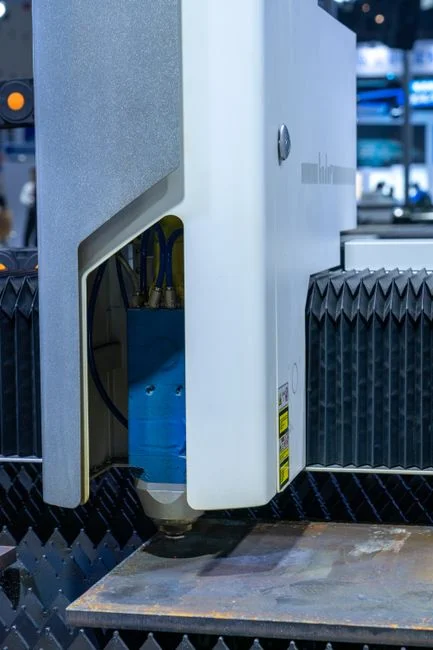
For gelatin-plant WAS, the three realistic dewatering options are plate-and-frame filter press, decanter centrifuge, and screw press, and they trade off cake dryness, CAPEX, OPEX, and footprint in predictable ways. The plate-and-frame filter press is the default choice on protein-and-fat-rich WAS because it consistently reaches 22–28% DS at polymer dose 4–8 kg/t DS — the cake is dry enough for landfill or incineration without further conditioning, and the enclosed press contains odor and aerosol (per HydropureWater field data, 2026). The decanter centrifuge trades cake dryness for footprint and continuous operation: expect 18–23% DS at higher polymer consumption (6–12 kg/t DS), and use it when the plant has tight civil works or plans to land-apply or temporarily store cake rather than haul it. A screw press is only viable on already-thickened sludge (>4% DS feed) and produces a 20–24% DS cake; it is a low-OPEX, low-throughput option for smaller plants with stable feed. The decision rule is straightforward: choose a plate-and-frame filter press for WAS dewatering when the cake goes to landfill or incineration; choose a centrifuge when cake is land-applied or stored; choose a screw press only for low-rate plants with stable feed. Polymer selection matters as much as equipment selection — cationic polyacrylamide with medium charge density (50–60%) is the usual starting point for protein-rich WAS, and jar tests on actual plant sludge beat any vendor default dose.
| Criterion | Plate-and-frame filter press | Decanter centrifuge | Screw press |
|---|---|---|---|
| Cake dryness | 22–28% DS | 18–23% DS | 20–24% DS |
| Polymer dose | 4–8 kg/t DS | 6–12 kg/t DS | 3–6 kg/t DS |
| Throughput per unit | Medium (batch) | High (continuous) | Low–medium |
| Footprint | Medium–large | Compact | Compact |
| CAPEX (relative) | Medium | Medium–high | Low |
| OPEX (relative) | Low–medium | Medium–high (polymer + power) | Low |
| Best fit | Landfill / incineration cake | Land application / storage | Low-rate, stable feed |
| Feed DS requirement | 2–4% DS thickened | 1–3% DS direct | >4% DS thickened |
Sludge Handling Economics in 2026
The numbers below translate the technical decisions above into a defensible 2026 budget line for a 2,000 m³/day gelatin plant. IFAS retrofit CAPEX runs USD 80–180 per m³/day in Asia and USD 150–300 per m³/day in EU/US projects (per HydropureWater field data, 2026); use this as the biological-stage reference cost when sizing the sludge line downstream. Aeration OPEX uplift over a comparable ASP is +15–25% on blower energy, and mechanical dewatering adds another 0.8–1.2 kWh/m³ of treated flow depending on press type (per HydropureWater field data, 2026). Polymer cost is USD 3–6 per kg, so budget 6 kg/t DS for a well-tuned filter press on gelatin WAS — that line item alone runs USD 18–36 per tonne of dry solids. Disposal cost is the dominant variable: landfill runs USD 40–120 per wet tonne in Asia and USD 80–250 per wet tonne in EU/US, while incineration with energy recovery runs USD 60–180 per wet tonne and can swing negative (i.e., a gate fee) when biosolids calorific value is high enough. DAF oil recovery at >95% removal (per Jorsun case snapshot, 2026) is the most reliable sidestream revenue line and routinely offsets a meaningful share of pretreatment OPEX. For the underlying dewatering engineering — polymer preparation, cake discharge, and press cycle tuning — the sludge dewatering machine engineering guide walks through the unit operations in detail.
Frequently Asked Questions
What sludge yield should I use to size a gelatin-plant sludge line?
Use 0.30–0.45 kg DS per kg CODremoved for the WAS stream and add 0.05–0.10 kg DS per kg CODremoved for biological fat capture if DAF underperforms; for a 2,000 m³/day plant at influent COD 12,000 mg/L and 95% removal, that yields 7–10 t DS/day of WAS plus 1–2 t DS/day of DAF skimmings (per HydropureWater field data, 2026).
What polymer dose does a gelatin WAS filter press actually need?
Budget 4–8 kg polymer per tonne of dry solids for a plate-and-frame filter press and 6–12 kg/t DS for a decanter centrifuge; jar-test on actual plant sludge before issuing a vendor dose guarantee (per HydropureWater field data, 2026).
Is anaerobic digestion worth the capex on a gelatin plant?
Yes when influent COD is consistently above 15,000 mg/L and a low-grade heat source is available (cooker condensate at 50–60 °C); expect 0.30–0.35 m³ CH₄ per kg CODremoved at 35 °C and 20-day HRT, but watch chloride above 5,000 mg/L and sulfate-driven sulfide toxicity (per Metcalf & Eddy, 5th ed., 2014).
What cake dryness should I design the dewatering unit to hit?
Target 22–28% DS on a plate-and-frame filter press for landfill or incineration, 18–23% DS on a decanter centrifuge for land application or storage, and 20–24% DS on a screw press for low-rate, stable-feed plants; gelatin-plant biosolids carry roughly 12 MJ/kg of energy value, so drier cake also improves any downstream combustion or drying step (per HydropureWater field data, 2026; per International Plasma Technology Center, 2024).