What Pet Food Wastewater Sludge Actually Is
Pet food wastewater generates two sludge streams that behave differently in thickening, digestion, and dewatering, and conflating them is the most common design error in the downstream train. The first stream is DAF skimmings: an emulsified mixture of FOG, protein fines, and captured TSS at 3–8% dry solids, scraped from the top of the primary flotation unit. The second is waste activated sludge (WAS) from the SBR or MBR biological stage, at 0.8–1.5% dry solids, with a floc structure dominated by extracellular polymers and bound water (HydropureWater field data, 2026).
Combined plant influent on a typical 2026 pet food line runs COD 3,000–15,000 mg/L, TSS 800–4,000 mg/L, FOG 200–1,500 mg/L, and ammonia-N 50–300 mg/L (HydropureWater field data, 2026). At 90–95% TSS capture in primary/DAF and 95–99% in the biological stage, a 1,000 m³/day plant produces 4–10 kg of dry solids per cubic metre treated. Rendering washwater in particular carries blood and thermally released protein, which raises bound-water content well above what a cook-extruder line generates and is the reason dewatering cake from rendering-dominated plants typically underperforms textbook polymer doses. The scope of this guide is the sludge train downstream of DAF and the SBR/MBR; the upstream biological design is covered separately in the SBR for pet food wastewater 2026 design guide.
Pet Food Sludge Mass Balance: How Much Solids the Plant Must Handle
A sludge mass balance is the only way to size thickening tanks, digesters, and dewatering equipment without guessing, and it is rarely done correctly on pet food lines because production swings by SKU. The basic equation per stream is: dry solids produced (t/d) = Q (m³/d) × influent TSS (kg/m³) × removal efficiency.
For a 1,000 m³/day plant with 8,000 mg/L influent TSS and 95% biological removal, WAS production alone is 1,000 × 0.008 × 0.95 = 7.6 t/d dry solids. Add DAF skimmings at 90% capture of the primary TSS fraction, typically another 0.4–0.8 t/d, and a further ~0.9 t/d of FOG-bound solids at 1,000 mg/L raw FOG and 90% DAF removal (HydropureWater field data, 2026). That 9–10 t/d total must be thickened, stabilized (or not), and mechanically dewatered before any haulage or reuse decision is made.
One factor is consistently missed in vendor conversations: pet food plants run campaign-based SKUs (beef, chicken, salmon, lamb), and sludge yield swings 15–25% week to week. Equalization, thickening, and dewatering must all be sized for peak weekly loading, not the rolling annual average, or the press will bottleneck every Monday morning.
| Stream | Source | Dry solids (%) | Yield (kg DS/m³ treated) | 2026 design driver |
|---|---|---|---|---|
| DAF skimmings | Primary FOG + TSS capture | 3–8% | 0.4–0.8 | FOG-bound; heated handling |
| WAS (SBR/MBR) | Biological excess | 0.8–1.5% | 7.6–9.5 | Bulk volume; drives press sizing |
| FOG-bound solids | Captured in DAF float | — | 0.6–1.4 | Polymer demand; biogas potential |
| Combined total | 1,000 m³/d plant | — | 9–12 t/d | Size for peak campaign week |
Thickening: DAF Skimmings, WAS, and Dissolved-Gas Floatation
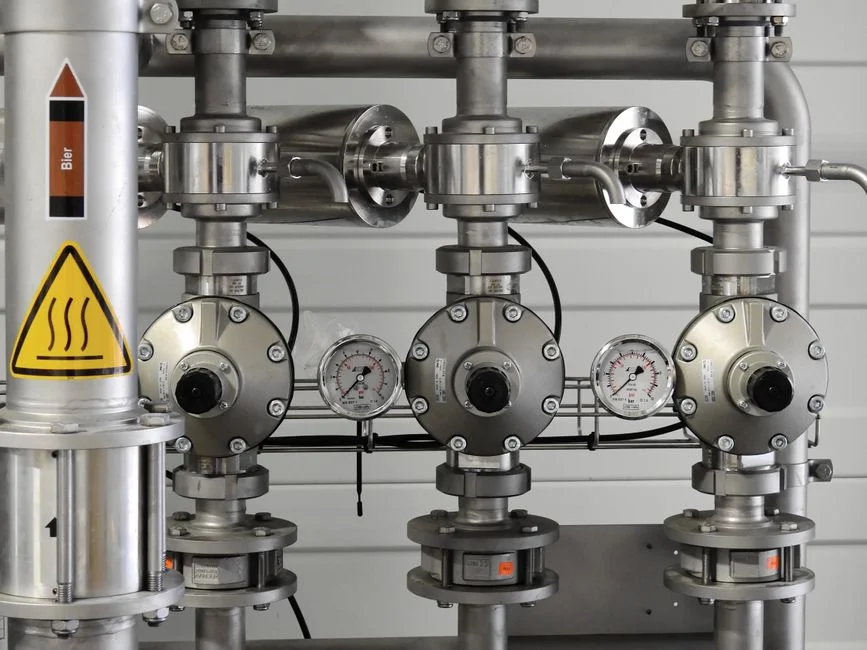
The thickening step is where the pet food matrix punishes undersized equipment, because FOG behaves like a scum blanket and polymer demand is unusually high. Three unit operations compete for this duty, and the choice differs by stream.
Gravity thickening is the cheapest option for WAS alone, targeting 2–4% dry solids in a large footprint, but it fails on rendering lines because rising grease forms a persistent scum layer that blocks the decant. DAF thickening applied to WAS as a standalone unit reaches 3–5% dry solids at 5–15 m³/m²·h hydraulic loading and handles high-FOG carryover well; a dissolved air flotation (DAF) system configured as a sludge thickener is the most common retrofit. Skimmings from the primary DAF are typically 3–8% dry solids already, and are routed directly to a heated holding tank (45–55°C) before digestion or rendering pickup to prevent the fat from solidifying in the transfer pipe.
Polymer conditioning at thickening is unavoidable on this matrix. Expect 2–5 kg active polymer per dry tonne for WAS and 5–10 kg/t for skimmings, delivered through an automatic polymer and coagulant dosing system with a maturation residence time of 60–120 seconds before the thickener.
| Thickener type | Target DS output | Hydraulic loading | Polymer dose (kg/t DS) | Best fit |
|---|---|---|---|---|
| Gravity (WAS only) | 2–4% | — | 0–1 | Cook-extruder lines, low FOG |
| DAF thickening (WAS) | 3–5% | 5–15 m³/m²·h | 2–5 | Rendering lines, FOG carryover |
| Skimmings hold + screen | 3–8% | — | 5–10 | All DAF float streams |
Stabilization: Aerobic Digestion vs. Anaerobic Co-Digestion of Pet Food Sludge
Stabilization is optional in the regulatory sense but economically significant above 500 m³/day, and the decision is driven by whether the plant has a stable rendering or cook-extruder co-substrate stream. Aerobic digestion is the default for smaller plants: a single insulated aerated tank at HRT 20–30 d and 35–55°C, achieving 30–45% VS destruction with no revenue stream but low CAPEX. Anaerobic digestion at HRT 20–25 d mesophilic (35–37.5°C), SRT 20–30 d, achieves 50–65% VS destruction and produces usable biogas.
The methane-yield data that informs digester sizing for food-industry sludge comes from analogous co-digestion work. In bench-scale mesophilic digesters at 37.5°C, pure algae biomass loaded at 4 g VS/L·d with a 20-day residence time yielded an average of 0.23 L CH₄/g VS added; the same digester fed a 50% algae / 40% sorted food waste / 10% wastewater sludge mix at 2 g VS/L·d produced the highest observed yield of 0.40 L CH₄/g VS added (Spierling, Cal Poly 2011, p. 7). The mechanism was not ammonia suppression; it was the addition of readily digestible carbon. The same study reported no inhibition at total ammonia nitrogen concentrations up to 3,370 mg/L at the higher loading rate, which is directly relevant to pet food streams where ammonia-N from rendering washwater can run 50–300 mg/L and concentrate further in the digester feed.
Pet food sludge on its own is C:N 8–12, which is low and risks ammonia toxicity at high loading. Co-digesting with starch-rich cook-extruder waste or rendering grease raises the operating C:N into the 20–30 sweet spot for stable methanogenesis. The decision rule used in 2026 designs is straightforward: plants under 500 m³/day → aerobic digestion; plants over 500 m³/day with a stable rendering co-substrate supply → anaerobic co-digestion, with payback typically 4–7 years on biogas utilization at current energy prices. A useful parallel reference for high-FOG sludge streams is the edible oil wastewater sludge treatment guide.
| Parameter | Aerobic digestion | Anaerobic co-digestion |
|---|---|---|
| HRT | 20–30 d | 20–25 d |
| Temperature | 35–55°C (mesophilic–thermophilic) | 35–37.5°C (mesophilic) |
| VS destruction | 30–45% | 50–65% |
| CH₄ yield (L CH₄/g VS added) | — | 0.23 (mono); 0.40 (co-digestion, Cal Poly 2011) |
| NH₃-N tolerance observed | n/a | 3,370 mg/L without inhibition (Cal Poly 2011) |
| C:N operating range | — | 20–30 (with co-substrate) |
| Fit | Plant <500 m³/d, no co-substrate | Plant >500 m³/d with rendering/cook-extruder waste |
Mechanical Dewatering: Plate Press, Belt Press, or Decanter Centrifuge
Dewatering is where disposal economics are made or lost, and the choice between three technologies turns on cake dryness target, FOG fraction, and odor constraints. A plate and frame filter press delivers 22–28% dry solids cake at 5–10 kg polymer per dry tonne over a 4–6 hour cycle, and the higher cake dryness cuts haulage cost by a factor of 4–8 versus an 18% cake. It is the best fit for pet food WAS where the rendering reuse or landfill gate fee dominates OPEX. A belt filter press runs continuously at 18–22% dry solids with 3–6 kg/t polymer and a much lower CAPEX, but struggles on high-FOG sludge because fat blinds the belt and forces frequent wash-down. A decanter centrifuge delivers 20–25% dry solids at 5–8 kg/t polymer, is fully enclosed (lowest odor and best for rendering-dominated lines near residential or food-handling neighbors), but carries higher OPEX through power and abrasion wear.
Polymer selection matters as much as the press itself. Cationic polyacrylamide at 40–60% charge density is the workhorse for WAS on this matrix; a dual-polymer system (cationic + anionic) is preferred for FOG-rich skimmings because the charge demand is significantly higher. The reference equipment for a 50 m² filtration area automatic hydraulic plate press is the HydropureWater plate and frame filter press, which targets the 22–28% DS range and pairs naturally with the upstream SBR or MBR.
Cake disposal in 2026 splits into four routes: off-site landfill (tipping fee, no value), rendering reuse (revenue credit for protein content where accepted by the renderer), incineration (energy-from-waste with gate fees), and composting (where permitted and where the FOG fraction is low enough to meet the compost quality spec). The economic order in most US and EU jurisdictions today is rendering reuse > incineration with energy recovery > composting > landfill.
| Parameter | Plate & frame filter press | Belt filter press | Decanter centrifuge |
|---|---|---|---|
| Cake dry solids | 22–28% | 18–22% | 20–25% |
| Polymer dose (kg/t DS) | 5–10 | 3–6 | 5–8 |
| Cycle / operation | Batch, 4–6 h | Continuous | Continuous |
| CAPEX (relative) | High | Low | Medium–high |
| Odor containment | Good (closed) | Poor (open) | Best (enclosed) |
| Best fit | Pet food WAS, haulage-driven | Cook-extruder only, low FOG | Rendering lines, odor-constrained sites |
Centrate and Pressate: Closing the Water Loop
Pressate from a plate press typically returns at COD 5,000–15,000 mg/L and ammonia-N 200–800 mg/L, and if sent back to the head of the plant untreated it can add 10–20% to the biological load — enough to push an SBR into F/M upset within a single cycle. The right routing on a 2026 design is to send pressate to the equalization basin upstream of DAF, where it benefits from the same FOG capture as raw influent, or to a dedicated side-stream treatment sized for 10–20% of the main flow. For any plant targeting direct surface discharge (COD <50–125 mg/L), pressate must pass through the MBR membrane bioreactor system; bypassing it will fail the final effluent spec on the first week of operation.
2026 Cost Snapshot: CAPEX, OPEX, and Payback for the Sludge Train
Procurement needs a defensible budget envelope before talking to suppliers, and the numbers below are 2026 indicative ranges for a 1,000 m³/day pet food plant. A 50 m² fully automatic hydraulic plate and frame filter press runs USD 80,000–140,000 CAPEX, with OPEX dominated by polymer and cake haulage. A 1,000 m³ mesophilic CSTR anaerobic digester with combined-heat-and-power runs USD 600,000–1,200,000 CAPEX, offset by biogas revenue and energy savings; the typical payback window is 4–7 years at 2026 industrial energy prices when rendering co-substrate is available. A 500 m³ insulated aerobic digester with aeration runs USD 150,000–300,000 CAPEX with no revenue stream, justified only at smaller flows or as a polishing step downstream of anaerobic digestion.
The single most defensible argument for specifying a plate press over a belt press is haulage math: at 25% dry solids, cake volume per dry tonne is roughly 4–8× lower than at 18%, and on a 1,000 m³/day plant producing 9–10 t/d DS that is a six-figure annual disposal saving that recurs for the life of the equipment.
| Equipment | Indicative 2026 CAPEX (USD) | OPEX driver | Payback / value lever |
|---|---|---|---|
| Plate & frame filter press, 50 m², automatic | 80,000–140,000 | Polymer + cake haulage | 4–8× lower haulage cost vs 18% cake |
| Belt filter press, equivalent capacity | 40,000–70,000 | Polymer + belt wash water | Lower CAPEX; higher disposal cost |
| Decanter centrifuge | 150,000–300,000 | Power + wear parts | Lowest odor; preferred near receptors |
| Anaerobic CSTR, 1,000 m³, with CHP | 600,000–1,200,000 | Biogas revenue offsets OPEX | 4–7 years at 2026 energy prices |
| Aerobic digester, 500 m³, insulated | 150,000–300,000 | Aeration power | No revenue; small-plant fit only |
Frequently Asked Questions
What dry solids target should a pet food wastewater sludge thickener achieve before dewatering?
Thickening should reach 2–4% dry solids for WAS and 3–8% for DAF skimmings before the press; below 2%, the press cycle extends and polymer dose rises disproportionately, and above 5% on WAS the pumping and pipework become the operational bottleneck (HydropureWater field data, 2026).
Is anaerobic co-digestion worth the CAPEX for a 1,000 m³/day pet food plant?
Yes, if the plant has a stable rendering or cook-extruder co-substrate supply. At 0.23–0.40 L CH₄/g VS added on analogous co-digestion matrices (Spierling, Cal Poly 2011, p. 7) and 2026 industrial energy prices, payback typically lands in the 4–7 year range for a 1,000 m³ mesophilic CSTR with CHP; without a co-substrate, the payback stretches beyond 10 years and aerobic digestion is the better fit.
How much polymer does a plate and frame filter press require on pet food WAS?
Expect 5–10 kg of active cationic polyacrylamide per dry tonne, with 40–60% charge density; FOG-rich skimmings often need 8–12 kg/t and benefit from a dual-polymer (cationic + anionic) program delivered through an automatic polymer and coagulant dosing system (HydropureWater field data, 2026).
What cake dry solids should the plant target for the lowest total disposal cost?
22–28% dry solids on a plate and frame filter press, because the haulage volume per dry tonne drops by a factor of 4–8 versus an 18% belt-press cake; on a 1,000 m³/day plant producing 9–10 t/d DS this is a six-figure annual saving that justifies the plate press CAPEX premium on disposal cost alone.
Where should pressate be routed to avoid overloading the head of the plant?
Pressate at COD 5,000–15,000 mg/L and ammonia-N 200–800 mg/L must return to the equalization basin upstream of DAF or to a dedicated side-stream treatment; routing it directly to the SBR or MBR head can add 10–20% to the biological load and crash nitrification within one cycle.