What wastewater does a Stockholm hotel actually generate?
Hotel wastewater is a blend of four streams that rarely behave like domestic sewage: blackwater from toilets, greywater from showers and basins (60–75% of total volume in EU tourism-sector benchmarks), kitchen fats, oils and grease (FOG), and laundry chemicals that push pH to 9–11 and add surfactants that foam in aeration tanks. A defensible per-guest-night loading for an 80–300-room Stockholm property is 150–250 L water, 60–90 g BOD₅, 15–25 g TSS, and 4–6 g oil & grease (per EU 91/271/EEC design defaults for tourist accommodation). Year-round city hotels such as the Grand Hôtel Stockholm and Hotel C run at 75–90% occupancy, while archipelago and conference venues such as Hotel Skeppsholmen and Körunda experience seasonal peaks of 3–5× the winter base load during June–August and event weeks. A separate sidestream worth flagging: spa and sauna backwash carries 35–40 °C water, high TDS, and residual chlorine, all of which disrupt nitrification if blended directly into the main biological stage. For a peer-reviewed comparison of how Lisbon properties handle a similar but warmer load profile, the Lisbon hotel wastewater system guide gives useful side-by-side numbers.
Swedish and EU rules a 2026 hotel system must meet
EU Urban Waste Water Directive 91/271/EEC sets the floor: for discharges >2,000 PE, effluent must meet BOD₅ ≤25 mg/L, COD ≤125 mg/L, and TSS ≤35 mg/L, with phosphorus limits tightening for sensitive recipients. Sweden's Naturvårdsverket guidance and the NFS-mark typically push total phosphorus to <0.5 mg/L for properties discharging near the Baltic, and require continuous temperature logging because cold reactors recover slowly. The certification layer now drives spec: Green Key (held by Hotel Kungsträdgården and Best Western and hotel Linköping), BREEAM In-Use Excellent (Villa Dahlia), and the Nordic Swan Ecolabel (Blique by Nobis) all demand documented water savings, chemical reductions, and reuse metrics. Comfort Hotel Solna and Clarion Hotel Stockholm have committed to climate neutrality by 2030, which converts into a hard CAPEX case for water-reuse-ready plants rather than a soft ESG preference.
Comparing MBR, SBR, and buried WSZ package plants for a Stockholm hotel
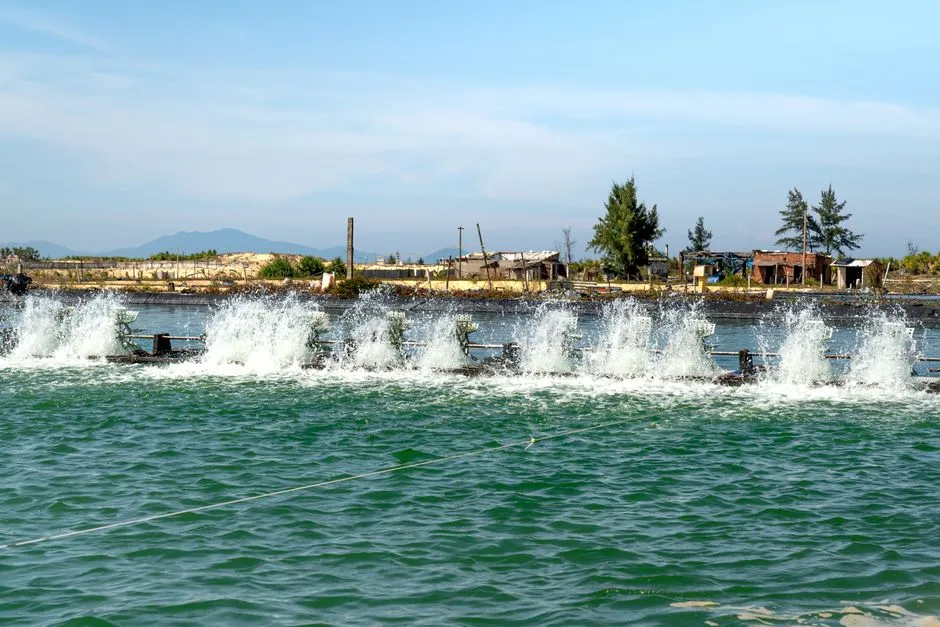
Three realistic package-plant topologies dominate Stockholm tenders for an 80–300-room property. The buried WSZ A/O package plant is fully buried, requires no full-time operator, and typically cuts civil-works footprint by ~60% versus an open-tank SBR — well matched to boutique and archipelago sites with intermittent loads. The MBR membrane bioreactor system with submerged PVDF membranes delivers sub-1 μm filtrate that approaches reuse quality, shrinks the biological basin footprint by ~60% versus conventional activated sludge, and is the strongest fit for 100–400-room city hotels chasing Green Key or BREEAM water credits. SBR is the lowest-CAPEX concrete-tank option for 50–150-room properties but needs a competent operator and a larger tank volume — difficult to retrofit into a central Stockholm basement. The PVDF MBR membrane module itself is the component that drives effluent quality and OPEX.
| Parameter | WSZ buried A/O | SBR (concrete tank) | MBR (submerged PVDF) |
|---|---|---|---|
| Flow range | 1–80 m³/h | 5–50 m³/h | 5–80 m³/h |
| Typical BOD₅ effluent | ≤20 mg/L | ≤20 mg/L | <5 mg/L |
| Typical TSS effluent | ≤30 mg/L | ≤30 mg/L | <1 mg/L |
| Footprint vs. conventional | ~40% (buried) | ~80% (open tank) | ~40% (compact) |
| Operator demand | Minimal (SCADA) | Daily check, 0.5–1 FTE | Minimal (SCADA + CIP) |
| Reuse-ready effluent | No | No (needs tertiary) | Yes (toilet flushing, irrigation) |
| Best fit (rooms) | ≤80 / archipelago | ≤150 / low CAPEX | ≥100 / certification priority |
| Installed CAPEX (100-room) | €40,000–€80,000 | €70,000–€120,000 | €120,000–€220,000 |
Local precedent exists: Vox Hotel sources water locally with treatment and targets a 99% recycling rate, and Swedish CountryLiving runs a circular water system at its cottages — proof that Stockholm-area operators already adopt closed-loop thinking rather than relying on municipal dilution.
Cold-climate design choices for Stockholm winter operation
A package plant specified for southern Europe will underperform or fail in a Stockholm February. Burial depth must clear the local frost line — ~1.2 m in greater Stockholm and 1.5–1.8 m on archipelago sites — or tanks must be fully insulated with XPS and a heated lid. Inlet piping needs self-regulating heat-tracing cables rated for sustained -20 °C ambient, which is the realistic design temperature given the cold snaps documented in 2024–2025 Stockholm winters. Biological nitrification drops roughly 50% below 10 °C, so winter solids retention time (SRT) must be extended to 25–35 days and aeration diffusers must be rated for sub-zero start-up. A fully buried WSZ A/O package plant also eliminates the freeze-thaw odour and noise problems that disturb guests at open-lagoon countryside sites, effectively mitigating environmental and guest-experience risks.
Pretreatment, disinfection, and sludge handling for hotel plants
Headworks is where most hotel-plant reliability problems start. Specify a rotary mechanical bar screen with 3–5 mm apertures to strip rags, cotton swabs, and plastics before they foul downstream membranes. A DAF pre-treatment unit or grease interceptor upstream of the biological stage is non-negotiable: hotel kitchens at full occupancy can exceed 50 mg/L oil & grease without it, and that load will crash an MBR's flux within hours. For disinfection, UV is adequate for small plants (<20 m³/d), while a 100–400-room hotel with a reuse loop should specify an on-site chlorine dioxide generator compliant with EU Drinking Water Directive 98/83/EC residual limits. End-of-pipe, a plate-and-frame filter press at ~80% moisture reduction cuts sludge hauling mass and Stockholm County disposal fees roughly fivefold versus pumping liquid sludge.
CAPEX, OPEX, and a 2026 decision matrix
Order-of-magnitude CAPEX for a 100-room hotel plant sits in three bands: a buried WSZ unit at €40,000–€80,000, an SBR concrete tank at €70,000–€120,000, and an MBR at €120,000–€220,000 installed (EU tourism-sector benchmarks, 2025–2026; site-specific quotes vary with civil works and discharge consent). OPEX is dominated by energy — MBRs run 0.4–0.8 kWh/m³ versus 0.2–0.4 kWh/m³ for SBR — plus chemicals, sludge hauling, and the labour cost of compiling Green Key / BREEAM / Swan reporting. The following matrix provides a procurement-grade decision shortcut.
| If the property is… | Then specify… | Because… |
|---|---|---|
| ≤80 rooms, archipelago or buried site, intermittent load | WSZ buried A/O | Lowest CAPEX, no operator, survives winter burial |
| ≤150 rooms, low CAPEX priority, brownfield with tank room | SBR concrete tank | Cheapest biological stage, larger civil footprint |
| ≥100 rooms, reuse or certification (Green Key / BREEAM / Swan) priority | MBR with PVDF membranes | Reuse-grade effluent, smallest basin, best certification fit |
| Remote archipelago site with no municipal sewer | WSZ + ClO₂ polishing + reuse loop | Avoids municipal connection charges, qualifies for water credits |
Pair the matrix with a 5-year ROI that values avoided water fees (~SEK 50–80/m³ in Stockholm Vatten tariffs, 2025), Green Key / BREEAM certification uplift on average daily rate, and avoided municipal connection charges on archipelago sites. For a Nordic-climate peer comparison, the Warsaw hotel wastewater treatment guide applies similar cost bands under a different permit regime.
Frequently Asked Questions
What EU and Swedish effluent limits apply to a Stockholm hotel in 2026?
EU Urban Waste Water Directive 91/271/EEC requires BOD₅ ≤25 mg/L, COD ≤125 mg/L, and TSS ≤35 mg/L for discharges above 2,000 PE. Naturvårdsverket guidance typically tightens total phosphorus to <0.5 mg/L for properties discharging near the Baltic, and mandates continuous temperature monitoring of the biological stage.
Can a packaged biological plant really handle a Stockholm winter?
Yes, provided the unit is buried below the ~1.2 m frost line (1.5–1.8 m in the archipelago) and fitted with self-regulating heat-tracing on the inlet pipe. Winter SRT must be extended to 25–35 days because nitrification activity roughly halves below 10 °C.
MBR, SBR, or buried WSZ — which fits a 100-room Stockholm hotel?
For a 100-room property chasing Green Key, BREEAM In-Use, or Nordic Swan certification, an MBR delivers reuse-grade effluent (<1 mg/L TSS) at €120,000–€220,000 installed. A buried WSZ at €40,000–€80,000 is the right answer when the priority is low CAPEX and minimal operator attention rather than reuse.
How much does hotel wastewater treatment cost per cubic metre?
Plan on 0.4–0.8 kWh/m³ for MBR energy, 0.2–0.4 kWh/m³ for SBR, plus chemical, sludge-hauling, and certification-reporting labour. The Stockholm Vatten potable tariff of roughly SEK 50–80/m³ (2025) is the benchmark for any reuse-driven OPEX offset.
Do I need a grease trap if the hotel has an MBR?
Yes. Hotel kitchens at full occupancy can exceed 50 mg/L oil & grease, which will foul submerged PVDF membranes within hours. A DAF unit or baffled grease interceptor upstream of the biological stage is mandatory, not optional.