Why Cedar Rapids Food Plants Face a Different DAF vs Clarifier Question
The Cedar Rapids/Iowa City corridor is the densest cluster of corn wet milling and oat flaking capacity in North America, anchored by PepsiCo (Quaker Oats), General Mills, Cargill, TreeHouse Foods, Ingredion, and a long tail of dairy and meat processors along the I-380 corridor. Those plants generate wastewater distinct from coastal craft breweries or retail bakeries. Steep water from a corn wet mill carries 2,000–4,000 mg/L TSS and a moderate oil/grease load from germ pressing; oat flaking wash water is TSS-dominant (grain fines and starch) with FOG typically under 100 mg/L; snack fryer discharge swings the other way with FOG above 500 mg/L and TSS in the 600–1,500 mg/L band. The local Industrial Pretreatment Program, administered through the Cedar Rapids Water Pollution Control Facility, sets FOG, BOD, and TSS limits tighter than national categorical standards, and a surcharge applies to each mg/L above those limits. That local surcharge structure makes the technology choice a 2026 capex question rather than a textbook comparison. The practical question for a plant engineer is: when does a DAF skid earn its capital versus a gravity/lamella clarifier on a concrete pad, and when does a hybrid train pay back both? The matrix that follows is built around the three numbers every Cedar Rapids plant has on its weekly effluent report: influent FOG, influent TSS, and peak hourly flow.
What a DAF System Actually Does in a Food Wastewater Tank
A dissolved air flotation system clarifies wastewater by attaching fine air bubbles to flocculated oil and solids so the combined particle–bubble agglomerate becomes buoyant enough to rise. Saturated recycle water is depressurized through a manifold of needle valves or a micro-bubble generator, releasing bubbles in the 30–50 µm range (Clearwater/Sigmadaf product spec, accessed 2026). The microbubbles attach to oil droplets and to chemically conditioned floc, lift the float blanket to the surface, and a paddle or scoop skims the thickened layer into a sludge hopper. DAF Corp's two product geometries bracket the design space most food plants will see in vendor proposals: the round FC Maximizer, 6–70 ft diameter, 10–11,000 gpm capacity, 92–98% TSS removal, and 2–4% thickened sludge; and the rectangular RC UniMax, 10–1,000 gpm, 85–90% TSS removal, with integrated lamella plates for low-buoyancy particles. A representative design point is the DAF Corp FC-150, sized for 500 gpm at 2,000 ppm TSS feed clarified down to 50 ppm — exactly the high-FOG food stream a Cedar Rapids snack or rendering plant would specify. DAF dominates on FOG capture because oil droplets have near-neutral buoyancy and attach readily to microbubbles, whereas in a quiescent gravity clarifier the same droplets tend to re-suspend under cross-flow or thermal currents. For an RFP-level review of microbubble DAF equipment, see the dissolved air flotation system specifications.
What a Gravity or Lamella Clarifier Does Differently
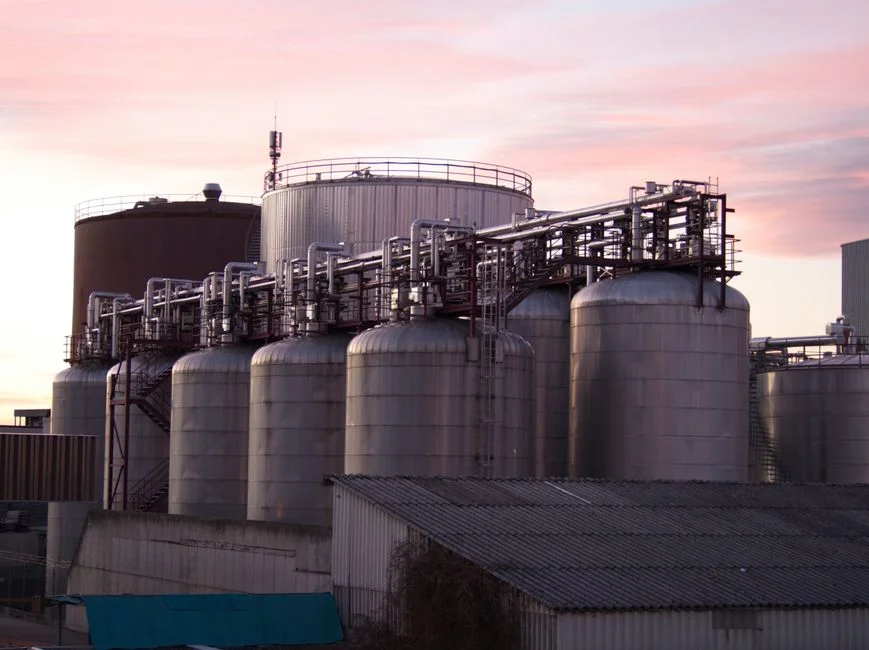
A conventional clarifier gives flocculated influent two to three hours of quiescent residence in a center-fed tank, lets gravity pull denser particles to a sludge blanket on the bottom, and overflows clarified water over peripheral weirs. The 1978 EPA Plant A benchmark — an extended-aeration system treating 318 m³/day of poultry wastewater at an overflow rate of 19.5 m³/day/m² (400 Igpd/ft²) — produced clarifier effluent with BOD under 30 mg/L and SS under 40 mg/L, equivalent to greater than 95% BOD and greater than 90% SS removal (EPA-600/2-78-188, 1978). A lamella (inclined-plate) clarifier expands this operating envelope by stacking plates at 55–60° inside a shallow tank, lifting surface loading rates to 20–40 m/h — roughly 20× a conventional clarifier's 1–2 m/h — and cutting coagulant demand by about 30% because the shorter fall path needs less floc strength. Lamella works for TSS-dominant streams because heavier, denser particles (grain starch, oat fines, dairy mineral solids) settle faster than they float, and the inclined plates shorten the distance a particle must fall to be captured. For RFP-level hardware, a HydropureWater high-efficiency lamella clarifier sized on surface loading and plate spacing is the typical starting point. The conventional wisdom that DAF is automatically better for all applications is incorrect for TSS-dominant streams; the EPA Plant A clarifier has been a food/bev workhorse for nearly fifty years, and lamella simply packages the same physics into a smaller concrete pad.
The 2026 Decision Matrix: DAF, Lamella, or Both in Series
Plant engineers should use a numeric crossover between DAF, lamella, conventional clarification, and a hybrid series train to guide vendor meetings. The breakpoints below are anchored in Sigmadaf and DAF Corp product performance, the EPA 1978 Plant A clarifier benchmark, and Hahn's 2010 fundamentals paper identifying air/solids ratio, hydraulic loading, and chemical conditioning as the three design knobs that move any DAF unit. Equalization upstream is non-negotiable for variable food streams and is assumed in the matrix below.
| Technology | Best-fit influent FOG | Best-fit influent TSS | Typical removal efficiency | Footprint | Sludge concentration |
|---|---|---|---|---|---|
| DAF (Sigmadaf / DAF Corp) | >150 mg/L | >1,000 mg/L | 92–98% TSS; up to 90% oil | Small | 2–4% |
| Lamella clarifier | <150 mg/L | <1,000 mg/L | 80–90% TSS; <50% FOG | Very small (20–40 m/h loading) | 1–2% |
| Conventional clarifier | <50 mg/L | <500 mg/L | 70–85% TSS; <30% FOG | Large (1–2 m/h loading) | 0.5–1% |
| DAF + lamella in series | >300 mg/L FOG with TSS >2,000 mg/L | Polishes residual TSS post-DAF | Combined >95% TSS, >90% FOG | Two skids in series | 2–4% from DAF; 1–2% from lamella |
Read the matrix left to right to identify where your weekly influent FOG and TSS numbers land. The DAF + lamella series train earns its place on corn wet mill evaporator condensate plus wash water streams, where FOG sits above 300 mg/L and TSS exceeds 2,000 mg/L; DAF strips the FOG, while lamella polishes residual TSS to a level the biological step can absorb without shock loading. Equalization is mandatory; Hahn (2010) flags equalization tanks as the operational feature that stabilizes variable wastewater characteristics and improves flotation efficiency. If your weekly numbers never cross 150 mg/L FOG or 1,000 mg/L TSS, the capex argument for DAF usually fails on simple payback.
Matching the Choice to Cedar Rapids' Process Streams
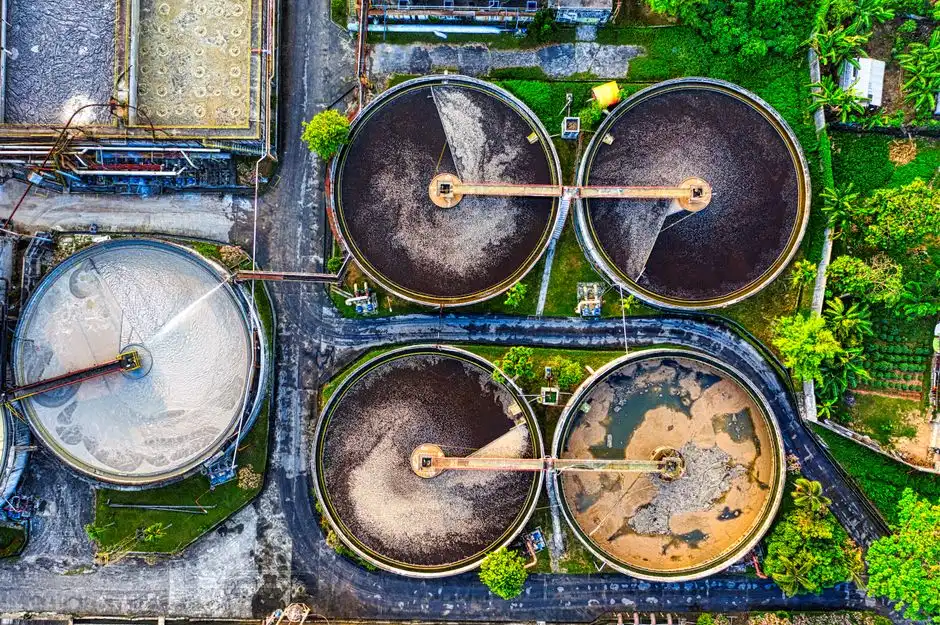
Corn wet milling steep water and fiber wash water are very high TSS (2,000–4,000 mg/L) with moderate FOG from germ pressing. Specify DAF as the primary step, with acid/alkaline conditioning tanks upstream to break emulsions and lift TSS capture; DAF Corp's 2–4% thickened sludge is high enough to feed a dewatering press without a thickener. Oat flaking and cereal wash water are the inverse: TSS-dominant from grain fines, FOG typically under 100 mg/L, with large seasonal flow swings. A lamella clarifier inside an equalized basin is the right answer; bring in DAF only if lubrication oils push FOG above ~150 mg/L. Snack fryer and flavor prep streams swing hard on FOG (400–800 mg/L) at moderate TSS, and DAF is the obvious pick with an automatic coagulant and flocculant dosing skid tuned for emulsion breaking. Dairy processing is the variable case; equalization first, then route high-product-loss days through DAF and low-FOG CIP rinse days through lamella. Smaller regional meat and poultry processors in eastern Iowa should follow the 1978 EPA Plant A precedent: primary screening, DAF or lamella for FOG/TSS, then biological treatment with an integral secondary clarifier. For a parallel decision framework in another industry, see our DAF vs clarifier for mining wastewater in Conroe guide.
Capex, Opex, and the Cedar Rapids Permit Math
Cost benchmarking for primary solids separation is best done against the 1978 EPA Plant A data, escalated via the ENR Construction Cost Index. Plant A's capital structure was capital-heavy, labor-light, and energy-modest: roughly $257k in 1972, updated to about $400k in November 1977 dollars using an ENR index of 2,660, with $18,600/yr operating cost on a 318 m³/day stream (EPA-600/2-78-188, 1978). Clarifier trains amortize capital over 25 years on a small labor footprint, while DAF trains add a saturated recycle pump, an air compressor, and a continuous polymer dose. OPEX comparison tracks three line items: DAF runs recycle pumps and compressors 24/7 plus coagulant/polymer; lamella uses roughly 30% less chemical and no recycle pumps but needs a larger tank volume for a given flow. The local permit economics usually decide the project. The Cedar Rapids IPP FOG surcharge, applied to each mg/L above the discharge limit, can dominate a plant's annual wastewater bill; high-FOG streams (snack, rendering, meat) typically pay back DAF in 18–36 months on avoided surcharges alone. Water reuse is the second lever: a well-sized DAF or lamella effluent can feed cooling-tower makeup or boiler feed after RO, reducing both sewer volume and freshwater purchase — relevant for energy-intensive corn wet mills where a plate and frame filter press dewaters the DAF sludge and an industrial RO system polishes the clarified stream. For a side-by-side cost breakdown on a related edible-oil stream, the edible oil wastewater treatment cost breakdown walks through the same line items. Starch-plant operators should also review the starch wastewater sludge treatment guide for downstream dewatering economics.
Frequently Asked Questions
What influent FOG and TSS levels justify a DAF over a lamella clarifier in a Cedar Rapids food plant?
Use the ~150 mg/L FOG and ~1,000 mg/L TSS breakpoints as the screening test on your weekly effluent report. Below both numbers, lamella wins on capex and chemical use; above either number, DAF earns back the difference in smaller tankage, higher FOG capture, and avoided IPP surcharges within 18–36 months.
Can a lamella clarifier handle corn wet mill or snack fryer wastewater on its own?
Not reliably. Corn wet mill steep water exceeds 2,000 mg/L TSS and snack fryer effluent often runs 400–800 mg/L FOG — both above the lamella envelope. A
Frequently Asked Questions
Should a food plant in Cedar Rapids pick a DAF or a clarifier in 2026?
The choice depends primarily on the density of your wastewater contaminants and the specific pretreatment requirements set by the Cedar Rapids Water Pollution Control Facility. In 2026, DAF (Dissolved Air Flotation) is the preferred choice for facilities handling high concentrations of fats, oils, and grease (FOG) or light solids that do not settle readily by gravity. Conversely, if your plant generates heavy, inorganic solids or grit, a clarifier remains the more cost-effective and energy-efficient solution for meeting local municipal discharge limits.
What influent FOG level makes DAF worth the extra cost over a lamella clarifier?
A DAF system becomes economically justifiable when influent FOG concentrations consistently exceed 200 to 300 mg/L. At these levels, the buoyant nature of the fats often prevents effective sedimentation in a lamella clarifier, leading to surface skimming issues and potential discharge violations. DAF systems utilize micro-bubbles to float these contaminants, typically achieving FOG removal efficiencies of 80% to 95%, which is essential for protecting downstream biological treatment processes from organic overloading.
How much TSS can a lamella clarifier remove compared to a DAF system?
A well-optimized lamella clarifier typically removes 60% to 85% of Total Suspended Solids (TSS) for settleable, high-density particles. In contrast, a DAF system is designed to capture lighter, non-settleable particles, often achieving 85% to 98% TSS removal when used in conjunction with appropriate coagulation and flocculation chemistry. The performance gap is determined by the specific gravity of the solids; if the solids are lighter than water, the clarifier may see near-zero removal effectiveness without chemical assistance.
Is DAF or a gravity clarifier better for corn wet milling wastewater?
For corn wet milling operations, which are common in the Cedar Rapids area, a DAF system is generally superior due to the high concentration of emulsified oils and light starch particles present in the process stream. While gravity clarifiers are used for primary grit removal, the secondary treatment of process water requires the flotation mechanisms of a DAF to successfully separate the protein and oil fractions that would otherwise remain suspended and increase the Biochemical Oxygen Demand (BOD) load on the municipal sewer system.
What is the typical hydraulic loading rate for a food-industry clarifier?
In food-industry applications, a standard circular gravity clarifier typically operates at a hydraulic loading rate of 300 to 600 gallons per day per square foot (gpd/ft²). For high-rate lamella clarifiers, the effective loading rate can be significantly higher—ranging from 0.25 to 0.5 gallons per minute per square foot (gpm/ft²) of projected plate area—due to the increased settling surface area provided by the inclined plates, which allows for a smaller physical footprint while maintaining efficient solids separation.