
Why Abuja hotels need a dedicated sewage treatment system in 2026
A 60-200 room Abuja hotel or resort in 2026 needs a packaged biological STP sized for 1.0-1.5 m³/room/day with a peak factor of 2.5-3.0x for the August rainy season, delivering BOD ≤30 mg/L, TSS ≤30 mg/L, and faecal coliform ≤200 CFU/100 mL to meet NESREA effluent limits. The dominant choice is a buried MBR or WSZ-A/O package plant with dual NEPA/solar power and 60-80% treated-water reuse for landscape irrigation and toilet flushing.
Three forces make the STP mission-critical rather than optional in FCT. First, the regulatory floor: Nigeria's National Environmental (Sanitation and Waste Control) Regulations 2009 enforced by NESREA, layered with FCT Environmental Protection Board oversight, now carries active penalties and operating-licence revocation risk across 2024-2026 enforcement cycles. Second, the soil reality: Abuja's ferralsol and sandy loam with a seasonally high water table causes conventional soakaways to fail 2-3 years after commissioning, and packaged biological treatment with treated-water reuse is now the de-facto FCT standard for 3-star and above. Third, the brand and stakeholder pressure: a 2017 survey of 363 Abuja and Lagos hotels (Muazu, Rashid & Zainol, 2017) found a strong positive correlation between stakeholder pressure and green-practice adoption — international flags including Marriott, Hilton, and Accor now require a documented wastewater plan in FCT pre-opening audits. The baseline sizing for the band covered here is 60-200 rooms at 70% occupancy, which yields 80-200 m³/day and a peak flow of 200-600 m³/day during the August wet season. For a deeper procurement checklist and supplier shortlist, see the Nigeria packaged STP buyer's guide.
Abuja hotel sewage characteristics and peak-load design basis
Hotel sewage in central Nigeria is warm, surfactant-heavy, and microbiologically loaded — and the design numbers below are the ones a supplier's process guarantee should be benchmarked against. Local measured data on Abuja 3-5 star hotels is limited, so the table combines typical tropical hotel values from WHO/UN literature with field ranges observed in comparable West African resort and commercial developments. The key is to design to the upper bound of the range, not the median, because laundry surfactants and kitchen grease push organic and oil loadings well above domestic sewage.
| Parameter | Typical Abuja 3-5 star hotel influent | Design assumption |
|---|---|---|
| BOD5 | 250-400 mg/L | 400 mg/L |
| COD | 500-800 mg/L | 800 mg/L |
| TSS | 200-300 mg/L | 300 mg/L |
| Oil & grease | 50-100 mg/L | 100 mg/L |
| Total nitrogen (TN) | 40-70 mg/L | 70 mg/L |
| Total phosphorus (TP) | 8-15 mg/L | 15 mg/L |
| pH | 6.5-7.5 | 6.5-7.5 |
| Temperature | 26-30 °C | 28 °C |
| Faecal coliform | 106-107 CFU/100 mL | 107 CFU/100 mL |
The microbiological profile is the part most Abuja tenders get wrong. Pathogen panels from University of Abuja Teaching Hospital, Gwagwalada (Amos et al., 2024) list Escherichia coli, Klebsiella pneumoniae, Pseudomonas aeruginosa, and Enterobacter species among the Gram-negative isolates of public-health importance in local sewage — directly relevant to NESREA's faecal coliform ceiling of 200 CFU/100 mL. Peak flow is the second design driver: Abuja's August rainfall averages 290 mm/month at the airport station, and a 30-minute peak intensity of 80-100 mm/hr is routine, which drives the 2.5-3.0x peak factor and forces either an equalisation tank or membrane flux headroom in the biological stage. pH is neutral, salinity is low, and heavy metals are negligible, but surfactant loading from in-house laundry is high — a DAF pre-treatment unit upstream of the biological stage is the standard way to protect membrane life and prevent foaming in the aeration tank.
FCT and NESREA discharge and reuse limits a 2026 plant must hit

The effluent numbers below are the working 2026 baseline that any Abuja hotel tender should be written against. NESREA's national effluent limits set BOD ≤30 mg/L, TSS ≤30 mg/L, COD ≤60 mg/L, oil & grease ≤10 mg/L, pH 6-9, faecal coliform ≤200 CFU/100 mL, and residual chlorine 0.5-1.0 mg/L. These are non-negotiable for surface or subsurface discharge within FCT and are now the default in FCT-EPA pre-operational audits.
Where reuse is on the table, the bar moves higher. WHO/FAO restricted-irrigation guidelines (toilet flushing and landscape irrigation) call for BOD ≤10 mg/L, TSS ≤10 mg/L, and faecal coliform ≤200 CFU/100 mL — a tighter envelope than discharge alone, which is the single biggest reason MBR has displaced conventional A/O in the premium Abuja resort segment. A chlorine dioxide disinfection system sized for 0.5-1.0 mg/L residual reliably hits the FC target without the trihalomethane risk of bulk chlorine at warm temperatures. For Abuja resorts with on-site landscape, 60-80% reuse is realistic when paired with a 1-2 ML lined holding pond acting as a buffer during the November-March dry season, when evapotranspiration drops but reuse demand stays flat.
MBR vs WSZ underground A/O vs SBR: which fits an Abuja hotel
Three packaged technologies dominate the Abuja hotel segment, and the choice is driven by flow band, reuse ambition, and available footprint — not by technology fashion. The table below is sized in m³/room/day so an engineer can read across to their property directly. Each row reflects the operating envelope a Nigerian EPC should be able to guarantee, not a laboratory best case.
| Criterion | WSZ underground A/O | MBR (submerged PVDF) | SBR (cyclic batch) |
|---|---|---|---|
| Flow band | 1-80 m³/day (1-50 m³/h) | 10-2,000 m³/day | 50-2,000 m³/day |
| Room-count fit (Abuja) | ≤50 rooms | ≥60 rooms, premium resorts | 200+ room convention hotels |
| Footprint | Smallest (buried) | ~60% smaller than SBR | Largest (≥0.5 ha typically) |
| Effluent BOD / TSS | ≤30 / ~30 mg/L | ≤5 / ≤5 mg/L (reuse-grade) | ≤20 / ≤20 mg/L |
| Reuse potential | Landscape only | Toilet flush + irrigation | Landscape only |
| Operator skill | None (buried, automated) | Low-medium (membrane CIP) | Medium (cycle tuning) |
| Surfactant tolerance | Low | High (PVDF 0.1 μm flat-sheet) | Medium |
| CAPEX band, FCT all-in | $25,000-$90,000 | $80,000-$180,000 | $70,000-$150,000 |
WSZ underground A/O wins for the ≤50 m³/day, ≤50-room segment where burying the unit under a car park preserves landscaping and aerator noise — 35-45 dB at 1 m — is not a guest complaint risk. The trade-off is weaker solids capture, so reuse is limited to subsurface drip irrigation. MBR is the right answer for ≥60-room properties, premium resorts, and any site with a reuse-grade target; submerged PVDF flat-sheet modules at 0.1 μm nominal pore size tolerate the surfactant spikes from on-site laundry that defeat SBR's settling phase. SBR remains valid for 200+ room convention hotels with ≥0.5 ha of land and no reuse target — competitive CAPEX, but footprint and OPEX push against Abuja real-estate economics. All three need pre-screening: a rotary mechanical bar screen with 3-5 mm aperture ahead of a DAF unit is the standard pre-treatment train for hotel-strength waste. See the WSZ underground A/O packaged STP and the MBR membrane bioreactor package plant for unit-level specifications, and the Casablanca hotel STP guide for a comparable North-African case study. For hybrid moving-bed configurations on retrofit sites, the IFAS process design for hotels reference is useful.
Dual power, buried installation, and Abuja-specific engineering
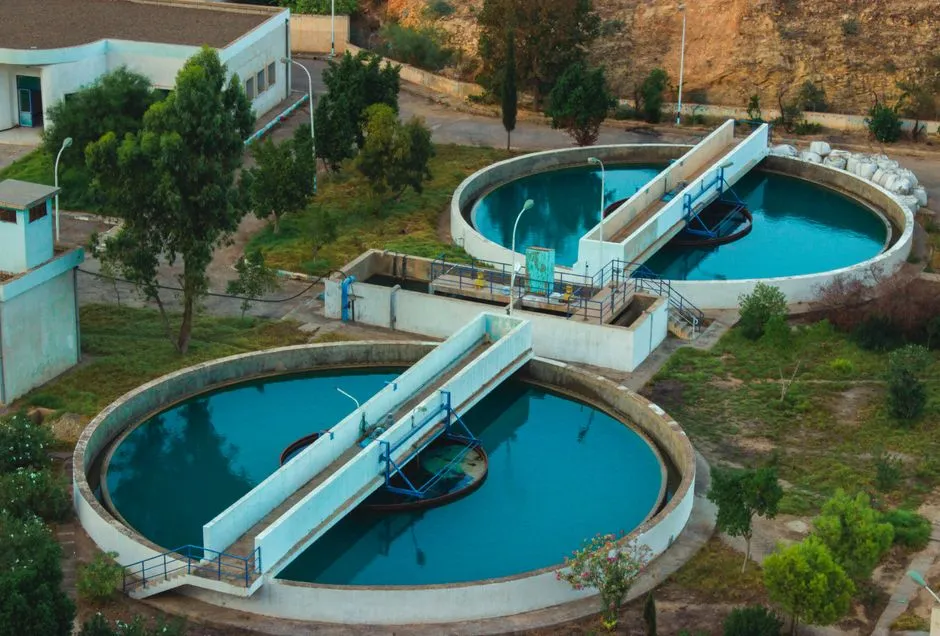
The plant that passes the FAT and fails on day 365 is almost always a plant that ignored three Abuja-specific failure modes. Power is the first: NEPA grid availability in FCT averages 6-12 hours/day, and an MBR that loses aeration fouls its membranes within 6 hours — irreversible flux loss follows within 24 hours. Specify a dual-source scheme with NEPA plus a diesel genset, or NEPA plus a solar PV array with lithium battery bank sized to ride through the typical 4-8 hour outage window. Buried installation is the second: a WSZ underground package eliminates aerator noise from guest-room complaints entirely, but the FCT high water table in August-September demands anti-buoyancy anchoring (concrete dead-man or screw piles) and a soil-bearing check of 80-100 kPa on the excavation pad. Sludge handling is the third: a small plate-and-frame filter press operated 1-2×/week dewaterings to 18-22% DS sidesteps the open drying-bed complaints that recur in Abuja's hotel residential catchments, with cake disposed to an FCT-approved off-site facility. An automatic chemical dosing system for coagulant and CIP chemicals rounds out the operating envelope.
2026 cost breakdown: CAPEX, OPEX, and ROI for Abuja hotel STP
Procurement and finance need a defensible budget envelope and a payback narrative anchored in water-reuse savings. The CAPEX bands below are all-inclusive of civil works, installation, and commissioning in FCT, drawn from regional supplier benchmarks for 2026. OPEX covers electricity, chemicals, membrane cleaning, and routine maintenance; membrane replacement is treated as a separate 5-8 year lifecycle line.
| Cost line | WSZ underground A/O | MBR | SBR |
|---|---|---|---|
| CAPEX (FCT all-in) | $25,000-$90,000 | $80,000-$180,000 | $70,000-$150,000 |
| OPEX ($/m³ treated) | $0.25-$0.45 | $0.45-$0.70 | $0.30-$0.55 |
| OPEX, 150 m³/day plant | $14,000-$25,000/yr | $25,000-$38,000/yr | $16,000-$30,000/yr |
| Membrane replacement (5-8 yr) | N/A | $15,000-$30,000 event | N/A |
| Municipal water offset (60-80% reuse) | Negligible (landscape only) | $25,000-$40,000/yr | Negligible |
| Payback vs WSZ baseline | — | 3-5 years (reuse argument) | Not economic on reuse |
On a 150 m³/day Abuja hotel, 60-80% reuse at current FCT municipal water tariffs of ₦450-₦800/kL saves roughly $25,000-$40,000/year on potable supply and sewerage — enough to deliver a 3-5 year payback for MBR over WSZ on the reuse argument alone, before any NESREA fine-avoidance value is counted. For a benchmark of comparable Australian pricing, see the Victoria sewage equipment suppliers 2025 guide.
3-step selection framework for a 2026 Abuja hotel STP
Convert the comparison into a decision the board can sign off next week. Step 1 — Quantify flow and target. Room count × 1.0-1.5 m³/room/day, peak factor 2.5-3.0x, reuse target yes/no. ≤50 m³/day and no reuse → WSZ underground A/O. ≥50 m³/day, or any reuse → MBR. Step 2 — Lock in compliance. Name NESREA, FCT-EPA, and the hotel flag's brand standard explicitly in the tender; require BOD, TSS, and faecal coliform guarantees on the treated water, not just on the effluent tank. Step 3 — Engineer the site. Dual power (NEPA + genset or NEPA + solar/battery), buried or enclosed installation with anti-buoyancy, sludge dewatering, and a one-year O&M bond with a Nigerian EPC rather than a longer warranty with no local presence — the bond outperforms the warranty every time the membrane fouls in year two. For the operational half of that bond, the MBR maintenance protocol sets out the seven-step CIP and data-logging routine that an FCT O&M team should be running.
Frequently Asked Questions
What size STP does a 100-room Abuja hotel need?
A 100-room Abuja hotel at 70% occupancy generates 100-150 m³/day of sewage, with a rainy-season peak of 300-450 m³/day. An MBR or WSZ-A/O packaged plant with a 6-12 hour equalisation tank upstream of the biological stage is the standard configuration, sized on a 2.5-3.0x peak factor.
What is the cost of a packaged STP for a hotel in Abuja in 2026?
CAPEX ranges from $25,000 for a small WSZ underground unit (≤50 m³/day) to $80,000-$180,000 for an MBR at 50-200 m³/day, all-inclusive of civil works and commissioning in FCT. OPEX runs $0.25-$0.70/m³ across the three technologies.
Which effluent limits apply to Abuja hotels under NESREA?
The 2026 NESREA national limits are BOD ≤30 mg/L, TSS ≤30 mg/L, COD ≤60 mg/L, oil & grease ≤10 mg/L, pH 6-9, and faecal coliform ≤200 CFU/100 mL. Reuse for toilet flushing or landscape irrigation requires the tighter BOD ≤10 mg/L and TSS ≤10 mg/L band.
Can hotel wastewater be reused for irrigation in Abuja?
Yes. With an MBR plus chlorine dioxide disinfection, 60-80% reuse for restricted irrigation (toilet flush and landscape) is realistic on a 100-200 m³/day Abuja hotel, typically paired with a 1-2 ML lined holding pond for dry-season buffer storage.
How long does an MBR membrane last in a hotel application?
Submerged PVDF flat-sheet modules in hotel service typically last 5-8 years before replacement, provided surfactant spikes from on-site laundry are controlled by upstream DAF and the membrane is cleaned on a 7-step CIP protocol rather than left to run to failure.