Why Amsterdam Hotels Need a Dedicated Treatment System in 2026
An Amsterdam hotel or resort in 2026 typically needs a packaged MBR membrane bioreactor system (10–2,000 m³/day, sub-micron effluent) or a buried WSZ underground package sewage treatment plant (1–80 m³/h) to meet EU Urban Waste Water Directive 91/271/EEC and local Hoogheemraadschap discharge permits. MBR is preferred for 80+ key properties on tight canal-belt sites; WSZ fits smaller hotels with available landscape area.
Directive 91/271/EEC sets the regulatory floor: BOD ≤25 mg/L, COD ≤125 mg/L, and TSS ≤35 mg/L for discharges from agglomerations above 2,000 p.e. In the Netherlands, that directive cascades into the Wet milieubeheer (Environmental Management Act) and the Hoogheemraadschap permit regime, executed in the Amsterdam region by Waternet (Hoogheemraadschap Amstel, Gooi en Vecht) and adjacent Rijnland. A hotel discharging more than the equivalent of ~50 p.e. triggers a direct discharge permit; smaller flows route through the municipal sewer under indirect discharge rules, but caps on BOD/COD/TSS still apply.
Three Amsterdam-specific constraints push developers toward packaged treatment. First, the high groundwater table (often 0.5–1.0 m below grade in the Jordaan, Pijp, and Oost) forces any below-grade tank into a buoyancy check and double-walled construction. Second, the UNESCO canal-belt heritage overlay prohibits visible plant-room architecture on façade-protected streets — equipment must go below grade, into a courtyard, or behind a parapet. Third, in-town footprints under 200 m² rule out large concrete aeration basins. Guest-side complaints about sewer odor (see TripAdvisor S2 evidence from the Nova Hotel Amsterdam) have become a real operational driver for on-site polishing, especially in older buildings with marginal venting.
On the policy side, BREEAM-NL and Green Key certification pathways in 2026 are now awarding credits for documented on-site reuse or polishing, and at least one major Amsterdam operator has begun publishing reuse targets on its property page (Hyatt Regency Amsterdam, S4, 2025). That makes a defensible, permit-ready treatment train a budget line rather than an option.
Influent Characteristics: What Comes Out of an Amsterdam Hotel
Domestic-strength sewage from guest rooms is the design baseline, but kitchens, laundries, and spa backwash routinely push the load above textbook municipal values. For a typical mid-scale Amsterdam property (80–250 keys), the engineer should design to the following envelope, not to a residential default.
| Parameter | Typical hotel range | Peak-hour spike | Design value (2026) |
|---|---|---|---|
| BOD₅ | 200–300 mg/L | 400–500 mg/L | 300 mg/L |
| COD | 400–600 mg/L | 800–1,200 mg/L | 600 mg/L |
| TSS | 200–400 mg/L | 500–800 mg/L | 400 mg/L |
| NH₄-N | 20–40 mg/L | 50–70 mg/L | 40 mg/L |
| FOG (kitchen) | 30–80 mg/L | 150–250 mg/L | 80 mg/L |
| Per-guest water use | 150–250 L/guest-night | — | Up to 400 L for resorts with spa/pool |
Laundry and kitchen prep are the two flow streams most likely to bust a design. A breakfast-and-dinner F&B operation produces a discrete 2–3 hour FOG spike that, if it hits the bioreactor untreated, can cut oxygen transfer efficiency by 15–25% within a single service. Hotel occupancy drives a 1.5–2.0× peaking factor across weekday/weekend and tourist season — peaking factors above 2.0 are documented in canal-belt hotels during Pride, King's Day, and the IBC conference week. Treat the hydraulic problem as batch, not continuous: equalization volume should hold at least 6 hours of average daily flow at peak factor.
For cold-side chemistry, expect influent temperature in the 10–18 °C range for most of the year, dropping to 8 °C in January. Nitrification rate drops roughly 50% per 7 °C below 15 °C, so the MBR or WSZ basin volume must be sized at winter temperature, not at 20 °C nameplate. The article-level guidance below (HydropureWater field data, 2026) on sizing assumes winter-rated MLSS and SRT.
MBR vs. WSZ Package Plant: Process Comparison for Dutch Hotels
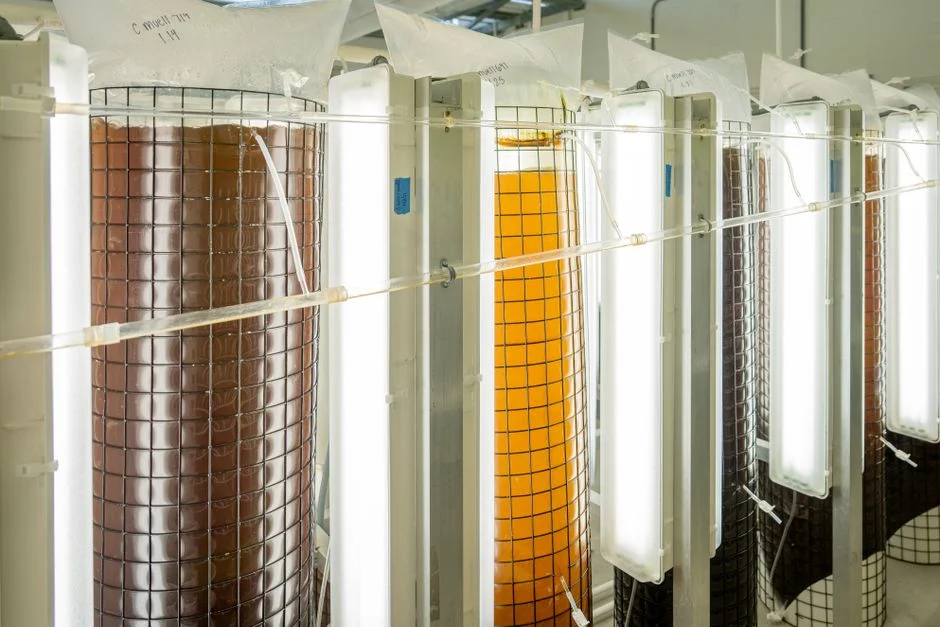
For 2026 Amsterdam projects, the shortlist collapses to two packaged technologies: an MBR (activated sludge plus submerged DF series flat-sheet MBR module, 0.1 μm pore) and a buried WSZ A/O contact-oxidation unit. Both meet 91/271/EEC effluent limits when correctly sized; the choice is driven by site, reuse intent, and discharge path.
| Parameter | MBR (DF module skid) | WSZ (buried package) |
|---|---|---|
| Capacity range | 10–2,000 m³/day | 1–80 m³/h (24–1,920 m³/day) |
| Effluent TSS | <5 mg/L | ≤30 mg/L (tertiary clarifier stage) |
| Effluent BOD | <5 mg/L | ≤20 mg/L |
| Pore / separation | 0.1 μm PVDF membrane | Settling + disinfection, no membrane |
| Footprint vs. conventional activated sludge | ~60% smaller basin volume | Below grade, landscapped over |
| Reuse suitability | Toilet flush, irrigation, cooling-tower makeup (near-potable after RO) | Typically sewer discharge only |
| Aeration energy | 10–20× lower than cross-flow MBR designs (DF coarse-bubble module spec) | Lower overall demand (biofilm contact oxidation) |
| Operator requirement | Periodic chemical CIP; no daily operator | Fully automated, no operator |
| Capex band (installed) | €80,000–€350,000 for 50–500 m³/day | €15,000–€60,000 for 5–30 m³/h |
Three rules of thumb from HydropureWater field data, 2026: an MBR skid cuts basin volume by approximately 60% versus a conventional activated-sludge plant of equivalent throughput, which is decisive on a 150–250 m² canal-belt footprint. The DF module's coarse-bubble aeration delivers 10–20× lower membrane aeration energy than early-generation cross-flow designs, putting typical MBR specific energy at 0.6–1.2 kWh/m³. A WSZ unit, by contrast, can be buried under a courtyard or parking bay and landscaped over, which is the only way to get an acceptable permit on a monument-protected façade.
Reuse is the real differentiator. MBR effluent is suitable for toilet flushing, sub-surface irrigation, and cooling-tower makeup under Dutch drinking-water law (Drinkwaterbesluit) with appropriate Legionella control. WSZ effluent, even when disinfected, typically clears sewer discharge but not reuse thresholds. The Amsterdam energy and water board have begun signalling (2025) that BREEAM-NL "Wat 02" credits favour reuse-grade polishing for hospitality projects above 100 keys, which tilts the decision toward MBR in the 80–250 key band.
For peak-load seasonality, the MBR is more forgiving: it holds mixed liquor at 8,000–12,000 mg/L MLSS and absorbs a 2.0× hydraulic shock with minimal effluent drift. A WSZ, sized close to its nominal flow, will short-circuit during a Pride-week surge unless the engineer has added 30% hydraulic buffer in the upstream equalization tank.
Pretreatment and Disinfection: What Sits in Front of and Behind the Bioreactor
The bioreactor is the headline equipment, but it is only the middle of the train. A defensible 2026 spec for an Amsterdam hotel includes four supporting unit operations — and underspecifying any one of them is the most common reason these plants fail their first permit cycle.
Headworks starts with a GX rotary mechanical bar screen (2–3 mm aperture) to protect downstream equipment from rags, hair, and the micro-plastics that wash off hotel textiles. Laundry effluent is the worst offender: a single wash cycle can deliver a 5-minute slug of lint that will blind a pump or a membrane module if it reaches the bioreactor unfiltered. The GX series handles 10–500 m³/h per unit and runs unattended.
For properties co-treating kitchen flow, a DAF system for FOG removal ahead of the MBR is not optional. DAF at 4–300 m³/h typically removes 70–90% of influent FOG and 50–70% of colloidal COD, which translates directly into lower membrane fouling rates and CIP frequency. Without it, MBR membrane life on a hotel feed typically drops from 8+ years to 3–4 years.
Where footprint allows, a lamella clarifier at 20–40 m/h surface loading rate (high-efficiency sedimentation tank) as a polishing/buffer stage can cut coagulant chemical use by approximately 30% versus a conventional clarifier, and acts as a flow-equalization buffer ahead of the MBR. The capital trade-off is tank height (typically 4–5 m) — which on a tight canal-belt site means going below grade.
Final disinfection uses a chlorine dioxide generator (50 g/h to 20,000 g/h ClO₂) rather than chlorine. ClO₂ maintains biocidal efficacy across the 6.5–8.5 pH range typical of MBR effluent, does not form trihalomethanes, and is compliant with EU Drinking Water Directive 98/83/EC and WHO guidelines for non-potable reuse. Dose is typically 0.5–1.5 mg/L residual for 30 minutes contact, depending on the downstream reuse end-use.
Sizing Rule of Thumb: MBR or WSZ for Your Hotel
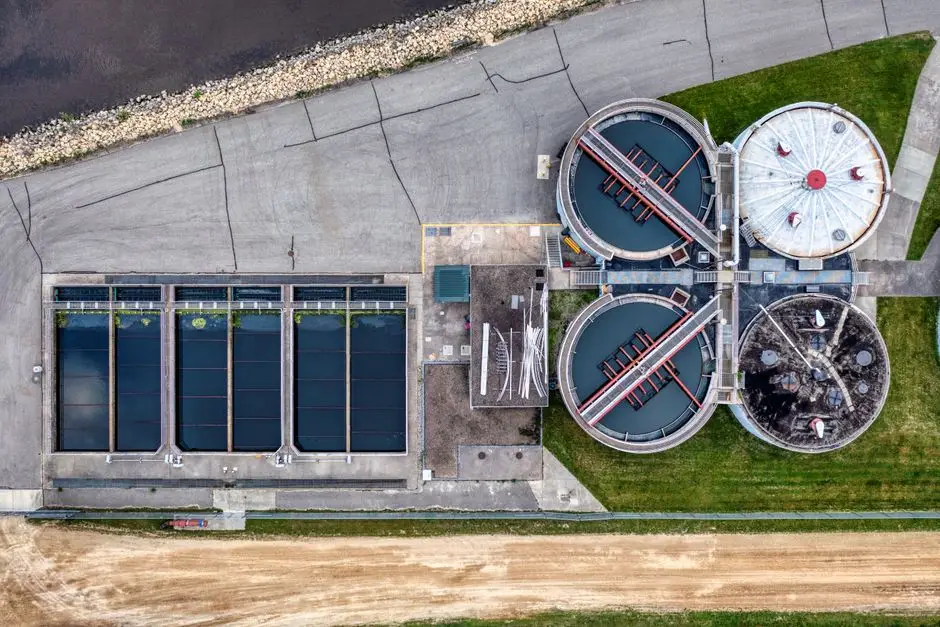
Use this decision rule to shortlist technology in a 30-minute meeting. The cut-offs are derived from HydropureWater project data, 2026, cross-referenced against EU Directive 91/271/EEC sizing guidance and Waternet indirect-discharge thresholds.
| Hotel size | Recommended technology | Design flow | Site requirement |
|---|---|---|---|
| Up to 80 keys | WSZ buried package | 1–15 m³/h | Garden or subsoil space; minimal civils |
| 80–250 keys | MBR skid | 50–200 m³/day | Sub-basement or ground-floor plant room; ~80–150 m² |
| 250+ keys or resort with spa/laundry | MBR + DAF pretreatment | 200–2,000 m³/day | Automated chemical dosing; concrete or steel tankage |
Always add 30% hydraulic buffer for event-driven peak occupancy, and specify 1.5× average daily flow as the design flow rather than the 24-hour average. For a 150-key property on the canal belt, that translates to a design flow of approximately 90 m³/day, not the 60 m³/day you get from per-capita arithmetic. If the property hosts conferences, weddings, or is within walking distance of the RAI, push the peak factor to 2.0× and the equalization volume to 8 hours of average flow. The 2026 rule: design the hydraulic train for the worst Tuesday in April, not the average Wednesday in February.
For the small-hotel end (30–80 keys, often a heritage canal-house conversion), a single WSZ-A/O-5 unit in the courtyard handles 5 m³/h with no operator and an installed footprint under 20 m². For properties where burial is impossible — many Jordaan and Centrum plots have no access for a crane — an above-grade skid-mounted MBR is the only option, and the engineer should plan for acoustic enclosure at 55 dB(A) at 10 m to clear the omgevingsvergunning.
Permits, Discharge Paths, and Reuse Options in the Netherlands
The discharge path is fixed by site, and it determines the permit stack. Direct discharge to surface water (an Amsterdam canal or the IJ) requires a Hoogheemraadschap water permit issued by Waternet under the Waterwet and the Omgevingswet. For Amsterdam city and the IJ, that is Waternet (Hoogheemraadschap Amstel, Gooi en Vecht); for Haarlemmerbuurt and west, Rijnland takes the lead. Typical review time in 2025–2026 is 12–26 weeks depending on effluent volume and proximity to a bathing water designation.
Indirect discharge to the municipal sewer is the more common path for inner-city hotels and is governed by the Waterschap Amstel, Gooi en Vecht indirect-discharge rules (BOD/COD/TSS caps, plus pH 6.5–9 and temperature ≤30 °C). A packaged treatment plant treating to 91/271/EEC limits clears these caps comfortably, but the hotel still needs a connection permit from the municipality and an omgevingsvergunning for the building work.
On-site reuse for toilet flushing, irrigation, or cooling-tower makeup must meet the Dutch drinking-water-quality (Drinkwaterbesluit) parameters, with documented Legionella control per the Drinkwaterbesluit's Article 4–6 obligations. For hotels, that means a documented flushing regime, temperature control on the reuse loop, and dual-plumbing separation per NEN 1006. BREEAM-NL "Wat 02" and Green Key award explicit credits for documented reuse volumes — a growing 2026 driver that is changing the procurement conversation from "treat and discharge" to "polish and reuse."
CAPEX and OPEX Envelope for 2026 Projects
The numbers below are order-of-magnitude turnkey bands, not quotations, drawn from HydropureWater European project data, 2026. They include tankage, equipment, installation, and commissioning but exclude building works, connection fees, and permit charges.
| System | Capacity | CAPEX band (2026) | OPEX driver |
|---|---|---|---|
| WSZ package | 5–30 m³/h | €15,000–€60,000 installed | Sludge hauling |
| MBR system | 50–500 m³/day | €80,000–€350,000 installed | Membrane aeration, periodic chemical CIP |
| Reuse-grade polishing (RO/MF) | 20–200 m³/day | +€20,000–€120,000 | Membrane replacement, antiscalant |
| Plate-and-frame filter press for sludge | 1–10 m³/h | €25,000–€90,000 | Cuts sludge hauling OPEX by 20–45% |
For a 100-key canal-belt hotel, the realistic 2026 turnkey band for an MBR skid with DAF pretreatment and ClO₂ disinfection is €120,000–€220,000, with annual OPEX at roughly 8–12% of CAPEX driven by energy and membrane maintenance. Adding reuse-grade polishing (RO or MF) for toilet flushing and irrigation typically adds €30,000–€80,000 and pays back in 4–6 years on the Amsterdam water tariff (€1.65–€2.10/m³ in 2026, including BTW). Sludge dewatering with a plate-and-frame filter press reduces hauling volume and OPEX by 20–45% (HydropureWater field data, 2026), and is worth specifying on any MBR above 100 m³/day — see the broader desludging cost optimization guide for the operating math. Comparative regional data for non-EU benchmarks is available in the Casablanca hotel wastewater treatment guide and the Guadalajara hotel wastewater treatment guide; for an attached-growth alternative to MBR, see the IFAS for hotel wastewater engineering guide.
Frequently Asked Questions
What is the EU discharge limit for hotel wastewater?
Under EU Urban Waste Water Directive 91/271/EEC, a discharge above 2,000 p.e. must meet BOD ≤25 mg/L, COD ≤125 mg/L, and TSS ≤35 mg/L. Dutch implementing rules (Wet milieubeheer, Hoogheemraadschap permits) add total nitrogen and phosphorus caps for discharges to sensitive waters, including the IJ and the North Sea canal.
Can a small Amsterdam hotel use a packaged STP?
Yes. A WSZ underground package plant at 1–15 m³/h is standard for 30–80-key properties, requires no daily operator, and can be buried under a courtyard to clear the UNESCO canal-belt visual-impact rules. Indirect discharge to the municipal sewer is the typical permit path for this size band.
How much does an MBR cost for a 100-room hotel?
A 2026 turnkey MBR installation for a 100-key property runs €120,000–€220,000 depending on pretreatment scope, reuse-grade polishing, and acoustic enclosure. Annual OPEX lands at roughly 8–12% of CAPEX, dominated by aeration energy and periodic chemical cleaning-in-place of the membrane modules.
Is on-site water reuse allowed in the Netherlands?
Yes, under the Drinkwaterbesluit with documented Legionella control (Article 4–6) and NEN 1006 dual-plumbing separation. BREEAM-NL and Green Key award explicit credits for documented reuse volumes, which is making on-site reuse a procurement requirement for many 2026 hospitality builds.
What permits does an Amsterdam hotel need for wastewater?
A direct surface-water discharge requires a Hoogheemraadschap water permit from Waternet (or Rijnland outside the AGV area). Discharge to the municipal sewer requires a Waterschap indirect-discharge clearance and an omgevingsvergunning for the plant installation. Lead time for the water permit in 2025–2026 is typically 12–26 weeks.