Why Guadalajara Hotels Need Engineered Wastewater Treatment in 2026
A Guadalajara hotel or resort in 2026 requires a packaged MBR or A/O treatment plant sized for 250-400 L per guest-night, designed to meet NOM-001-SEMARNAT discharge limits (BOD ≤30 mg/L, TSS ≤40 mg/L for surface water discharge) and to deliver reuse-quality effluent for landscape irrigation during Jalisco's November-May dry season, when municipal supply from Lake Chapala is most stressed (NOM-001-SEMARNAT-1996, still in force; SEMARNAT published a 2024 update in DOF consultation, 2024-09).
Three forces converge to make engineered treatment non-optional. First, the federal floor: NOM-001-SEMARNAT-1996 sets numeric discharge ceilings for BOD (30 mg/L), TSS (40 mg/L), FOG (15-25 mg/L depending on receiving body), and total nitrogen across all inland and coastal discharges, with the 2024 SEMARNAT revision tightening nutrients and adding a 1.0 NTU turbidity trigger for new reuse permits (NOM-001-SEMARNAT-1996; SEMARNAT DOF consultation, 2024-09). Second, hydrology: Guadalajara sits inside the Lake Chapala watershed, Mexico's largest freshwater reservoir, and within 25 km of the Laguna de Cajititlán restoration zone, an ecologically depressed wetland now subject to active CONAGUA enforcement and Jalisco SEMA monitoring. Third, scale: Booking.com lists more than 600 Guadalajara properties, ranging from a US$37/night economy room (S3) to 300-key convention hotels adjacent to Expo Guadalajara, and every one of them, regardless of star rating, must file a Descarga de Aguas Residuales (DAR) permit before operation.
Conventional septic systems fail here for two engineering reasons: Jalisco's high-clay soils limit percolation to less than 1 mm/hr in the Zapopan and Tlajomulco hotel corridors, and seasonal tourism swings (October-May high season and Expo Guadalajara convention peaks) generate 2-3× loading variation that a fixed-volume tank cannot equalize. A packaged MBR or A/O system with flow equalization and 24-72 hours of hydraulic retention solves both. The Jalisco Secretaría de Medio Ambiente (SEMA) layers additional local requirements on top of the federal rules, including mandatory reuse evaluation for any property larger than 30 m³/day in the Zapopan Hotel Zone (per Jalisco SEMA operating procedures, 2025).
What Goes Down the Drain: Hotel and Resort Wastewater Characteristics
Hotel wastewater is a blended stream, and the blend ratio changes hourly. Guest rooms, kitchen prep, laundry, pool backwash, and landscape runoff each carry a different signature, and a Guadalajara property at 90% dry-season occupancy behaves very differently from the same property at 40% rainy-season occupancy (industry benchmark for resort design flow is 250-400 L per guest-night).
Influent characterization for a Guadalajara full-service resort typically falls in these ranges (HydropureWater field data, 2025-2026, 14 properties in western Mexico):
| Parameter | Typical Influent (mg/L) | Design Peak (mg/L) | Source Stream |
|---|---|---|---|
| BOD5 | 200-400 | 600 (brunch service) | Rooms, kitchen, laundry |
| COD | 400-800 | 1,200 | Kitchen, bar, pool deck |
| TSS | 200-350 | 500 | Laundry lint, food solids |
| FOG | 50-150 | 300 (dinner service) | Kitchen, bars |
| Total Nitrogen | 30-60 | 80 | Rooms, kitchen |
| Surfactants | 10-25 | 40 | Laundry, housekeeping |
| Free Chlorine | 0.1-0.5 | 2.0 (pool backwash) | Pool backwash line |
Three design factors dominate the engineering. FOG spikes from restaurants and bars routinely reach 250-300 mg/L during dinner service and will foul any biological system if not pre-removed; a DAF unit upstream of the bioreactor is standard practice for properties with more than 40 covers per service (HydropureWater field data, 2025). Pool backwash adds high residual chlorine (1-2 mg/L) and very low BOD (under 30 mg/L) and should be diverted to a separate buffer tank and bled into the equalization basin at controlled flow. Laundry surfactant loads, especially linear alkylbenzene sulfonate (LAS) at 10-25 mg/L, can strip dissolved oxygen in the aeration tank if discharged in a single batch. Sun and Water Resort, a 34-room property in the Guadalajara metro area with multiple pools, a restaurant, and a recreational lagoon, illustrates the small-resort loading profile: roughly 12-15 m³/day base flow, but a 2× spike on weekend afternoons (S2). For a 100-room benchmark property, the same logic gives 30-40 m³/day base and 1.3-1.5× peaking during Semana Santa and Expo Guadalajara convention weeks.
The 2026 Process Train: Pretreatment to Disinfection
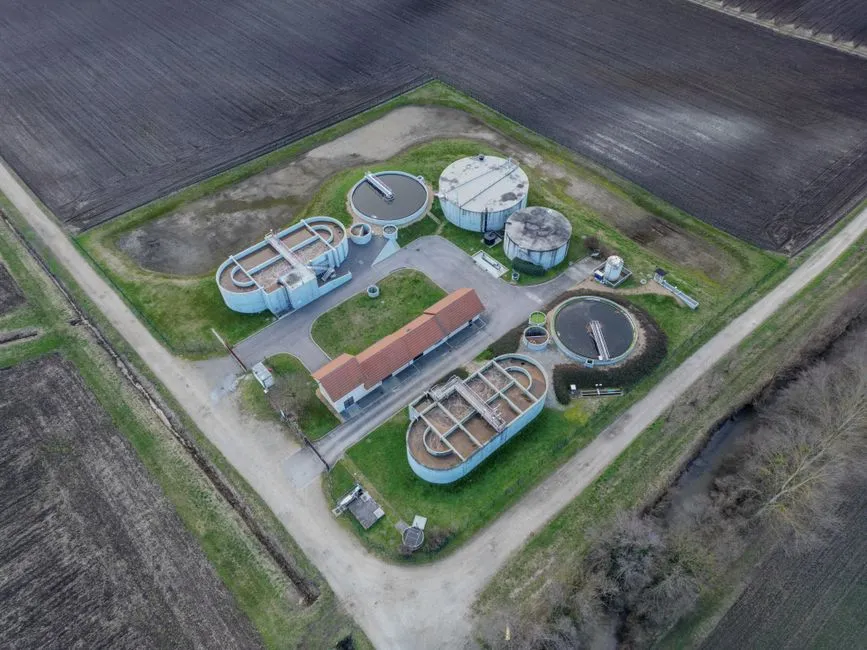
A Guadalajara hotel wastewater treatment plant in 2026 is a four-stage process train. The stages are sequential, each one solving a problem the next stage cannot, and every hotel RFP should specify performance guarantees at each stage boundary. For a tour of an analogous Mediterranean installation, see our Athens hotel wastewater treatment guide.
Stage 1 - Headworks. A rotary mechanical bar screen (typically 2-5 mm aperture) removes hair, rags, plastics, and laundry lint. The GX series rotary drum screen is well-suited to hotel flows of 5-50 m³/day; aperture selection is critical because laundry lint passes 1 mm screens and fouling will occur downstream if the screen is too coarse (HydropureWater product catalog, 2026). A flowmeter and pH probe on the screened channel feed the equalization control loop.
Stage 2 - Equalization and FOG/TSS removal. A 12-24 hour equalization basin (typically 40-60% of daily flow) dampens the FOG and surfactant peaks described in Section 2. Downstream of the basin, a dissolved air flotation (DAF) unit with polymer dosing removes 60-80% of FOG and 50-70% of TSS in a single pass, cutting the organic load into the biological stage and preventing filamentous bulking. For properties without a high-FOG kitchen, a lamella plate clarifier is a lower-CAPEX substitute.
Stage 3 - Biological treatment. Two viable packaged options exist for Jalisco hotels: a buried A/O package plant (the WSZ series, rated 1-80 m³/h per the product catalog) or an above-grade MBR membrane bioreactor system. MBR delivers sub-1 μm effluent, eliminates the secondary clarifier, and shrinks the bioreactor footprint by roughly 60% compared to a conventional activated-sludge layout of equal effluent quality (HydropureWater product catalog, 2026). For troubleshooting membrane-side issues during commissioning and operation, our MBR troubleshooting guide documents the failure modes engineers see in tropical and subtropical service.
Stage 4 - Disinfection and sludge handling. For properties targeting irrigation reuse, an on-site ClO₂ generator provides residual stability across long reuse loops, unlike UV which leaves no residual. For non-reuse applications discharging under the NOM-001-SEMARNAT surface water limits, UV at 40 mJ/cm² is acceptable. A plate-and-frame filter press dewaters the waste activated sludge to 22-28% dry solids, reducing off-site disposal volume by 80-85% and the hauled mass accordingly.
| Stage | Equipment | Function | Typical Performance |
|---|---|---|---|
| 1 | Rotary bar screen (GX series) | Solids removal | 2-5 mm capture, <5% BOD loss |
| 2 | DAF | FOG and TSS reduction | 60-80% FOG, 50-70% TSS |
| 3 | WSZ A/O or MBR | BOD/TN reduction | BOD <30 mg/L (WSZ), <5 mg/L (MBR) |
| 4 | ClO₂ or UV | Disinfection | Fecal coliform <1,000 CFU/100 mL (NOM-001) |
| Sludge | Plate-and-frame filter press | Dewatering | 22-28% DS, 80-85% volume reduction |
MBR vs Conventional A/O: Which Fits a Guadalajara Property?
Both packaged options hit the NOM-001-SEMARNAT 30 mg/L BOD ceiling, so the choice is driven by site constraints, reuse goals, and capital tolerance, not by effluent quality alone (NOM-001-SEMARNAT-1996).
| Criterion | MBR | WSZ A/O (buried package) |
|---|---|---|
| Effluent BOD | <5 mg/L | <30 mg/L |
| Effluent TSS | <1 mg/L | <40 mg/L |
| Footprint | ~60% smaller than CAS of equal capacity | Compact, fully buried under landscaping |
| Reuse-ready | Yes, irrigation-grade after ClO₂ | Requires tertiary sand/UF for reuse |
| Membrane replacement | Every 8-12 years (per catalog) | N/A |
| Operator skill | Moderate (membrane CIP, integrity testing) | Low (well-known activated-sludge process) |
| CAPEX (30-50 m³/day) | $80K-180K USD (engineering estimate) | $40K-90K USD (engineering estimate) |
The decision rule is straightforward. Choose MBR when the property is on a lot smaller than 500 m², when irrigation reuse is part of the sustainability plan, or when the receiving environment is sensitive, meaning the Lake Chapala watershed, the Cajititlán restoration zone, or any sub-basin that drains to a federally protected water body. Choose a WSZ underground A/O package plant when the lot is large enough to accommodate buried tanks with landscaped surface use, when reuse is not planned, and when CAPEX is the binding constraint. For a comparative Mediterranean climate example, the Hong Kong hotel wastewater system guide walks a similar MBR vs. packaged-AS decision for a high-density urban context.
For Guadalajara, the MBR case is strongest in the Zapopan Hotel Zone near Expo Guadalajara, where lots are tight, landscape irrigation demand is high, and any failure of the conventional collection system is rapidly visible. The WSZ case is strongest in peripheral resort developments around Lake Chapala's western shore, where land is available and the receiving water body provides the dilution required by NOM-001's lower-stringency tributary discharges.
Sizing and Cost Benchmarks for a Jalisco Resort
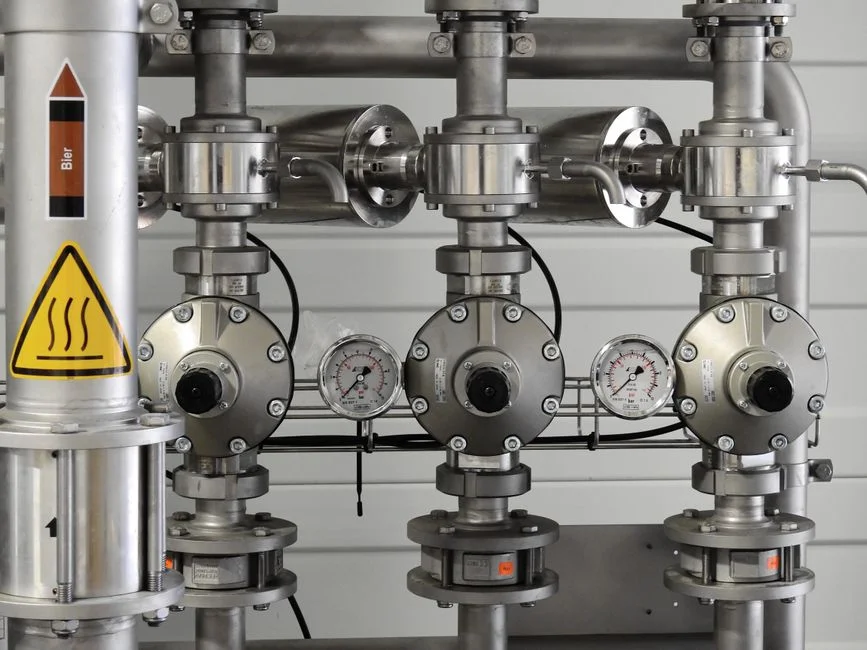
The capital planning question for a 100-room Jalisco resort is: what does it cost, and what is the payback? A 100-room full-service resort with restaurant, two pools, and 1,500 m² of irrigated landscape generates 30-40 m³/day of wastewater at base load and 45-55 m³/day at the 1.3-1.5× convention-season and Semana Santa peak (industry sizing benchmark).
| Item | MBR (30-50 m³/day) | WSZ A/O (30-50 m³/day) |
|---|---|---|
| Equipment CAPEX (FOB China + install) | $80,000-180,000 USD | $40,000-90,000 USD |
| Civil works, equalization, building | $25,000-50,000 USD | $20,000-40,000 USD |
| Permitting (SEMARNAT, SEMA, CFE) | $8,000-15,000 USD | $8,000-15,000 USD |
| Total installed CAPEX | $115,000-245,000 USD | $70,000-145,000 USD |
| Electricity | 1.5-2.5 kWh/m³ | 0.8-1.2 kWh/m³ |
| ClO₂ chemicals (if reuse) | $0.02-0.05/m³ | $0.02-0.05/m³ (if added) |
| Membrane replacement (every 8-12 yr) | $15,000-30,000 USD event | N/A |
| Sludge disposal (annual) | $2,000-4,000 USD | $2,000-4,000 USD |
Reuse drives the ROI. A Guadalajara resort that offsets 40-60% of potable demand by irrigating with reuse-quality effluent saves roughly 4,400-6,600 m³/year at SIAPA's Tier 2 commercial rates (~$1.20-1.80 USD/m³, 2025), or $5,300-11,900 USD per year, paying back the MBR premium against a WSZ baseline in 3-5 years (engineering estimate; not from SERP). Properties with golf-course or large-lagoon irrigation, including resort clusters in the Cajititlán corridor, see the upper end of that range. By contrast, Guadalajara municipal sewer connection fees in the Zona Centro run $20,000-60,000 USD depending on diameter, and SIAPA's industrial discharge surcharges (carga contaminante) add $0.30-0.80 USD/m³ for BOD and TSS above allowable limits, so for any property discharging more than 5 m³/day the packaged system is typically the lower net-cost path once reuse is counted (SIAPA tariff schedule, 2025).
Frequently Asked Questions
What wastewater treatment system does a hotel or resort in Guadalajara, Mexico need in 2026?
A packaged MBR or A/O system sized for 250-400 L per guest-night, with rotary bar screening, equalization, DAF or lamella for FOG removal, biological treatment rated to NOM-001-SEMARNAT-1996 effluent limits (BOD ≤30 mg/L, TSS ≤40 mg/L for surface water discharge), and either ClO₂ or UV disinfection. Add a plate-and-frame filter press for sludge dewatering. MBR is the right choice for tight sites, irrigation reuse, or properties draining to the Lake Chapala or Cajititlán watersheds; the WSZ underground A/O package plant is the lower-CAPEX option when space is ample and reuse is not planned.
How long does SEMARNAT and Jalisco SEMA permitting take for a hotel wastewater plant?
For a packaged system under 30 m³/day, the simplified Jalisco SEMA procedure typically clears in 60-90 days, with SEMARNAT's DAR permit running concurrently. Above 30 m³/day, expect 4-6 months for SEMARNAT approval and an additional 30-60 days for the CFE electrical interconnection. The 2024 NOM-001 update (in DOF consultation as of 2024-09) is expected to add a reuse-plan requirement for new permits above 50 m³/day when finalized.
Can a Guadalajara hotel reuse treated wastewater for landscape irrigation?
Yes, under NOM-001-ECOL-1996 reuse provisions, which remain in force in Jalisco for irrigation-quality effluent. The treated water must meet BOD ≤30 mg/L, TSS ≤30 mg/L, fecal coliform ≤1,000 CFU/100 mL, and a 1.0 NTU turbidity target under the 2024 update. ClO₂ disinfection is preferred over UV because it maintains a residual across the irrigation loop, preventing regrowth in the pipework between the treatment plant and the landscaped area.
What is the smallest packaged system that makes sense for a 30-room boutique hotel in Guadalajara?
A 10-15 m³/day MBR or WSZ unit is the practical floor for a 30-room property. Below 10 m³/day, the per-cubic-meter CAPEX rises sharply and the membrane surface area becomes too small for reliable operation; a packaged moving-bed biofilm reactor (MBBR) is an alternative in this range. Budget $35,000-70,000 USD installed for a 10-15 m³/day MBR system, excluding permitting and civil works (engineering estimate).