Why Maputo Hotels Need a Dedicated 2026 Wastewater Strategy
Maputo's hospitality market in 2026 is a two-tier inventory: international brand-managed properties such as the Radisson Blu Hotel & Residence, Maputo, and restored heritage icons like the 142-room Polana Serena Hotel sitting on 4 ha of gardens in the Polana district (per AKDN, 2010-12). Both tiers carry the same engineering reality — high-expectation guests, dense kitchens, and intermittent pool backwash — but neither publishes its wastewater design. A buyer in 2026 is therefore choosing blind against a benchmark that does not exist in the public record, and any undersizing shows up within the first high-occupancy weekend as odours, overflows, or kitchen FOG carry-through.
Hotel hydraulics are not residential hydraulics. Occupancy swings from 30% to 100% on long weekends and conference blocks, kitchen FOG spikes at breakfast and dinner service, and laundry flows are batched. The standard sizing heuristic for tropical coastal Maputo resorts is a peak hydraulic factor of 2.5–3.0× average dry weather flow (ADWF); a plant sized only to ADWF will overflow at the moments that matter most to a GM's reputation. The 2010 Polana Serena ISO 14001 certification, awarded specifically for its grey-water recycling system that irrigates the hotel's gardens (per AKDN, 2010-12), is the proof point that reuse is already a certifiable, bankable model in Maputo — not an aspirational ESG slide.
For a 2026 new build, the dominant choice is a single combined-stream package plant that takes sanitary, grey, and FOG streams together after pre-treatment. Separate-stream treatment is a retrofit concession, not a new-build default, because civil works and hydraulic balancing both simplify when one biological stage sees one merged influent.
Maputo Hotel Wastewater Characterisation: Flows, Loads, and Peak Factors
A defensible 2026 design basis for a 50–200-room Maputo resort starts with per-capita flow, then layers the kitchen and laundry contributions on top. The working numbers an engineer should put in a specification: 200–250 L per guest-night, 50 L per staff shift, and 30 L per restaurant cover. A 150-room property at 80% occupancy with 120 staff and 200 covers per meal sits in the 60–90 m³/day ADWF band, which is the right envelope for a packaged plant quotation.
Influent characterisation the same plant must handle, drawn from typical tropical-resort operating envelopes:
| Parameter | Typical Influent Range | Operational Implication |
|---|---|---|
| BOD | 250–400 mg/L | Drives biological tank sizing and aeration demand |
| COD | 500–800 mg/L | BOD:COD ratio of ~0.5 confirms biodegradability, no toxic inhibition |
| TSS | 200–350 mg/L | Sets solids load on the clarifier or membrane stage |
| FOG | 50–150 mg/L | Must be removed upstream; FOG coats membranes and impairs biology |
| Peak factor | 2.5–3.0× ADWF | Defines hydraulic capacity of the biological and disinfection stages |
The peak factor of 2.5–3.0× ADWF is the single most undersized parameter in Maputo hotel specifications. High-occupancy weekends and morning kitchen discharge overlap, and a biological stage sized to average flow simply cannot pass the surge without washing out biomass or tripping downstream disinfection. The failure mode is visible within the first quarter of operation.
Pre-treatment is therefore effectively mandatory before any biological contact, and it runs in a fixed order: a GX rotary mechanical bar screen first to strip wipes and solids, then a dissolved air flotation unit or a properly sized grease trap to lift FOG before it emulsifies. A membrane bioreactor downstream of untreated FOG will foul in weeks, not months.
MBR vs WSZ Package Plant: Head-to-Head for a 2026 Maputo Hotel
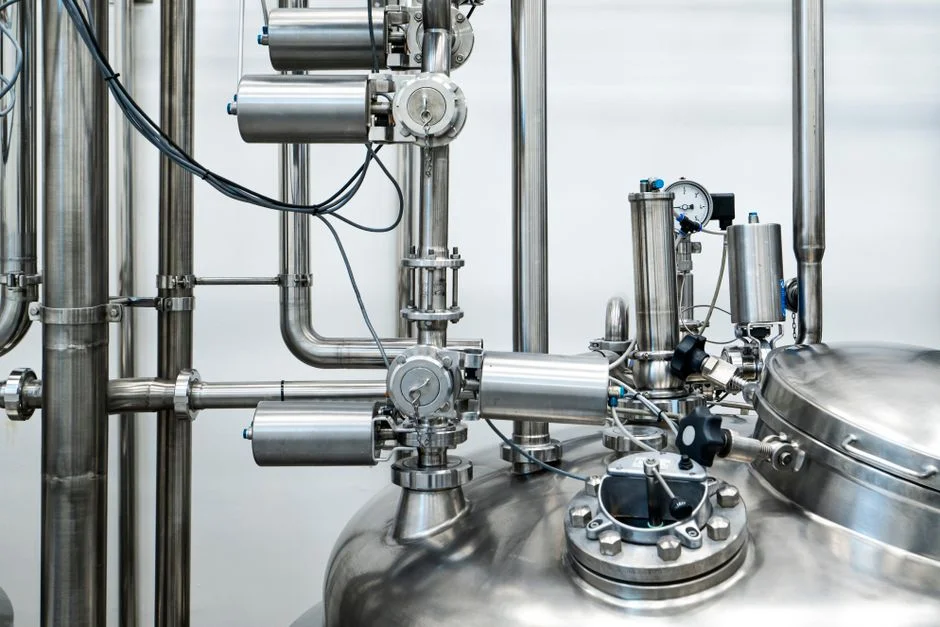
This is the core buyer's question: which packaged system fits a 2026 Maputo property. The two technologies that dominate the quotation set are the WSZ underground A/O package plant and the submerged MBR membrane bioreactor. They are not interchangeable; they answer different design briefs.
A WSZ underground A/O package plant delivers 1–80 m³/h of fully buried A/O contact oxidation followed by sedimentation and disinfection, with PLC automation and no dedicated operator. It is the right pick for boutique 30–80-room properties, staff villages, and any site where the landscaped surface must remain unbroken for aesthetic or planning reasons. The buried footprint is the dominant advantage; the limitation is effluent polish, which is suitable for sewer discharge or restricted irrigation but not for unrestricted reuse.
An MBR membrane bioreactor package plant delivers 10–2,000 m³/day from a tank roughly 60% smaller than a conventional activated-sludge layout of the same throughput, with submerged PVDF membranes at a nominal <1 μm pore size. The MBR effluent is essentially reuse-ready: low turbidity, low TSS, and low coliform counts after a polishing disinfection step. For an 80–250-room resort or a beachfront lodge targeting landscape irrigation, toilet flush, or laundry make-up, MBR is the only fully defensible choice in 2026.
| Selection Axis | WSZ Buried A/O Package | MBR Membrane Bioreactor |
|---|---|---|
| Flow range | 1–80 m³/h | 10–2,000 m³/day |
| Footprint | Buried, no surface visibility | 60% smaller than CAS at same load |
| Effluent quality | Suitable for sewer / restricted irrigation | <1 μm turbidity, near-reuse quality |
| Reuse readiness | Limited (irrigation only with controls) | Direct feed to garden, toilet, laundry |
| CAPEX per m³ | Lower for small flows | Higher, offset by reuse savings |
| Best fit | 30–80 rooms, no near-term reuse | 80–250 rooms, reuse-mandated |
For phased masterplans — common on Mozambican coastal resorts where a 50-room phase 1 expands to 180 rooms over five years — a hybrid path is defensible. Phase the biology as a WSZ A/O block, but stage the membrane cassette upgrade with a DF flat-sheet membrane cassette in the second phase once occupancy and reuse demand are proven. The MBR effluent benchmark of <1 μm turbidity directly extends the Polana Serena 2010 ISO 14001 grey-water model into a 2026 new-build context, where the certification is no longer a first-in-country novelty but an expected hospitality deliverable.
Grey-Water Reuse Economics: The Polana Serena Precedent in 2026 Terms
Reuse is the line item that converts a CAPEX conversation into a board-paper conversation. The Polana Serena Hotel in Maputo was the first hotel in Mozambique awarded ISO 14001, specifically for a grey-water recycling system that produces quality water for the hotel's gardens from its wastewater stream (per AKDN, 2010-12). Sixteen years later, the same logic applies: a 4-hectare resort garden is a year-round irrigation sink that can absorb the bulk of a membrane plant's daily output without storage headaches.
The reuse sweet spot in a resort is well-defined. Garden irrigation, landscape irrigation, toilet flush, and laundry make-up water typically account for 40–60% of a resort's total water demand. Replacing that fraction with MBR-quality reuse — disinfected through a chlorine dioxide generator rated 50–20,000 g/h rather than liquid chlorine, because ClO₂ retains biocidal efficacy at the warm 25–30 °C coastal temperatures where chlorine residuals decay — directly displaces fresh water purchases at Maputo's municipal tariff.
The payback logic is straightforward: incremental membrane and reuse-tank CAPEX is divided by the volume of fresh water offset (m³/day × municipal tariff) to give a simple payback in years. For Maputo resorts with substantial landscape area and a 4-ha benchmark already documented, payback on the incremental MBR CAPEX typically lands in a 3–6 year band. Beyond the financial return, reuse is the cleanest answer to ESG questionnaires from international operators and to the kind of ESG reporting pressure that international brand groups already apply to their Maputo properties. For an extended treatment-economics treatment in a comparable North-African coastal market, the Casablanca hotel wastewater treatment 2026 guide runs the same reuse math in greater detail.
Mozambique 2026 Compliance Direction and Operator Considerations
Mozambique's 2026 wastewater compliance direction is best framed qualitatively rather than against numeric effluent limits that are not consistently published for hotel discharges. The relevant institutional frame is the Ministry of Public Works, Housing and Water Resources / ARA-Sul (the southern water regulator) supervision, layered with the de facto hospitality benchmark of ISO 14001 — a benchmark the Polana Serena has held since 2010 (per AKDN, 2010-12) and which international operators such as Radisson and Serena apply through their own ESG reporting requirements. A buyer in 2026 is therefore designing to an ESG ceiling, not just a regulatory floor.
For a Maputo resort the realistic discharge pathway is one of two: municipal sewer where the property sits inside the Polana or central-Maputo collection area, or on-site soakaway plus MBR-quality reuse for irrigation outside the sewer network. Both pathways are easier to defend with a packaged plant whose effluent quality is documented and reproducible, rather than an open activated-sludge system with drifting performance.
Operator reality is a practical constraint, not a compliance footnote. A fully buried WSZ or a packaged MBR with PLC automation needs only periodic site visits — weekly to monthly depending on load — which matters for remote resort sites north of Maputo where recruiting a dedicated wastewater operator is a recruitment problem in its own right. Two routine side-streams the buyer must budget for: chemical dosing for coagulant and pH adjustment through a packaged automatic chemical dosing system, and sludge handling through a plate and frame filter press that dewaters waste activated sludge to a handleable cake for off-site disposal.
CAPEX/OPEX Band and Selection Recommendation by Property Size
For 2026 budget discussions with ownership, CAPEX is best expressed as an installed USD-per-m³/day band that bundles equipment, civil works, containerised or skid assembly, and commissioning, and OPEX is best expressed as energy (kWh/m³), chemical cost, membrane replacement interval, and sludge-hauling cost. Exact unit prices depend on container-versus-buried configuration, on-site access, and Maputo import logistics, so ranges — not point estimates — are the honest format for a board paper.
| Property Size | Recommended System | Pre-treatment Chain | Reuse Path |
|---|---|---|---|
| 30–80 rooms | WSZ buried A/O package plant | GX bar screen → DAF / grease trap → biology | Restricted irrigation or sewer |
| 80–250 rooms | MBR package plant with DF flat-sheet cassette | GX bar screen → DAF → MBR | Garden, toilet flush, laundry make-up |
| >250 rooms / phased masterplan | Containerised or skid MBR, staged expansion | GX bar screen → DAF → MBR → high-efficiency sedimentation tank as buffer | Full resort reuse loop with storage |
The size-based rule is the easiest way to close the conversation: 30–80 rooms buy a WSZ, 80–250 rooms buy an MBR with reuse, and anything larger or phased starts as a containerised or skid MBR with staged capacity blocks. Every one of those paths feeds through the same pre-treatment chain — rotary bar screen, DAF or grease trap, biological stage, then either MBR membrane or sedimentation plus disinfection. For a comparable Latin-American resort sizing case, the Guadalajara hotel wastewater treatment 2026 guide applies the same rule against a different tariff structure. The Polana Serena 2010 ISO 14001 precedent closes the loop: Maputo is already a proven reuse market in 2026, and the engineering task is to specify a system that matches the property size rather than over-build biology that the operator cannot run.
Frequently Asked Questions
What wastewater treatment system does a 50–200-room Maputo hotel need in 2026?
A buried or skid-mounted package plant sized to a peak hydraulic factor of 2.5–3.0× ADWF. Use a WSZ underground A/O package plant for 30–80 rooms where reuse is not a near-term priority, and an MBR membrane bioreactor package plant for 80–250 rooms targeting irrigation or toilet-flush reuse. The Polana Serena's 2010 ISO 14001 grey-water recycling system (per AKDN, 2010-12) is the certified precedent.
How much does a packaged wastewater treatment plant cost for a Maputo hotel in 2026?
CAPEX is best quoted as an installed USD-per-m³/day band covering equipment, civil works, and skid or containerised assembly, with OPEX driven by energy (typically 0.6–1.2 kWh/m³ for an MBR), chemical dosing, membrane replacement on a multi-year cycle, and sludge hauling. Treat any vendor quote that gives only a point figure with no bandwidth as incomplete — see the size-based rule in the selection table above.
Is grey-water reuse worth the incremental MBR cost for a Maputo resort?
Yes, where landscape area exceeds ~1 ha and reuse can displace 40–60% of total water demand. Incremental MBR CAPEX is typically paid back in 3–6 years against Maputo municipal fresh-water tariffs, and the chlorine dioxide generator handles the warm-temperature polishing step the Polana Serena model first certified in 2010. For process-side design depth on the biological stage, the IFAS for hotel wastewater 2026 engineering guide covers the alternative biology path.