Why Amman hotels need a dedicated wastewater system in 2026
Jordan is one of the world's most water-scarce states, with renewable freshwater supply below 100 m³ per capita per year, and reuse is no longer an option — it is now a permit condition enforced by the Water Authority of Jordan (WAJ) and the Aqaba Special Economic Zone Authority (ASEZA) for any new hospitality development. A 2021 study of 13 five-star Amman hotels (JABM 2021, Business Sustainability Through Environmental and Operational Management in Five Star Hotels in Amman, Jordan) found that operational water and energy savings were the preferred sustainability practices across maintenance, food and beverage, kitchens, purchasing, and housekeeping departments — confirming that the operator's first sustainability question is "how do we cut fresh-water draw," not "how do we polish effluent." That intent has to be converted into an engineering deliverable in 2026.
The design universe splits in two. Inside Amman's Miyahuna sewer network, a packaged plant must meet Miyahuna/WAJ pre-treatment limits before discharge; the off-site burden is shared. Outside the network — the Sweimeh Dead Sea zone, southern Aqaba, remote Wadi Rum camps — the property must run a standalone plant with a full reuse train, because there is no trunk sewer to connect to. The only documented working example at scale is the Tala Bay WWTP, a modified activated sludge plant with polishing ponds and chlorination, originally 300 m³/day in 2005 and expanded to 1,000 m³/day by Aquatreat (Arab Water Council case study, WAJ 2020). That single Jordanian reference point anchors every assumption in the rest of this article.
Hotel and resort wastewater: what is actually in the stream
A hotel is not a suburb. The influent character is set by kitchens, laundries, pools, spas, and a guest population that loads the system in sharp peaks, and a domestic-style sewage treatment plant underperforms on exactly those streams. Typical hotel influent parameters sit in the following ranges (HydropureWater field data, 2026; cross-checked against the Tala Bay operating envelope):
| Parameter | Typical hotel range | Domestic reference | Design implication |
|---|---|---|---|
| COD | 400–800 mg/L | 250–500 mg/L | Larger biological reactor volume |
| BOD₅ | 200–400 mg/L | 150–300 mg/L | Higher aeration demand |
| TSS | 200–400 mg/L | 150–250 mg/L | Front-end screening + DAF sized accordingly |
| FOG | 50–150 mg/L | 20–50 mg/L | DAF pre-treatment is non-negotiable |
| pH | 6.5–8.5 | 6.5–7.5 | Within biological tolerance, no correction |
| Temperature | 25–35°C | 15–25°C | Faster biology, lower reactor volume |
FOG, lint, hair, and surfactants from kitchens and housekeeping arrive in pulses that overwhelm a plain primary clarifier, and laundry hot water raises the stream temperature 5–10°C above ambient, which shifts reaction kinetics and reduces oxygen solubility. The Arab Water Council's Tala Bay case explicitly flags rising oil and grease in the influent as a weakness affecting plant efficiency, alongside increased salinity from laundry and restaurant reuse water damaging the drip irrigation system. The practical answer is a DAF unit upstream of the biological stage, sized for the 90–95% FOG removal and 80–90% TSS removal it needs to deliver (see MBR troubleshooting and maintenance guide for what happens when this step is skipped). A daily peaking factor of 2.0–3.0× average — driven by morning shower block and evening dining service — sets the equalisation tank at 6–12 hours HRT, which is what every packaged vendor should be quoting when they walk into the room.
The 2026 process train for an Amman hotel WWTP
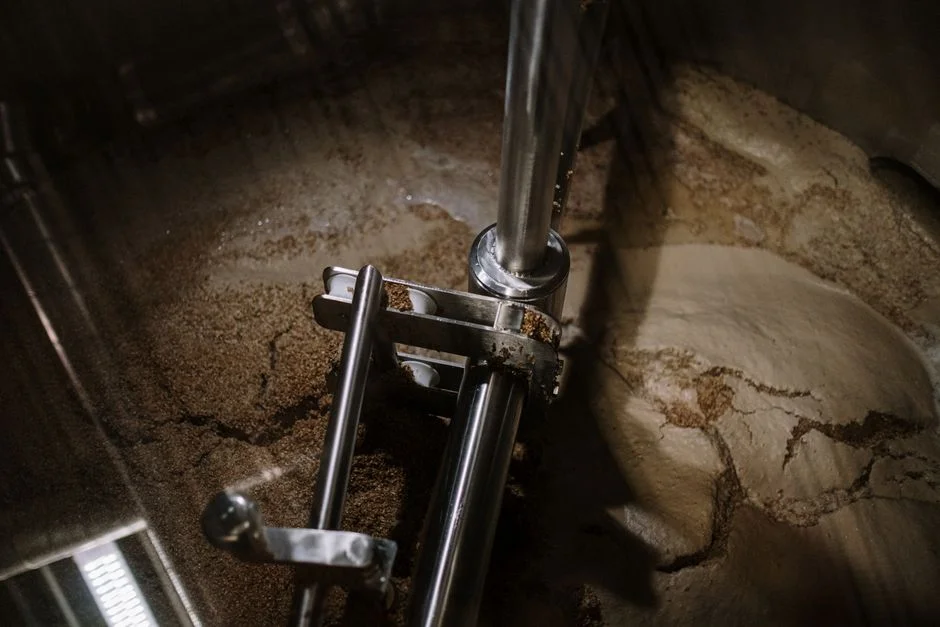
From inlet to reuse storage, a defensible 2026 train for an Amman hotel WWTP runs in six stages. The Tala Bay plant (1,000 m³/day, 8,000 m³ reclaimed water storage, operating since 2005) is the Jordanian sizing anchor; a 200-room Amman property typically discharges 40–60 m³/day at full occupancy, so most packaged plant specifications are 10–200 m³/day units.
| Stage | Unit operation | 2026 specification | Removal / performance target |
|---|---|---|---|
| 1. Coarse screening | Rotary bar screen, 5–10 mm aperture | Auto-cleaning, 5 mm bar spacing | Protect pumps from rags, plastics, hair |
| 2. Grit removal + flow equalisation | Vortex grit chamber + equalisation tank | 6–12 hour HRT; aerated mixing | Peaking factor 2.0–3.0× damped to <1.5× |
| 3. FOG / colloidal removal | DAF unit | DAF pre-treatment for FOG and lint, 5–25 m³/h | 90–95% FOG; 80–90% TSS |
| 4. Biological stage | MBR / SBR / MABR / modified AS | See comparison section | BOD <20 mg/L; COD <50 mg/L for reuse |
| 5. Tertiary + disinfection | Multi-media filter + ClO₂ or UV | chlorine dioxide disinfection for reuse water at 2–5 mg/L residual | Reuse quality per JS 893 |
| 6. Sludge handling | Plate and frame filter press | plate and frame filter press for hotel sludge dewatering | Cake >20% DS for off-site disposal |
Stage 1 starts with a rotary bar screen to drop out plastics, rags, and hair before they reach the pump sumps. The grit chamber removes sand and coffee grounds from kitchen prep; the equalisation tank then smooths the 2.0–3.0× diurnal peaks into a steady 1.0–1.3× flow to the biological stage. DAF drops FOG to under 10 mg/L — essential because oil coats biomass and destroys nitrification. The biological stage is where the design choice lives, and the next section handles that head-to-head. Tertiary filtration with sand + anthracite polishing, followed by chlorine dioxide at 2–5 mg/L or UV at 30–40 mJ/cm², is the typical 2026 reuse finish. Sludge from the DAF and biological waste stream concentrates in a hopper and is dewatered to a >20% dry-solids cake for off-site incineration or landfill. The full package is a packaged MBR wastewater treatment system for the inner-Amman case, or a modified AS + polishing pond + chlorination train for the Tala Bay-style standalone resort.
MBR vs SBR vs MABR vs conventional activated sludge: choosing the right biological stage
The biological reactor is the most expensive single line item and the hardest to change later, so the technology choice has to be locked in at the spec stage. For a 50–500-room Amman property in 2026, the four realistic options compare as follows (HydropureWater field data, 2026; MENA hospitality references):
| Criterion | MBR (PVDF) | SBR | MABR | Modified AS + polishing (Tala Bay model) |
|---|---|---|---|---|
| Footprint vs CAS | ~40% (60% smaller) | ~60% | ~50% | 100% (baseline) |
| Effluent TSS | <1 μm (membrane) | 10–20 mg/L | 5–15 mg/L | 20–30 mg/L (post-pond <10) |
| Reuse suitability | Direct to irrigation/toilet flush | Tertiary needed | Tertiary needed | Polishing pond + chlorination |
| Energy (kWh/m³) | 0.6–1.2 | 0.4–0.7 | 0.3–0.6 | 0.5–0.9 (incl. pond aeration) |
| CAPEX band (USD/m³/day) | $400–$900 | $300–$650 | $500–$1,000 | $250–$550 |
| Jordan track record | Multiple city hotels (post-2018) | Several mid-size hotels | Limited; pilot-scale only | Tala Bay (1,000 m³/day, since 2005) |
For an inner-Amman site inside the Miyahuna sewer shed — a 200-room city hotel on a tight plot with a 40–60 m³/day load — the packaged MBR with PVDF hollow-fibre membranes is the 2026 default. Effluent at <1 μm turbidity is essentially reuse-ready, and the 60% footprint saving is decisive when the plant room sits under the porte-cochère. For a 50-room boutique with 10–25 m³/day and a budget-conscious developer, an SBR cuts CAPEX 25–35% against an MBR of equal capacity, at the cost of an extra tertiary polishing step before reuse. MABR is the 2026 emerging option — biofilm on a gas-transfer membrane cuts aeration energy 30–50% versus CAS and handles high-ammonia streams well — but operating references in Jordan are still limited to pilots, so specify it with a parallel CAS or MBR train as standby for the first 12 months. The modified AS + polishing pond + chlorination train used at Tala Bay remains the right answer for Aqaba and Sweimeh resorts with land available and saline reuse water, because the polishing pond dampens salinity spikes and the process is well understood by local operators (Arab Water Council case study).
Reuse targets, Jordan standards, and how the Dead Sea changes the design
Jordan's reclaimed wastewater framework, the JS 893 family of standards updated in 2020, defines restricted use (landscape irrigation, with buffer and crop restrictions) and unrestricted use (toilet flush, cooling, car wash, when microbiological and physico-chemical criteria are met). For a hotel, the realistic unrestricted target is toilet flushing and landscape irrigation — both of which pay back fastest because they displace the highest-cost fresh water. In Aqaba, ASEZA Environment Regulation No. 21 (2001) sets the discharge envelope for any plant that cannot achieve 100% reuse, and Tala Bay operates under that framework today. The economic case is sharp: Aqaba fresh water costs USD 2.5–4/m³ for commercial users, and a 1,000 m³/day reuse plant at 50–100% offset saves USD 400–2,500 per day on the Tala Bay case (Arab Water Council). At a 200-room Amman property running 40–60 m³/day, the daily offset is USD 100–240 — enough to cover OPEX inside 18–24 months even before any fresh-water scarcity surcharge is added.
The Dead Sea basin adds a first-order design driver that no top-3 page addresses. The Dead Sea surface sits at 34.2% salinity — roughly ten times ocean water — and any spa backwash, brine pool discharge, or Dead Sea mineral treatment line carries total dissolved solids high enough to collapse the osmotic balance in a biological reactor and kill the biomass. The fix is a segregated brine holding and haul-off tank upstream of the WWTP, sized for at least 7 days of brine generation, with no cross-connection to the kitchen or laundry stream. This is non-negotiable in Sweimeh; it is also the difference between a plant that runs for ten years and one that loses nitrification in the first quarter. For reuse quality, the WHO wastewater reuse guidelines give the international safety floor and should sit alongside JS 893 in any compliance submission. For comparable regional framing, see the Hong Kong hotel wastewater 2026 engineering guide and the Athens 2026 hotel wastewater guide.
Cost bands and the 2026 selection checklist
CAPEX and OPEX in the MENA hospitality WWTP market in 2026 sit in the following bands (indicative, not quotes; project-specific pricing depends on plot conditions, civil works, and import duties):
| Cost element | MBR | SBR | MABR | Modified AS + reuse polishing |
|---|---|---|---|---|
| CAPEX (USD per m³/day capacity) | $400–$900 | $300–$650 | $500–$1,000 | $250–$550 |
| OPEX (energy + chemicals, USD per m³ treated) | $0.12–$0.25 | $0.08–$0.18 | $0.10–$0.20 | $0.08–$0.18 |
| Sludge disposal (USD per m³ treated) | $0.02–$0.05 | $0.02–$0.05 | $0.02–$0.05 | $0.02–$0.05 |
| Expected membrane replacement | 5–8 years | n/a | 7–10 years | n/a |
The 2026 vendor-selection checklist is six steps. (1) Confirm whether the property is inside the Miyahuna sewer network or needs a standalone reuse plant; this single answer fixes 80% of the spec. (2) Size the plant at 0.20–0.30 m³ per guest-night at peak occupancy — for a 200-room hotel at 80% occupancy that is 32–48 m³/day base, plus a 2.0–3.0× peaking factor. (3) Decide the reuse target: restricted irrigation only, or unrestricted reuse that includes toilet flushing. (4) Check the plot: a packaged MBR can fit in a 40 m² plant room; a modified AS + polishing pond needs 800–1,500 m² for a 1,000 m³/day resort, scaled down proportionally. (5) Verify the WAJ / ASEZA approval pathway before signing — discharge to sea in Aqaba goes through ASEZA Regulation No. 21, while inland discharge goes through WAJ pre-treatment acceptance into Miyahuna. (6) Demand at least one Middle East operating reference of three years or more, plus ISO 9001 / 14001 documentation. A vendor that cannot show a 36-month operating log on a similar plant is not qualified for a 20-year design life. The Tala Bay case is the Jordan reference for the remote-resort track; for city hotel builds, look at operating packaged MBRs of similar scale in the Levant or Gulf since 2020.
Frequently Asked Questions
Which wastewater treatment technology should a 2026 Amman hotel specify?
A packaged MBR with PVDF membranes for inner-Amman sites tied into the Miyahuna sewer, sized at 0.20–0.30 m³ per guest-night, followed by chlorine dioxide or UV disinfection. For remote resorts in Sweimeh or Aqaba with no sewer connection, the Tala Bay model — modified activated sludge plus polishing pond and chlorination, originally 1,000 m³/day, operating since 2005 — is the proven Jordan reference.
How much does a hotel wastewater treatment plant cost in Jordan in 2026?
Indicative 2026 MENA CAPEX bands are USD 400–900 per m³/day for a packaged MBR, USD 300–650 for an SBR, and USD 250–550 for a modified AS train with reuse polishing. OPEX runs USD 0.08–0.25 per m³ treated for energy and chemicals. A 200-room Amman property at 40–60 m³/day fits a USD 16,000–54,000 packaged plant envelope before civil works.
How do you handle Dead Sea brine from hotel spa backwash?
The Dead Sea surface is 34.2% salinity — roughly ten times ocean water — and brine backwash will collapse a biological reactor on contact. The fix is a segregated brine holding tank of at least 7 days' storage upstream of the WWTP, with no cross-connection to kitchen, laundry, or guest-room streams, and haul-off by tanker.
What reuse standard applies to reclaimed water from a Jordanian hotel?
Jordan Standard JS 893 (2020 update) governs reclaimed wastewater, with restricted use for landscape irrigation and unrestricted use for toilet flushing, cooling, and car wash when microbiological and physico-chemical criteria are met. ASEZA Environment Regulation No. 21 (2001) sets the discharge envelope for Aqaba plants that cannot achieve 100% reuse, and Tala Bay operates under it today.