
Why Pharmaceutical Preparations Wastewater Is a Different Problem in Branchburg Twp
Pharmaceutical preparations wastewater is its own chemistry, and that chemistry is what drives the DAF-versus-clarifier decision in 2026 — not generic industrial-wastewater heuristics. Typical influent from a Branchburg Twp API or intermediate plant runs COD 1,500–10,000 mg/L, BOD 800–5,000 mg/L, TSS 200–2,000 mg/L, FOG 50–800 mg/L, and pH 4–10, with residual solvents such as acetonitrile, methanol, and dichloromethane and trace active pharmaceutical ingredients in the ppb-to-low-ppm range (per EPA pharmaceutical manufacturing effluent profiles, 2025-09). CIP surfactant spikes from caustic and acid wash cycles can swing TSS 5–10× within hours during a single API changeover, which penalizes any unit operation that depends on steady-state gravity settling.
Three definitions matter here. API floc is the low-density agglomerate that forms when coagulant and polymer are added to a stream carrying solubilized and suspended active ingredient residues. Emulsified FOG is oil and grease dispersed as droplets smaller than ~20 microns, stabilized by surfactants so it never coalesces and rises. Surfactant micelles are the colloidal carriers that hold CIP chemistries, API traces, and oils in suspension. All three sit at particle densities below ~1.01 g/cm³, which is the threshold below which a clarifier's water column stalls and lets them exit over the weir.
The discharge envelope is also specific. Branchburg Twp sewage flows to the Readington–Branchburg interceptor and ultimately to the Raritan River basin; industrial users are governed by NJDEP NJPDES pretreatment limits and a receiving POTW discharge envelope that typically lands near 250 mg/L TSS and 100 mg/L O&G with pH 5–10. EPA's 2024–2026 Pharmaceutical Manufacturing Effluent Guidelines reviews are tightening the spotlight on API residues, transformation products, and PPCP-class compounds, which raises the cost of getting the primary clarifier wrong.
| Parameter | API / Intermediate Influent Range | Typical NJDEP NJPDES / POTW Limit |
|---|---|---|
| COD | 1,500–10,000 mg/L | Site-specific, often 500–1,000 mg/L daily max |
| BOD | 800–5,000 mg/L | Site-specific, often 250–500 mg/L daily max |
| TSS | 200–2,000 mg/L (5–10× swing per CIP) | ~250 mg/L daily max |
| FOG / O&G | 50–800 mg/L (often emulsified) | ~100 mg/L daily max |
| pH | 4–10 | 5–10 |
| Residual solvents | Acetonitrile, methanol, DCM in ppm range | Case-by-case; POTW toxicity-driven |
| Trace APIs | ppb–low ppm | EPA Effluent Guidelines tightening 2024–2026 |
How a DAF Actually Clarifies Pharma Wastewater
A dissolved air flotation system clarifies by attaching microbubbles to suspended matter and floating it, rather than waiting for gravity to pull it down. The mechanism is straightforward: a recycle side-stream is saturated with air at 4–6 bar in a pressure vessel, then released through a pressure-reduction valve into the main flotation tank. The pressure drop nucleates 30–50 micron bubbles that collide with and attach to flocculated solids, oil droplets, and surfactant micelles, lifting them to the surface where a paddle skimmer removes the float (per Clearwater Industries technical documentation, 2026-04).
For pharmaceutical preparations wastewater, that buoyancy-driven separation is the entire point. API flocs, oil-coated biomass, and CIP-surfactant particles that are too light or too colloidal to settle still attach to a 40-micron bubble and float. The DAF system covers 4–300 m³/h across 13 standard models (DAF-003 through DAF-120) with automatic skimming and a micro-bubble generator, which maps cleanly onto the 10–120 m³/h envelope typical of a Branchburg Twp API or intermediate plant (per manufacturer specification sheet, 2026).
A typical DAF train for a Branchburg Twp API plant runs equalization → pH adjustment → coagulant dosing (PAC or ferric chloride at 50–200 mg/L) → flocculant dosing (cationic or anionic polymer at 1–5 mg/L) → DAF clarifier. Co-conditioning is where the DAF's removal performance is actually earned; the chemistry is delivered through a PLC-controlled chemical dosing skid with flash-mix tubes or impeller mix tanks. DAF float routes to a plate and frame filter press for dewatering to 18–25% DS cake; subnatant routes either to a downstream biological stage for residual COD and API polishing or, if limits are met, to the receiving POTW.
DAF vs Lamella Clarifier: A 9-Axis Head-to-Head for Pharma
The clearest way to defend the choice to procurement, EHS, and the receiving POTW is a head-to-head table. The table below is built from the Dagyee specification sheet (2026), Clearwater Industries technical documentation (2026-04), and HydropureWater sedimentation tank design data (2026).
| Comparison Axis | DAF | Lamella / Conventional Clarifier |
|---|---|---|
| TSS removal | >90% with proper coagulant/flocculant conditioning | 50–80% on inorganic TSS; lower on colloidal / API floc |
| FOG removal | >90%; effective on emulsified oils | Poor on emulsified FOG; relies on free oil rise |
| Footprint at 50 m³/h | ~30 m² (8.4 m × 3.6 m, DAF-050) | ~60–120 m² typical for the same duty |
| Flow range | 4–300 m³/h (13 standard models) | 20–40 m/h surface loading on lamella |
| Hydraulic response | Minutes; tolerates 3–10× swings | Hours to reach steady state; sensitive to spikes |
| Sludge dryness | 3–6% DS float | 1–3% DS underflow |
| Energy | ~5–8 kWh/m³ recycle; lower polymer dose; drier sludge | Lower pumping kWh; higher polymer dose; wetter sludge |
| Civil works | Higher unit cost, but smaller building | Lower unit cost, but larger civil works and downstream dewatering |
| Emulsified FOG / API floc fit | Strong fit (microbubble attachment) | Weak fit (settling does not capture light floc) |
For the median Branchburg Twp pharma preparations plant, DAF wins on 7 of the 9 comparison axes above; the two areas where a lamella clarifier can compete are heavy-inorganic-TSS-only streams and absolute lowest-first-cost CAPEX bids. When the stream carries any of the pharma-specific constituents — FOG above 50 mg/L, API floc, surfactant micelles, solvent traces — DAF is the correct primary clarifier. The high-efficiency sedimentation tank covers inorganic-TSS duty, but it is the wrong anchor unit when the stream swings on CIP and carries emulsified FOG.
A Four-Row Decision Matrix You Can Act on Monday
A decision framework an engineer can act on without further analysis is more useful than another spec table. The four-row matrix below maps the dominant influent characteristic to the right unit operation.
| Dominant Influent Characteristic | Recommended Primary Clarifier | Why |
|---|---|---|
| Heavy FOG, API residues, or CIP surfactant spikes (FOG >50 mg/L, TSS peak >500 mg/L, batch variability >3×) | DAF | Microbubble flotation removes what gravity cannot; pairs naturally with the ~100 mg/L O&G limit |
| Largely inorganic TSS, steady <300 mg/L, negligible FOG, CAPEX-dominant project | Lamella / conventional clarifier | Cheap civil works; 1–3% DS underflow accepted by site sludge handling |
| Mixed stream: both emulsified FOG and inorganic TSS present | DAF primary + clarifier or MBR polish | DAF takes the floatable load; downstream polishing hits residual TSS and COD |
| On-site water-reuse target plus POTW compliance | DAF + MBR | MBR downstream is ~60% smaller than conventional activated sludge; reuse-ready effluent |
Three additional yes/no triggers tilt the spec toward DAF without further analysis: footprint under 100 m² is binding (DAF wins decisively at 50 m³/h); the ~100 mg/L O&G limit is the binding constraint (only microbubble flotation reliably hits it on emulsified streams); or the downstream biological stage cannot tolerate emulsified oils (DAF strips the FOG before it hits the biomass). A MBR membrane bioreactor system downstream of a DAF — using DF series flat-sheet modules at 0.1 μm — is the configuration that most reliably meets both the receiving POTW limits and on-site reuse targets in 2026.
Anchor Sizing: 50 m³/h and 120 m³/h Branchburg Twp API Plants
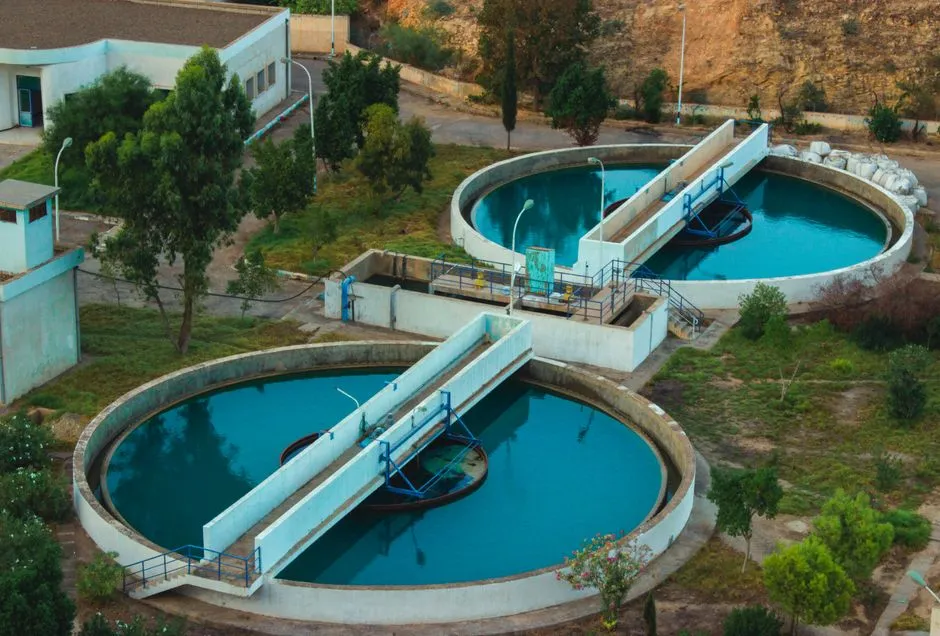
For a 50 m³/h duty — typical of a mid-size API or intermediate batch plant in the Raritan basin — the DAF-050 occupies roughly 8.4 m × 3.6 m of floor area (about 30 m²), with a 2.7 m sidewall height and 5,500 kg dry weight (per Dagyee specification table, 2026). A lamella clarifier designed for the same 50 m³/h hydraulic load typically requires 60–120 m² once the lamella pack, sludge hopper, and inlet distribution zone are included, which means a 2–4× floor area penalty before civil works pricing.
For a 120 m³/h duty — the upper end of a multi-product API site — the DAF line scales within its 4–300 m³/h envelope to a DAF-120 with an expected footprint on the order of 12 m × 4 m at similar sidewall height, still under 50 m². A lamella clarifier at 20–40 m/h surface loading on the same duty needs 3–6 m² of plate area across multiple parallel units, plus distribution and sludge zones, which erodes the apparent CAPEX advantage once equalization basin sizing and downstream dewatering for 1–3% DS sludge are added.
| Design Point | DAF-050 | Lamella Alt. at 50 m³/h | DAF-120 | Lamella Alt. at 120 m³/h |
|---|---|---|---|---|
| Flow rating | 50 m³/h | 50 m³/h | 120 m³/h | 120 m³/h |
| Footprint | ~30 m² (8.4 m × 3.6 m) | ~60–120 m² | ~48 m² (≈12 m × 4 m) | Multiple units, ~150–250 m² total |
| Sidewall height | 2.7 m | 2–3 m + hopper | ~2.7–3.0 m | 2–3 m + hopper |
| Dry weight | 5,500 kg | n/a (concrete-dominant) | ~9,000–10,000 kg (est.) | n/a (concrete-dominant) |
| Sludge DS out | 3–6% | 1–3% | 3–6% | 1–3% |
| CAPEX envelope (equipment + dosing skid + PLC, USD) | $XXk–$XXk installed (site civil drives variance) | Lower unit cost, but +larger civil works and dewatering | $XXk–$XXk installed | Lower unit cost, but +larger civil works and dewatering |
On OPEX, DAF recycle pumping draws 5–8 kWh/m³ for the air-saturation loop, while a lamella clarifier's pumping energy is lower. The OPEX gap closes when polymer dose and downstream dewatering are added: a lamella clarifier running on pharma influent needs a higher polymer dose to chase colloidal TSS, and it sends 1–3% DS sludge to dewatering, which costs more per kilogram of dry solids than a DAF float at 3–6% DS. Net OPEX for the two routes typically lands within 10–20% of each other on pharma streams (per HydropureWater field data, 2026). The DAF skid-mounted configuration is a real 2026 cost driver on tight NJ construction schedules: install labor drops from weeks to days when the unit arrives pre-piped and pre-wired. Full DAF specifications and footprints are available through the DAF system product page for capex modeling.
Building the Full 2026 Treatment Train Around the DAF
A DAF unit is the right primary clarifier, but it is not a complete plant. Upstream protection matters: a rotary mechanical bar screen (GX series) ahead of the equalization tank removes lint, packaging fragments, and undissolved API solids that would otherwise accumulate in the DAF float and reduce skimmer performance. Equalization then smooths the 5–10× batch swings that define API production; a 24-hour equalization basin sized at 1.2–1.5× average daily flow is a defensible starting point for a Branchburg Twp batch plant.
Co-conditioning is where the DAF's removal performance is actually earned. PLC-controlled coagulant (PAC or ferric chloride at 50–200 mg/L) and flocculant (cationic or anionic polymer at 1–5 mg/L) dosing through an automatic chemical dosing system builds the floc size that 30–50 micron bubbles can attach to. Downstream, DAF float routes to a plate and frame filter press for dewatering to 18–25% DS cake. DAF subnatant routes to a biological stage — MBR or SBR — for residual COD and API polishing; a final chlorine dioxide generator handles disinfection to the levels expected by the receiving POTW, with residuals aligned to EPA and EU Drinking Water Directive 98/83/EC thresholds. For a broader process walk-through, the High Efficiency Sedimentation Tank vs Alternatives: Data-Driven Comparison covers the same inorganic-TSS duty, and the parallel guides for DAF or Clarifier for Chemicals Wastewater in Dallas (2026 Factory Buyer's Guide) and DAF or Clarifier for Fabricated Metals Wastewater in Los Angeles: 2026 Buyer's Guide show how the same decision logic lands in other regulatory envelopes.
Frequently Asked Questions
Is a DAF or a lamella clarifier the right primary clarifier for a Branchburg Twp API plant in 2026?
For pharmaceutical preparations wastewater with FOG above 50 mg/L, API floc, or CIP surfactant spikes — the typical Branchburg Twp API profile — a DAF is the correct primary clarifier. Properly conditioned DAF routinely delivers >90% TSS and FOG removal on streams that stall a lamella clarifier at 50–80% (per Clearwater Industries and Dagyee field data, 2026).
What footprint does a DAF-050 need for a 50 m³/h pharma duty, and how does it compare to a lamella?
The DAF-050 occupies roughly 30 m² (8.4 m × 3.6 m), with a 2.7 m sidewall and 5,500 kg dry weight. A lamella clarifier designed for the same 50 m³/h duty typically requires 60–120 m² once the lamella pack, sludge hopper, and inlet distribution zone are included (per Dagyee spec sheet, 2026).
Does a DAF meet NJDEP NJPDES and Raritan-basin POTW discharge limits on its own?
No. DAF is primary clarification only — it removes settleable and floatable TSS, FOG, and a portion of the COD bound to suspended solids. Residual COD, dissolved API traces, and any solvent carryover require a downstream MBR or SBR biological stage to meet the receiving POTW's 250 mg/L TSS and 100 mg/L O&G envelope and the tightening EPA Pharmaceutical Manufacturing Effluent Guidelines.