
Why Winery Wastewater Challenges Conventional Treatment
Raw winery wastewater carries a chemical oxygen demand of 68 g/L, biochemical oxygen demand of 55 g/L, total suspended solids of 14.7 g/L, and a COD:N:P ratio of 100:1:0.4 — values documented for a Douro-region facility operating a standard SBR pilot (Engineering Proceedings, 2023-10). That nutrient ratio is the first red flag: a conventional activated sludge plant designed for municipal sewage at 100:5:1 will run severely nitrogen-limited on winery influent, and phosphorus supplementation becomes a design decision rather than a polishing step.
Flow is the second problem. Wineries generate 3–5 kL of wastewater per ton of grapes crushed, concentrated inside a 60–90 day harvest window (Australian Journal of Grape and Wine Research, 2011). Outside that window, the same facility may produce a tenth of the flow from bottling-line rinses and floor washdowns. Quality varies on an hourly basis during vintage as presses, centrifuges, and transfer lines cycle through cleaning sequences. Sodium- and potassium-based cleaners (predominantly NaOH) push conductivity and salinity in spikes that a continuous-flow basin cannot absorb without equalization.
A generic activated sludge system sized for the average harvest load will either under-aerate during crushing peaks or waste energy during the eight months of low flow. The combination of high strength, low N:P, and seasonal surges is what pushes designers toward a batch reactor with programmable cycle timing — a configuration that lets one tank operate as a buffer, a reactor, and a clarifier in sequence.
| Parameter | Value | Source |
|---|---|---|
| COD | 68 g/L | S4, Douro region |
| BOD | 55 g/L | S4, Douro region |
| TSS | 14.7 g/L | S4, Douro region |
| VSS | 12.8 g/L | S4, Douro region |
| TN | 0.663 g/L | S4, Douro region |
| TP | 0.258 g/L | S4, Douro region |
| COD:N:P | 100:1:0.4 | S4, Douro region |
| Flow per ton grapes | 3–5 kL | S5, Australian review |
Headworks screening should be specified to handle this solids load before any biological stage; a rotary bar screen for headworks protection sized to 10 mm bar spacing is a typical starting point for vintage flows carrying grape skins, seeds, and label fragments.
How a Sequencing Batch Reactor Works for Winery Effluent
A sequencing batch reactor runs five sequential phases — fill, react, settle, decant, and idle — inside a single tank, repeating the cycle on a fixed or demand-based schedule. The decanter withdraws treated supernatant from the top while activated sludge remains at the bottom, ready to treat the next batch. Because all phases share one vessel, the plant footprint is smaller than a continuous-flow activated sludge train with separate aeration basin and secondary clarifier.
For winery wastewater, the react phase is the design variable that matters most. It can be programmed as alternating anoxic and aerobic sub-phases within a single cycle, which directly addresses the COD:N:P = 100:1:0.4 imbalance: the anoxic window consumes residual nitrate from the prior aerobic sub-phase, and the aerobic window then re-nitrifies the ammonia released during endogenous decay. This internal recycle eliminates the need for a separate denitrification basin.
The batch format is uniquely suited to winery flows because cycle length, aeration duration, and decant volume are software parameters, not civil works. A 24-hour cycle during peak vintage can be shortened to 8 hours during the low-flow bottling season without taking the tank offline. MLSS in the published winery SBR study was held at 2 and 4 g VSS/L (Engineering Proceedings, 2023-10), confirming that the SBR can be operated in the same mixed-liquor range as conventional activated sludge but with the operational flexibility of a batch.
SBR Cycle Design Parameters for Winery Wastewater
A defensible design basis starts with a total cycle of 8–24 hours, allocated approximately as 50–60% react, 20–30% settle, and the remainder split between fill, decant, and idle. During peak vintage, longer react phases at lower F/M protect effluent quality; during low-flow months, shorter cycles increase throughput without raising aeration cost. The settle phase should not be shortened below 60 minutes, since winery mixed liquor at 4 g VSS/L needs the full duration to compact below 50 mg/L effluent TSS — a threshold the Douro study noted was breached when settle time was compressed.
F/M ratio is the most leveraged operating parameter. Published SBR research on winery wastewater recommends staying at or below 1.4 g COD/g SS (Engineering Proceedings, 2023-10). When this ratio was exceeded at the highest organic loading rate tested, effluent COD reached 3.5 g/L at steady state, more than 20× the 0.150 g/L legal discharge limit. Dissolved oxygen in the aerobic react sub-phase should be held at 1.5–2.5 mg/L — enough to drive BOD oxidation without stripping volatile organics or wasting blower power.
Hydraulic retention time across the SBR train is typically 1–5 days depending on influent COD and the target effluent quality, but this number only holds when upstream equalization is sized to absorb the harvest surge. A 24–48 hour equalization basin ahead of the SBR is standard practice for any facility where peak-day flow exceeds twice the average.
| Parameter | Recommended Range | Source / Basis |
|---|---|---|
| Total cycle length | 8–24 h | OLR-dependent, S4 |
| React phase | 50–60% of cycle | Engineering practice, S4 |
| Settle phase | 20–30% of cycle, ≥60 min | S4 settling observations |
| MLSS / MLVSS | 2–4 g VSS/L | S4 winery SBR study |
| F/M ratio | ≤ 1.4 g COD/g SS | S4 high-strength limit |
| DO setpoint (react) | 1.5–2.5 mg/L | BOD oxidation standard |
| HRT (SBR only) | 1–5 days | Influent COD dependent |
| Equalization upstream | 24–48 h | Harvest surge damping |
Where cleaning wastewater streams carry fats, oils, or grease that would otherwise shock the SBR, a DAF pre-treatment for suspended solids and FOG removal upstream of the reactor protects biomass from oil coating and improves sludge settleability.
SBR Performance Data from Winery and Related Applications
Two-stage SBR systems with microalgal biomass on winery wastewater achieved COD removal of 85 ± 9% and NH4-N removal of 91 ± 20% (Environ Sci Pollut Res Int, 2024-07). A single-stage SBR fed anaerobically pretreated winery wastewater reached COD removal of 78 ± 9% and NH4-N removal of 95 ± 9%. These are not theoretical projections — they are measured outcomes from reactors operating on real winery streams.
Direct aerobic SBR on raw, unblended winery wastewater tells a more cautious story. At the highest OLR tested, effluent COD reached 3.5 g/L, against a 0.150 g/L legal discharge limit (Engineering Proceedings, 2023-10). The failure mode was not the biology — COD removal remained in the 70–85% range — but the absolute residual concentration, which started from an influent of 68 g/L. This is the engineering argument for tertiary polishing after an SBR, not against the SBR itself.
Nutrient removal is the other performance dimension worth flagging. With influent COD:N:P at 100:1:0.4, any SBR will run nitrogen-limited. Full nitrification to below 10 mg/L NH4-N is achievable only with external nitrogen dosing, and full denitrification to below 15 mg/L TN typically requires supplemental carbon or a downstream constructed wetland polishing cell. Pilot data should be read with this constraint in mind: high NH4-N removal percentages on a low-influent-N stream do not translate directly to high-influent-N municipal performance.
SBR vs. MBR vs. Constructed Wetlands for Winery Applications
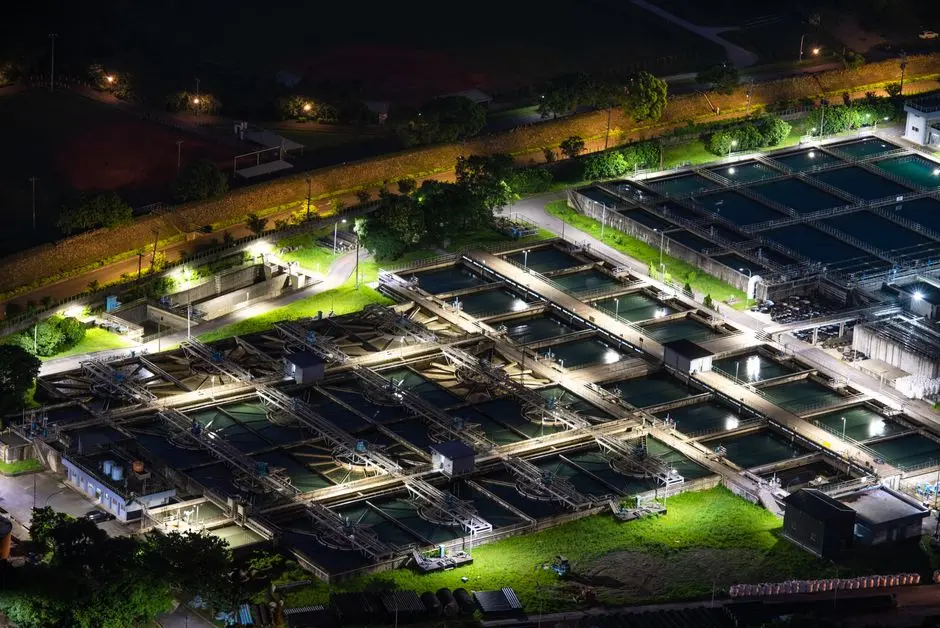
Three biological platforms dominate winery treatment: sequencing batch reactors, membrane bioreactors, and constructed wetlands. SBRs offer moderate capital cost, a footprint smaller than pond systems, and cycle-level operational flexibility. MBRs deliver sub-micron effluent quality suitable for direct reuse, but require higher capital cost, membrane replacement budgeting, and more consistent operator attention. Constructed wetlands have the lowest capex but require the largest land area and lose treatment efficiency during cold winter months when plant uptake and microbial activity drop.
For a mid-size winery producing 200–2,000 m³/d with stable staffing and available tankage, the SBR is the most defensible default. For sites with strict reuse requirements, tight footprints, or variable operator skill, an MBR polishing for sub-150 mg/L COD discharge may justify the higher lifecycle cost. Constructed wetlands fit large-land, low-load sites where the seasonal performance dip is acceptable.
No single technology handles the full 68 g/L COD load alone. Most installed winery trains pair an anaerobic pretreatment stage — typically a UASB or anaerobic lagoon — with a downstream aerobic SBR or MBR. The anaerobic stage removes 60–80% of the COD, drops the OLR on the aerobic stage to a manageable range, and recovers biogas in the process.
| Criterion | SBR | MBR | Constructed Wetland |
|---|---|---|---|
| Relative capex | Moderate | High | Low |
| Footprint | Small–moderate | Smallest (~60% of CAS) | Largest |
| Effluent quality | 10–50 mg/L TSS | < 1 µm filtered | 10–30 mg/L TSS, variable |
| Operator skill | Moderate | Higher | Lowest |
| Best fit | 200–2,000 m³/d, stable staff | Tight footprint, reuse mandate | Large land, low load |
| Seasonal handling | Cycle reprogramming | Flux adjustment | Performance dips in cold |
Integrating SBR into a Complete Winery Treatment Train
Upstream of the SBR, the treatment train typically starts with a rotary bar screen for headworks protection at 10 mm bar spacing to remove grape skins, seeds, and label fragments during vintage. Flow then enters an equalization basin sized for 24–48 hours of retention to dampen the 3–5 kL/ton surges and to allow pH correction dosing (target influent pH 6.5–7.5) ahead of the biological stage. Where cleaning wastewater carries fats or emulsified oils, a DAF unit sits between equalization and the SBR.
Downstream of the SBR, a lamella clarifier for SBR effluent polishing handles the residual TSS that escapes the batch settle phase, particularly during peak-load cycles. For sites targeting vineyard irrigation reuse, disinfection (typically UV or chlorination) follows clarification. For tighter discharge limits, MBR polishing as a tertiary step is the standard upgrade path — the engineering tradeoffs are detailed in a separate winery wastewater MBR engineering guide.
Waste activated sludge from the SBR is typically wasted at 0.3–0.5% of tank volume per day and dewatered on a plate-and-frame filter press for waste activated sludge. Winery biological sludge dewaters to 18–22% dry solids under standard polymer conditioning, producing a cake that can be composted with grape marc or disposed under winery solid-waste permits.
Frequently Asked Questions
What COD removal efficiency can an SBR achieve on winery wastewater?
Two-stage SBR systems on real winery streams have achieved 85 ± 9% COD removal, while single-stage SBRs fed anaerobically pretreated winery wastewater reached 78 ± 9% (Environ Sci Pollut Res Int, 2024-07). Direct aerobic SBR on raw 68 g/L influent delivers lower absolute effluent quality because the residual COD remains above discharge limits, which is why polishing is standard practice.
How does an SBR compare to an MBR for winery applications?
Both treat the same influent, but an MBR delivers sub-micron effluent suitable for direct reuse, with a footprint roughly 60% of a conventional activated sludge plant and a higher capital cost. An SBR offers moderate capex, cycle-level operational flexibility, and effluent in the 10–50 mg/L TSS range that typically requires a downstream clarifier or MBR polish before reuse discharge.
How is waste activated sludge handled in a winery SBR?
Sludge is wasted at roughly 0.3–0.5% of tank volume per day and dewatered on a plate-and-frame filter press to 18–22% dry solids under standard polymer conditioning (HydropureWater field data, 2026). The dewatered cake can be composted with grape marc or disposed under the winery's solid-waste permit.
Can an SBR alone meet the 0.150 g/L winery discharge limit for COD?
No. Published pilot data shows that direct aerobic SBR on raw winery wastewater produced effluent COD up to 3.5 g/L at the highest OLR tested (Engineering Proceedings, 2023-10), more than 20× the discharge limit. Meeting 0.150 g/L requires either anaerobic pretreatment ahead of the SBR or tertiary polishing downstream, typically MBR or coagulation-sedimentation.
How does an SBR handle the seasonal flow variability of a winery?
Cycle length, react duration, and decant volume are software parameters on an SBR, not fixed by tank geometry. Operators can run a 24-hour cycle during peak vintage and shift to 8-hour cycles during the low-flow bottling season, with no tank offline time. This batch flexibility is the primary reason SBR is preferred over continuous-flow activated sludge for harvest-driven flows.