Why Distillery Wastewater Is a Hard Problem for Biological Treatment
Cane molasses distilleries generate spent wash with COD of 30,000–80,000 mg/L and BOD/COD ratios between 0.4 and 0.6; grain-based ethanol plants run lower, typically 5,000–15,000 mg/L COD (HydropureWater field data, 2026). Raw stillage exits the column at 60–90 °C with a pH of 3.5–5.0 and carries the deep brown color characteristic of melanoidin polymers formed during Maillard reactions. Sulfite residues from boiler-feed chemical treatment and seasonal variation in molasses quality add further inhibition. Conventional suspended-growth biology cannot handle this: the organic load is 50–100× higher than municipal wastewater, the temperature is outside the mesophilic window, and a single batch dump can swing influent COD by 3–5× over a few hours. That is why a moving bed biofilm reactor for distillery wastewater is positioned as a polishing stage after anaerobic pretreatment, not as a stand-alone solution. Anaerobic digestion (UASB or anaerobic digester) takes the bulk COD load and converts it to biogas, then the MBBR handles residual organics, ammonia, and the polishing that determines whether the plant meets its discharge consent.
Where MBBR Fits in a Distillery ETP
The dominant 2026 process train for distillery effluent is a hybrid: cooling/equalization → pH correction and nutrient dosing → UASB or anaerobic digester → aerobic MBBR → optional tertiary (activated carbon, MBR, or ozone) → sludge dewatering. The reference process flow for a comparable beverage-sector plant is detailed in What ETP Does Heineken Need After Expanding Its Brewery? 2026 Process Guide. MBBR sits in the aerobic slot for three reasons: it handles residual COD and ammonia in a footprint 30–50% smaller than activated sludge, it tolerates the diurnal and organic shocks common in batch distillery operations because biomass is attached to media rather than suspended, and it accepts feed variability that would wash out flocs in a CAS basin. When discharge limits tighten to ≤100 mg/L COD, the MBBR is paired with a DAF or an MBR downstream. When the goal is zero-liquid-discharge (ZLD) for boiler or cooling-tower reuse, the MBBR effluent feeds RO and a mechanical evaporator, with the MBBR providing the biological backbone that protects the membranes.
MBBR Design Parameters for Distillery Polishing
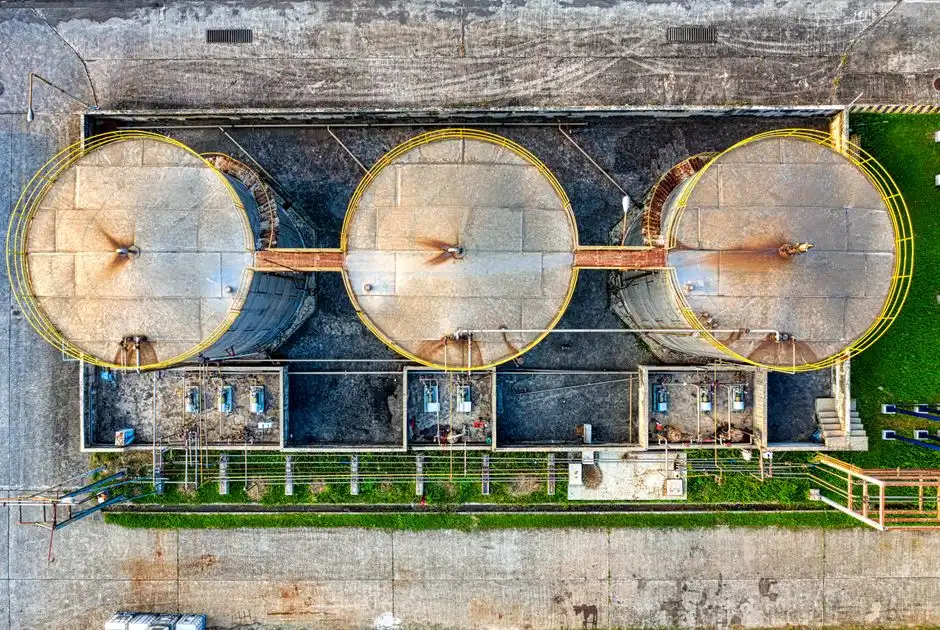
The table below consolidates a working set of MBBR design parameters for distillery polishing. These values can be lifted directly into a P&ID or a process datasheet; the cited case studies confirm the lower end of each range, while the upper end represents a robust design margin.
| Parameter | Polishing (post-UASB) | Standalone post-anaerobic with high residual load | Notes / Source |
|---|---|---|---|
| HRT | 6–10 h | 12–24 h | S1 ran 6–10 days batch; S5 ran up to 72 h. Real continuous distillery MBBR typically operates 8–10 h. |
| Media fill | 20–40% (default 30%) | 30–40% | 20% proven in S1 (Kaldnes K1, 91% BOD / 93.81% COD); >50% risks media carryover and clogging. |
| DO (aerobic zone) | 2.0–3.0 mg/L | 2.0–3.5 mg/L | Above 3.5 mg/L wastes blower energy with diminishing returns. |
| F/M ratio | 0.2–0.5 kg BOD/kg MLVSS·d | 0.1–0.3 kg BOD/kg MLVSS·d | Biofilm carriers tolerate higher F/M than CAS because of higher effective biomass. |
| Temperature | 25–35 °C | 25–35 °C | Below 15 °C biology drops sharply; covered reactor or heat exchanger required in cold climates. |
| pH | 6.5–8.0 | 6.5–8.0 | UASB effluent typically exits at 7.0–7.5; minor correction in equalization. |
| Media type | HDPE Kaldnes K1 / K3 or equivalent | Same | Surface area 500–1,200 m²/m³, density 0.95–0.98 g/cm³ (floats without aeration). |
| Aeration | Coarse-bubble diffused, 0.8–1.2 kg O₂/kg BOD applied | Same | SS304 or FRP coarse-bubble diffusers preferred for fouling tolerance. |
The S1 (Tanjungpura 2019) baseline at 20% Kaldnes K1 fill achieved 91% BOD and 93.81% COD removal on laundry wastewater at 10-day retention, confirming the lower end of the 20–40% fill range as proven (DOI: 10.26418/jtllb.v7i1.31882). The S5 (Guheshwori 2024) pilot pushed 96.84% COD and 99.20% NH₄-N at 72 h HRT with media, which justifies longer HRT when ammonia limits apply (gnest.org/publication/gnest_07240). Both pilots ran longer than a typical continuous distillery MBBR, so their removal percentages represent an upper bound; conservative engineering should target the lower band of each range. A rotary mechanical bar screen upstream protects the media from solids carryover, which is the single most common cause of biofilm-carrier fouling on distillery projects.
Expected Removal Efficiencies: Distillery MBBR vs. Published Case Studies
The table below anchors the distillery design case against the two cited MBBR pilots and the realistic effluent range an engineer should expect from a hybrid UASB + MBBR train in 2026.
| Parameter | Published MBBR result (S1 / S5) | Realistic distillery MBBR range (post-UASB) | Notes |
|---|---|---|---|
| COD | S1: 910 → 56.3 mg/L (93.81%) S5: 96.84% with media at 72 h |
150–400 mg/L | Distillery MBBR effluent typically 150–400 mg/L COD without tertiary polishing. |
| BOD | S1: 441 → 39.67 mg/L (91%) S5: 88.97–89.68% at 72 h |
20–60 mg/L | Well within standard 2026 distillery discharge targets of BOD ≤30 mg/L. |
| NH₄-N | S5: 99.20% at 24 h with media | 2–10 mg/L | MBBR is the standard ammonia polishing stage after anaerobic digestion. |
| Phosphate | S1: 38.24 → 5.31 mg/L (86.10%) S5: 92.98% at 24 h with media |
3–8 mg/L | Biological phosphate removal is partial; chemical polishing often required. |
| Color (melanoidin) | Not reported in S1 or S5 | 30–50% reduction | Melanoidin removal is biological-limited; activated carbon or ozone required for visible-color compliance. |
The compliance outcome for 2026: a hybrid MBBR + activated carbon or MBBR + MBR polishing train can bring distillery effluent to <100 mg/L COD and <10 mg/L BOD, which matches the standard distillery discharge target referenced in most jurisdictions. Melanoidin color, however, is the MBBR's weak point — biofilm consortia can shift 30–50% of true color but rarely break the polymer chain, so any color-restricted permit will still need an activated-carbon or ozone polish downstream.
Media Selection, Fill Ratio, and Aeration Choices
HDPE Kaldnes K1 carriers, the same media used in the S1 pilot, remain the default choice for distillery MBBR duty. K3 carriers offer higher protected surface area (typically 600–800 m²/m³ versus 500 m²/m³ for K1) and slightly better mixing at low DO, which suits high-ammonia polishing zones. Biofilm chip media from alternative suppliers deliver surface areas of 800–1,200 m²/m³ but cost more per cubic meter and have less published long-term performance on distillery effluent. All HDPE media in this class share a density of 0.95–0.98 g/cm³, meaning they float without aeration and require a retaining screen at the effluent weir. Twenty percent fill is the proven minimum from the S1 baseline; 30–40% gives a safety margin for shock loads from batch distillery operations, while fills above 50% risk media carryover, dead zones, and clogging at the screens. For aeration, coarse-bubble diffused aeration is preferred over fine-bubble on distillery duty because of higher tolerance to fouling from residual melanoidins and FOG, plus easier maintenance when diffusers need to be raised and cleaned. Nutrient supplementation is handled by an automatic chemical dosing system dosing urea and phosphoric acid to maintain the BOD:N:P = 100:5:1 ratio downstream of the anaerobic stage.
Common Configuration Mistakes on Distillery MBBR Projects
Four failure modes show up repeatedly on distillery MBBR commissioning reports. First, skipping the anaerobic stage and trying to feed raw 30,000 mg/L stillage directly to an MBBR: the oxygen demand is unmeetable, biomass will wash out, and the biofilm carriers will foul with melanoidin precipitates within days. Second, under-sizing equalization: distillery batch operations produce 3–5× peak diurnal COD swings, and a too-small EQ tank will alternately starve and shock the MBBR, knocking biofilm off the carriers during the shock phase. Third, ignoring temperature control: nitrification efficiency in an MBBR drops sharply below 15 °C, so plants in cold climates need a heat exchanger on the MBBR feed or a covered reactor to hold biology in the 25–35 °C window. Fourth, no nutrient dosing: anaerobic pretreatment strips nitrogen and phosphorus along with the carbon, and an MBBR running on a nitrogen-starved feed will lose nitrification capacity within two weeks. The standard BOD:N:P = 100:5:1 ratio must be maintained through chemical dosing upstream, or the polishing stage will fail its ammonia guarantee.
Integrating MBBR With Tertiary and Sludge Stages
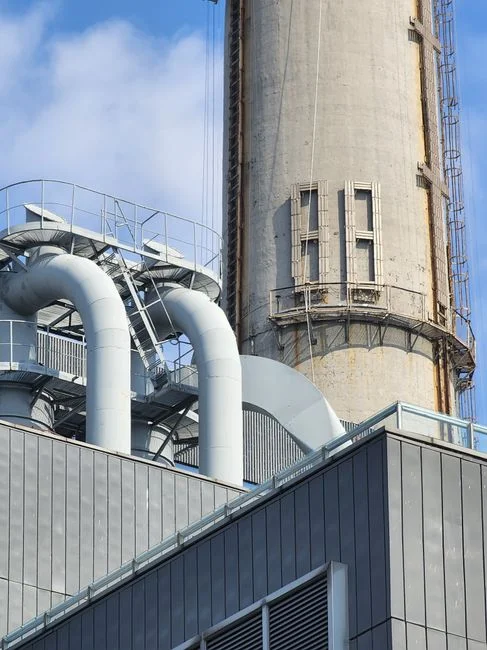
An MBBR that delivers 150–400 mg/L COD cannot meet a ≤100 mg/L discharge limit on its own. The standard 2026 polish options are an MBR membrane stage, a DAF + activated carbon train, or ozone for color-restricted permits. For ZLD reuse, the MBBR effluent is typically polished by multi-media filtration to protect an RO system, with the RO concentrate feeding a mechanical evaporator and the condensate returned to the boiler. The MBBR waste sludge stream is typically 0.8–1.2% dry solids, which is too thin to send directly to a filter press; a lamella thickener or a DAF thickener brings it to 3–5% before dewatering. Expected cake from a plate and frame filter press is 22–28% DS, suitable for offsite disposal or co-incineration with bagasse at cane-molasses distilleries. A dissolved air flotation (DAF) system is the workhorse for any FOG, color-body, or suspended-solids carryover from the MBBR stage and is often placed both upstream (as a pre-clarifier on the UASB effluent) and downstream (as a final polish). For plants targeting the tightest ammonia and COD limits, an MBR membrane bioreactor system downstream of the MBBR delivers <5 mg/L TSS and <50 mg/L COD in a single aerobic stage.
Capex, Opex, and Compliance Outlook for 2026
Order-of-magnitude capex for a 100 m³/day MBBR polishing stage — reactor tank, media, blowers, coarse-bubble diffusers, and control panel — runs roughly USD 80,000–150,000 equipment-only in 2026, excluding civil works (HydropureWater field data, 2026). Treat this as a planning range, not a vendor quote. Opex is dominated by aeration, which accounts for 60–70% of operating cost at typical energy demand of 0.8–1.2 kWh per kg COD removed; sludge hauling is the second line item. On the compliance side, most jurisdictions in 2026 enforce COD ≤250 mg/L and BOD ≤30 mg/L for distillery discharge, while tighter regions (EU IPC-BREF, India CPCB, China GB 27631-2011 updated thresholds) require ≤100 mg/L COD and tertiary polishing — the prudent move is to design to the strictest applicable limit from day one. Forward-looking: tightening color, TDS, and reuse-water standards are pushing distilleries toward MBBR + MBR + RO trains, with the MBBR acting as the biological backbone that protects downstream membranes. An integrated skid like the JY integrated water purification system is increasingly the procurement path for mid-sized distilleries that want a pre-engineered MBBR + MBR package rather than a stick-built ETP.
Frequently Asked Questions
Can MBBR treat raw distillery wastewater alone?
No. Raw distillery spent wash at 30,000–80,000 mg/L COD will overload any aerobic biofilm reactor on oxygen demand and wash out attached biomass within hours. The S5 (Guheshwori 2024) data confirms 96.84% COD removal but only after the feed has been pretreated to municipal-strength levels; the MBBR is a polishing stage, not a stand-alone digester.
What HRT should I use for a distillery MBBR after UASB?
Plan for 8–10 hours HRT at continuous flow as the robust default. The S1 (Tanjungpura 2019) pilot at 10-day batch retention hit 93.81% COD on Kaldnes K1 media, but batch retention is not equivalent to continuous HRT — design to the 8–10 h continuous band and target the lower end of the removal range.
Is Kaldnes K1 the right media for distillery duty?
K1 is the proven baseline and the lowest-risk choice; it is the same media used in the S1 pilot that delivered 91% BOD and 93.81% COD at 20% fill. K3 offers higher surface area for ammonia polishing zones, but for a general distillery polishing reactor, K1 at 30% fill is the conservative default.
What discharge COD can I expect from a distillery UASB + MBBR train?
Plan for 150–400 mg/L COD after the MBBR alone, which is still above the ≤100 mg/L limit that tight jurisdictions enforce. Adding an MBR polish or DAF + activated carbon downstream reliably brings the train to <100 mg/L COD and <10 mg/L BOD, which is the standard 2026 distillery discharge target.
What polishing is needed for zero-liquid-discharge (ZLD) at a distillery?
For ZLD, route MBBR effluent through multi-media filtration to an RO system, then feed the RO concentrate to a mechanical evaporator. The MBBR is the biological backbone that protects the RO membranes from organic fouling; without it, RO membranes would foul within weeks on raw anaerobic effluent.
How does MBBR compare to SBR or activated sludge for distillery duty?
MBBR tolerates organic shocks that would wash out a CAS basin because biomass is attached to carriers, and it runs in a 30–50% smaller footprint than an SBR for the same COD load. The trade-off is that MBBR alone does not achieve the same effluent TSS as an SBR or MBR, so for ultra-tight permits an MBBR + MBR combination is the 2026 benchmark — see MBBR Advantages and Disadvantages: 2026 Engineering Buyer's Guide for the full head-to-head.