Why Ho Chi Minh City Data Centers Face a Different Water Problem in 2026
A data center in Ho Chi Minh City typically needs a treatment train that handles 20-40% of its intake as cooling tower blowdown — for a 100 MW campus that can reach 2 million liters per day (per IDE Tech, 2026) — while meeting QCVN 40:2015/BTNMT industrial wastewater limits and the higher scaling risk of tropical source water. The 2026 baseline train is pretreatment (multi-media + DAF or lamella) plus side-stream RO at 75-80% recovery, with optional softening for higher cycles of concentration, and an MBR polishing step if on-site reuse is targeted.
HCMC sits on the Saigon River and the Dong Nai basin, a tropical watershed where source-water TDS is typically low (in the 80-200 mg/L range from published basin surveys) but swings seasonally as conductivity climbs during the dry season (MONRE basin reports, 2024-2025). That seasonality matters more than the absolute number: monsoon dilution can drop conductivity by 30-50% between August and March, which changes antiscalant dose targets and RO recovery limits on a month-to-month basis. Engineers designing a 2026 train should plan for swing-feed operation rather than a single design point.
The wet-bulb design day is the second binding constraint. HCMC's ambient design wet-bulb sits at 28-32°C for most of the year, compared to 18-24°C across most U.S. temperate data-center sites (industry cooling-tower reference data, 2025). Higher wet-bulb directly raises evaporation rate and forces the practical cycles of concentration ceiling from a temperate 6-7 down to 3-5 in HCMC, because the Langelier Saturation Index and the silica scaling index both worsen with temperature. That single shift changes the blowdown ratio: at 4 CoC, blowdown is 25% of makeup; at 3 CoC, it is 33% (Genesis Water, 2026).
The 2026 build pipeline is the third factor. Vietnamese hyperscale campuses are scaling into the 20-100 MW band across operators including Viettel, FPT, and CMC, alongside new FDI announcements for regional capacity from global cloud providers. The two wastewater streams a 2026 HCMC data center must manage are cooling tower blowdown (CTBD) and ancillary process wastewater (humidification, chiller bleed, once-through generator testing). Both must be characterized separately before any train is locked in.
Cooling Tower Blowdown Chemistry: What HCMC Operators Are Actually Discharging
CTBD is not "concentrated makeup water" in a simple sense — it is a chemically altered stream. The evaporative process leaves behind dissolved solids while treatment chemicals are added upstream to keep the loop healthy, and both end up in the purge. Working ranges an HCMC operator should design around: TDS 2-5x the makeup value (so 200-1,000 mg/L on a typical Dong Nai-sourced feed); silica 20-80 mg/L after concentration, with a soft 150 mg/L ceiling at the RO inlet to avoid calcium-silicate scaling; copper and zinc in the 0.1-1.0 mg/L range from corrosion-inhibitor programs; total phosphorus 2-10 mg/L from phosphonate scale inhibitors; residual oxidizing biocide (chlorine or ClO2) typically 0.1-0.5 mg/L; and pH shifted to 8.0-9.0 to control Langelier index on the loop (Water Utility Report, 2026; industry CTBD characterization data, 2025-2026).
Three scaling species set the recovery ceiling: silica, calcium carbonate, and calcium sulfate. These are the exact compounds IDE Tech identifies as the reason conventional brackish-water RO (BWRO) plateaus at 75-80% recovery before scaling becomes unmanageable (IDE Tech, 2026). Once any of these three crosses its saturation index in the concentrate stream, flux declines irreversibly and clean-in-place frequency doubles within a week.
The blowdown ratio is governed by a simple identity: blowdown fraction of makeup = 1/(CoC − 1). At 4 CoC the fraction is 25%; at 6 CoC it drops to 20%; and in HCMC, where the practical ceiling is 3-5 CoC, the working range is 20-33% (Genesis Water, 2026). This is the number to anchor any volumetric design on. A separate risk in coastal-influenced districts of HCMC (District 2, District 9, Thu Duc) is saline intrusion into the deeper aquifer during the dry season, which can push makeup hardness and chloride sharply; treat this as a qualitative design risk that justifies dual-feed pretreatment trains or a guard with on-line conductivity meters.
| Parameter | Typical HCMC makeup (Dong Nai/Saigon) | CTBD at 4 CoC | RO concentrate ceiling (75-80% recovery) | Design driver |
|---|---|---|---|---|
| TDS (mg/L) | 80-200 | 320-1,000 | 1,600-5,000 | RO osmotic pressure limit |
| Silica (mg/L as SiO2) | 5-15 | 20-60 | 100-300 | Calcium silicate scaling |
| Calcium hardness (mg/L as CaCO3) | 30-80 | 120-320 | 600-1,600 | CaCO3 / CaSO4 scaling |
| Total phosphorus (mg/L) | <0.05 | 2-10 | 10-50 | Phosphate fouling, nutrient loading |
| Cu + Zn (mg/L) | <0.02 | 0.1-1.0 | 0.5-5.0 | QCVN heavy-metal ceiling, RO fouling |
| pH | 6.8-7.6 | 8.0-9.0 | 7.5-8.5 (adjusted) | LSI control on loop |
QCVN 40:2015/BTNMT and Other Vietnam Compliance Lines You Must Hit in 2026
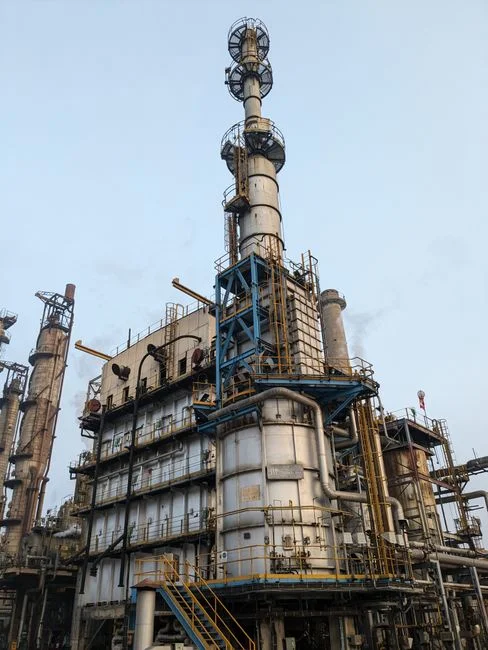
QCVN 40:2015/BTNMT is the binding national technical regulation on industrial wastewater in Vietnam, and it is the document any HCMC data center will be measured against. It is structured in two columns: Column A applies to discharges into water bodies used as sources for domestic water supply, and Column B applies to discharges into other receiving waters. Most HCMC data centers — particularly those sited in industrial parks such as Saigon Hi-Tech Park, Tan Thuan Export Processing Zone, or the various Dong Nai-border parks — will discharge to an industrial-park WWTP and ultimately under Column B thresholds, but the engineer should still confirm with the park operator and the provincial drain/discharge permit authority before locking any design (QCVN 40:2015/BTNMT regulatory text; HCMC DONRE procedural guidance, 2024-2025).
The 2026 limits to design around are pH 6-9 at the outlet, temperature ≤40°C at the outlet, residual chlorine controlled, oil and grease ≤10 mg/L, total nitrogen controlled to low mg/L ranges, and TDS typically required to be reported and capped by permit. Two of these are routine failure modes for data centers: temperature (because warm CTBD blends with the rest of the plant drain at 30-35°C and can spike toward the 40°C cap in summer) and pH (because the cooling loop runs at pH 8-9 to control Langelier index, and blowdown inherits that pH). Engineers should plan for a pH trim step on the discharge line, not on the cooling loop, to avoid pushing the loop into a corrosive regime.
If the data center is co-located with an industrial-park WWTP, the park operator typically sets an inlet acceptance specification tighter than the national Column B limits — for example, lower TDS or stricter residual chlorine caps. Treat that inlet spec as the binding design basis. Discharges to the Saigon River or to HCMC's combined drainage system also require a separate permit from the HCMC Department of Natural Resources and Environment (DONRE), and the procedural path should be confirmed during FEED, not after commissioning.
The 2026 Baseline Treatment Train for an HCMC Data Center
The defensible 2026 baseline train is a four-stage flow with a parallel sludge line. Stage 1 — Pretreatment: a rotary mechanical bar screen for cooling tower intake protection takes out drift, leaves, and basin debris before a multi-media filter ahead of the side-stream RO drops TSS to below 5 NTU, with PLC-controlled antiscalant and biocide dosing on a conductivity-triggered feed. Stage 2 — Side-stream RO or side-stream softening: two trains are realistic for HCMC. Train A is a side-stream RO skid for cooling tower blowdown reuse at 75-80% recovery, with the permeate blended back into cooling-tower makeup and the concentrate sent to the brine-management stage. Train B is sodium-cycle ion-exchange softening to push CoC from 4 to 6-7, which lowers blowdown from 25% to 13-14% of makeup — often the right call for 5-30 MW colocation sites where RO operating complexity is not warranted. Stage 3 — Concentrate management: the RO brine is the hard stream; the upper-bound option is a fluidized-bed brine desalter at ~95% recovery followed by crystallization, but in HCMC's 2026 capex environment this is justified only above 50 MW (IDE Tech, 2026). Below that, brine is typically sent to the industrial-park WWTP or an evaporation pond. Stage 4 — Polishing and disinfection: an MBR polishing step before discharge or on-site reuse brings TSS below 1 mg/L and reduces bacterial load, with an on-site ClO2 generator for cooling-loop microbial control sized to handle both the cooling loop and any on-site reuse line. Sludge line: a lamella clarifier handles clarifier underflow, and a plate-and-frame filter press for blowdown sludge dewatering produces a 25-30% dry-solids cake for off-site disposal; wet sludge volume is typically 0.3-0.8% of treated flow, depending on antiscalant chemistry.
| Stage | Unit operation | Function | Typical HCMC sizing band | Link |
|---|---|---|---|---|
| 1A | Rotary mechanical bar screen | Debris removal at intake/basin overflow | 5-20 m3/hr per 10 MW | GX screen |
| 1B | Multi-media filter | TSS reduction to <5 NTU | 10-30 m/hr filtration rate | Multi-media filter |
| 1C | Automatic chemical dosing | pH, antiscalant, biocide injection | PLC-controlled, 2-3 dosing points | Dosing system |
| 2A | Side-stream RO | 75-80% recovery, permeate to cooling makeup | 50-500 m3/day permeate per train | RO skid |
| 2B | Ion-exchange softening | Push CoC from 4 to 6-7 | 15-30 g/L resin capacity | — |
| 3 | Brine management / desalter | Concentrate volume reduction | 95% recovery (if ZLD scope) | — |
| 4 | MBR + ClO2 | Polishing and disinfection | 10-20 LMH membrane flux | MBR · ClO2 generator |
| Sludge | Lamella + plate-and-frame press | Sludge thickening and dewatering | 25-30% DS cake | Filter press |
Comparing the Three Realistic 2026 Trains for HCMC
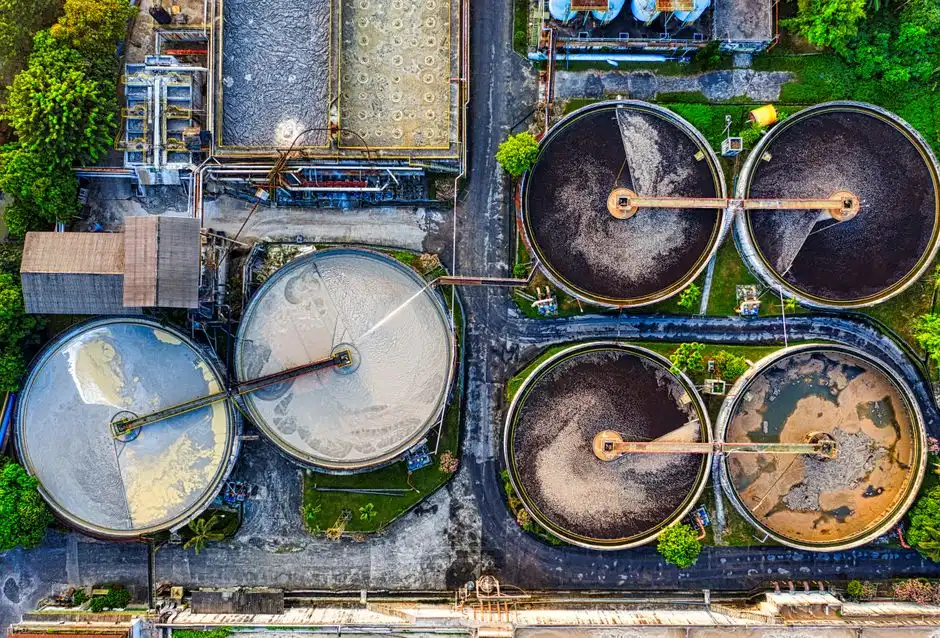
Most HCMC data centers will choose between four realistic trains, and the choice is driven as much by site size and discharge permit risk as by capex. Option A — Treat and discharge: pretreatment plus a DAF unit for oil and suspended-solids removal or a high-efficiency sedimentation tank to meet QCVN 40:2015 Column B, then sewer. Lowest capex, but highest ongoing water-and-discharge cost and the highest permit risk if the receiving WWTP tightens its acceptance spec. Option B — Side-stream RO reuse: pretreatment plus a side-stream RO skid at 75-80% recovery feeding cooling-tower makeup, with brine routed to the industrial-park WWTP. Mid capex, 30-50% net freshwater reduction on a 30 MW campus; the 15 MW benchmark in Genesis Water's 2026 analysis recovered 60% (3 MGD/yr) of blowdown at a 6.7-year base payback narrowing to 3-5 years once avoided costs are priced in. Option C — Softening plus closed-loop cooling: push CoC from 4 to 6-7 with sodium-cycle softening, drop blowdown from 25% to 13-14% of makeup, no RO needed (S4 math). Lowest operating complexity, best fit for 5-30 MW colocation where operator headcount is constrained. Option D — Full zero liquid discharge: RO plus brine desalter at ~95% recovery plus crystallizer. High capex, justified only above 50 MW and where land and discharge are genuinely constrained.
| Option | Train | 2026 capex band (USD, 30 MW) | Net freshwater reduction | Operating complexity | Best fit |
|---|---|---|---|---|---|
| A | Treat and discharge (DAF/sed + sewer) | Low (~$200-400k) | 0% | Low | <5 MW with strong sewer access |
| B | Side-stream RO reuse | Mid (~$600k-1.2M) | 30-50% | Mid (RO specialists) | 20-50 MW hyperscale |
| C | Softening + closed-loop | Mid (~$300-600k) | 40-50% (CoC 4 → 6-7) | Low | 5-30 MW colocation |
| D | Full ZLD (RO + desalter + crystallizer) | High (~$3-6M+) | ~95% (near-zero liquid discharge) | High | >50 MW, constrained sites |
A 30 MW HCMC Campus: Worked Capex, Opex, and Payback in 2026
A 30 MW evaporative-cooling campus in HCMC, sourcing makeup from SAHACO or the Thu Duc water utility, is a representative size band for the new Vietnamese hyperscale pipeline. At 4 CoC the blowdown fraction is 25% of makeup, so a campus in the 25-30 MW IT-load class that pulls on the order of 1-2 ML/day of makeup will see on the order of 250-500 kL/day of blowdown — enough to justify side-stream recovery but small enough that a full ZLD train is uneconomic. Engineers should run site-specific mass balances on the actual PUE and WUE targets, but the ratio math is the right anchor for a feasibility study.
Capex in 2026 USD, presented as bands because HydropureWater does not publish price lists: Option A sits in the low hundreds of thousands of USD; Option B (side-stream RO) in the mid six-to-low-seven figures; Option C (softening + closed loop) in the mid six figures; Option D (ZLD) in the high six-to-low-seven figures and rises sharply with crystallizer scope. The Genesis Water 15 MW reference case shows $200k capex and a 6.7-year base payback narrowing to 3-5 years once avoided water cost, avoided discharge cost, ESG reporting value, and permit-risk reduction are priced in (S4, 2026).
The HCMC-specific economic twist is that freshwater tariffs and discharge fees are materially lower than at arid U.S. sites, so the conservation business case leans less on direct water-cost savings and more on permit certainty, ESG and FDI-investor reporting, and the water-stress narrative that international hyperscale tenants are increasingly asking for in RFPs. Engineers building the financial model should put an explicit line item on "avoided permit risk" and on "ESG/外资 reporting value" rather than relying on water-tariff arbitrage alone. For a comparable temperate-climate baseline, see our temperate-climate data center blowdown baseline and the Boston data center blowdown treatment reference.
| Train (30 MW HCMC) | Capex band (USD, 2026) | Annual OPEX drivers | Indicative payback | Key non-financial value |
|---|---|---|---|---|
| A — Discharge | $200-400k | Discharge fees, freshwater makeup, sludge hauling | n/a (no recovery) | Lowest first cost |
| B — Side-stream RO | $600k-1.2M | RO power, antiscalant, CIP chemicals, membrane replacement | 4-6 years | Freshwater reduction, ESG reporting |
| C — Softening + closed loop | $300-600k | Salt/brine regeneration, lower biocide dose | 3-5 years | Lower complexity, suits colocation |
| D — ZLD | $3-6M+ | Crystallizer energy, high operator skill | 7-10+ years | Discharge-zero permit certainty |
Frequently Asked Questions
What is the most common QCVN 40:2015 limit an HCMC data center actually trips?
TDS and temperature are the two most common design drivers. Most HCMC data centers run their cooling loop at pH 8-9 and at 30-35°C, so the discharge pH sits inside the 6-9 limit but temperature can climb toward the 40°C outlet cap during the May-September hot-wet period, and TDS is the parameter most likely to be capped by the industrial-park WWTP's inlet acceptance spec. Residual chlorine is a frequent upset trigger when the cooling loop's oxidizing biocide program is over-fed.
Can a hyperscale RO system from a U.S. arid site be dropped into HCMC unchanged?
No. A 75-80% BWRO recovery assumption designed for 18-24°C wet-bulb in Arizona or Texas will not hold in HCMC's 28-32°C wet-bulb environment because the higher ambient temperature worsens the Langelier Saturation Index, accelerates calcium-silicate scaling, and lowers the effective CoC ceiling. Tropical source water also changes the biofouling regime: warmer, more biologically active water drives higher Assimilable Organic Carbon load on the RO feed, which requires a more aggressive clean-in-place frequency and often a different antiscalant selection.
Is zero-liquid discharge (ZLD) worth it in Vietnam in 2026?
Generally no below 50 MW. The capex delta between side-stream RO and full ZLD is on the order of 2-5x for a 30 MW campus, the crystallizer pulls significant power and operator attention, and Vietnam's industrial-park WWTP network is currently willing to accept brine within an inlet spec. ZLD becomes defensible above ~50 MW or where the site has a specific discharge-zero permit constraint from the provincial authority.
How does the treatment train differ for a colocation facility versus a hyperscaler?
Colocation facilities (typically 5-30 MW, lean operator staffing) are best served by Option C — sodium-cycle softening plus a closed-loop push from 4 to 6-7 CoC, with the modest blowdown sent to the park WWTP. Hyperscale campuses (typically 20-100 MW, dedicated water specialists) can justify Option B or D — side-stream RO at 75-80% recovery, or full ZLD where discharge permit risk is binding. The technology is the same; the difference is operational complexity tolerance and per-gallon capex amortization.
What is the realistic 2026 payback for a blowdown-recovery system in HCMC?
Typically 4-6 years on a 30 MW campus once permit risk, ESG reporting value, and freshwater-tariff inflation are priced in. The base-case calculation (water-cost-only) on the Genesis Water 15 MW benchmark sits at 6.7 years, narrowing to 3-5 years with full avoided-cost accounting (S4, 2026). HCMC's lower water tariffs push the simple payback longer than at an arid U.S. site, so the business case should be built on total cost of ownership and non-financial value rather than water-cost savings alone.