What a PLC Actually Does Inside a Water Treatment Plant
A PLC (Programmable Logic Controller) is the ruggedized industrial computer that directly reads sensors and drives pumps, valves, and chemical feeders in water treatment. SCADA (Supervisory Control and Data Acquisition) is the software layer above the PLC that provides operators with a plant-wide HMI, trending, alarming, and remote access. Modern 2026 architectures use PLCs at ISA-95 Level 0–1, SCADA at Level 3, and increasingly add OPC UA and cloud edge gateways between them.
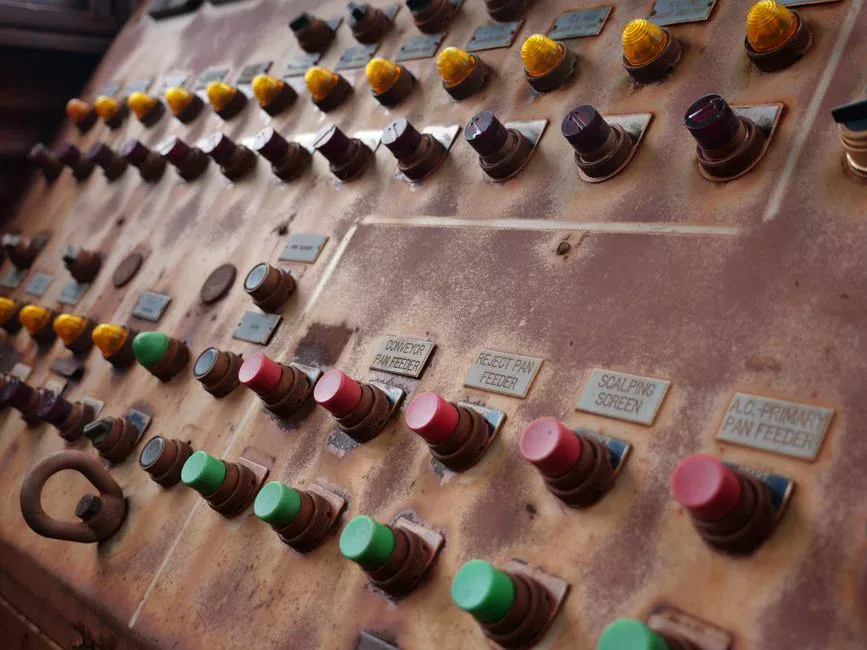
The PLC scans analog inputs (flow, pH, dissolved oxygen, turbidity, level) and discrete inputs (pump run, valve limit, high-level float) on a fixed cycle, then writes outputs to VFDs, chemical dosing pumps, and actuated valves every 10–50 ms. That deterministic scan is the reason the PLC — not a Windows server — sits in the control loop. On packaged skids, this is exactly the architecture used in a fully automated PLC-controlled RO system or a PLC-controlled chemical dosing skid: the PLC owns the safety interlocks, the pump sequencing, and the closed-loop dosing math, and it exposes a small number of registers to the supervisory layer.
The dominant PLC families in 2026 water plants are Siemens S7-1500, Allen-Bradley CompactLogix/ControlLogix, Schneider M580, and ABB AC500. These typically feature a -20 to +60 °C operating range, conformal coating on I/O boards for humid headworks and chlorine rooms, and IP65 panel enclosures for outdoor cabinets. A DCS (Distributed Control System), by contrast, integrates controller and supervisory functions tightly and is common in power and large refineries; water plants overwhelmingly pair a stand-alone PLC with a separate SCADA HMI.
What SCADA Adds on Top of the PLC
SCADA is the Level 2–3 software that polls PLCs (and RTUs at remote wellfields or lift stations) over an industrial network to deliver a single plant-wide view. The PLC performs the control work, while SCADA displays that work to operators, regulators, and managers. A SCADA system without a PLC underneath is simply a dashboard with no data source.
Water plants specifically use SCADA for: real-time HMI mimics of each process train, historical trending with 1–5 years of retention for permit reporting, alarming via SMS and email to on-call staff, batch and recipe management for coagulant or polymer dosing, audit trails for EPA and EU discharge compliance, and remote operator access via mobile devices or satellite SCADA clients. The ABB white paper on SCADA for renewable energy and water applications identifies SCADA as the most widely used automation system in these sectors — a finding that matches municipal bid documents in 2026.
The 2026-default SCADA platforms are AVEVA System Platform, Ignition by Inductive Automation (now the most common greenfield choice for mid-size water utilities due to its unlimited-tag licensing model), Siemens WinCC Unified, GE iFIX, and Rockwell FactoryTalk View SE. All of them speak OPC UA natively and are migrating toward containerized or cloud-deployed architectures rather than the single Windows server pattern of 2010. A critical procurement point: a SCADA license is sold per tag, and tag count is driven by what the user decides to expose, not by what the PLC can produce — making tag count a scoping decision rather than a technical one.
SCADA vs PLC for Water Treatment: Head-to-Head Comparison
A parameter matrix provides the clearest way to brief a team or vendor. The table below uses 2026 pricing and scan-time numbers as order-of-magnitude benchmarks.
| Dimension | PLC | SCADA |
|---|---|---|
| Primary function | Reads sensors, drives actuators, runs control logic | Supervises PLCs, displays HMI, trends, alarms, reports |
| ISA-95 / Purdue level | Level 0–1 (process, basic control) | Level 2–3 (supervisory, operations) |
| Typical scan / refresh interval | 10–50 ms scan cycle (deterministic) | 1–10 s poll/refresh (best-effort, network-bound) |
| Hardware form factor | Rack or DIN-rail modular PLC with discrete and analog I/O cards | Server, VM, or container with HMI clients and historian storage |
| Software form factor | Firmware / IEC 61131-3 program on the controller | Windows or Linux application with web clients |
| 2026 cost driver | $300–$900 per I/O point installed; $25,000–$120,000 for a packaged panel | $1,500–$12,000 per SCADA tag in license plus server hardware |
| Failure mode | Stops one process loop; interlocks may shut equipment down safely | Blinds operators and breaks trending; the plant keeps running on the PLC |
| Cybersecurity posture | Lives in a Level 1 security zone; rarely internet-facing | Lives in a higher-trust zone; exposed for remote access; prime ransomware target |
| Redundancy model | Dual hot-standby CPU, redundant power, redundant I/O (high cost) | Redundant server pair + redundant historian; clients auto-failover |
| Typical vendor | Siemens, Rockwell, Schneider, ABB | AVEVA, Inductive Automation, Siemens, GE Vernova, Rockwell |
| Skill to maintain | Controls engineer, IEC 61131-3 ladder or structured text | IT-leaning engineer, SQL, networking, virtualization |
| Safety function suitability | Suitable for SIL 1–3 trips when properly certified | Not safety-rated; must never be the primary safety path |
Failure mode and safety function suitability are the two most critical rows for water-plant decision-makers. A PLC failure typically stops one loop — such as a filter train, a chemical feed, or a transfer pump — and can be programmed to fail safe. A SCADA failure blinds operators but does not stop the plant, as PLCs continue running their last good logic. This asymmetry is the strongest engineering argument for a layered design, allowing SCADA retrofits to be performed on live plants without shutting down the process.
How the Layers Connect: ISA-95, Purdue Model, and Modern Protocols
The Purdue Model serves as the standard mental model for industrial networking. Level 0 consists of physical sensors and actuators, such as electromagnetic flow meters feeding the PLC, pH probes, and motorized valves. Level 1 contains the PLCs running closed-loop control. Level 2 includes the SCADA HMI and local control room servers. Level 3 consists of the plant-wide historian, reporting, and operations management. Level 4 is the enterprise layer — EAM, CMMS, lab information, GIS, and billing — which should never touch a PLC directly.
The 2026 default communication stack uses EtherNet/IP or PROFINET between the PLC and I/O, and OPC UA as the SCADA-to-PLC lingua franca, replacing legacy RS-485 Modbus in most greenfield work. MQTT is used for cloud telemetry from edge gateways, while Modbus TCP remains common in legacy sites with limited budgets. OPC UA is the preferred protocol for new 2026 specifications because it provides authentication, encryption, and a structured information model.
Cybersecurity segmentation in 2026 is based on IEC 62443-3-3, the de facto water-sector standard referenced by EPA and state cyber auditors. The Purdue Model maps directly onto IEC 62443 security zones: PLCs sit in a Level 1 zone with tight conduit rules, SCADA servers sit in a higher-trust zone, and unidirectional gateways or data diodes create the cleanest boundary for cloud or remote access. University of Louisville cyber risk assessment literature treats SCADA/DCS networks as critical infrastructure rather than office IT, a framing that has hardened as US water utilities adopt AWWA and CISA guidance.
2026 Cost and Lifecycle Numbers for a Real Plant
CAPEX and OPEX benchmarks for a 100–10,000 m³/day water or industrial wastewater plant are based on 2026 HydropureWater field data; ranges reflect panel size, I/O density, and integration scope.
| Line item | 2026 typical range | Notes |
|---|---|---|
| Packaged PLC control panel (CPU, I/O, HMI, VFD integration) | $25,000–$120,000 | Drives $300–$900 per I/O installed |
| Full SCADA server stack, 250–1,000 tags | $80,000–$400,000 | Drives $1,500–$12,000 per tag licensed |
| Integration engineering | $120–$220/hour | 200–600 hours typical; 1,500+ for multi-site rollouts |
| Annual SCADA license support | 12–18% of license cost | Vendor-specific; negotiate before signing |
| PLC firmware updates, battery replacement | Every 3–5 years | Plan a 1–2 day outage per major PLC |
| HMI PC refresh | Every 7–10 years | Industrial PCs, not consumer hardware |
| Retrofit SCADA onto existing PLC plant | 30–50% cheaper than greenfield | PLC layer is already paid for and working |
The 30–50% retrofit discount applies when a plant already has a working PLC layer. Many municipal and industrial water plants in 2026 have PLCs that are 5–15 years old and functional, but lack plant-wide visibility, historical trending, and remote alarm notification. In these cases, a SCADA retrofit is typically a more effective investment than a full PLC replacement.
Which Architecture Do You Actually Need? A Decision Framework
The following decision tree maps plant size, I/O count, and operator count to a specific 2026 architecture for new installations or major retrofits.
- Small plant, under ~200 I/O points, one operator shift. A PLC with a local color HMI is usually sufficient and saves $50,000–$150,000 compared to a SCADA layer. Use cellular remote alarm dialers rather than full SCADA until the I/O count exceeds 200 or a second operator shift is added.
- Medium plant, 200–1,500 I/O points, multiple operators, regulatory trending required. Full SCADA with redundant servers is the 2026 standard. Specify Ignition, AVEVA, or WinCC Unified with OPC UA to the PLCs and 2+ years of historian retention. Online water-quality analyzers for SCADA trending should be included in this tier.
- Multi-site or remote plants (wellfields, lift stations, package plants). PLC at the edge plus cloud SCADA — typically Ignition Edge or a vendor IIoT gateway using MQTT to a central historian — is the dominant 2026 pattern and aligns with the cloud SCADA for multi-site water management trend. Cellular or satellite backhaul is acceptable since no control traffic crosses it.
- Highly safety-critical processes. Chlorine dioxide dosing, RO membrane protection, and chlorine gas rooms must keep safety interlocks in the PLC and SIL-rated logic. A fully automated chlorine dioxide generator with PLC interlocks is the standard architecture; SCADA is used for visibility, not trip functions.
If a facility has working PLCs but lacks a plant-wide view, a SCADA retrofit is almost always the preferred solution over a PLC replacement.
Frequently Asked Questions
What is the typical PLC scan time in a water treatment plant?