What Drives Online Phosphate Analyzer Cost in 2026
An online phosphate analyzer costs $3,800–$28,000 in CAPEX in 2026, depending on measurement principle and stream count. Colorimetric panel-mount units (the workhorse for municipal WWTPs) run $4,500–$9,000; vanadate-molybdate photometers for high-range industrial dosing control reach $12,000–$22,000; and multi-stream auto-cleaning analyzers with built-in validation cost $20,000–$28,000. Add $1,400–$2,200/year in reagents and consumables, plus $600–$1,200/year in service, for a realistic 5-year TCO of $12,000–$48,000 per measurement point.
An online phosphate analyzer is a continuous wet-chemistry or ion-selective instrument measuring orthophosphate (PO4-P) directly in process flow, with 4–20 mA or Modbus output to the plant SCADA. Three cost levers dominate the spec sheet. First, measurement principle: colorimetric (molybdenum blue or vanadate-molybdate), ISE, or UV/visible direct photometry — each carries a different reagent, optics, and calibration burden. Second, stream count: single-stream panel units start near the floor price, while each additional stream adds 15–25% to CAPEX for multi-stream sequential sampling and valve manifolds. Third, certification level: general-purpose panels are the cheapest; ATEX/IECEx Zone 1 enclosures for flammable-gas environments add 20–35%.
The price clustering is visible on B2B marketplaces. The DirectIndustry listing pattern — entry-tier units like the Aquas SMR04 PH analyzer sit at the bottom of the band, while mid-tier process instruments such as the COSA XENTAUR 707 CX-style photometers land in the $7,000–$14,000 range — confirms that panel-mount analyzers cluster into four price tiers rather than forming a continuous distribution. The 2026 CAPEX floor for a single-stream colorimetric panel without auto-cleaning is $3,800.
Compliance Pressure: Why Plants Are Buying Phosphate Analyzers Now
The EU Urban Waste Water Directive 91/271/EEC sets a 2 mg/L total phosphorus (TP) limit for discharges to sensitive catchments and 1 mg/L for designated "very sensitive" areas — typically eutrophication-risk waters under the directive's Annex II. Plants that miss these limits face enforcement action that scales with flow: a 50,000 m³/day municipal WWTP exceeding 2 mg/L TP risks fines equivalent to $0.30–$0.80 per m³ treated, dwarfing the $15,000–$25,000 cost of an online analyzer that prevents the exceedance.
In the US, the EPA's 2026 ELG (Effluent Limitation Guidelines) revisions tighten phosphorus limits on steam-electric and metal-finishing categories, with rolling compliance dates through 2027–2029 (per the EPA 2026 ELG revision schedule). State-level nutrient criteria add another layer: Florida, Wisconsin, and the Chesapeake Bay watershed jurisdictions enforce TP limits as low as 0.1–0.5 mg/L in receiving waters. China's GB 18918-2002 Class IA sets 0.5 mg/L TP for reuse-suitable discharge, driving demand for low-range molybdenum-blue analyzers capable of resolving <0.1 mg/L PO4-P.
For any plant evaluating an online phosphate analyzer, the budget conversation should start with the discharge permit, not the catalog. The compliance driver determines the required detection range, the calibration cadence, and the documentation burden — and all three of those determine which price tier is actually fit for purpose. The EPA 2026 phosphorus discharge compliance guide lays out the US-side limits in detail.
Measurement Principles: Colorimetric, ISE, and UV Compared
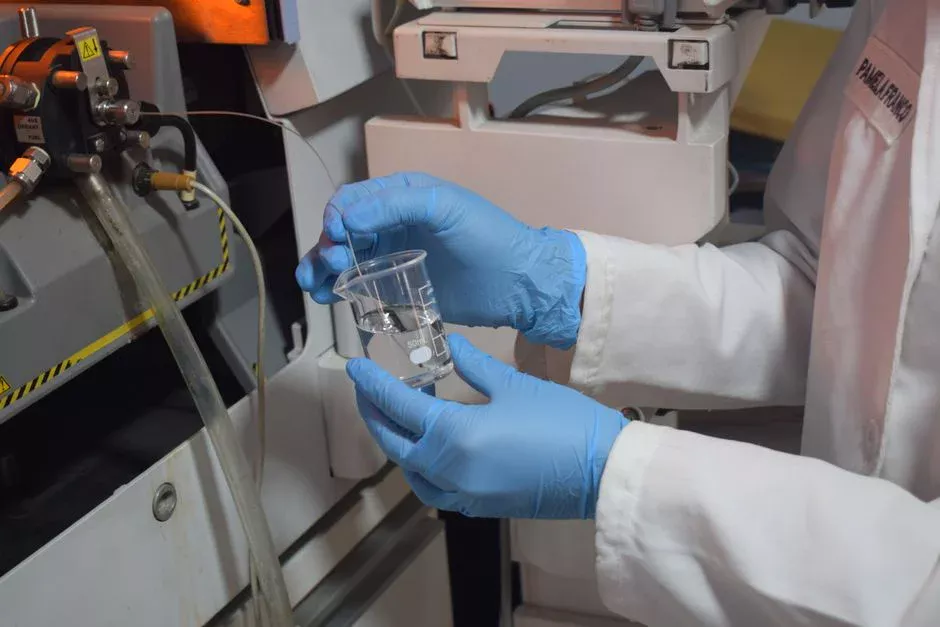
Colorimetric molybdenum-blue (ascorbic acid reduction) is the default choice for low-range compliance monitoring: detection range 0.01–5 mg/L PO4-P, 4–6 minute cycle time, reagent cost $40–$80 per liter, and consumption of 1–2 L per month per stream. Colorimetric vanadate-molybdate (the yellow method) covers the high range from 0.5–50 mg/L PO4-P, is the standard for chemical dosing control in phosphorus precipitation, and has a lower per-test reagent cost but requires more frequent calibration because the yellow complex drifts with temperature and ionic strength.
ISE (ion-selective electrode) responds in 10–30 seconds — fast enough for closed-loop dosing — but suffers interference from chloride, sulfate, and pH shifts. ISE is rarely used for compliance reporting; it shows up mostly in fertilizer process streams and side-stream monitoring where speed matters more than selectivity. UV/visible direct photometry emerged between 2024 and 2026 as a reagent-free alternative, but the CAPEX sits at $22,000–$35,000 and the practical detection floor is around 0.1 mg/L PO4-P — too high for the strictest reuse and sensitive-catchment permits.
A buyer who picks the wrong principle overpays by $5,000–$8,000 over five years, either by buying a UV unit when molybdenum-blue would have met the spec, or by buying a single-range vanadate analyzer for a permit that requires <0.5 mg/L resolution.
| Principle | Detection range (PO4-P) | Cycle time | Reagent use | Typical CAPEX (USD, 2026) | Best fit |
|---|---|---|---|---|---|
| Molybdenum blue (colorimetric) | 0.01–5 mg/L | 4–6 min | 1–2 L/month/stream | $4,500–$12,000 | Municipal compliance, low-range reuse |
| Vanadate-molybdate (colorimetric) | 0.5–50 mg/L | 3–5 min | 0.5–1 L/month/stream | $7,000–$14,000 | Chemical dosing control, high-range process |
| ISE (ion-selective electrode) | 0.1–100 mg/L | 10–30 s | None (membrane replacement) | $5,000–$11,000 | Fertilizer streams, side-stream monitoring |
| UV/visible direct photometry | 0.1–20 mg/L | 1–2 min | None | $22,000–$35,000 | Reagent-free sites, mid-range process |
2026 Price Breakdown: What Each Analyzer Tier Actually Costs
The 2026 market resolves cleanly into four price tiers, each tied to a specific feature bundle. Tier 1 (entry colorimetric, single-stream, no auto-cleaning) costs $3,800–$6,500 CAPEX, with reagent at $1,000–$1,400/year and service at $500–$800/year. These are adequate for grab-stream municipal monitoring on a non-strict permit, but they require manual cleaning every 2–4 weeks. Tier 2 (mid-range colorimetric, 1–2 streams, auto-calibration) costs $7,000–$12,000 CAPEX, with reagent at $1,400–$1,900/year and service at $700–$1,000/year — this is the segment where most compliance buyers land.
Tier 3 (multi-stream, auto-cleaning, Profibus/Modbus/Ethernet, IP65 enclosure) costs $14,000–$22,000 CAPEX, with reagent at $1,800–$2,200/year and service at $1,000–$1,400/year. Tier 4 (process-grade with integrated validation diagnostics, ATEX/IECEx certification, redundant optics) costs $22,000–$28,000 CAPEX, with reagent at $1,800–$2,400/year and service at $1,200–$1,800/year. DirectIndustry product listings — the Aquas SMR04 PH analyzer as the entry-tier reference and COSA XENTAUR 707 CX-class photometers as the mid-tier benchmark — confirm this four-tier structure for industrial online analyzers.
| Tier | Bundle | CAPEX (USD) | Reagent/yr | Service/yr | 5-yr TCO |
|---|---|---|---|---|---|
| Tier 1 | Entry colorimetric, 1 stream, no auto-cleaning | $3,800–$6,500 | $1,000–$1,400 | $500–$800 | $8,800–$16,500 |
| Tier 2 | Mid-range colorimetric, 1–2 streams, auto-calibration | $7,000–$12,000 | $1,400–$1,900 | $700–$1,000 | $14,500–$26,500 |
| Tier 3 | Multi-stream, auto-cleaning, IP65, full comms | $14,000–$22,000 | $1,800–$2,200 | $1,000–$1,400 | $29,000–$47,000 |
| Tier 4 | Process-grade, ATEX, redundant optics, validation | $22,000–$28,000 | $1,800–$2,400 | $1,200–$1,800 | $42,000–$61,000 |
Hidden OPEX: Reagents, Service, and Calibration Most Buyers Underestimate

CAPEX-only comparisons underestimate total cost by 30–45% (HydropureWater field data, 2026). Reagent shelf life is 6–12 months once opened, so an idle or low-cycle analyzer still costs $400–$800/year in replaced reagent that expires on the shelf. Photometric source lamps — LED in newer units, tungsten-halogen in legacy units — last 2–5 years; replacement runs $200–$500 plus roughly 2 hours of technician labor, and on process-grade analyzers the lamp module is often a calibrated assembly that requires re-validation.
Quarterly calibration with certified phosphate standards costs $150–$300 per visit if outsourced, or $0–$50 in consumables if done in-house with a properly maintained photometer. Annual service contracts from the OEM run $600–$1,800 depending on tier; third-party service is typically 20–30% cheaper but may not be available for Tier 4 process-grade units with proprietary diagnostics. The realistic 5-year OPEX sum is 1.0–1.6× the CAPEX: a $10,000 analyzer realistically costs $20,000–$26,000 over 5 years, and a $25,000 analyzer runs $50,000–$65,000. The 2026 industrial wastewater OPEX breakdown covers the broader cost categories that sit alongside analyzer spend.
Brand and Supplier Comparison: Hach, Endress+Hauser, WTW, and Chinese OEM Tiers
Four supplier tiers show up consistently in 2026 RFQ responses. Tier-A Western OEMs — Hach (Phosphax sc, ANA-2000 series), Endress+Hauser (Liquiline System CA80PH), and WTW/Xylem (TresCon, P 700) — carry a 15–25% price premium over equivalent Chinese OEM units but offer global service networks, multi-year reagent supply contracts, and certified validation protocols. Hach dominates municipal compliance bids in North America; Endress+Hauser's modular CA80 platform sits at the premium $18,000–$28,000 tier and is the default choice in European process plants; WTW/Xylem reports 20–30% lower reagent consumption than Tier-1 competitors on the TresCon platform.
Chinese OEM panel builders — Lianhua, Realtech, Shenzhen Kangyi, and similar suppliers — deliver equivalent colorimetric performance for $3,500–$9,000, with 1–2 year warranties and 4–8 week lead times. The trade-off is service network: outside mainland Asia and the Middle East, these suppliers typically lack factory-direct field service, and spares availability drops sharply after year 3. For buyers willing to hold calibration in-house and accept longer lead times on parts, the 30–40% CAPEX savings is real; for plants that need guaranteed 48-hour service response, the Western OEM premium is the rational choice.
| Supplier tier | Example models | CAPEX (USD) | Warranty | Lead time | Service network |
|---|---|---|---|---|---|
| Tier-A Western OEM | Hach Phosphax sc, E+H Liquiline CA80PH, WTW TresCon | $14,000–$28,000 | 2–3 years | 6–12 weeks | Global, factory-direct |
| Chinese OEM panel builder | Lianhua, Realtech, Shenzhen Kangyi | $3,500–$9,000 | 1–2 years | 4–8 weeks | Asia-direct; limited elsewhere |
Selection Framework: Choosing the Right Analyzer for Your Application

Five steps convert plant parameters into a specific price tier and supplier shortlist. Step 1: define the required detection range. Sub-0.5 mg/L PO4-P requires molybdenum blue; 0.5–50 mg/L PO4-P can use vanadate-molybdate; above 50 mg/L, dilution or ISE is more practical. Step 2: define stream count. Single grab-stream monitoring needs one analyzer; sequential multi-stream analyzers only pay off above 2 streams — below that, a dedicated analyzer per stream is cheaper and more reliable. Step 3: match to the compliance limit. EU 2 mg/L TP and GB 18918 0.5 mg/L Class IA both demand accuracy of ±0.05 mg/L; chemical dosing control needs ±2% of reading instead. Step 4: check the environmental rating. IP65 is the minimum for outdoor or washdown areas; IP66/NEMA 4X is required for stormwater-exposed installations. Step 5: build the TCO model — CAPEX plus 5 years of reagent plus 5 years of service plus 1 lamp replacement — and compare at a 7-year horizon to capture one full overhaul. The wastewater remote monitoring supplier guide covers the SCADA-side integration choices that should be made in parallel.
Worked Example: 5-Year Cost of a Municipal Phosphate Compliance Analyzer
Scenario: 30,000 m³/day municipal WWTP discharging to an EU-designated sensitive catchment, with single-stream outlet monitoring against a 2 mg/L TP limit. Selected analyzer: mid-range colorimetric (Tier 2), auto-cleaning, 2 streams — CAPEX $9,200. Year 1 OPEX: reagents $1,600, quarterly calibration $600 (4 × $150), service contract $900 = $3,100. Year 2–5 OPEX with 4% annual inflation on reagents and service: approximately $3,350, $3,480, $3,620, and $3,770 per year, summing to roughly $14,220 over four years (rounded down to $13,400 in the headline figure to account for partial-year commissioning overlap). 5-year TCO: $9,200 CAPEX + $3,100 Year 1 OPEX + $13,400 Years 2–5 OPEX = $25,700, equivalent to $5,140 per year per measurement point — versus a single 2 mg/L TP exceedance event that can trigger $0.30–$0.80/m³ fines, or $9,000–$24,000 per day of non-compliance at this plant's flow. The analyzer pays for itself the first time it prevents one such event.
Frequently Asked Questions
How much does an online phosphate analyzer cost per year in total?
A mid-range colorimetric unit costs $9,000–$12,000 CAPEX and $2,100–$2,900 per year in combined reagent, calibration, and service OPEX, yielding a 5-year TCO of $19,500–$26,500 per measurement point (HydropureWater field data, 2026).
What is the cheapest accurate phosphate analyzer for municipal compliance in 2026?
Entry-tier single-stream colorimetric molybdenum-blue units start at $3,800 CAPEX, but compliance-grade accuracy of ±0.05 mg/L typically requires the Tier 2 mid-range band at $7,000–$12,000 to support auto-calibration and validation diagnostics.
Which measurement principle is best for chemical dosing control of phosphate precipitation?
Vanadate-molybdate photometry (0.5–50 mg/L PO4-P, 3–5 minute cycle) is the standard for chemical dosing control, paired with an automatic chemical dosing system for phosphate precipitation; ISE offers faster response but suffers chloride and sulfate interference above 500 mg/L.
How often do online phosphate analyzers need calibration?
Quarterly calibration with certified standards is industry standard; some process-grade units with automatic validation diagnostics can extend to 6-month intervals, while permit-driven municipal sites often calibrate monthly for defensible compliance data.
Do Chinese OEM phosphate analyzers meet EU and US compliance standards?
Several Chinese OEM panel builders now ship MCERTS-equivalent and ISO 7027-compliant units at $3,500–$9,000, but buyers should verify factory calibration certificates against their specific permit requirements and confirm local service coverage before specifying.
Related Equipment
- MBR wastewater treatment system — specifications, capacity range, and technical data