Why Pharmaceutical Wastewater in Jordan Is a Distinct Engineering Problem
Jordan is among the world's most water-scarce nations, with renewable freshwater per capita below 100 m³/year, and that single fact reshapes every ETP design decision in 2026. Make-up water economics — driven by the Disi aquifer conveyor, the King Abdullah Canal, and the Aqaba desalination plants — push water recovery from a sustainability bonus into a primary revenue line. A site discharging 200 m³/d of treated effluent is, in practice, throwing away 150–180 m³/d of water that could feed a cooling tower or CIP loop if RO polishing were added to the train.
Climate forces the second round of design constraints. Summer ambient temperatures of 30–40 °C accelerate biological kinetics (a benefit, since design rates rise) but simultaneously depress dissolved oxygen saturation to roughly 7.0 mg/L at 35 °C versus 9.1 mg/L at 25 °C (standard ASCE oxygen-transfer reference). MBBR and MBR aeration systems in the Amman-Zarqa corridor must therefore be sized for warmer operation than European or North American design manuals assume; failure to do so yields under-aerated basins, sulfide odors, and incomplete COD removal during peak summer months.
The sector's geography concentrates the design challenge. Jordan's pharmaceutical manufacturing is clustered in Amman and Zarqa, mixing chemical-synthesis API plants, biological API fermentation facilities, and finished-dose Fill & Finish lines. Veolia's 50-plant pharma research (Veolia Water Technologies, 2020) confirms that API sites produce both higher flows and higher COD variability than finished-product sites — and Jordan's mix of all three plant types means a single influent characterization is rarely defensible.
Regulatory anchoring completes the picture. Discharges to the public sewer fall under JISM industrial wastewater standards, administered jointly by the Ministry of Water and Irrigation and the Ministry of Environment. Permit conditions in the Amman-Zarqa corridor are typically stricter than the headline JISM limits because of downstream treatment plant capacity — making biological polishing with an integrated MBR system the default starting point for any 2026 specification rather than an upgrade option.
Influent Characteristics: What Jordanian Pharma Plants Actually Discharge
Influent design values for Jordanian pharmaceutical plants should be drawn from Veolia's 50-plant research rather than textbook pharma averages, because the Veolia dataset is the only public source with enough site coverage to bracket real variability. The summary table below is the envelope most EPCs in the region work from in 2026, before site-specific jar testing.
| Parameter | Typical Range (Veolia 50-plant dataset) | Design Implication for Jordan |
|---|---|---|
| Average daily flow | 30–600 m³/d; API sites trend higher than finished-dose | Size equalization for upper-bound flow, not mean |
| Influent COD | 400–62,000 mg/L; outlier at 300,000 mg/L observed | Always jar-test; do not assume a generic value |
| COD/BOD₅ ratio | 1 to 15 across 50 plants | Ratio <2 = easily biodegradable; 2–3 = biodegradable; >3 = refractory risk |
| Refractory ("hard") COD | Site-specific; limits achievable biological removal | Set GAC or RO polishing targets from this fraction |
| Common solvents | Methanol, ethanol, acetone, isopropanol, acetic acid (30+ in regular use) | Low-boiling-point solvents (methanol) bypass evaporative steps |
| Salinity (TDS) | Elevated from fermentation buffers and CIP chemicals | Test for biomass inhibition; size for corrosion-resistant materials |
| Surfactants/detergents | From equipment and floor cleaning | Segregate at source; otherwise expect foaming in biology |
The COD/BOD₅ ratio is the single most consequential number in this table. Veolia classifies ratios below 2 as easily biodegradable, 2–3 as biodegradable, and above 3 as potentially resistant to biological treatment alone (Veolia Water Technologies, 2020). A Jordanian API plant with a ratio of 10–15 — common when synthesis mother liquors and fermentation residues co-mingle — will not reach JISM-aligned sewer limits through biology alone; GAC polishing or RO must be priced in from day one, not added as a retrofit.
Three site-specific characteristics routinely move Jordanian designs off the Veolia envelope. First, batch production is the dominant variability driver, and the Veolia research explicitly flags it as the largest single source of hydraulic and load swings within a single site. Second, CIP chemicals and fermentation buffers elevate TDS beyond what a generic "API plant" number would suggest, and Veolia notes that high salinity inhibits biomass development and accelerates corrosion of unprotected carbon steel. Third, detergent residues from equipment cleaning are the single most common cause of foaming events in the downstream biological stage — segregation at source is the cheapest control, but it is rarely retrofittable into existing pipework without a small capital package of its own.
MBBR vs MBR vs SBR: Selecting the Right Biological Stage
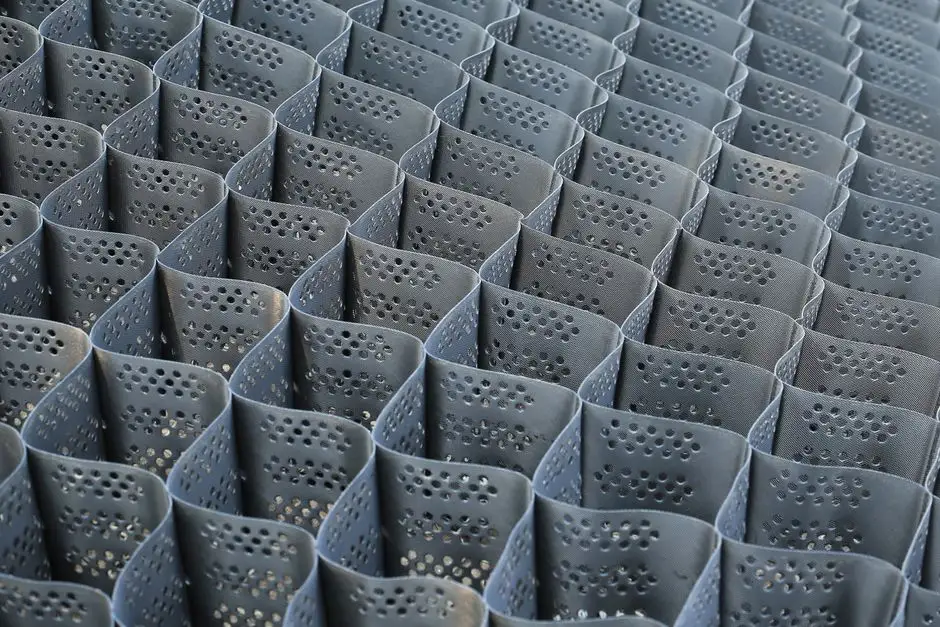
The biological stage is where 2026 pharmaceutical ETP specifications are won or lost, because the three competing technologies — MBBR, MBR, and SBR — make different trade-offs on variability, footprint, and reuse-quality effluent. The table below is the comparison engineers in the Amman-Zarqa corridor actually use in vendor screening, and the decision rule of thumb that follows is the one most EPCs apply when the influent envelope is still being characterized.
| Criterion | MBBR | MBR | SBR |
|---|---|---|---|
| Load variability tolerance | High (handles 400–62,000 mg/L COD swings with large equalization) | High (membrane buffers effluent quality) | Moderate (cycle timing requires stable feed) |
| Effluent TSS | Higher; usually needs DAF or sand filter downstream | Sub-1 μm filtrate; near-reuse quality | Low in decant phase, but variable |
| Footprint | Reference baseline | ~60% smaller than conventional activated sludge (HydropureWater product spec, 2026) | Larger equalization volume required |
| Warm-climate suitability | Good; biofilm tolerates 30–40 °C ambient | Good; membrane flux is the limit, not biology | Decant phase is sensitive to temperature-driven density effects |
| Operator skill | Moderate | Moderate-High (membrane CIP, integrity testing) | High (cycle tuning, decanter maintenance) |
| Anaerobic pretreatment fitOptional | Proven (Veolia line E: Equalization → Anaerobic → MBR) | Optional | |
| Best-fit Jordanian use case | Flow >300 m³/d, moderate variability, discharge to sewer | COD >10,000 mg/L API sites; reuse-quality targets | Smaller finished-dose plants with skilled operators |
Three operational points matter for the procurement decision. First, anaerobic pretreatment upstream of an MBR reduces aeration energy by 30–50% and is the standard configuration for COD above 10,000 mg/L, but the Veolia research warns that low-boiling-point solvents like methanol evaporate and bypass the anaerobic reactor — so evaporator-based sidestreams must be condensed and returned to the biological stage, not sent to atmosphere. Second, MBR effluent routinely reaches reuse quality directly when paired with automatic pH and coagulant dosing on the front end, which is why the automatic pH and coagulant dosing skid is sized into the MBR skid rather than treated as a peripheral. Third, MBR commands a 20–30% CAPEX premium over an equivalent MBBR, but eliminates the secondary clarifier and reduces the downstream DAF/filtration package — when totaled across the train, the MBR premium often shrinks to 5–10% for a Jordanian site targeting sewer discharge with reuse optionality.
The decision rule of thumb used in 2026 Jordanian specifications: MBBR for flows above 300 m³/d with moderate variability where discharge to sewer is the only target; MBR where effluent must reach reuse limits or where sewer-connection limits are tight (Amman-Zarqa corridor); anaerobic plus MBR for any API site with influent COD regularly above 10,000 mg/L.
Recommended 2026 Process Train for Jordanian API and Finished-Dose Plants
The end-to-end flow below is a defensible 2026 specification for an Amman-Zarqa corridor API or finished-dose plant. Each stage is justified by either JISM-aligned compliance requirements or by a Veolia-documented process line, and every major unit can be specified as a packaged skid for procurement.
- Stage 1 — Screening. A rotary mechanical bar screen (typically 2–5 mm aperture) protects downstream pumps and membranes from rags, plastic liners, and fibrous excipient debris. Non-negotiable for JISM sewer-connection permits, which routinely cite gross-solids carry-over as a violation trigger.
- Stage 2 — Equalization. 24–48 hour hydraulic retention to dampen the batch-to-batch swings that the Veolia research identifies as the single largest variability driver within a pharma site. Sized for upper-bound flow, not mean.
- Stage 3 — Neutralization and pH control. Automatic dosing of acid or caustic to bring pH into the 6.5–7.5 band that downstream biology and RO membranes require. Veolia line D (Neutralization → Equalization → Cooling → MBBR → Sand Ballasted Lamellae Settling) is the documented precedent.
- Stage 4 — Biological treatment. MBBR or MBR sized for warm-climate operation; anaerobic pretreatment added upstream when influent COD regularly exceeds 10,000 mg/L. The 30–40 °C Amman-Zarqa summer ambient must be carried through the design, not adjusted to a temperate reference.
- Stage 5 — TSS/FOG polishing. A DAF polishing unit or lamella clarifier ahead of RO removes biomass carry-over and residual FOG that would foul membranes. Proven in Veolia line A (Equalization → MBBR → DAF → Cooling).
- Stage 6 — Tertiary polishing. GAC adsorption for refractory COD and trace API residuals (Veolia line F ends with GAC + sand filtration), followed by industrial RO polishing when the water-recovery case justifies it.
- Stage 7 — Sludge dewatering. A plate-and-frame sludge filter press producing a cake suitable for licensed disposal under Jordanian hazardous-waste rules, with filtrate returned to the head of the plant.
For finished-dose Fill & Finish lines with lower and more stable loads, Stages 4 and 5 can be simplified to a single MBR with a DAF polish omitted; for chemical-synthesis API sites with COD above 10,000 mg/L, add an anaerobic reactor (UASB or IC) between Stages 3 and 4 to cut aeration energy by 30–50%.
Jordanian Discharge Compliance and the ZLD Question in 2026

Typical 2026 JISM-aligned targets for discharges to the Amman-Zarqa municipal sewer are COD ≤150 mg/L, TSS ≤60 mg/L, pH 6–9, and residual chlorine ≤1 mg/L; sites discharging to surface water or wadis face tighter BOD₅ ≤40 mg/L and COD ≤100 mg/L. These numbers should be confirmed against the specific project permit, because Amman and Zarqa governorate authorities routinely append site-specific clauses to the JISM baseline. The 2026 design implication is direct: any biological-only train faces residual risk on these limits, and MBR plus RO is the configuration that absorbs the tightest reasonable permit condition without a redesign.
Zero liquid discharge is no longer purely a regulatory conversation in Jordan — it is a water-economics conversation. Potable water tariffs reflect the real cost of desalination and inter-basin transfer, so a pharma plant discharging 200 m³/d can typically recover 150–180 m³/d for cooling tower or CIP reuse via RO, and that recovered water has a clear internal cost-avoidance value. The decision framework: RO polishing pays back in water-cost avoidance alone for most sites above 100 m³/d in 2026, independent of the discharge limit. ZLD beyond RO (brine concentrator plus crystallizer) is reserved for sites with no sewer access, no evaporation pond option, or regulatory hard-stops on brine discharge; CAPEX escalates sharply past the RO boundary and is rarely justified in the Amman-Zarqa corridor.
When ZLD is mandatory, the standard hybrid train is MBR → RO → brine concentrator → crystallizer, with a thermal or mechanical vapor recompression stage sized for the residual brine volume. For sites considering this path, the integrated water purification skid is one option for combining the RO and downstream stages into a single packaged unit.
CAPEX and OPEX Ranges for a 2026 Jordanian Pharma ETP
The figures below are 2026 turnkey order-of-magnitude ranges for an EPC-delivered plant in the Amman-Zarqa corridor, excluding civil works, permitting, and grid-power upgrade costs. They are framed as ranges because site-specific influent, discharge class, and reuse targets swing the final number by ±20% even within the same plant category. Use them to screen vendors and to anchor a board-level capex conversation, then re-baseline against firm quotations.
| Plant Class | Daily Flow | Biological Core | Turnkey CAPEX (USD, 2026) | Dominant OPEX |
|---|---|---|---|---|
| Packaged ETP, finished-dose | ~50 m³/d | MBBR | 180,000–280,000 | Aeration energy, chemical dosing |
| Mid-scale API | 100–200 m³/d | MBR | 350,000–650,000 | Membrane CIP, aeration, sludge hauling |
| High-strength API + reuse | ~200 m³/d | Anaerobic + MBR + RO | 800,000–1,400,000 | RO membrane replacement, energy, sludge hauling |
Three cross-cutting cost lines are routinely omitted from early budgets and should be carried separately. Sludge handling — typically a plate-and-frame sludge filter press and a high-efficiency sedimentation tank — adds 8–12% to total CAPEX. Disinfection, usually chlorine dioxide generated on-site via a chlorine dioxide generator or ozone, adds another 2–8% but is mandatory under JISM-aligned permits and should never be value-engineered out. Finally, predictive maintenance for pharmaceutical wastewater plants — vibration monitoring on blowers, membrane integrity trending, RO flux logging — typically reduces OPEX by 8–15% over a five-year horizon and is increasingly expected by ministry inspectors reviewing renewal applications. For a regional reference on equipment selection and discharge compliance in a similar climate, the Bahrain pharma guide covers an adjacent Gulf regulatory regime and is worth reading in parallel.
Frequently Asked Questions
What is the typical COD range for pharmaceutical wastewater in Jordan?
Veolia's 50-plant research (Veolia Water Technologies, 2020) documents influent COD from 400 to 62,000 mg/L, with one outlier plant observed at 300,000 mg/L. For Jordanian API sites, the operating range is typically 5,000–20,000 mg/L and must be confirmed by site-specific jar testing before any biological stage is sized.
Is MBBR or MBR better for a Jordanian API plant in 2026?
MBR is the better default for Jordanian API sites targeting either reuse or the tighter Amman-Zarqa sewer-connection limits, because it delivers sub-1 μm filtrate without a secondary clarifier and tolerates warm 30–40 °C ambient operation. MBBR remains the lower-cost choice for flows above 300 m³/d with moderate variability where only sewer discharge is required.
When is anaerobic pretreatment justified upstream of an MBR?
Anaerobic pretreatment upstream of an MBR is justified when influent COD regularly exceeds 10,000 mg/L, which is typical for chemical-synthesis API streams. It reduces aeration energy by 30–50% but is sensitive to low-boiling-point solvents like methanol, which evaporate and bypass the reactor (Veolia Water Technologies, 2020) — sidestream condensers must be sized to capture these volatiles.
What are the typical 2026 JISM-aligned discharge limits in the Amman-Zarqa corridor?
Typical 2026 JISM-aligned sewer-discharge targets in the Amman-Zarqa corridor are COD ≤150 mg/L, TSS ≤60 mg/L, pH 6–9, and residual chlorine ≤1 mg/L. Surface-water discharges are tighter at BOD₅ ≤40 mg/L and COD ≤100 mg/L, which pushes designs toward MBR + RO polishing rather than MBBR alone.
How much water can a Jordanian pharma plant realistically recover with RO polishing?
A 200 m³/d pharmaceutical discharge typically yields 150–180 m³/d of RO permeate suitable for cooling tower or CIP reuse, based on a 75–90% RO recovery range. Given Jordan's 2026 potable water tariffs, the recovered volume has a direct cost-avoidance value that frequently justifies the RO CAPEX independent of any regulatory driver.