
Why Pharmaceutical Wastewater in Bahrain Needs a Dedicated Treatment Train
Bahrain imports over 90% of its potable water through desalination, which makes every cubic metre of treated effluent a strategic resource. The Supreme Council for Environment, working through Ministerial Order 3/2012 (MOICT) on hazardous waste, treats pharmaceutical residues as controlled substances, and industrial parks such as BIIP publish host-WWTP pretreatment limits that are tighter than municipal sewer rules in most other jurisdictions. Plants that design only to sewer-discharge risk retrofitting later when production scales up or when the regulator tightens reuse requirements.
Pharma effluent is not just "strong sewage". Per Li et al. (ScienceDirect, 2024-06) and Veolia's pharmaceutical wastewater guide, it carries residual active pharmaceutical ingredients (APIs), synthesis intermediates, antibiotic resistance genes (ARGs), high salinity, and solvents that municipal plants were never sized to remove. A municipal WWTP receiving pharma influent without pretreatment typically sees partial degradation, ARG proliferation, and pass-through of low-molecular-weight APIs.
The variability alone justifies a dedicated train. Veolia's 50-plant dataset shows daily flows of 0–3,500 m³/day, COD up to 70,000 mg/L, and inlet temperatures of 5–70 °C. Equalisation is not optional — it is the difference between a stable biological stage and a chronic toxic-shock recovery cycle.
Influent Characterisation: What the Numbers Actually Look Like
The first engineering decision is classifying the plant against Veolia's four influent categories: biologicals, chemical API, finished products, and unclassified streams. Each category has a different COD/BOD5 signature, a different ARG risk profile, and a different pre-treatment requirement. The next decision is reading the COD/BOD5 ratio: Veolia defines <2 as easily biodegradable, 2–3 as biodegradable, and >3 as potentially non-biodegradable. Across Veolia's 50-plant sample the ratio spans 1–15, meaning roughly 60% of pharma streams need physical or chemical pre-treatment before biology will work at all.
FOG, colloidal matter, and floor-cleaning surfactants are routine in formulation plants. On-site jar-testing of the actual DAF feed — not literature values — is the only reliable way to size the air-to-solids ratio and polymer dose. For antibiotic or fermentation facilities, ARG removal must be a design target, not an afterthought; the combination of UASB + A/O + advanced oxidation documented by Hou et al. (2019, cited in Li et al. 2024) is the closest peer-reviewed reference for ARG-bearing streams.
| Parameter | Biologicals | Chemical API | Finished Products | Unclassified |
|---|---|---|---|---|
| Typical COD (mg/L) | 1,000–8,000 | 5,000–30,000 | 500–5,000 | 2,000–70,000 |
| COD/BOD5 ratio | 1.5–3 | 3–10 | 1.5–4 | 2–15 |
| Temperature (°C) | 20–40 | 15–70 | 20–35 | 5–60 |
| FOG (mg/L) | 50–200 | 100–500 | Low–moderate | Variable |
| ARG risk | Low | Moderate | Low | High if antibiotic stream |
| Daily flow (m³/day) | 50–1,500 | 20–3,500 | 5–500 | 0–2,000 |
Source: Veolia Water Technologies, Pharmaceutical Manufacturing Wastewater Guide (50-plant dataset). Treat these as envelopes; sample your own plant for design values.
Recommended Process Train for a Bahrain Pharma Plant
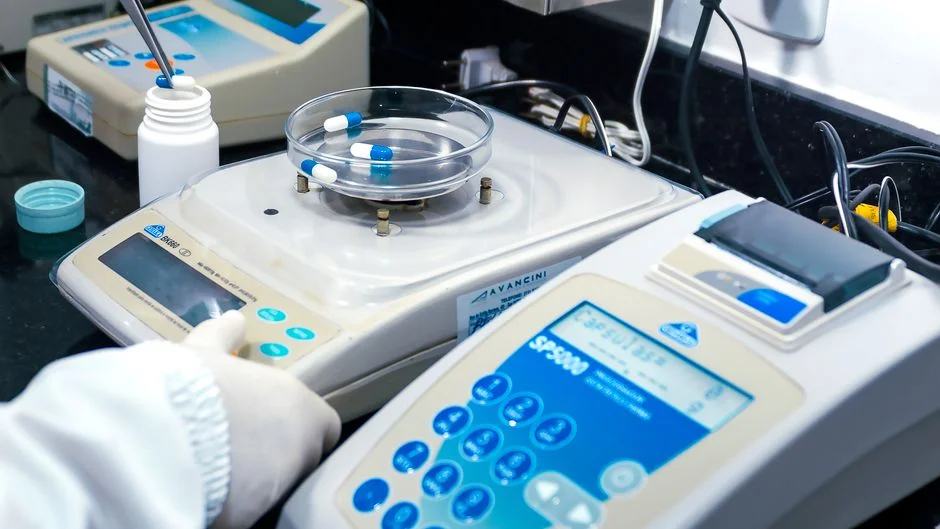
The train below is sized for a mid-sized Bahraini API/formulation facility aiming at on-site reuse. Each stage has a defined removal target tied to the discharge and reuse limits in the next section.
- Screening. A rotary bar screen (typically 2–6 mm aperture) protects downstream pumps, DAF, and membranes from rags, ampoules, and broken glass. The GX rotary mechanical bar screen class is a defensible default.
- Equalisation, neutralisation, and cooling. Sized for 8–24 hours of hydraulic retention at peak flow, with pH correction to 6–9 and cooling below 38 °C to keep mesophilic biology stable. Veolia data show inlet temperatures up to 70 °C — a plate heat exchanger is normal practice.
- Dissolved air flotation (DAF). A DAF system removes FOG, TSS, colloids, and a fraction of COD before biology. Target 90–95% FOG removal; this is also where surfactant and cleaning-agent peaks are knocked down.
- Biological treatment. Choose UASB for high-COD streams above 3,000 mg/L (Veolia's threshold) with flow rates typically 5–200 m³/day; choose MBBR + activated sludge (Veolia BAS configuration) for variable or inhibitory loads where biofilm robustness matters more than absolute COD reduction.
- Membrane bioreactor (MBR). Submerged PVDF membranes replace the secondary clarifier. Per Veolia, an MBR delivers 95% COD, 99% BOD5, 99% TSS, and 4–5 log Total Coliform reduction, producing a <1 µm filtrate that is the ideal RO feed. An integrated MBR system with DF series flat-sheet membrane modules handles 8,000–12,000 mg/L MLSS with 10–20× lower energy than external cross-flow designs.
- GAC polishing. Coal-based granular activated carbon with balanced micro/mesoporosity (per SorbiTech) removes residual APIs, trace organics, and COD that passes biology. Spent carbon is thermally reactivated at 900 °C to recover 90–95% capacity.
- Reverse osmosis. An industrial RO system at ~95% recovery delivers the Middle-East reuse benchmark: pH 6–7, COD 50–100 mg/L, BOD5 <2 mg/L, TDS 250 mg/L.
| Stage | Target Pollutant | Typical Removal | Key Design Parameter |
|---|---|---|---|
| Screening | Rags, glass, packaging | 100% of >2 mm | 2–6 mm aperture |
| Equalisation | Flow, pH, temperature | Hydraulic smoothing | 8–24 h HRT |
| DAF | FOG, TSS, colloids | 90–95% FOG, 70–85% TSS | Air:solids 0.005–0.02 |
| Biological (UASB / MBBR) | Biodegradable COD, BOD | 60–90% COD | OLR 1–10 kg COD/m³·d |
| MBR | Residual COD, TSS, bacteria | 95% COD, 99% TSS | Flux 15–25 LMH |
| GAC | APIs, trace organics | 50–80% residual COD | EBCT 10–30 min |
| RO | Dissolved salts, residual COD | 95% recovery, >99% salts | Feed SDI <3 |
Bahrain Discharge and Reuse Targets: What the Effluent Must Meet
Sewer-discharge plants in Bahraini industrial parks must meet the host WWTP's pretreatment limits, which typically include COD, TSS, pH, oil & grease, ammonia, and heavy metals — and which are tighter than most municipal sewer rules abroad. Industrial-park limits in BIIP and similar zones commonly fall in the COD 500–800 mg/L, TSS 200–400 mg/L, FOG <50 mg/L range, with pH 6–9 and a temperature ceiling near 40–45 °C.
For on-site reuse, the design target is the Veolia Middle-East example: pH 6–7, COD 50–100 mg/L, BOD5 <2 mg/L, TDS 250 mg/L. This envelope covers cooling-tower makeup (controls scaling and biological fouling) and low-pressure boiler feed (controls silica and hardness carryover). For sea outfall, Supreme Council for Environment marine water quality decisions apply, including salinity, temperature, and dissolved-oxygen constraints — but sea outfall is rare for new pharma builds.
If reuse extends to washdown, CIP final rinse, or any human-contact application, add a disinfection step after MBR and before reuse. A chlorine dioxide generator sized for 0.5–1.0 mg/L residual ClO2 at contact time ≥30 minutes is standard practice, with UV as a polishing alternative where chlorination by-products are a concern.
| Parameter | Host WWTP Sewer Limit (typical) | Middle-East Reuse Target (Veolia) | Sea Outfall (SCE) |
|---|---|---|---|
| pH | 6–9 | 6–7 | 6–9 |
| COD (mg/L) | 500–800 | 50–100 | ≤150 |
| BOD5 (mg/L) | 200–400 | <2 | ≤30 |
| TSS (mg/L) | 200–400 | — | ≤50 |
| FOG (mg/L) | <50 | — | ≤15 |
| TDS (mg/L) | — | 250 | Site-specific |
| NH4-N (mg/L) | ≤10 | — | ≤5 |
Equipment Selection Framework: Choosing the Right Skid for Each Stage
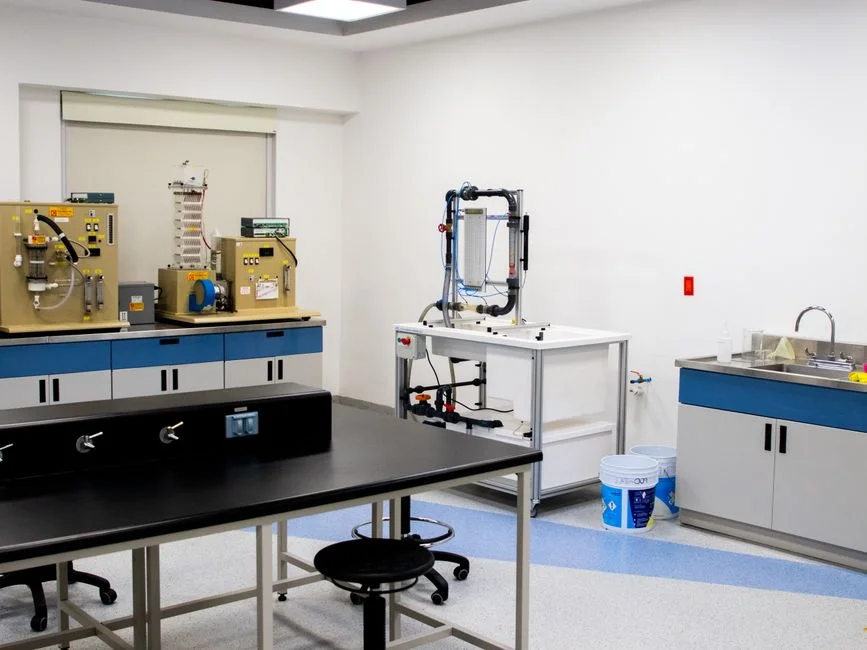
The decision rules below map each process stage to a defensible equipment choice and the sizing margin the EPC should hold.
- DAF sizing. Pick the DAF model against peak hourly flow plus 20% turndown. Specify 90–95% FOG removal at design load; insist on a polymer-make-down unit and an adjustable recycle ratio.
- MBR membrane format. Flat-sheet (DF series, 0.1 µm PVDF) suits high-MLSS pharma streams (8,000–12,000 mg/L) and tolerates shock loading better than hollow-fibre. Expect 10–20× lower energy than external cross-flow at the same flux.
- RO selection. Size on feed TDS and the 95% recovery target. Brackish RO is standard for influent TDS <5,000 mg/L; high-recovery trains need energy recovery above 2,000 mg/L. GAC must precede RO to keep SDI <3 and protect membranes from organic fouling.
- Sludge handling. A high-efficiency sedimentation tank thickens biological sludge to 2–3% DS, and a plate-and-frame filter press dewaters the combined sludge to >22% DS for off-site disposal. Use an automatic chemical dosing system for polymer and antiscalant to keep performance consistent and reduce operator exposure.
Cost Drivers and Lifecycle Considerations in the GCC
The biggest OPEX line in any Bahrain pharma plant is aeration energy in the biological stage. MBBR and MBR configurations typically halve aeration kWh/kg COD removed versus conventional activated sludge at the same load, because biofilm carriers hold higher active biomass at lower DO setpoints and MBR clarifier recycle is eliminated. GAC lifecycle is the second lever: thermal reactivation at 900 °C recovers 90–95% of adsorption capacity, which over 3–5 cycles drops media OPEX by 60–70% versus single-use carbon. RO membrane replacement is the largest consumable cost; GAC pre-treatment plus antiscalant dosing extends membrane life from 2 to 3–5 years. Sludge disposal is non-trivial in Bahrain — every 1% improvement in dewatering dryness cuts hauled mass by roughly 5–8%, which is why the plate-and-frame press is standard. For context, the regional GCC BOD discharge benchmark and the wastewater treatment cost benchmarks give EPCs the comparable cost envelopes for tender pricing; specific regional Saudi industrial wastewater engineering specs are a useful proxy for Bahrain's climate-driven design factors.
Frequently Asked Questions
What is the typical COD/BOD5 ratio for pharmaceutical wastewater in Bahrain?
Across Veolia's 50-plant dataset the COD/BOD5 ratio ranges from 1 to 15. Ratios below 2 are easily biodegradable; 2–3 are biodegradable; above 3 the stream may need physical or chemical pre-treatment before biological stages will work reliably.
What removal rates does an MBR deliver on pharmaceutical effluent?
Per Veolia, a correctly sized MBR delivers 95% COD reduction, 99% BOD5 removal, 99% TSS removal, and 4–5 log Total Coliform reduction, producing a sub-1 µm filtrate suitable for downstream RO polishing.
What reuse quality can a Bahraini pharma plant realistically achieve with MBR + GAC + RO?
The Veolia Middle-East reuse benchmark — pH 6–7, COD 50–100 mg/L, BOD5 <2 mg/L, TDS 250 mg/L — is achievable at ~95% RO recovery, suitable for cooling-tower makeup and low-pressure boiler feed.
Which Bahraini regulator governs pharmaceutical wastewater discharge?
The Supreme Council for Environment sets marine water quality rules; Ministerial Order 3/2012 (MOICT) controls hazardous pharmaceutical waste; sewer discharge to a host WWTP is governed by that park's published pretreatment limits, which are typically tighter than municipal sewer norms.
How is antibiotic resistance gene (ARG) risk addressed in pharma effluent design?
For antibiotic or fermentation-based plants, ARG removal is a design target, not an afterthought. The peer-reviewed reference is UASB + A/O + advanced oxidation (Hou et al., 2019, cited in Li et al. 2024), which the design team should validate against site-specific ARG monitoring.