Why Textile Effluent in Bahrain Needs a Tailored Treatment Train
Textile wastewater treatment in Bahrain typically uses a four-stage train — screening, equalization, dissolved air flotation (DAF) for color and suspended solids, then a biological stage such as MBBR or MBR — followed by chlorine dioxide disinfection. MBBR biofilm reactors (deployed at a Bahrain jeans facility, per S3 LinkedIn, 2025) and MBR with 0.1 μm PVDF membranes deliver near-reuse effluent suitable for RO polishing, helping plants meet Bahrain MOICT effluent limits and reduce freshwater draw.
Bahrain's textile sector is dominated by dyeing, finishing, and denim/jeans operations that discharge effluents with high color, high salinity, and high organic load per cubic meter. A medium-sized dyeing line in the Gulf typically generates 80–250 m³ of process wastewater per ton of finished fabric, and most of that flow is hot — intake water drawn from the Gulf at 30–35 °C is heated further by dye-bath steam, so feed to the treatment plant regularly arrives at 35–45 °C. Combined with the Gulf's high ambient humidity (often above 60% year-round), this raises cooling loads and slows biological kinetics unless the bioreactor is sized for elevated temperature operation.
Compliance is governed by the Supreme Council for Environment (SCE) and enforced through the Ministry of Oil, Industry, and Commerce and Tourism (MOICT) for industrial discharge approvals. Operators must consult the current MOICT/SCE discharge tables for their specific effluent class before specifying limits — those tables, not this article, are the binding reference. What is clear is that the framework is structured around reuse and discharge-to-sea, so a treatment train that ends at "compliant discharge" leaves money on the table in a water-scarce market where potable water tariffs are a significant operating cost. The MBBR project at the Bahrain jeans facility is direct evidence that biological treatment is an accepted, deployed path for local textile plants (S3 LinkedIn, 2025).
Influent Characteristics That Drive Equipment Selection
Textile effluent is a four-contaminant problem, and each contaminant class points to a specific unit process. Color and dyes — particularly reactive azo dyes and disperse dyes from polyester lines — resist conventional biological oxidation because their chromophore structures are stable under aerobic conditions, so a physico-chemical stage (coagulation + DAF) is required upstream of the bioreactor. Salts from sodium chloride and sodium sulfate used as dye-bath auxiliaries push influent conductivity into the 5,000–20,000 μS/cm range; high salinity inhibits nitrifying biofilm and reduces the effective operating window of conventional activated sludge. Suspended fibers and lint from knit and denim lines load screening and DAF stages and must be removed early to prevent matting of downstream carrier media. High BOD/COD — typically in the several-hundred to low-thousand mg/L range after equalization — defines the sizing of the biological stage.
Reactive and disperse dyes are the most common reason a "standard" biological plant fails on a textile line: the dyes pass straight through an aeration tank and reappear in the clarified overflow, producing visible color in the discharge. Coagulation with ferric chloride or polyaluminum chloride followed by DAF removes a large fraction of the colloidal dye residue before biotreatment, and it also strips surfactants and emulsified oils that would otherwise foam in the bioreactor. Without that pre-stage, MBBR and MBR both see elevated loading and shorter membrane-cleaning intervals.
Equalization is the first line of defense against pH swings (alkaline scouring baths alternating with acid dye baths) and temperature spikes. A properly sized equalization basin with pH correction and coagulant dosing flattens the load curve so that the downstream DAF and biological stages operate in a narrow, predictable range. The rule of thumb for Bahraini dyeing/finishing lines is to size equalization for at least 8–12 hours of average flow, but the final number is set by the batch sequencing on the production floor and should be confirmed with the customer's process team before equipment selection.
The Standard 2026 Process Train for Bahraini Textile Plants
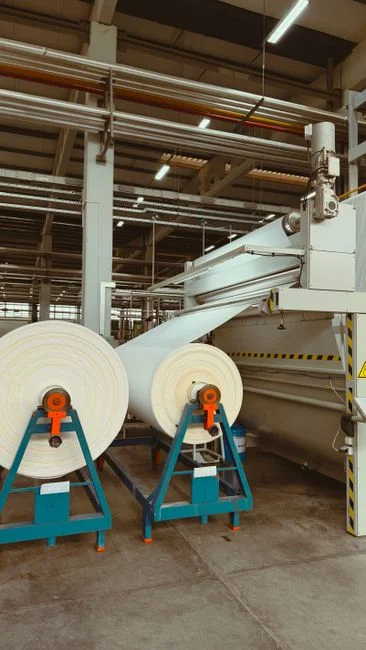
The reference process train used in Bahraini textile ETP designs in 2026 is a six-step sequence. Each step has a defined function and a measurable performance target.
- Rotary mechanical bar screening with a GX series rotary mechanical bar screen removes fibers, lint, and packaging debris (typically 2–6 mm aperture) before downstream units. This protects DAF nozzles and prevents biomass matting in the biological stage.
- Flow and load equalization with pH correction and coagulant dosing flattens hydraulic and contaminant peaks. A PLC-controlled automatic chemical dosing system handles coagulant, flocculant, and acid/alkali addition in proportion to flow.
- Dissolved air flotation (DAF) using a DAF system for textile pre-treatment — 13 standard models covering 4–300 m³/h — provides high-rate removal of suspended solids, colloidal dye residues, and emulsified oils. Hydraulic retention time is typically 20–30 minutes, and float-solids concentration reaches 3–5% dry solids.
- Biological treatment via MBBR (proven at the Bahrain jeans facility per S3) with freely-moving carrier-media biofilm, or an integrated MBR system with submerged PVDF membranes delivering sub-1 μm filtration at roughly 60% smaller footprint than conventional activated sludge. The two options are compared in detail in the next section.
- Lamella clarifier as a polishing and sludge-separation stage, with surface loading of 20–40 m/h and chemical consumption up to 30% lower than conventional settling tanks.
- On-site chlorine dioxide disinfection using a on-site chlorine dioxide generator (50 g/h to 20,000 g/h), compliant with WHO Drinking-water Guidelines and EU Directive 98/83/EC. ClO₂ is preferred over chlorine for textile effluent because it does not form trihalomethanes with residual dye fragments.
| Stage | Unit Process | Key Specification | Primary Removal Target |
|---|---|---|---|
| 1 | Rotary bar screen (GX) | 2–6 mm aperture | Fibers, lint, debris |
| 2 | Equalization + dosing | 8–12 h HRT typical | pH, temperature, load swings |
| 3 | DAF | 4–300 m³/h, 20–30 min HRT | Color, TSS, oil/grease |
| 4 | Biological (MBBR or MBR) | MBBR: 30–50% carrier fill; MBR: 0.1 μm PVDF | BOD, COD, residual color |
| 5 | Lamella clarifier | 20–40 m/h surface loading | Sludge separation, polishing TSS |
| 6 | ClO₂ disinfection | 50 g/h – 20,000 g/h | Fecal coliform, residual pathogens |
The six steps are not optional. Skipping screening chokes the DAF; skipping equalization destabilizes the biology; skipping pre-coagulation/DAF pushes color into the MBR membranes and shortens cleaning intervals from quarterly to weekly.
MBBR vs MBR vs Conventional Activated Sludge: Choosing the Right Biological Stage
The biological stage is where capital and operating decisions diverge most. Three options are credible for a Bahraini textile plant in 2026.
MBBR (Moving Bed Biofilm Reactor). Carrier media move freely in the aeration tank; biofilm grows on the protected surface area, delivering 30–50% carrier fill in a compact footprint. MBBR is tolerant of hydraulic and organic load swings, requires no sludge recirculation, and is the technology proven at the Bahrain jeans facility (S3 LinkedIn, 2025). It is the right choice when the goal is compliance, not high-purity reuse. Limitations: effluent TSS is higher than MBR, so downstream polishing/RO needs more robust pre-filtration.
MBR (Membrane Bioreactor). An integrated MBR system with submerged PVDF membranes using DF series PVDF flat-sheet MBR modules (80–225 m² per module, 0.1 μm nominal pore size) producing 32–135 m³/day per module. MBR delivers near-reuse quality directly out of the bioreactor at roughly 60% smaller footprint than conventional activated sludge, and it is the correct choice when RO feed or process-rinse water is targeted. Limitations: higher CAPEX per m³, membrane fouling control required, and the influent must be screened and pre-clarified to the spec the membrane manufacturer publishes.
Conventional Activated Sludge (CAS). Lower CAPEX and a large installed base globally, but the largest footprint of the three, the weakest effluent quality, and the most sensitivity to salinity and temperature swings. Rarely the first choice for new Bahraini textile builds in 2026; more common as a retrofit where space is unconstrained and the discharge is to sea, not to reuse.
| Parameter | MBBR | MBR (PVDF, 0.1 μm) | Conventional Activated Sludge |
|---|---|---|---|
| Relative footprint | Compact | ~60% smaller than CAS | Largest |
| Effluent TSS | 20–50 mg/L (with clarifier) | < 1–5 mg/L (membrane-retained) | 20–40 mg/L |
| Load swing tolerance | High | Moderate (membrane fouling risk) | Low |
| Sludge recirculation | Not required | Required (high MLSS) | Required |
| Reuse compatibility | Needs polishing before RO | RO-ready directly | Needs polishing before RO |
| Bahrain reference | Deployed (S3, 2025) | Field-proven globally; no Bahrain public reference in research | Common in older Gulf plants |
Decision logic: if the operator's goal is to meet discharge limits at lowest CAPEX, MBBR is the default. If the goal is reuse water that can feed an industrial RO system for textile reuse water without an intermediate clarifier, MBR is the right answer. CAS is a retrofit choice when footprint is not the constraint. For a deeper dive into the biofilm alternative, see this granular activated sludge technology engineering guide.
Sludge Handling, Chemical Dosing, and Reuse Pathways
A textile ETP is not complete when the bioreactor discharges clean water — the solids and the reuse loop must be closed. The mixed chemical/biological sludge from DAF float, lamella underflow, and MBR waste activated sludge (if MBR is selected) is dewatered using a plate-and-frame filter press for textile sludge. Filter-press cake at 25–35% dry solids is manageable for off-site disposal under the SCE/MOICT waste-handling framework; below 20% dry solids, transport and landfill costs dominate.
Chemical dosing is not a "set and forget" subsystem on a textile line. Dye-bath chemistry changes by color and by fabric, and a fixed dose will over- or under-dose between batches. A PLC-controlled automatic chemical dosing system with flow-paced coagulant and pH feedback cuts chemical consumption (typically 15–30% versus manual dosing) and prevents the load spikes that destabilize the biological stage. Dosing points are usually on the equalization transfer line (coagulant) and on the DAF inlet (flocculant).
The reuse pathway is where a Bahraini plant recovers the most value. Routing MBR permeate — already at < 5 mg/L TSS and low COD — through an industrial RO system for textile reuse water produces water suitable for boiler-feed makeup, process rinsing, or dye-bath dilution. In a water-scarce market with rising potable tariffs, reuse at 40–60% of total flow is typically the break-even point where the RO CAPEX is recovered in 3–5 years. Operators must, however, verify local acceptance: reuse volumes and final quality still need to satisfy MOICT/SCE discharge-or-reuse criteria for the specific effluent class, and RO concentrate must be managed within the same framework. The Australia and Canada guides linked below show how the same train is adapted in different regulatory environments — textile wastewater treatment process guide for Australia and textile wastewater treatment process guide for Canada — and a useful DAF-side reference is this DAF system engineering and cost guide.
Frequently Asked Questions
What is the standard treatment train for textile wastewater in Bahrain?
The standard 2026 train is screening (GX series rotary bar screen) → equalization with pH correction → DAF (4–300 m³/h) for color and TSS → biological treatment (MBBR or MBR with 0.1 μm PVDF) → lamella clarifier → on-site chlorine dioxide disinfection (50 g/h to 20,000 g/h). MBBR is the deployed reference in Bahrain (S3 LinkedIn, 2025); MBR is the preferred choice when reuse water is targeted.
Which biological stage is best for a Bahraini textile plant — MBBR or MBR?
MBBR is best when the goal is compliance-only discharge: it is compact, tolerant of load swings, requires no sludge recirculation, and is already proven at a Bahrain jeans facility (S3, 2025). MBR is best when reuse water for RO feed or process rinsing is targeted: submerged 0.1 μm PVDF flat-sheet modules (DF series, 80–225 m²) deliver < 5 mg/L TSS and near-reuse quality at roughly 60% smaller footprint than conventional activated sludge.
How do Bahraini textile plants meet MOICT and Supreme Council for Environment requirements?
Compliance is governed by the Supreme Council for Environment with enforcement routed through MOICT. Operators must consult the current MOICT/SCE discharge tables for their specific effluent class to confirm the binding limits for COD, TSS, pH, temperature, and salinity — those tables are the legal reference and are updated periodically. The treatment train described in this article is engineered to produce effluent that meets typical Gulf-class industrial discharge and reuse criteria, but final sizing must be validated against the current regulatory text for the specific site.
Related Equipment
- lamella clarifier with 20–40 m/h surface loading — specifications, capacity range, and technical data