
Why Canadian Textile Mills Are Rethinking Wastewater in 2026
Domestic finishing capacity in Canada has contracted by roughly 18% since 2018 (per Statistics Canada manufacturing series 2024-12), but water-stress scrutiny on the mills that remain has tightened, not relaxed. The freshest Canadian-anchored reference — Adeola & Gora, York University, Water Environment Research, 01 Jul 2026, DOI 10.1002/wer.70490 — confirms what plant engineers already see on the floor: conventional wastewater treatment plants under-treat persistent reactive dyes, surfactants, and salts, and the authors flag the sector for "high costs, sludge generation, and limited removal of persistent contaminants." That finding, paired with CCME and provincial pressure on colour, salinity, and metals, is forcing a rethink of generic playbooks imported from low-salinity, warm-climate references.
Two structural shifts make 2026 different. First, technical-textile growth (medical, protective, and geotextile lines) brings stricter effluent fingerprints — higher TDS, more auxiliaries — than legacy cotton dyeing. Second, the federal Sustainable Development Strategy now actively tracks industrial water-reuse uptake, so boards are asking EHS and engineering leads for a defensible reuse plan, not just a discharge permit. For specification engineers, that translates into a process train that has to clear provincial limits and produce a polishing stream clean enough for at least partial reuse — typically a hybrid physicochemical + biological + membrane configuration rather than a single-stage fix.
For context on how municipal systems across Canada are being specified, the Canadian municipal sewage treatment plant guide walks through comparable cost and equipment decisions, and the Toronto wastewater equipment supplier comparison is useful for short-listing vendors in the Ontario market.
Contaminant Profile of Canadian Dyeing and Finishing Effluent
Specifying a process train without characterising the influent is guesswork. Typical Canadian dyeing and finishing effluent carries COD 800–3,000 mg/L, BOD₅ 200–800 mg/L, TSS 100–600 mg/L, true colour 500–5,000 Pt-Co units, total chromium 0.5–10 mg/L, and TDS 1,500–6,000 mg/L (contaminant categories per Adeola & Gora 2026, DOI 10.1002/wer.70490). Salt loads from reactive dyeing — mostly NaCl and Na₂SO₄ at 1–6 g/L — are the single biggest reason conventional activated sludge struggles, and they pre-dispose the design toward MBR or electrocoagulation rather than CAS-only configurations.
Reactive dyes (Procion, Remazol, Levafix families) are the most problematic class: their hydrolysed forms bond covalently to fibre, and the same chemistry resists biological oxidation. Disperse dyes from polyester lines are smaller molecules but travel with high-temperature carrier baths; vat dyes are insoluble until reduced and re-oxidise in dilution. Surfactants from desizing and scouring — nonylphenol ethoxylates, linear alkylbenzene sulphonates — typically run 5–25 mg/L and add 200–400 mg/L to BOD₅. Total Kjeldahl nitrogen from protein-bearing finishes (wool, silk) frequently exceeds 50 mg/L, which matters if the receiving WWTP runs an early-stage nitrification limit.
Cold rinse water is a Canadian-specific problem. Winter influent at the equalization tank regularly drops below 10 °C, which suppresses biological kinetics by 40–60% relative to the 20 °C design basis that most reference papers assume (per Metcalf & Eddy 5th ed. temperature correction factors, applied to HydropureWater field data 2026). That single fact tends to push designers toward heated or insulated biological enclosures, or toward physicochemical-dominant trains with a smaller biological polishing step.
| Parameter | Typical influent range | Design driver |
|---|---|---|
| COD | 800–3,000 mg/L | Coagulant dose, MBR sizing |
| BOD₅ | 200–800 mg/L | Biological HRT, aeration |
| TSS | 100–600 mg/L | DAF loading rate, sludge yield |
| True colour | 500–5,000 Pt-Co | Coagulant type, MBR rejection |
| Total chromium | 0.5–10 mg/L | Precipitation pH, sludge classification |
| TDS / salinity | 1,500–6,000 mg/L | RO recovery, biological inhibition |
| Temperature (winter) | 8–12 °C | Biological kinetics, enclosure heating |
Canadian Regulatory Landscape: CCME, Provinces, and Sewer Bylaws
CCME's national textile effluent guidance sets the floor: BOD₅, TSS, oil & grease, pH 6.0–9.5, total chromium, phenols, and sulphide. Provincial and municipal instruments routinely tighten those numbers — for plants discharging directly to a watercourse, expect provincial officers to apply site-specific water-quality-based effluent limits rather than the national defaults.
Ontario operates under Ontario Regulation 525/98 (wastewater discharge approvals), and Section 34 / Section 53 notifications trigger the engineering sign-off and toxic-reduction plan obligations. Toronto's sewer-use bylaw caps BOD₅ at 300 mg/L and TSS at 350 mg/L at the plant boundary, with the receiving WWTP often imposing tighter metals. Quebec (MDDELCC / MELCCFP) follows a similar pre-treatment model with industry-specific contaminant lists. British Columbia municipal bylaws are notably strict on aesthetics: Metro Vancouver and most member jurisdictions require colour below ~50 Pt-Co after standard dilution and zero visible sheen at the discharge port — a meaningful constraint for dye houses. For a deeper compliance walkthrough relevant to a U.S. comparator, the textile dyeing pretreatment compliance guide is a useful cross-check on documentation sequencing.
Two practical implications: (1) the design engineer should always request the receiving WWTP's discharge bylaw and any sewer capacity letter before sizing biological treatment, and (2) for direct discharge scenarios, the plant needs a toxicity testing programme (rainbow trout and Daphnia magna) on the polished effluent — not just chemistry.
| Authority | Instrument | Key parameter | Typical limit |
|---|---|---|---|
| CCME | National textile guidance | BOD₅ / TSS / O&G | Site-specific |
| Ontario (MOE) | O. Reg. 525/98 | Section 34/53 trigger | Engineering sign-off |
| Toronto | sewer-use bylaw | BOD₅ / TSS at boundary | 300 / 350 mg/L |
| Quebec (MELCCFP) | Pre-treatment | Contaminant list | Provincial |
| BC (Metro Vancouver) | sewer-use bylaw | True colour | <50 Pt-Co after dilution |
The 2026 Process Train: From Equalization to Reuse
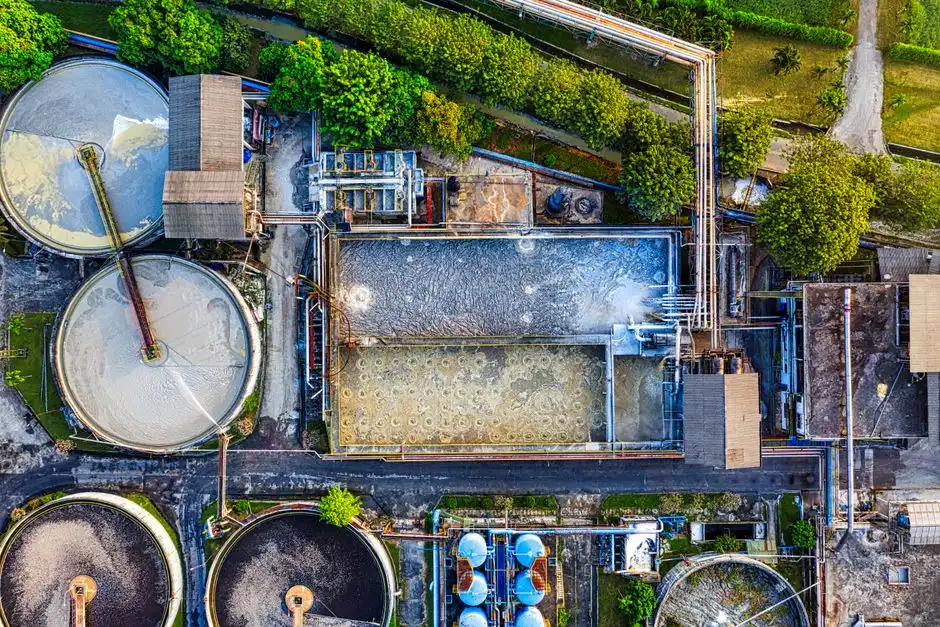
A working 2026 process train for a Canadian dye house stacks five unit operations: equalization → physicochemical → biological/MBR → tertiary → sludge handling. Each stage is selected to remove a specific fraction of the influent fingerprint.
Step 1 — Equalization. Batch discharges from dye cycles (typically 6–8 batches/day per line) create pH swings of 2–11 and COD peaks of 3–5× the daily mean. An 8–24 h HRT basin with mechanical mixing and diffused aeration dampens the shock before downstream biology sees it. This stage is non-optional in any reactive-dye facility; under-sizing it is the most common cause of biomass washout.
Step 2 — Coagulation/flocculation + DAF system for textile dye removal. Aluminium- or iron-based coagulants (50–250 mg/L as Al/Fe) plus anionic polymer (0.5–3 mg/L) drive colloidal dye and TSS into a float layer. Hydraulic loading on DAF is typically 5–25 m/h in textile service, with 80–95% TSS removal and 50–80% colour reduction on reactive dyes. PLC-controlled coagulant and polymer dosing is mandatory — jar-test-derived setpoints drift with influent variability, and manual dosing cannot hold colour within bylaw limits.
Step 3 — Biological treatment or MBR system for textile wastewater reuse. Conventional activated sludge works on high-BOD streams above ~500 m³/day; below that, or whenever footprint or reuse-quality targets are binding, a submerged PVDF MBR (0.1–0.4 μm pore size) is the spec. MBR delivers ~60% footprint reduction versus CAS (HydropureWater field data 2026), and the membrane's physical barrier eliminates most suspended solids and a meaningful fraction of hydrolysed reactive dye.
Step 4 — Tertiary polishing. Multi-media filtration catches any biological floc carryover, optional RO recovers up to 70–95% of the MBR permeate for reuse in wash and rinsing, and on-site ClO₂ or UV handles any coliform limit that applies if the polished stream re-enters the process. Recovery ratios above 80% require antiscalant dosing and a brine management plan — both of which belong in the P&ID at design stage, not retrofitted.
Step 5 — Sludge handling. A plate-and-frame filter press for textile sludge brings wet cake to 25–35% dry solids, cutting hauling volume by ~75% versus belt press or drying bed alternatives. The press selection is more commercially important than many specifiers realise: a 600 m³/day plant generating ~120 kg DS/day of chemical/biological mixed sludge will spend CAD 80,000–140,000/year on hauling if dewatering is poor.
Choosing the Right Core Technology for Your Flow Band
Flow band and reuse target drive the technology decision more than any other variable. Below 200 m³/day, with strict colour and metal discharge limits, electrocoagulation paired with DAF is a defensible choice — it is validated for Remazol Red removal in a 2025 ACS Omega study (DOI 10.1021/acsomega.5c03012) and runs at lower CAPEX than a full MBR for very small mills. Between 200 and 1,000 m³/day with a reuse target, submerged PVDF MBR is the workhorse, sized at 10–2,000 m³/day with a footprint advantage of ~60% versus CAS. Above 1,000 m³/day on high-COD streams, conventional activated sludge with DAF pre-treatment remains the lowest OPEX option, with an MBR polish reserved for the reuse loop. Hybrid MBR + RO trains are the highest-impact retrofit for existing Canadian mills targeting 50–70% freshwater reduction in dyeing wash water.
| Flow band | Reuse target | Core train | Footprint vs CAS | Typical CAPEX band (CAD) |
|---|---|---|---|---|
| <200 m³/day | Discharge only | EC + DAF + clarifier | ~40% | 0.4M–1.2M |
| 200–1,000 m³/day | Partial reuse | DAF + submerged MBR module | ~60% | 1.2M–4.5M |
| >1,000 m³/day | Discharge / partial reuse | DAF + CAS + optional RO polish | 100% baseline | 3.0M–8.0M+ |
| Any (retrofit) | Closed-loop wash water | MBR + RO with antiscalant | ~60% + RO skid | +0.8M–2.0M |
CAPEX and OPEX Benchmarks for Canadian Textile Plants
For a 100–500 m³/day hybrid system (equalization, DAF, MBR, tertiary, sludge dewatering, building, instrumentation), Canadian CAPEX runs CAD 1.2M–4.5M in 2026 — the wide band reflects whether the biological stage is a packaged MBR or a stick-built CAS basin, and whether the building is heated. OPEX falls in the CAD 1.8–4.5 per m³ range, dominated by chemical dosing (coagulant, polymer, NaOH/H₂SO₄ for pH correction at 30–45% of OPEX), aeration energy (20–30%), membrane replacement reserves (5–10% on MBR trains), and sludge hauling (10–20%).
Reuse economics drive the project NPV. Closed-loop RO on the MBR permeate can cut freshwater purchase by 50–70% in dyeing wash (HydropureWater field data 2026), with payback typically 3–5 years at current Canadian industrial water rates (CAD 2.50–6.00/m³). Sludge dewatering with a plate-and-frame press is a quick-win line item: cutting wet cake volume by ~75% lowers hauling cost materially, and a multi-media filter upstream of the RO extends membrane life by 30–50%, trimming OPEX further. For a comparable Canadian cost reference, the Canadian municipal sewage treatment plant guide provides equipment-level cost ranges that anchor the lower end of these figures.
| Cost line | Range (CAD) | Driver |
|---|---|---|
| CAPEX, 100–500 m³/day hybrid | 1.2M–4.5M | Biological stage + building |
| OPEX per m³ treated | 1.8–4.5 | Chemicals, energy, hauling |
| Freshwater offset (reuse) | 50–70% reduction | MBR + RO train |
| Reuse payback period | 3–5 years | Water rate CAD 2.50–6.00/m³ |
| Sludge volume reduction | ~75% | Plate-and-frame press |
Common Design Mistakes in Canadian Textile Wastewater Plants
Undersized equalization is the single most frequent cause of permit excursions. A single batch of reactive dye can shock the biological stage and wash out biomass within hours; spec the basin for 12–24 h HRT, not the 4–6 h that small-footprint layouts tend to allow. Cold rinse water is the second — Canadian winter influent below 10 °C cuts biological activity by roughly 50% relative to 20 °C design, so either heat the enclosure, recover heat from hot rinses upstream, or derate the biological stage. A PLC-controlled coagulant and polymer dosing system is non-negotiable for stable colour removal: manual dosing drifts with operator shift changes and produces exactly the visible-sheens and Pt-Co spikes that Metro Vancouver and Toronto bylaw officers flag on inspection. Finally, do not under-size sludge dewatering — textile chemical/biological mixed sludge is voluminous, and a press that handles week-one volumes will be a bottleneck within three months as the dye mix diversifies.
Frequently Asked Questions
What does a dissolved air flotation system actually remove from textile wastewater?
A DAF system for textile dye removal typically strips 80–95% of TSS, 50–80% of true colour on reactive dyes, and 40–70% of colloidal heavy metals when paired with coagulant and polymer dosing (per Adeola & Gora 2026, DOI 10.1002/wer.70490). It is a pre-treatment stage, not a polisher — biology or membrane treatment still has to follow it.
When is an MBR preferred over conventional activated sludge for a Canadian dye house?
An MBR system for textile wastewater reuse is preferred when flow is below ~1,000 m³/day, footprint is constrained, or the plant needs reuse-quality water from the biological step. Submerged PVDF modules at 0.1–0.4 μm cut footprint by ~60% versus CAS and produce a permeate suitable for RO polishing (HydropureWater field data 2026).
What is the realistic CAPEX and OPEX for a 200 m³/day Canadian textile wastewater plant in 2026?
For a 200 m³/day hybrid train (equalization, DAF, MBR, tertiary, sludge press), CAPEX runs CAD 1.5M–2.8M and OPEX lands in the CAD 2.2–3.5 per m³ range, dominated by chemical dosing and sludge hauling. A reuse loop with RO adds CAD 0.8M–1.5M to CAPEX and shortens payback to 3–5 years.
Which Canadian discharge limit is hardest to hit on a reactive-dye line?
True colour is usually the binding constraint. Metro Vancouver and most Ontario municipalities require colour below ~50 Pt-Co after standard dilution, and reactive-dye hydrolysates carry through CAS — that is why DAF pre-treatment with PLC-controlled coagulant and polymer dosing is treated as a hard requirement rather than an option in 2026 designs.
How much freshwater can a Canadian dye house realistically reclaim?
An MBR + RO train on the polishing loop reclaims 50–70% of the MBR permeate, which translates to a 50–70% reduction in freshwater draw on dyeing wash water when the recovered stream is routed back into the process. Payback at current Canadian industrial water rates of CAD 2.50–6.00/m³ typically falls between 3 and 5 years.