What Makes Dairy Plant Wastewater So Challenging to Treat
Dairy effluent is one of the most variable high-strength streams an industrial process engineer will encounter: a single facility can discharge between 0.3 and 11 L of wastewater for every liter of milk processed (Hamy 2005, cited in Applied Water Science 2020, S4). At a typical single-line plant this translates to 50–75 m³/day of raw discharge, with the range driven almost entirely by clean-in-place (CIP) frequency and product-changeover losses (S4). Without a clear handle on those two variables, equipment sizing is guesswork.
The other defining characteristic is compositional instability. Across a 10-sample, three-month study at a milk processing plant in Bechar, pH ranged from 5.09 to 8.27 with a mean of 6.96 (S4) — a swing that will collapse nitrification biology and corrode concrete tanks if it reaches the biological stage untreated. The same study reported a mean COD/BOD₅ ratio of 1.015, confirming that essentially all of the organic load is biodegradable; this is good news for biological treatment, but it also means the load is delivered in a tight shock rather than a slow, steady feed.
Source segregation is the practical response: keep high-strength streams (CIP rinses, whey, product losses) separate from low-strength streams (cooling-tower bleed, floor drainage, boiler blowdown) so that equalization can dampen the pH and load swings before the biological stage sees them. A rotary bar screen for dairy headworks is typically the first engineered step, removing rags, plastics, and casein fines that would otherwise blind downstream DAF and membrane equipment.
| Parameter | Typical Range (Dairy Effluent) | Source |
|---|---|---|
| Volume | 0.3–11 L effluent per L milk processed | Hamy 2005, in S4 |
| Daily discharge (single line) | 50–75 m³/day | S4 |
| pH (min – max, 10 samples) | 5.09 – 8.27 (mean 6.96) | S4 |
| COD/BOD₅ ratio | ~1.015 (highly biodegradable) | S4 |
| Equalization requirement | 8–24 h of peak flow | Engineering practice |
Danone's Multi-Stage Treatment Train at a Glance
Danone and comparable global dairy operators converge on a five-stage train: screening → equalization → dissolved air flotation → biological treatment (activated sludge or MBR) → tertiary polishing (sand filtration, ultrafiltration, or reverse osmosis) followed by disinfection or direct reuse. The order is not optional — each stage protects the next from a specific failure mode.
DAF precedes biology because dairy streams carry 60–90% of their FOG and a large fraction of TSS in a form that aeration tanks cannot handle; left in place, these contaminants cause foaming, filamentous bulking, and rising sludge in the clarifier (Al-Tayawi et al. 2023, S2). Removing them up front means the biological stage sees a stable, largely soluble COD load that it can actually metabolize.
For the biological step, MBR has been steadily gaining share over conventional activated sludge in the dairy sector because it tolerates mixed liquor suspended solids (MLSS) of 8,000–12,000 mg/L — roughly 2–3× the concentration of a conventional tank — and produces an effluent low enough in TSS and BOD₅ to feed an RO skid without intermediate clarification. Shear-enhanced membrane filtration has also been documented as an effective polish step for industrial dairy wastewater, with Kertész (2014) demonstrating stable flux under vibratory shear (S3). The net effect of the MBR-plus-RO configuration is a treated water stream suitable for boiler feed, cooling-tower makeup, or CIP final rinse. A properly specified industrial DAF system for dairy wastewater is what makes the rest of the train economically viable.
Primary Treatment: Screening, Equalization, and DAF
The front-end of a dairy treatment train is where most of the engineering risk lives. Get it wrong and the biological stage will never recover. The rotary bar screen should be specified at 3–6 mm aperture — fine enough to strip casein fines and packaging fragments from CIP return, coarse enough to avoid blinding on every shift. Material of construction matters: 304L stainless is the minimum for dairy service; CIP chemistry will pit standard carbon steel within months.
The equalization basin that follows should be sized for 8–24 hours of peak flow, with mechanical mixing and diffused air to prevent pH stratification and to keep fats emulsified rather than forming a surface cap. A 16-hour basin at 75 m³/day gives roughly 50 m³ of working volume, which is enough to flatten a pH swing from 5.09 to 8.27 (S4) into a feed that the downstream biology can absorb.
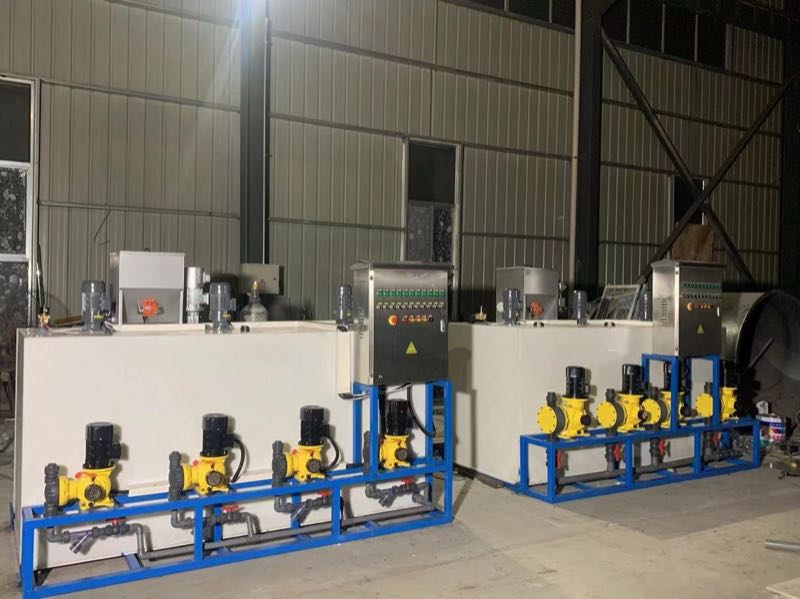
The DAF stage is sized on hydraulic loading, typically 4–25 m/h depending on the FOG fraction of the feed, and achieves FOG <50 mg/L and TSS removal of 70–90% when paired with chemical coagulation. Alum or polyaluminum chloride (PAC) remains the workhorse coagulant, but bioflocculants — bacterial exopolysaccharides — are documented in the dairy literature as effective alternatives that recover value-added products from the floated sludge (S2). PLC-controlled coagulant dosing for DAF tied to a streaming-current probe is the difference between consistent performance and chronic carryover that overwhelms the biology.
Secondary Treatment: Activated Sludge vs MBR for Dairy Loads
The choice between conventional activated sludge and MBR is the central design decision for any Danone-class dairy plant. Conventional activated sludge is proven, well-understood, and lower in CAPEX; it also constrains the operator to MLSS around 4,000 mg/L, requires a separate secondary clarifier, and produces an effluent that is not clean enough to feed an RO membrane directly. For plants under 200 m³/day with no reuse target, it is often the rational choice.
MBR — submerged PVDF flat-sheet or hollow-fibre membranes at 0.1–0.4 μm pore size — runs at MLSS of 8,000–12,000 mg/L, occupies roughly 60% of the footprint of an equivalent activated-sludge train, and produces an effluent with TSS <5 mg/L and BOD₅ <5 mg/L. That effluent quality is the gateway to a reuse loop: it can pass through multi-media filtration and RO without intermediate clarification. An MBR system for dairy effluent polishing with PVDF flat sheet MBR modules is the configuration most global dairy operators are now specifying for new builds above 200 m³/day.
Dairy effluent is nitrogen- and phosphorus-poor relative to municipal sewage, so supplemental nutrient dosing is rarely required for biological growth — a small cost advantage over municipal-plant design. Documented alternatives — aerated electrocoagulation, bioflocculant-assisted coagulation, ecological treatment systems (S2, S5) — have niches in polishing or in small-scale/low-strength applications, but they do not displace the activated-sludge-versus-MBR decision at production scale.
| Parameter | Conventional Activated Sludge | MBR (PVDF, 0.1–0.4 μm) |
|---|---|---|
| MLSS operating range | 2,000–4,000 mg/L | 8,000–12,000 mg/L |
| Effluent TSS | 10–30 mg/L | <5 mg/L |
| Effluent BOD₅ | 10–30 mg/L | <5 mg/L |
| Footprint (relative) | 1.0× | ~0.4× |
| RO feed compatibility | Requires intermediate clarification | Direct |
| Typical CAPEX envelope | Lower | Higher (offset by reuse value) |
Tertiary Polishing and Water Reuse: Closing the Loop in 2026
The 2026 ESG and Scope-3 water-reporting environment has pushed reuse from a "nice-to-have" to a board-level KPI for global dairy operators. The polishing train that makes reuse possible is straightforward: multi-media filtration (sand over anthracite over garnet) to drop the silt density index to <5, protecting the RO membranes from fouling; then industrial RO system for dairy water reuse at 70–95% recovery, depending on feed salinity and temperature. The RO permeate is suitable for CIP final rinse, boiler feed (with further polishing), or cooling-tower makeup. A multi-media filter for RO pretreatment is the unit that determines whether the RO membranes survive their first 24 months.
Disinfection before reuse is mandatory. UV is the low-energy default, but chlorine dioxide is preferred where biofilm control in the reuse loop matters — its biocidal action is less affected by pH and it does not produce trihalomethanes. A ClO₂ generator for reuse water disinfection sized to deliver 0.5–1.0 mg/L residual at peak reuse flow is the 2026 default specification. The benchmark for the industry now sits at 50–80% water reuse rates at production scale, with the top quartile of operators exceeding 80% through combined MBR–RO plus evaporation-side recovery in the concentrate stream.
Selecting Equipment for a Danone-Class Dairy Plant in 2026
Translating the train above into a procurement action comes down to three decision points: flow rate, reuse intent, and sludge-handling scope. A plant below 200 m³/day with no reuse target and discharge-to-sewer consent should default to DAF + conventional activated sludge + chlorination — the lowest-CAPEX path that still meets typical discharge consents. A plant above 200 m³/day, or any plant with a reuse target above 30% of effluent volume, should default to DAF + MBR + RO; the higher CAPEX is recovered inside 5–7 years through water-cost avoidance and consent certainty.
The sludge line is often underspecified at the procurement stage. DAF float and waste activated sludge combine to roughly 1–2% DS; dewatering with a filter press for dairy sludge dewatering brings this to 22–25% DS, suitable for off-site disposal or co-digestion. A high-efficiency sedimentation tank ahead of the filter press captures the bulk of the solids and reduces filter-cloth loading.
One final piece of front-end design that is consistently under-budgeted: pre-plumb the RO skid location, even if the reuse skid is not in the 2026 capital plan. Retrofit costs run 3–5× the price of front-end provision once the building is commissioned and the biological train is operating. Engineers evaluating sustainable water management case studies or planning pH adjustment and neutralization for dairy CIP streams alongside biological treatment will find that the highest-performing plants treat reuse as a design parameter from day one, not a future option.
| Plant Profile | Recommended Train | Reuse Capability | Sludge Line |
|---|---|---|---|
| <200 m³/day, no reuse | DAF + conventional activated sludge + chlorination | None | Plate-and-frame filter press to 22–25% DS |
| >200 m³/day or reuse >30% | DAF + MBR + RO + ClO₂/UV | 50–80% reuse achievable | Plate-and-frame filter press to 22–25% DS |
| All plants — future-proofing | Pre-plumb RO skid location at build | Retrofit-ready | — |
Frequently Asked Questions
How much wastewater does a dairy plant actually discharge per liter of milk processed?
Typical volumes range from 0.3 to 11 L of effluent per liter of milk processed, with single-line facilities discharging 50–75 m³/day depending on CIP frequency (Hamy 2005, cited in Applied Water Science 2020, S4).
Why is MBR preferred over conventional activated sludge for dairy wastewater reuse?
MBR produces an effluent with TSS <5 mg/L and BOD₅ <5 mg/L at MLSS of 8,000–12,000 mg/L, which is clean enough to feed a reverse-osmosis skid without intermediate clarification. Conventional activated sludge typically requires a separate polishing clarifier and still cannot meet RO feed specifications directly.
What discharge limits apply to dairy effluent in 2026?
Limits vary by jurisdiction. In the EU, the Urban Waste Water Treatment Directive (91/271/EEC) and associated dairy-industry guidance set COD, BOD₅, and total nitrogen thresholds; in the US, EPA effluent guidelines for the dairy products processing point source category apply; in India, CPCB and state PCB norms govern discharge to surface water and sewer. Operators exporting to multiple jurisdictions should design to the strictest applicable limit.
What water reuse rate can a Danone-class dairy plant realistically achieve in 2026?
With a DAF + MBR + RO train, 50–80% reuse of treated effluent is achievable at production scale. Top-quartile global dairy operators exceed 80% by recovering additional value from the RO concentrate stream through evaporation or crystallization, and by using treated effluent for CIP final rinse, boiler feed, and cooling-tower makeup. Operations considering third-party O&M KPIs for dairy wastewater plants typically report reuse rates as a primary board-level metric in 2026 ESG and Scope-3 water disclosures.