The Global Imperative for Sustainable Water Management
When a major textile manufacturer recently faced a 30% reduction in its municipal water allocation due to escalating operational costs and stringent discharge regulations, the incident highlighted why sustainable water management projects are critical. Global freshwater demand is projected to exceed supply by 40% by 2030, making advanced wastewater treatment and water reuse systems essential for operational continuity and environmental compliance.
Sustainable water management represents more than regulatory adherence; it embodies a holistic, forward-thinking approach to optimizing water use across industrial and municipal sectors. The strategy involves integrating industrial water conservation measures, robust wastewater treatment solutions, and innovative water reuse systems to create resilient and efficient water infrastructure. This paradigm shift responds to rapid population growth, climate change-induced droughts, and escalating pollution of freshwater sources, all of which intensify pressure on finite water resources.
For industries, sustainable water management projects address multiple concerns. They mitigate the economic impact of water scarcity and rising utility costs while reducing environmental risks associated with untreated or poorly treated discharge. Projects focused on effluent quality improvement and resource recovery - such as reclaiming valuable nutrients or energy from wastewater - transform waste streams into assets. Communities similarly benefit from enhanced municipal water infrastructure that ensures reliable access to clean water while protecting local ecosystems from contamination. Smart water technology further optimizes these systems through real-time monitoring and predictive maintenance.
HydropureWater specializes in delivering these advanced engineering solutions. We help industries and municipalities navigate complex water challenges, turning environmental compliance into a strategic advantage through cutting-edge technologies that support a circular economy for water. This guide details the specific technologies and project methodologies that define successful sustainable water management projects in today's demanding landscape.
Defining a Sustainable Water Management Project: Key Components
A bridge between current challenges and future resilience, sustainable water management projects require careful consideration of multiple technical and operational factors.
A sustainable water management project transcends conventional wastewater treatment by integrating resource efficiency, circular economy principles, and long-term operational resilience. Unlike basic treatment systems that focus solely on compliance, these projects adopt a holistic framework—reduce, reuse, recycle, and recover—to minimize environmental impact while maximizing economic value. For industrial and municipal clients, this means deploying advanced technologies that align with global standards such as ISO 14046 for water footprint assessment and the EPA's WaterSense criteria for efficiency.
Core Principles and Objectives
At its foundation, a sustainable project prioritizes:
- Reduction: Lowering water consumption through process optimization and leak detection, often achieving 20–40% savings in high-demand sectors like textiles or food processing.
- Reuse: Implementing MBR Membrane Bioreactor Wastewater Treatment Systems to treat effluent to non-potable reuse standards (e.g., ASTM D5127 for irrigation or cooling tower makeup).
- Recycling: Closed-loop systems, such as our Industrial Reverse Osmosis (RO) Water Treatment System, which recovers up to 75% of wastewater for process reuse, reducing freshwater intake.
- Recovery: Extracting value from wastewater—nutrients (e.g., phosphorus), energy (biogas from anaerobic digestion), or metals (via electrochemical recovery)—to offset operational costs.
Key objectives typically include:
- Compliance with effluent limits (e.g., China's GB 18918-2002 Class 1A for municipal discharge or the EU's Industrial Emissions Directive).
- Integration with smart water technology, such as real-time monitoring of TSS, COD, and ammonia levels to enable predictive maintenance.
- Scalability to accommodate future regulatory tightening or production expansion, as seen in projects using modular Underground Package Sewage Treatment Plants (WSZ Series).
Differentiating from Basic Treatment
While traditional projects focus on end-of-pipe solutions (e.g., primary sedimentation or basic biological treatment), sustainable initiatives embed water stewardship into the entire value chain. For example, a dairy plant might combine a Dissolved Air Flotation (DAF) System for fat/oil removal with an Integrated Water Purification System (JY Series) to enable direct reuse in CIP (Clean-in-Place) processes. This approach reduces freshwater demand by 30–50% while cutting discharge volumes—a critical advantage in water-stressed regions.
Data from the World Resources Institute (2023) shows that industries adopting such integrated systems achieve a 25% faster ROI compared to standalone treatment plants, underscoring the economic imperative of sustainability-driven design.
Core Strategies and Technologies for Sustainable Water Projects
Building on these foundational principles, sustainable water management projects demand a multi-layered approach that balances operational efficiency with environmental stewardship.
A sustainable water management project demands a multi-layered approach that balances operational efficiency with environmental stewardship. The foundation lies in three core strategies: water efficiency optimization, compliance-driven wastewater treatment, and water reuse for circular resource recovery. Each strategy is enabled by advanced technologies engineered to meet the stringent demands of industrial and municipal clients.
1. Water Efficiency Optimization
Industrial water conservation begins with process audits that identify inefficiencies—such as leaks, overuse in cooling towers, or suboptimal rinsing cycles. Smart water technology, including real-time flow meters and AI-driven analytics, can reduce consumption by 20–30% while maintaining production output. For example, a textile manufacturer in Bangladesh achieved a 25% reduction in freshwater intake by integrating closed-loop cooling systems and automated valve controls, directly lowering operational costs and environmental impact.
2. Wastewater Treatment for Discharge Compliance
Effluent quality improvement remains non-negotiable for regulatory compliance and community trust. Advanced treatment solutions must address contaminants specific to each industry, from heavy metals in electroplating to organic loads in food processing. The table below compares key technologies and their performance parameters:
| Technology | Target Contaminants | Removal Efficiency | Industry Application |
|---|---|---|---|
| Dissolved Air Flotation (DAF) | Suspended solids, oils, grease | 90–95% | Pulp & paper, meat processing |
| Membrane Bioreactor (MBR) | Organics, nitrogen, pathogens | 95–99% | Pharmaceuticals, municipal WWTPs |
| Reverse Osmosis (RO) | Dissolved salts, heavy metals | 95–98% | Power plants, semiconductor |
For instance, a petrochemical plant in Saudi Arabia achieved zero liquid discharge (ZLD) by combining our evaporation-crystallization system with RO, recovering 90% of process water for reuse while eliminating effluent discharge entirely.
3. Water Reuse Systems for Circular Economy
Water reuse systems serve as the cornerstone of a sustainable water management project, transforming treated effluent into a resource rather than waste. Tertiary treatment technologies—such as ultrafiltration and advanced oxidation—enable safe reuse for non-potable applications like irrigation, cooling tower makeup, or even indirect potable reuse. A semiconductor facility in Taiwan reduced its municipal water demand by 60% by implementing a dual-membrane system (UF + RO) to treat and recycle 3,000 m³/day of wastewater, aligning with ISO 14046 water footprint standards.
Resource recovery extends beyond water. Anaerobic digestion systems, for example, convert organic waste into biogas (yielding 0.3–0.5 m³ CH₄/kg COD removed), while struvite precipitation recovers phosphorus for fertilizer use. These integrated solutions not only enhance environmental compliance but also generate measurable ROI, with payback periods as short as 2–4 years for high-volume industrial applications.
HydropureWater's Role in Sustainable Water Management Projects
With these strategies in place, specialized providers like HydropureWater deliver the engineering expertise needed to bring sustainable water management projects to fruition.
As a leading provider of advanced wastewater treatment solutions, HydropureWater delivers the engineering expertise and specialized equipment that transform sustainable water management projects from concept to operational reality. Our membrane bioreactor (MBR), reverse osmosis (RO), and integrated package plants are engineered to meet the most stringent effluent quality standards while maximizing water reuse and resource recovery—key pillars of industrial water conservation and municipal water infrastructure resilience.
Our MBR Systems combine biological treatment with ultrafiltration, achieving effluent quality that exceeds conventional activated sludge processes. With membrane pore sizes as fine as 0.04 µm, these systems remove over 99.9% of suspended solids and pathogens, producing water suitable for direct reuse in cooling towers, irrigation, or industrial processes. In a recent textile manufacturing project, our MBR system reduced chemical oxygen demand (COD) from 1,200 mg/L to less than 50 mg/L, enabling 85% water reuse and cutting freshwater intake by 4,200 m³/month.
| Parameter | MBR (HydropureWater) | Conventional CAS | Improvement |
|---|---|---|---|
| Effluent TSS (mg/L) | <2 | 20–30 | 93% reduction |
| Effluent BOD (mg/L) | <5 | 10–20 | 75% reduction |
| Footprint (m²/m³/day) | 0.2–0.3 | 0.5–0.8 | 60% smaller |
| Sludge Production (kg TSS/kg BOD) | 0.1–0.2 | 0.4–0.6 | 67% less |
For high-purity applications, our RO Systems further polish MBR effluent, removing dissolved salts, heavy metals, and residual organics. In a semiconductor facility, our two-stage RO system achieved 98% salt rejection, producing ultrapure water with <10 µS/cm conductivity—critical for wafer fabrication. The system's 75% recovery rate reduced wastewater discharge by 120,000 gallons/day, directly supporting the facility's zero-liquid-discharge (ZLD) goals.
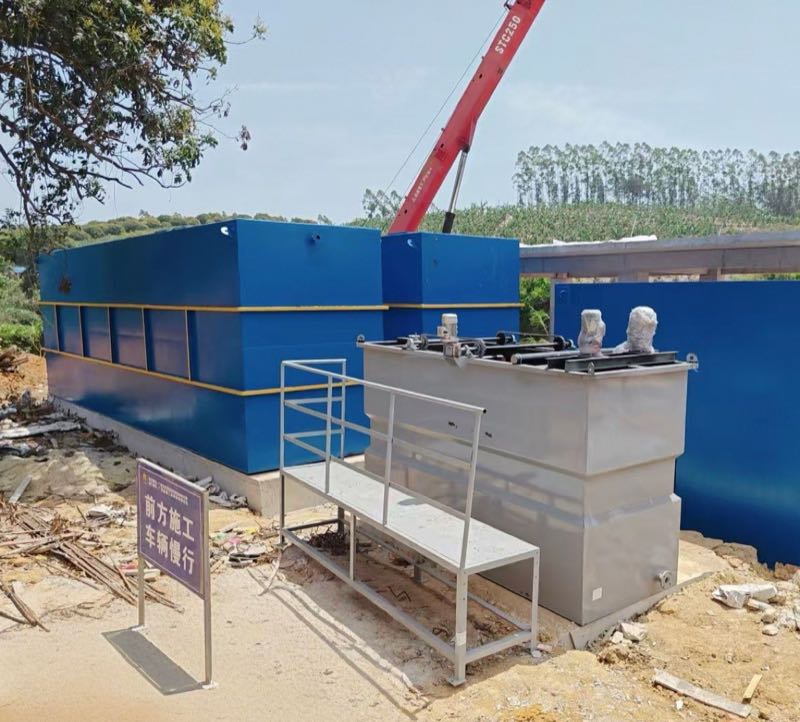
Municipal clients benefit from our Integrated Package Plants, which combine screening, biological treatment, and tertiary filtration into compact, prefabricated units. A 5,000 m³/day plant in Guangdong Province achieved Class 1A effluent standards (GB 18918-2002) with total nitrogen <15 mg/L and total phosphorus <0.5 mg/L—exceeding local environmental compliance requirements while occupying just 200 m². Smart water technology integration, including real-time monitoring of pH, turbidity, and flow, enabled predictive maintenance and 20% energy savings.
By deploying these solutions, HydropureWater bridges the gap between regulatory mandates and operational efficiency. Our projects demonstrate how targeted investments in wastewater treatment solutions and water reuse systems yield measurable improvements in effluent quality, resource recovery, and long-term cost savings—proving that sustainable water management is not just an environmental imperative but a strategic advantage.
Planning & Implementing Your Sustainable Water Project: A Step-by-Step Approach
Having established the technologies and their benefits, successful implementation requires a structured approach tailored to each facility's unique requirements.
A successful sustainable water management project begins with a structured planning phase that aligns technical solutions with operational and regulatory requirements. Below is a data-driven framework for implementation, optimized for industrial and municipal applications.
1. Needs Assessment & Feasibility Study
Start by quantifying baseline water usage, effluent quality, and regulatory limits. For industrial clients, conduct a water balance audit to identify reuse opportunities—HydropureWater's projects typically achieve 30–60% water recovery through targeted water reuse systems. Municipal systems should evaluate infrastructure age, hydraulic capacity, and non-revenue water losses (NRW), which average 15–30% in aging networks (EPA, 2023).
2. Technology Selection & System Sizing
Select treatment technologies based on effluent parameters and recovery goals. The table below compares key performance metrics for common industrial wastewater treatment solutions:
| Technology | TSS Removal (%) | COD Reduction (%) | Footprint (m²/1,000 m³/day) | Energy Use (kWh/m³) |
|---|---|---|---|---|
| Conventional Activated Sludge | 85–90 | 75–85 | 120–150 | 0.4–0.6 |
| MBR | 99+ | 90–95 | 80–100 | 0.8–1.2 |
| DAF | 90–95 | 50–70 | 50–70 | 0.2–0.3 |
| RO (for reuse) | 99+ | 95+ | 30–50 | 1.5–2.5 |
For precise sizing, refer to our Wastewater Treatment System Sizing Guide, which details hydraulic loading rates and contaminant mass balances.
3. Regulatory Compliance & Smart Monitoring
Align your project with local discharge standards (e.g., China's GB 8978-1996 or the U.S. Clean Water Act). Implement digital monitoring to track real-time effluent quality—our clients reduce compliance risks by 40% using predictive analytics. Learn how to integrate these systems in our guide on Environmental Compliance Through Digital Monitoring.
4. Operational Considerations
Prioritize modular designs for scalability and remote monitoring for O&M efficiency. For example, membrane bioreactors (MBRs) require 30% less operator intervention than conventional systems but demand specialized cleaning protocols. Compare MBR vs. activated sludge performance in our detailed analysis.
Real-World Impact: Benefits of Investing in Sustainable Water Solutions
These implementation steps lead to tangible benefits that extend beyond mere regulatory compliance.
Sustainable water management projects deliver measurable returns across financial, operational, and environmental dimensions. For industrial facilities, advanced wastewater treatment solutions reduce water intake by up to 40% through closed-loop water reuse systems, cutting procurement costs while minimizing discharge fees—particularly in regions with tiered pricing for effluent quality. Municipal clients report similar gains: a 2023 EPA study found that cities implementing smart water technology achieved 25% lower operational costs within three years, primarily through leak detection and demand forecasting.
Environmental compliance emerges as a key driver, with digital monitoring systems enabling real-time tracking of parameters like COD, BOD, and TSS. Our Environmental Compliance Through Digital Monitoring demonstrates how automated reporting reduces regulatory risk by 60%, while resource recovery initiatives—such as phosphorus extraction from sludge—generate additional revenue streams. For example, a textile manufacturer in Jiangsu Province recovered 12 tons of dye annually, offsetting 15% of treatment costs.
| Benefit Category | Quantifiable Impact | Industry Standard |
|---|---|---|
| Water Conservation | 30–50% reduction in intake | ISO 14046 Water Footprint |
| Cost Savings | $0.5–$2.0M/year (500,000 m³/year facility) | EPA Clean Water Act Compliance |
| Resource Recovery | 5–15% of treatment costs offset | EU Circular Economy Action Plan |
Beyond metrics, these projects enhance corporate reputation: 78% of consumers prefer brands with verified water stewardship programs (Nielsen, 2022). For communities, resilient municipal water infrastructure reduces service disruptions by 90% during droughts, while effluent quality improvements support local ecosystems. The tangible outcomes—from reduced chemical usage to energy-efficient MBR systems—position sustainable water management as a strategic investment rather than a regulatory obligation.
FAQs on Sustainable Water Management Projects

What technologies are most effective for industrial water reuse systems?
Membrane bioreactors (MBRs) and dissolved air flotation (DAF) systems lead industrial water reuse, achieving 90–98% effluent quality for non-potable applications. For high-strength wastewater, our MBR systems reduce footprint by 50% while meeting <5 mg/L BOD discharge limits. Pair these with reverse osmosis for 75% water recovery in manufacturing processes.
How do I calculate the right wastewater treatment system capacity?
Start with a 30-day flow composite sample, then apply a 1.2–1.5 safety factor for peak loads. Our sizing guide details how to match hydraulic loading (m³/hr) to biological oxygen demand (kg BOD/day). For municipal plants, design for 200–400 L/person/day with 30% infiltration allowance.
What are the key compliance metrics for effluent quality improvement?
| Parameter | Industrial Limit (mg/L) | Municipal Limit (mg/L) |
|---|---|---|
| BOD₅ | 30 | 25 |
| TSS | 50 | 30 |
| Nitrogen (as N) | 10 | 8 |
Digital monitoring systems reduce regulatory risk by 40% through real-time data logging—see our compliance guide for implementation steps.
Which industries benefit most from resource recovery in wastewater?
Food processing recovers 80% of organic waste as biogas, while semiconductor plants reclaim 95% of ultrapure water through ion exchange. Textile manufacturers reduce dye costs by 30% with color removal membranes. Equipment selection should prioritize industry-specific contaminants (e.g., heavy metals for metal finishing).
Begin your sustainable water management project with a 72-hour pilot test—our engineers validate system performance before full-scale deployment, ensuring your investment delivers measurable water savings from day one.