What is a Package Sewage Treatment Plant?
A package sewage treatment plant is a pre-engineered, modular wastewater treatment system designed for compact, decentralized applications. These self-contained units efficiently process domestic or industrial sewage using biological and physical-chemical methods, offering significant advantages in installation speed, footprint, and operational simplicity compared to conventional, custom-built plants. Capacities range from small residential units (e.g., 11 m³/day) to large commercial systems (e.g., 7570 m³/day). Unlike traditional infrastructure that requires extensive onsite civil engineering and concrete pouring, these systems are prefabricated in a factory environment and shipped as ready-to-integrate modules.
Package plants provide high-quality wastewater treatment in areas where connection to a central municipal sewer line is technically impossible or economically unfeasible. By integrating primary clarification, biological aeration, secondary sedimentation, and disinfection into a single or series of interconnected tanks, these systems achieve high pollutant removal rates within a minimal spatial requirement. Key benefits include a compact footprint, rapid deployment—often measured in weeks rather than months—and reduced long-term operational costs due to standardized components. Package plants are used in residential communities, hotels, industrial factories, and remote mining or construction sites where reliable, onsite sewage treatment is a regulatory necessity.
Key Technologies & Processes in Package Plants
Biological treatment efficiency in package plants is primarily determined by the oxygen transfer rate and the biomass concentration maintained within the reactor to stabilize organic matter. Most modern systems utilize aerobic processes where aerobic bacteria decompose organic pollutants (BOD and COD) into carbon dioxide, water, and new microbial cells. The selection of technology depends heavily on the required effluent quality and the available footprint for the installation.
Extended Aeration (EA) is a common variation of the activated sludge process used in package plants. It operates with a high sludge age (Mean Cell Residence Time) and low organic loading, which results in a highly stable process capable of handling fluctuating organic loads. EA systems are particularly advantageous for smaller flows because they produce less waste sludge and are simpler to operate, typically achieving BOD5 and TSS removal efficiencies exceeding 95%. For projects requiring nitrogen removal, Anoxic/Aerobic (A/O) Biological Contact Oxidation is often employed. This process integrates an anoxic zone where nitrates are converted to nitrogen gas, a feature standard in the HydropureWater WSZ series underground integrated sewage treatment plant, which utilizes fixed-film media to increase biomass density.
For sites with extreme space constraints or stringent reuse requirements, MBR (Membrane Bioreactor) technology represents the current gold standard. By replacing the secondary clarifier with a microfiltration or ultrafiltration membrane, an integrated MBR membrane bioreactor system can maintain much higher Mixed Liquor Suspended Solids (MLSS) concentrations—often 8,000 to 12,000 mg/L compared to 3,000 mg/L in conventional systems. This results in a footprint reduction of up to 50% and an effluent quality suitable for non-potable reuse. To understand the trade-offs between these approaches, engineers should evaluate a comparison of MBR vs extended aeration regarding costs and effluent quality.
| Technology Type | BOD5 Removal (%) | TSS Removal (%) | Nutrient Removal (N/P) | Relative Footprint |
|---|---|---|---|---|
| Extended Aeration (EA) | 90-95% | 90-95% | Low (Moderate Nitrification) | Medium |
| A/O Contact Oxidation | 95-97% | 95% | High (Denitrification) | Compact |
| Membrane Bioreactor (MBR) | >98% | >99% | Very High | Very Compact |
| SBR (Sequencing Batch Reactor) | 90-96% | 90-95% | Moderate to High | Medium |
Beyond the biological core, package plants often incorporate automatic chemical dosing systems for phosphorus precipitation or pH adjustment, and disinfection stages such as a Chlorine Dioxide Generator for disinfection to ensure the final effluent meets pathogen limits before discharge.
Applications & Capacity Ranges for Package Sewage Plants
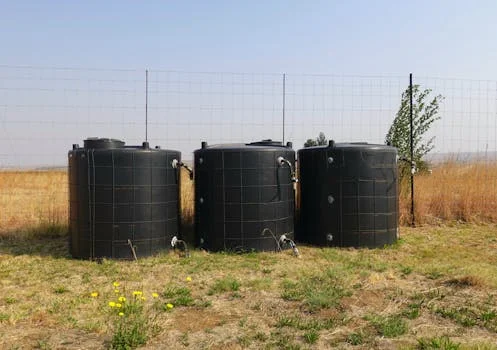
Package sewage treatment plants are used in various sectors, including residential, commercial, and industrial applications. Capacity requirements are calculated based on Average Daily Flow (ADF) and Peak Hourly Flow (PHF) to prevent hydraulic washout of the biological solids during high-use periods. The versatility of package plants makes them suitable for small commercial establishments and large-scale industrial parks.
Typical capacity ranges vary by manufacturer and technology. Small commercial systems often start at approximately 11 m³/day (3,000 GPD) and can scale up to 946 m³/day (250,000 GPD) in single-train configurations. Larger modular systems can reach 7,570 m³/day (2,000,000 GPD) by utilizing multiple parallel trains. For example, the HydropureWater WSZ series offers capacities from 1 to 80 m³/h (24 to 1,920 m³/day), making it suitable for a wide range of rural and industrial applications. When planning international projects, procurement specialists must consider regional variations, such as package wastewater treatment plant options in Uzbekistan or the specific regulatory environment for a package wastewater treatment plant in Canada.
| Application Sector | Typical Flow Range (m³/day) | Primary Pollutants | Recommended Technology |
|---|---|---|---|
| Hotels & Resorts | 50 - 500 | BOD, Fats/Oils, Detergents | MBR or A/O Oxidation |
| Remote Mining Camps | 20 - 200 | High Strength Domestic Sewage | Extended Aeration (EA) |
| Industrial Factories | 10 - 1,000 | BOD, COD, Variable pH | A/O with automatic chemical dosing systems |
| Residential Subdivisions | 100 - 2,000 | Standard Domestic Influent | SBR or EA |
| Hospitals & Clinics | 30 - 300 | Pathogens, Pharmaceuticals | MBR with advanced disinfection |
Selection of the appropriate capacity must also account for the Population Equivalent (PE). In most jurisdictions, a single PE is calculated at 150-200 liters per day. However, for industrial sites, the "industrial load" (BOD concentration) may be significantly higher than domestic sewage, necessitating a larger biological reactor even if the hydraulic flow remains low.
Essential Considerations for Choosing a Package Sewage Treatment Plant
Effluent discharge limits for Total Nitrogen (TN) and Total Phosphorus (TP) often dictate whether a package plant requires advanced tertiary filtration or integrated anoxic zones. Compliance with local regulations—such as the EPA standards in the United States, the EU Urban Waste Water Directive 91/271/EEC, or WHO guidelines for irrigation reuse—is the most critical baseline for any procurement decision. If the goal is water reclamation for cooling towers or landscaping, an MBR system is often required to ensure the turbidity and pathogen levels remain consistently low. Engineers should specifically check package wastewater treatment plant options in Massachusetts or package wastewater treatment plant options in Tennessee for examples of how state-level nitrogen limits influence equipment selection.
Influent characteristics are equally important. High-strength wastewater with elevated BOD/COD or specific industrial contaminants requires a more robust biological process or pre-treatment stages (like DAF or grease traps). If the influent temperature is consistently low, biological activity slows down, potentially requiring larger tank volumes or insulation. Site constraints such as available footprint, noise sensitivities, and odor control also play a role. Buried or underground systems, like the WSZ series, are ideal for hotels or residential areas where aesthetic impact and odor must be minimized.
Operational simplicity and automation levels significantly impact the Total Cost of Ownership (TCO). A system with a high level of automation reduces the need for a full-time onsite operator, which is often the largest O&M expense. Modern package plants should feature PLC-based control systems that manage aeration cycles, sludge wasting, and chemical dosing automatically. Finally, consider modularity; as a facility grows, the ability to add a second or third treatment train in parallel allows for scalable investment without replacing the entire initial system.
How to Select a Reliable Package Sewage Treatment Plant Manufacturer
Manufacturing tolerances for prefabricated steel or FRP tanks must adhere to structural standards such as AWWA or ISO to ensure a service life exceeding 20 years in corrosive wastewater environments. A manufacturer's technical track record and the breadth of their installed base are critical criteria. A manufacturer with decades of experience is more likely to have refined their tank internals and aeration headers to prevent common issues like "dead zones" or diffuser fouling.
Customization capability is another differentiator. A reputable supplier will request detailed influent data and site conditions to customize the internal media, aeration rates, and chemical dosing logic. They should also provide comprehensive documentation, including P&IDs (Piping and Instrumentation Diagrams), electrical schematics, and detailed O&M manuals. For those focused on membrane technology, evaluating the MBR system for sewage cost price and ROI is essential to ensure the technology fits the project's financial profile.
Compliance and after-sales support are the final pillars of selection. Verify that the manufacturer holds relevant certifications and can assist with the permitting process. Robust after-sales support, including the availability of spare parts (like blowers, pumps, and membranes) and remote technical assistance, is vital for minimizing downtime. In markets with high regulatory oversight, such as MBR wastewater treatment systems in Germany, the manufacturer's ability to guarantee effluent performance is a non-negotiable requirement. For a deeper look at procurement metrics, refer to this guide on prefabricated wastewater plant manufacturer specs and ROI.
Frequently Asked Questions
What is the average lifespan of a package sewage treatment plant?
With proper maintenance, a high-quality package plant typically lasts 20 to 25 years. Steel tanks require specialized epoxy coatings to prevent corrosion, while FRP (Fiber Reinforced Polymer) tanks offer inherent corrosion resistance. Mechanical components like blowers and pumps usually require replacement or overhaul every 5 to 7 years.
Can package plants treat industrial wastewater, or are they only for domestic sewage?
While originally designed for domestic sewage, package plants can treat industrial wastewater provided the pollutants are biodegradable. High-strength industrial waste often requires a customized