A package wastewater treatment plant in Canada is a factory-built, skid-mounted or buried unit that treats domestic or light industrial sewage where no municipal sewer exists. Typical packaged capacities run from about 1–80 m³/h (roughly 1–200 m³/day), using A/O, MBBR, or MBR process trains. Effluent targets commonly sit near 90–95% BOD and TSS removal when the plant is sized for the design load and operated within its rated temperature band.
What Is a Package Wastewater Treatment Plant?
A package wastewater treatment plant is a factory-built unit that combines primary, secondary, and often tertiary treatment in one enclosure. Typical Canadian capacities run 1–200 m³/day under PLC control, buried or above grade. Factory assembly replaces months of cast-in-place concrete with weeks of set, pipe, and commission after FAT.
Compared with site-built concrete works, packaged systems reduce excavation volume and allow modular add-ons when flow grows. Continuous on-site operators are usually unnecessary for standard domestic loads when alarms and remote monitoring are specified correctly. Most plants we size for camps and lodges sit at the lower end of that capacity band.
Core Technologies in Canadian Package Plants
Canadian packaged sewage plants typically use one of three biological trains: A/O, MBBR, or MBR. Process choice follows influent strength, winter temperature, reuse goals, and capital budget rather than brand preference.
The A/O (Anoxic/Aerobic) process sequences anoxic and aerobic zones for denitrification and carbon oxidation. On domestic sewage at design load, A/O package units commonly deliver 90–95% BOD and TSS removal to below about 20 mg/L when HRT and aeration are set for cold-weather kinetics. The HydropureWater WSZ series uses this layout with integrated settling and disinfection for rural and seasonal Canadian sites.
MBBR (Moving Bed Biofilm Reactor) systems retain biofilm on high-surface-area plastic carriers. The attached growth holds inventory through organic spikes and often maintains treatment when mixed liquor temperatures drop, which matters for mining camps and northern lodges with wide influent swings.
MBR (Membrane Bioreactor) couples activated sludge with PVDF membrane filtration. Permeate typically shows particles below 1 μm and BOD/TSS often below 5 mg/L under stable operation, supporting reuse or tight discharge points. Footprint can be up to 60% smaller than a conventional secondary plant of equal capacity, but membranes need freeze protection, insulation, or heated buildings in sub-zero service.
For cold-climate resilience without membrane heaters, MBBR and A/O usually need less protective infrastructure than MBR. Where reuse or ultra-low solids drive the permit, MBR remains the tighter process despite the higher winterization cost.
| Technology | Effluent Quality (BOD/TSS) | Cold Climate Resilience | Footprint | Relative Cost Factor |
|---|---|---|---|---|
| A/O (Anoxic/Aerobic) | Good (90-95% removal, <20 mg/L) | High (less sensitive) | Medium | Standard |
| MBBR (Moving Bed Biofilm Reactor) | Very Good (90-95% removal, <20 mg/L) | High (biofilm protects bacteria) | Medium | Standard to Medium |
| MBR (Membrane Bioreactor) | Excellent (<5 mg/L, <1 μm) | Moderate (requires freeze protection) | Smallest (up to 60% less) | High (25-40% more than A/O/MBBR) |
Projects that need a buried, automated A/O train can evaluate the Underground Package Sewage Treatment Plant (WSZ Series) against site flow, frost depth, and permit limits.
Design and Installation: Factory-Built vs Field-Assembled
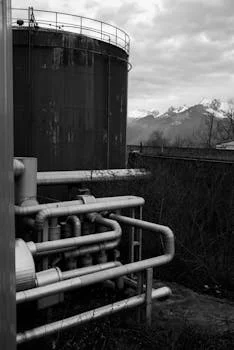
Factory-built packaged plants arrive pre-piped, pre-wired, and FAT-tested, which typically cuts on-site labour and commissioning time by about 40–60% versus field assembly. Buried tanks gain soil cover as insulation through Canadian winters and free the surface for landscaping or snow storage. Skid-mounted layouts suit temporary mining camps, disaster staging, or seasonal resorts that may relocate later.
Field-built concrete plants still fit large municipal works, but they often carry 30–50% higher upfront civil cost from formwork, pours, and longer schedules. Most plants we install for 10–50 m³/day camps stay factory-built unless rock excavation or odd hydraulics force a hybrid layout.
Compliance and Certification Standards in Canada
NSF/ANSI Standard 40 Class 1 certification is commonly required for residential systems in Alberta and is widely used elsewhere as a performance benchmark. Earlier guidance cited Class 1 effluent below 30 mg/L for both BOD and TSS; many Canadian package buyers still specify below 20 mg/L BOD and TSS for margin on provincial permits.
Provincial rules still govern onsite systems: British Columbia applies its Onsite Wastewater Management Regulation, and Ontario applies O. Reg. 374/22 for sewage systems. For larger discharges to fish-bearing waters, the federal Fisheries Act and the Wastewater Systems Effluent Regulations (WSER) may also apply.
According to Environment and Climate Change Canada (2024), WSER applies at an average influent of 100 m³/day or more. The discharge must reach fish-bearing waters, or a place that may reach them. Average carbonaceous BOD must stay ≤25 mg/L and suspended solids ≤25 mg/L. Total residual chlorine average must stay ≤0.02 mg/L, and un-ionized ammonia must stay below 1.25 mg/L as N. WSER does not apply in Nunavut, the Northwest Territories, or north of the 54th parallel in Québec or Newfoundland and Labrador. Equivalency arrangements cover Yukon and certain Québec systems.
Sensitive watersheds or reuse permits may need added disinfection. A modular HydropureWater's chlorine dioxide disinfection system can be paired with the package train when residual pathogen or colour limits tighten.
Cost Comparison by Capacity and Technology
Installed cost for Canadian packaged plants tracks capacity, process train, winterization, and automation depth. The ranges below are equipment-centric budget bands in CAD for typical domestic-strength sewage; civil works, freight to remote sites, and GST/HST sit outside them.
- 1–10 m³/day systems: These units typically range from $25,000–$50,000 CAD for A/O or MBBR technologies. They are ideal for remote cabins, small lodges, or clinics with lower flow rates.
- 10–50 m³/day systems: For small municipalities, resorts, or industrial pre-treatment, costs generally fall between $80,000–$180,000 CAD, primarily for MBBR or MBR systems.
- 50–80 m³/day systems: Larger installations in this range can cost from $200,000–$350,000 CAD, often incorporating MBR or larger A/O configurations, and include comprehensive automation, disinfection, and advanced control panels.
MBR packages typically cost 25–40% more than comparable A/O or MBBR units because of membranes, spare modules, and cleaner systems. Standardized A/O packages can land about 30–50% below many imported MBR quotes when reuse-grade effluent is not required. For broader plant cost context, see the 2025 wastewater treatment plant cost pricing guide.
| Capacity Range (m³/day) | Typical Technologies | Estimated Cost Range (CAD) | Primary Application |
|---|---|---|---|
| 1–10 | A/O, MBBR | $25,000–$50,000 | Remote cabins, small lodges, clinics |
| 10–50 | MBBR, MBR | $80,000–$180,000 | Small municipalities, industrial pre-treatment |
| 50–80 | MBR, Large A/O | $200,000–$350,000 | Larger facilities, advanced treatment needs |
How much does upgrading a package sewage plant cost?
Upgrade cost for a package sewage plant usually runs 40–100% of a comparable new package price when tanks stay reusable and only process internals, controls, or disinfection change. Full train replacement with new tanks and winterization often approaches new-build pricing once freight and crane time to a remote Canadian site are included. Scope the permit gap first: moving from septic-quality effluent to WSER-class CBOD/SS limits drives different equipment than a simple blower or screen swap.
What drives package treatment plant sewage costs?
Package treatment plant sewage costs rise fastest with design peak flow, cold-climate insulation or heat tracing, membrane inventory, and remote-site logistics. Influent with fats, oils, or industrial toxins adds pretreatment such as screening or DAF before biology. Automation, telemetry, and redundant blowers raise capital but cut operator hours on unmanned sites.
Choosing the Right System: Decision Framework
Canadian package-plant selection should follow the permit and the winter climate, not a brochure feature list. For standard secondary discharge in cold rural or seasonal service, an A/O package such as the HydropureWater WSZ series fully automated underground sewage treatment unit is usually the lower-risk default. High load variability or industrial spikes point toward MBBR. Choose MBR integrated wastewater treatment systems when reuse, sub-5 mg/L solids, or severe footprint limits justify membrane OPEX.
Use this short selection checklist before issuing an RFQ:
- Design average and peak flow in m³/day, plus seasonal occupancy swings.
- Influent BOD, TSS, TKN, FOG, and any industrial toxins.
- Discharge or reuse limits, including provincial onsite rules and possible WSER triggers at ≥100 m³/day.
- Frost depth, bury vs skid preference, and available power reliability.
- Operator availability: quarterly visit versus daily staffed plant.
- Sludge hauling distance and disposal fees.
- Expansion path if camp or lodge occupancy may double within five years.
Who This Is For / Next Step
This guide suits EPC firms, camp operators, resort owners, and municipal staff sizing decentralized plants from roughly 1–80 m³/day in Canadian climates. Buyers who need large municipal secondary works above a few thousand m³/day, or who only need a simple septic tank, should look at different plant classes. If you already have flow and effluent limits, request a sized proposal through our request-quote form with design flow, BOD/TSS targets, and site province.
Frequently Asked Questions
What is the typical service life of a packaged sewage plant in Canada?
A packaged sewage plant in Canada typically lasts 20–25 years when tanks, blowers, and controls receive scheduled service. Steel or composite shells, diffuser replacement, and electrical upgrades usually set the life limit rather than the biology. Buried units protected from UV and freeze–thaw often reach the upper end of that range. Budget membrane module swaps earlier if the plant uses MBR.
Can packaged plants operate in freezing temperatures?
Yes, packaged plants can operate in freezing temperatures when biology stays above process design temperature and hydraulics do not freeze. Buried A/O or MBBR units use soil cover as insulation; above-grade skids need insulation, heat tracing, and sometimes enclosure heaters. MBR plants need extra membrane freeze protection compared with media or suspended-growth A/O trains. Most northern sites we size keep blowers indoors and alarm low mixed-liquor temperature.
Do I need a permit for a packaged sewage plant in Canada?
Yes, provincial and municipal approvals are required for packaged sewage plants in Canada. NSF/ANSI 40 Class 1 certification often speeds residential reviews in Alberta and is accepted as evidence of performance in other provinces. Systems averaging 100 m³/day or more that discharge to fish-bearing waters may also fall under federal WSER monitoring and reporting. Confirm both the onsite sewage approval and any federal trigger early in design.
How much maintenance do these systems require?
Fully automated packaged plants generally need quarterly inspections and annual servicing for blowers, diffusers, and sludge wasting. A/O and MBBR trains usually need less routine work than MBR systems, which add membrane cleaning and periodic module replacement. Remote telemetry cuts emergency call-outs when high-level and DO alarms are configured. Keep a local sludge hauler under contract before commissioning.
Are packaged plants suitable for industrial wastewater?
Yes, packaged plants can treat many industrial wastewaters after adequate pretreatment such as screening or DAF for solids and FOG. Domestic-strength process sewage fits standard A/O or MBBR packages; high-toxicity or highly variable chemical waste needs a treatability study first. HydropureWater can integrate rotary screens and chemical dosing upstream of the biological package when the influent profile requires it. Never feed untreated solvent or extreme pH streams straight to the bioreactor.