
Why Dundee plastics and rubber factories need a different clarification strategy
Dundee, Michigan sits inside a polymer-processing corridor that includes extrusion, injection molding, and rubber compounding operations, all of which generate a mixed stream of floating latex, plasticizer emulsions, polymer fines, and dense mineral fillers (calcium carbonate, talc, carbon black) that settle. That dual character — half the load floats, half sinks — is the reason a generic "buy a clarifier" recommendation falls apart for this industry. Effluent swings batch-to-batch as hot wash water, purge compounds, and spent mold-release fluids rotate through the drains, and a single technology rarely covers the full envelope.
DAF units are the only mainstream clarifier that handle both fractions in one vessel: micro-bubbles (30–50 µm) lift floatables while a bottom auger pulls settled solids out the same tank (per Clearwater/SigmaDAF, 2026-04). The compliance anchor for any Dundee plant is EPA 40 CFR Part 414 (Plastics and Synthetic Materials Manufacturing), which sets categorical pretreatment limits for BOD, TSS, O&G, COD, and pH. On top of that, the Monroe County sewer-use ordinance and Great Lakes Basin water-quality expectations push plants toward strict, low-level discharge — especially for oil and grease, where Dundee-area POTWs typically enforce ≤250 mg/L. A clarification strategy that ignores the chemistry of plastics/rubber effluent will pass neither the federal categorical test nor the local sewer-use test.
Effluent characteristics: what you actually need to remove
The right technology follows the contaminant density, not the brand. Plastics and rubber streams split cleanly into floatables and settleables, and each demands a different physical mechanism.
Latex emulsions and polymer dispersions (0.1–10 µm droplets) have specific gravity near or below water and essentially never settle on their own; they are the textbook DAF target. Plasticizers — phthalates, adipates, epoxidized soybean oil — and mold-release agents share that low density and are captured by DAF micro-bubbles once destabilized. On the other end, carbon black, talc, calcium carbonate, and TiO₂ have specific gravities of 2.5–4.3 and settle readily under Stokes' law, making them natural candidates for a gravity or lamella clarifier. The trouble is that most Dundee plants discharge a mix of both, and the ratio shifts by shift.
Two contaminant classes sit outside the DAF-vs-clarifier choice. Volatiles — styrene, vinyl chloride, acrylate monomers — will not be removed by either physical separator and require biological polishing, carbon adsorption, or air stripping downstream. Washwater temperature also matters: typical plastics/rubber wash runs 40–60 °C, and DAF saturation efficiency drops as water temperature rises because warmer water holds less dissolved air, so saturation pressure or recirculation ratio has to be sized for the hot case.
| Contaminant class | Typical particle/ droplet size | Specific gravity | Dominant removal mechanism | Best-fit technology |
|---|---|---|---|---|
| Latex / polymer emulsion | 0.1–10 µm | 0.95–1.02 | Bubble attachment, float | DAF |
| Plasticizer / mold-release oil | 1–50 µm droplets | 0.90–1.00 | Bubble attachment, float | DAF |
| Polymer fines / flash | 10–500 µm | 0.92–0.98 | Bubble attachment, float | DAF |
| Carbon black / TiO₂ | 1–100 µm | 2.5–4.3 | Gravity settling | Lamella clarifier |
| Talc / CaCO₃ filler | 5–200 µm | 2.6–2.8 | Gravity settling | Lamella clarifier |
| Styrene / acrylate monomers | Dissolved VOC | ~0.9 (liq) | Air stripping, biodegradation | Biological / carbon (post-treatment) |
DAF vs gravity/lamella clarifier: head-to-head mechanics
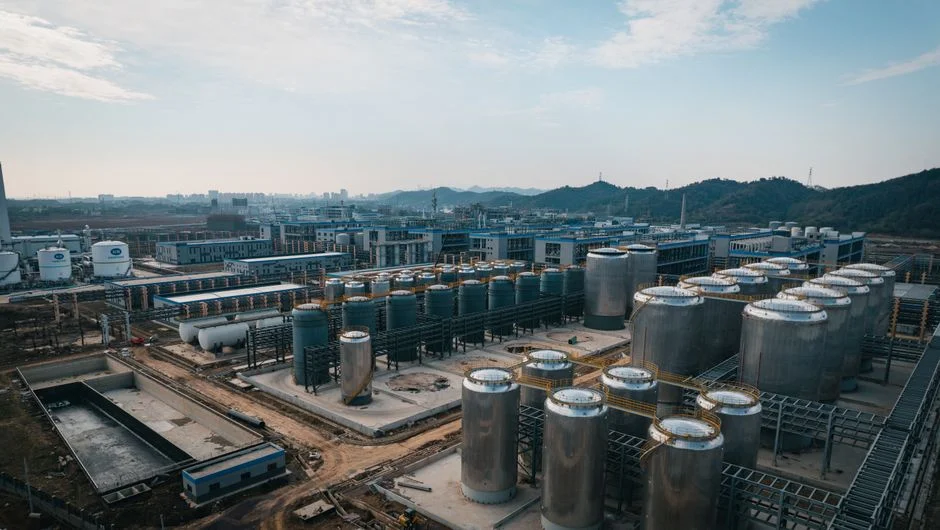
DAF and lamella clarifiers solve different physics problems, and a Dundee plant manager should choose based on which physics applies more often. In a DAF unit, saturated water at 4–6 bar is depressurized through needle valves or nozzles, releasing 30–50 µm micro-bubbles that nucleate on flocculated particles. The bubble-particle aggregate has effective density below water and rises in 3–8 minutes; a paddle skimmer scrapes the float into a trough, and a bottom auger removes any heavy solids that settle (per Clearwater/SigmaDAF, 2026-04). The result is high removal (typically 90–95% TSS, 95%+ FOG) of material that cannot be made to settle.
A lamella or conventional gravity clarifier works on Stokes' law: discrete particles fall through a quiescent zone, and inclined plates at 55–60° shorten the effective settling distance so surface loading rates reach 20–40 m³/m²/h. It is a passive, low-energy device, but it only removes particles that will actually settle — colloids, emulsified oils, and sub-50 µm fines pass through largely untouched.
DAF requires upstream chemical conditioning: coagulant (alum, PAC, or FeCl₃) plus anionic or cationic flocculant plus pH adjustment, mixed in serpentine tubes or contact tanks with a 15–45 second flash mix (per Clearwater, 2026-04). That conditioning destabilizes latex emulsions, which is the trade-off for handling the floatable fraction. The reward is sludge character: DAF float is thick (3–6% dry solids), drier than clarifier underflow, and often dewaterable without further conditioning — useful for plasticizer-laden sludge. The operational gotcha is that DAF needs clean water for start-up to pressurize the recirculation loop; if a Dundee plant idles between batches, the unit must be re-pressurized with clear water before resumed feeding (per Clearwater, 2026-04).
| Parameter | DAF | Lamella / gravity clarifier |
|---|---|---|
| Bubble/settling mechanism | 30–50 µm micro-bubbles attach to flocs | Inclined plates, Stokes settling |
| Surface loading rate | 5–25 m³/m²/h | 20–40 m³/m²/h |
| Hydraulic residence time | 15–30 min | 1–2 h |
| Typical TSS removal | 85–95% | 50–80% (settleables only) |
| Typical FOG removal | 90–95%+ | 20–40% (carryover only) |
| Chemical conditioning | Required (coagulant + flocculant) | Optional (often none) |
| Sludge form | Thick float, 3–6% DS | Thinner underflow, 1–3% DS |
| Start-up requirement | Clean water for pressurization | None |
| Footprint (per m³/h) | Small (skid) | 2–3× larger |
For Dundee facilities evaluating equipment, a dissolved air flotation system covers the floatable-dominant case, while a HydropureWater lamella clarifier is the better match when the stream is dominated by heavy mineral fillers.
Compliance: EPA 40 CFR Part 414 and Dundee, US pretreatment limits
EPA 40 CFR Part 414 categorical limits set the federal floor for plastics and synthetic materials manufacturers: BOD₅, TSS, O&G, COD, and pH are all regulated, and DAF effluent — typically 85–95% TSS and 90–95% O&G reduction — clears these limits in the majority of plastics/rubber streams (per EPA 40 CFR Part 414). The Monroe County POTW sewer-use ordinance layers additional local limits on top, and the commonly enforced ceiling is ≤250 mg/L O&G and ≤250 mg/L TSS at the discharge manhole. For a Dundee plant whose raw effluent runs 1,500–3,000 mg/L TSS, that local ceiling decides the technology: only DAF, or a DAF-primary/lamella-polish train, reliably gets inside the Monroe County envelope.
If the stream contains VOCs (styrene, acrylates, residual monomers), DAF and lamella both leave those untouched — neither floating nor settling strips volatiles, and the dissolved load still meets Monroe County's VOC-based local limits only with biological treatment or carbon adsorption downstream. That is a separate unit-process decision and is outside the DAF-vs-clarifier scope. For zero-discharge Dundee plants, the float from DAF and the underflow from a lamella both need dewatering on a plate and frame sludge filter press before reuse or landfill, and chemical conditioning upstream is best controlled by a HydropureWater automatic chemical dosing system.
2026 selection matrix: when to pick DAF, clarifier, or both
The selection rule is straightforward once the contaminant density is mapped. If more than 60% of the suspended load is floatable — latex, plasticizer, polymer fines — DAF alone is the right call, and the micro-bubble mechanism is the dominant removal step. If more than 70% of the suspended load is dense mineral filler (CaCO₃, talc, carbon black) with negligible FOG, an inclined-plate lamella clarifier is the more cost-effective choice and the absence of chemical conditioning simplifies operations. A lamella unit on a filler-only stream typically saves 30% on coagulant cost (per HydropureWater product spec, 2026).
Most Dundee plants do not live at either extreme. Two hybrid configurations cover the mixed-stream case. The first — DAF primary, lamella polish — handles streams where the DAF float carries fines that escape with the effluent; the lamella polishes residual TSS below 50 mg/L. The second — clarifier primary, DAF polish — fits high-temperature washwater where the bulk solids settle easily but carryover oils and plasticizers need a final bubble pass to clear the Monroe County O&G ceiling.
Construction material is the second decision. Polypropylene or 316SS is required for plasticizer-, solvent-, or styrene-bearing compounds because phthalates and aromatic monomers attack 304SS over time. 304SS is acceptable for inert polymer wash water with no aggressive organics. Skid selection should also consider batch operation: a plant that shuts down between shifts should pick a DAF design that re-pressurizes quickly with a small clear-water reservoir.
| Stream profile (fines are total TSS) | Recommended primary | Recommended polish | Rationale |
|---|---|---|---|
| >60% floatable (latex, plasticizer, fines) | DAF | None (or sand filter) | Micro-bubbles lift floatables; DAF is the dominant mechanism |
| >70% dense mineral filler, low FOG | Lamella clarifier | None | Settles readily; saves coagulant and CAPEX |
| Mixed fines + floatables, FOG > 200 mg/L | DAF | Lamella clarifier | DAF pulls floatables + FOG; lamella polishes residual TSS |
| High-T washwater with carryover oils | Lamella clarifier | DAF | Bulk solids settle; DAF polish removes residual FOG to <100 mg/L |
2026 cost and footprint comparison for Dundee plants
Capital cost favors lamella; footprint and sludge handling favor DAF. A DAF skid in the 4–300 m³/h range (13 standard DAF models) typically runs $25,000–$180,000 installed in 2026, with the smaller skids landing near $25,000 and the 200–300 m³/h units near the upper end. A comparable lamella clarifier is roughly 30–40% cheaper on CAPEX at equivalent flow because there is no saturation loop, no skimmer, and no flash-mix chemistry train. The trade-off is real estate: a lamella needs 2–3× the floor area of a DAF skid at the same flow, and Dundee industrial-park lots rarely have spare square footage.
OPEX has three drivers. First, polymer dose: DAF tolerates lower flocculant doses when the influent is floatable, but destabilizing a stubborn latex emulsion can spike polymer consumption to 5–15 mg/L; lamella clarifiers on a filler-only stream can save up to 30% on coagulant. Second, sludge disposal: DAF float exits at 3–6% dry solids versus 1–3% for clarifier underflow, so haul weight to a Monroe County landfill drops by 30–50%, a real line-item savings. Third, energy: DAF recirculation pump adds 0.5–2 kWh/m³; for a 50 m³/h plant running two shifts, that is 200–800 kWh/day, or roughly $3,000–$12,000/year at Michigan industrial rates, against zero pumping energy for a passive lamella. A 2026 cash-flow comparison for a typical 50 m³/h Dundee plant shows DAF with a 1.5–2.5 year payback on sludge-hauling savings alone when the stream is floatable-dominant.
| Cost driver (2026, 50 m³/h) | DAF skid | Lamella clarifier |
|---|---|---|
| Installed CAPEX | $90,000–$130,000 | $55,000–$90,000 |
| Footprint | ~8–12 m² (skid) | ~20–35 m² |
| Polymer/coagulant OPEX | $8,000–$15,000/yr | $5,500–$10,000/yr (filler-only) |
| Sludge hauling | Lower (3–6% DS float) | Higher (1–3% DS underflow) |
| Energy (recirc. pump) | 0.5–2 kWh/m³ | Negligible |
| Typical payback vs. baseline | 1.5–2.5 yr (floatable-dominant) | 1–2 yr (filler-dominant, space available) |
For Dundee plants short on floor space and long on floatable load, a dissolved air flotation system is the cost-effective answer. For filler-heavy streams on a generous lot, a HydropureWater lamella clarifier wins on first cost.
Implementation checklist for Dundee plastics and rubber plants
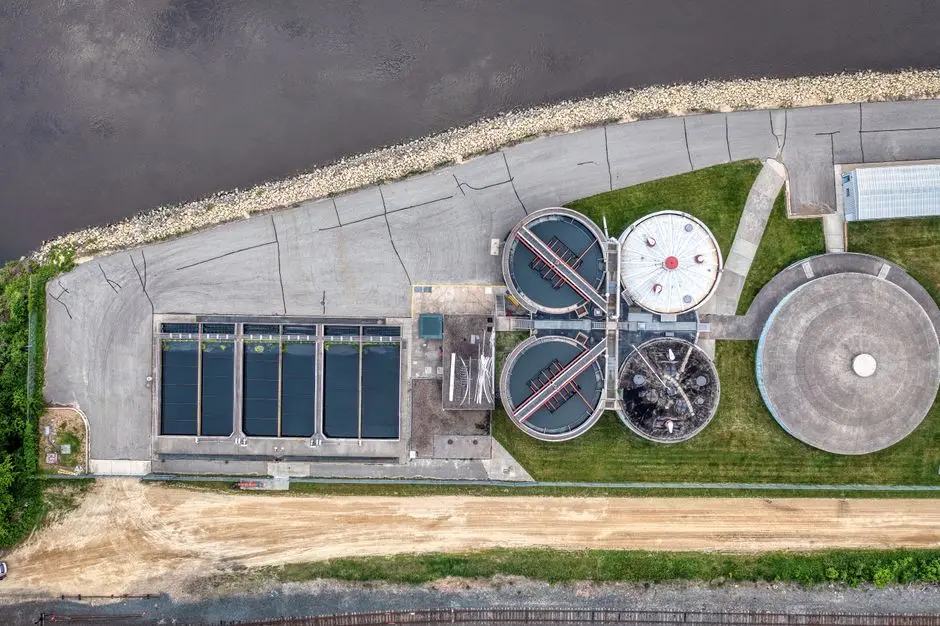
Five steps take a Dundee plant from jar test to commissioning without re-work.
- Composite-sample jar testing. Run DAF bench tests and settling tests on three production shifts to map contaminant variability; do not rely on a single grab sample because hot wash and purge batches swing TSS by 3–5×.
- Confirm 40 CFR Part 414 and Monroe County constraints. Walk the categorical limits and the local sewer-use ordinance with a Michigan-licensed environmental consultant before equipment selection; local limits often override federal minimums.
- Select construction material. Specify 304SS for inert polymer wash, 316SS or polypropylene for plasticizer-, solvent-, or styrene-bearing streams.
- Size chemical conditioning. Pick coagulant (alum, PAC, or FeCl₃) plus anionic or cationic flocculant from jar data; DAF requires 15–45 second flash mix in serpentine tubes or contact tanks before the flotation cell, dosed via an HydropureWater automatic chemical dosing system.
- Plan sludge handling. Route DAF float or clarifier underflow to a plate and frame sludge filter press for dewatering to 25–35% DS, then landfill or thermal disposal.
For comparable process context, see our DAF vs lamella clarifier for mining wastewater analysis, and for chemical program design reference our coagulant dosing selection for industrial wastewater guide.
Frequently Asked Questions
When should a Dundee plastics or rubber plant pick DAF over a lamella clarifier?
Choose DAF when more than 60% of the suspended load is floatable — latex emulsions, plasticizers, polymer fines, and oils with specific gravity below 1.0 — because 30–50 µm DAF micro-bubbles lift material that will not settle under Stokes' law in a lamella clarifier (per Clearwater/SigmaDAF, 2026-04). A typical DAF delivers 90–95% FOG and 85–95% TSS removal on these streams.
Does DAF alone meet EPA 40 CFR Part 414 categorical limits for plastics manufacturing wastewater?
In most cases, yes — DAF effluent routinely meets 40 CFR Part 414 categorical limits for BOD, TSS, O&G, COD, and pH, with Monroe County's local sewer-use ordinance adding a stricter ceiling of ≤250 mg/L O&G and ≤250 mg/L TSS at discharge. VOC-bearing streams (styrene, acrylates) are not removed by DAF and require biological polishing or carbon adsorption.
What is the 2026 CAPEX difference between a DAF skid and a lamella clarifier in Dundee, Michigan?
A DAF skid in the 4–300 m³/h range (13 DAF models) installs at $25,000–$180,000 in 2026; a comparable lamella clarifier runs 30–40% lower CAPEX but needs 2–3× the floor area. DAF float exits at 3–6% dry solids versus 1–3% for clarifier underflow, cutting Monroe County landfill hauling cost by 30–50% and typically paying back the higher first cost in 1.5–2.5 years on floatable-dominant streams.
Why does washwater temperature matter for DAF design in a plastics plant?
Plastics and rubber washwater typically runs 40–60 °C, and DAF saturation efficiency drops as temperature rises because warmer water holds less dissolved air at a given pressure. Dundee plants must oversize the saturation pressure or recirculation ratio for the hot case, or specify a cooler equalization tank upstream of the DAF.