Why Thiès Resorts Need Their Own Wastewater System in 2026
Thiès is Senegal's third-largest city, with a metro population of approximately 400,000 residents, yet ONAS (Office National de l'Assainissement du Sénégal) sewer coverage in the peri-urban resort corridors along the Thiès–Saly Petite Côte axis remains limited, forcing every new 3- and 4-star development to engineer a self-contained effluent train before opening. Senegal's national sanitation strategy is shifting toward decentralized treatment: SUEZ's 2024 contract for the Hann Bay urban and industrial WWTP in Dakar confirmed the government's preference for low-chemical, low-odor, energy-efficient process trains, but that capital project serves dense urban catchments, not isolated tourism properties. The dry season in Thiès runs November through May, with daytime highs of 35–40°C and groundwater drawdown that triggers municipal rationing cycles; under those conditions, reusing treated effluent for garden irrigation and toilet flushing is a financial decision that recovers $0.40–$0.80 per cubic meter of displaced fresh water. Senegal welcomed roughly 1.5 million international visitors annually pre-2024, and the post-pandemic recovery curve through 2025–2026 has concentrated new builds in the Thiès–Saly belt, where developers cannot wait for municipal trunk sewers and must commission on-site plants within 8–12 months of groundbreaking.
Hotel Wastewater Characteristics: What Makes Resorts Different
Resort sewage is not "domestic sewage at a different zip code"; laundry, kitchen, and pool backwash streams change the loading profile enough to invalidate any design based on residential curves. Raw influent from a typical 100-room Thiès hotel runs BOD₅ at 250–400 mg/L, TSS at 200–350 mg/L, and FOG at 80–150 mg/L during food-service peaks, with temperatures consistently 5–8°C above ambient sewage because of laundry and dishwater discharge. Laundry waste is the most volatile stream: surfactant loading, pH spikes to 9–11, and intermittent slug volumes that can equal 30–50% of hourly flow during linen changeover, so an equalization tank with 8–12 hour HRT is not optional. Pool backwash is the opposite problem, very low BOD (under 20 mg/L) but high TDS, residual chlorine, and high flow rate during filter cycles; this stream must be blended to under 10% of total forward flow or it will disrupt the biology of the downstream MBR. The peak hydraulic factor for a 3- to 4-star hotel in West Africa sits at 2.5–3.0× the dry-weather average, driven by weekend occupancy swings, banquet events, and simultaneous laundry shifts.
| Stream | BOD₅ (mg/L) | TSS (mg/L) | FOG (mg/L) | Temperature (°C) | Flow Pattern |
|---|---|---|---|---|---|
| Guestroom blackwater + greywater | 250–400 | 200–350 | 50–100 | 30–35 | Diurnal, weekend peak |
| Kitchen + food waste | 800–1,500 | 300–600 | 200–500 | 40–55 | Meal-time slug |
| Laundry | 200–400 | 100–200 | Low | 35–45 | Intermittent, high pH 9–11 |
| Pool backwash | <20 | <50 | Negligible | 25–30 | Filter-cycle surges |
| Blended raw influent (design) | 300–500 | 250–400 | 80–150 | 32–38 | 2.5–3.0× peak factor |
Senegalese Discharge Standards (NS 05-061) and Reuse Targets
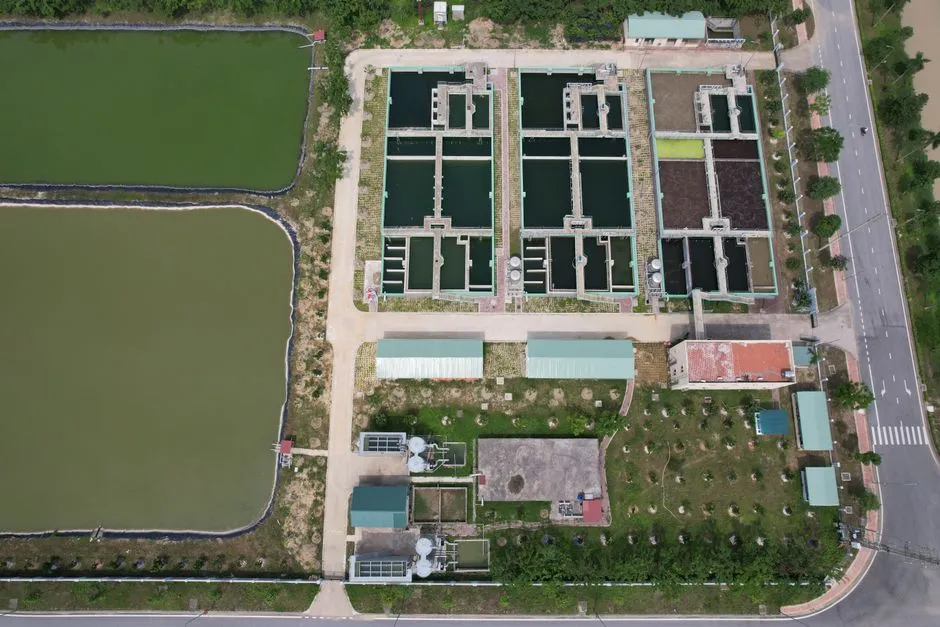
Senegalese standard NS 05-061 sets the regulatory floor for any hotel discharging more than 10 m³ per day: BOD₅ ≤40 mg/L, COD ≤120 mg/L, TSS ≤50 mg/L, FOG ≤20 mg/L, pH 6.5–8.5, and fecal coliforms ≤2,000 CFU per 100 mL. These are discharge-to-environment limits; they are not reuse limits. For unrestricted garden irrigation, the WHO 2006 Guidelines for the Safe Use of Wastewater, Excreta and Greywater require fecal coliforms ≤10 CFU/100 mL and intestinal nematodes ≤1 egg/L, a step beyond NS 05-061 that almost always forces tertiary disinfection plus a polishing filter on the reuse line. ONAS is the permitting authority for any discharge above the 10 m³/day threshold and reviews hydraulic capacity, effluent quality monitoring, and sludge disposal arrangements before issuing the operating permit. The SUEZ Hann Bay design (contracted 2024) explicitly favors low-chemical, low-odor process trains, an operator preference that aligns naturally with MBR + chlorine dioxide or UV over conventional chlorine, which generates trihalomethane odor complaints from hotel guests.
| Parameter | NS 05-061 Discharge Limit | WHO 2006 Unrestricted Irrigation | Typical MBR + ClO₂ Effluent |
|---|---|---|---|
| BOD₅ | ≤40 mg/L | — | <5 mg/L |
| COD | ≤120 mg/L | — | <30 mg/L |
| TSS | ≤50 mg/L | ≤10 mg/L (turbidity proxy) | <1 mg/L |
| FOG | ≤20 mg/L | — | <5 mg/L |
| ≤2,000 CFU/100 mL | ≤10 CFU/100 mL | <10 CFU/100 mL (post-ClO₂) | |
| pH | 6.5–8.5 | 6.5–8.5 | 7.0–7.5 |
Recommended 2026 Process Train for a Thiès Resort
The 2026 process train for a Thiès resort is a buried MBR-based package plant configured as bar screen → equalization → anoxic/aerobic MBR → UV or chlorine dioxide disinfection, with a parallel sludge dewatering line. Stage 1 is a rotary mechanical bar screen with 3–5 mm aperture to remove rags, plastics, and kitchen prep debris before they reach the biological stage. Stage 2 is an equalization tank fitted with submersible mixers, 8–12 hour HRT, pH and temperature probes, and a coarse bubble aeration grid; this buffer absorbs laundry pH swings and banquet slug loads, and it is the single most important tank for stable downstream biology. Stage 3 is the heart of the system: an anoxic zone followed by an aerobic MBR membrane bioreactor package with submerged PVDF hollow-fiber membranes rated at 0.1–0.4 μm, operated at 12–18 LMH flux; MBR delivers roughly 60% smaller footprint than conventional activated sludge plus clarifier, which matters on tight resort sites. Stage 4 is disinfection, with a ClO₂ disinfection generator sized 50–200 g/h preferred over chlorine because there is no trihalomethane formation and no guest complaints about swimming-pool smell. UV is acceptable where chemical storage and operator handling are a concern. Stage 5 is optional: a lamella clarifier polishing step plus an automatic backwash multi-media filter if the effluent is destined for unrestricted irrigation reuse. The sludge line pulls waste activated sludge to a plate-and-frame sludge filter press producing approximately 25% dry-solids cake for off-site disposal to an ONAS-approved facility.
Sizing Your System by Room Count
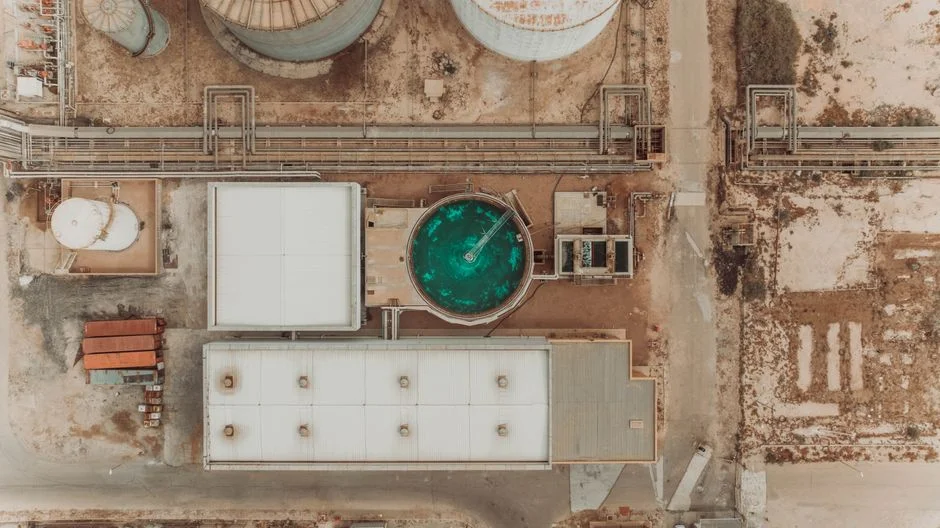
The per-room sizing benchmark for West African hospitality is 200 L per bed per day at average dry-weather flow, multiplied by a 2.5× peak factor per IPD/UNEP hospitality design guidelines. Worked example: a 100-room property at 1.8 beds per room equals 180 beds, giving 36 m³/day average and 90 m³/day peak; add a 20% kitchen and laundry allowance to land on a 110 m³/day design peak. The MBR flux of 12–18 LMH at the design peak then drives membrane area, while the anoxic HRT of 2–3 hours and aerobic HRT of 6–8 hours set the bioreactor volume. For smaller properties, a buried WSZ package plant in the 30–80 m³/day range is often the most cost-effective option because the entire biological and membrane train ships in a single prefabricated skid that is craned into an excavation and backfilled, eliminating the on-site civil bottleneck that delays most Senegalese hotel builds. The table below covers the design range most developers will encounter in the Thiès–Saly corridor.
| Room Count | Occupied Beds (×1.8) | Average Flow (m³/day) | Peak Flow (m³/day) | MBR Footprint (m²) | ClO₂ Generator (g/h) |
|---|---|---|---|---|---|
| 30 | 54 | 11 | 33 | 18–24 | 30–50 |
| 50 | 90 | 18 | 54 | 28–36 | 50–80 |
| 100 | 180 | 36 | 110 | 55–70 | 100–150 |
| 150 | 270 | 54 | 165 | 80–100 | 150–200 |
| 200 | 360 | 72 | 220 | 105–135 | 200–300 |
CAPEX and OPEX Benchmarks for 2026
Package MBR system CAPEX, FOB China and excluding civil works, sea freight, and installation, runs approximately $280–$450 per m³/day of design capacity, which places a 110 m³/day peak plant at $33,000–$50,000 for the equipment alone. Add 30–45% on top for civil works, containerization or skid mounting, sea freight to Dakar, overland transport to Thiès, and installation supervision; the all-in installed cost for a typical 100-room hotel lands in the $45,000–$75,000 range. OPEX is dominated by electricity at 0.8–1.2 kWh/m³ for the MBR plus aeration blowers, and by membrane replacement on a 5–7 year cycle at roughly 15–25% of initial membrane cost per replacement event. The reuse offset, where 40–60% of treated effluent displaces fresh water for landscape irrigation and toilet flushing, recovers $0.40–$0.80 per cubic meter, which over a 10-year horizon returns a meaningful fraction of the civil premium.
| Cost Line | 30 Rooms (35 m³/d peak) | 100 Rooms (110 m³/d peak) | 200 Rooms (220 m³/d peak) |
|---|---|---|---|
| MBR package (FOB China) | $10,000–$16,000 | $33,000–$50,000 | $62,000–$99,000 |
| Civil + freight + install (30–45%) | $3,500–$7,000 | $12,000–$22,500 | $22,000–$44,500 |
| All-in installed CAPEX | $13,500–$23,000 | $45,000–$72,500 | $84,000–$143,500 |
| Annual OPEX (power, chemicals, service) | $4,000–$6,500 | $11,000–$18,000 | $20,000–$33,000 |
| Annual reuse offset (savings) | $2,000–$4,000 | $6,500–$13,000 | $13,000–$26,000 |
Choosing a Supplier: What to Verify Before You Buy
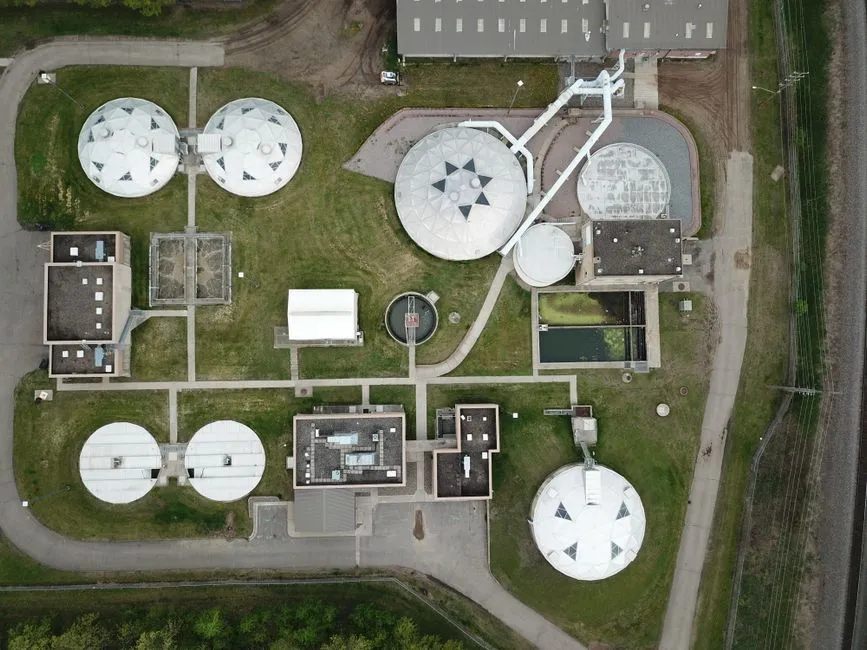
A hotel wastewater treatment plant in Senegal is a 10–15 year asset, and the procurement decision hinges on five verifiable items. First, request CE and ISO 9001/14001 documentation plus at least three reference installations in West Africa or comparable tropical climates, because PVDF membrane life at 35°C ambient differs materially from European operating data. Second, ask for membrane material test reports; PVDF outperforms PES (polyethersulfone) at sustained 35°C and tolerates chlorine cleaning at 500–1,000 ppm without permanent flux loss, while PES degrades noticeably above 40°C. Third, confirm PLC control with remote telemetry so the resort's engineering team can monitor the plant from the front desk or a phone app, which is critical where no full-time operator is on payroll; the engineering rationale is detailed in this remote monitoring for sewage plants guide. Fourth, verify spare parts stocking in Dakar or through a regional distributor, because membrane replacement lead time is the single largest OPEX risk for any MBR plant. Fifth, compare an integrated water purification skid or a buried WSZ package against a fully custom concrete SUEZ-style plant: for hotels under 200 rooms, the plug-and-play skid wins on CAPEX and timeline, while custom builds become economical only above 500 m³/day. A vendor shortlist framework applied to Senegalese conditions typically narrows the field to three or four qualified bidders before tender.
Frequently Asked Questions
Q1: How much does a hotel wastewater treatment system cost in Thiès, Senegal in 2026?
A package MBR plant sized for 110 m³/day peak (a 100-room hotel) runs $33,000–$50,000 FOB China for the equipment, with an all-in installed cost of $45,000–$72,500 once civil works, containerization, freight to Dakar/Thiès, and installation are added.
Q2: Can a hotel reuse treated wastewater for garden irrigation?
Yes. An MBR followed by a ClO₂ disinfection generator or UV achieves BOD₅ under 5 mg/L, TSS under 1 mg/L, and fecal coliforms under 10 CFU/100 mL, meeting WHO 2006 unrestricted irrigation reuse limits and NS 05-061 discharge standards simultaneously.
Q3: How long does installation take?
A buried WSZ package or containerized MBR skid ships in 8–12 weeks ex-works from the manufacturer, with 3–4 weeks of site work including excavation, crane setting, pipework, and commissioning; total project timeline from purchase order to compliant discharge is typically 14–18 weeks.
Q4: Do I need a full-time operator?
No dedicated operator is required for plants under 200 m³/day. A PLC-controlled system with remote telemetry needs only a quarterly service visit for membrane integrity testing, chemical replenishment, and calibration; the resort's existing maintenance team handles daily visual checks.
Q5: What is the discharge limit in Senegal?
Per NS 05-061, the limits are BOD₅ ≤40 mg/L, COD ≤120 mg/L, TSS ≤50 mg/L, FOG ≤20 mg/L, pH 6.5–8.5, and fecal coliforms ≤2,000 CFU/100 mL; ONAS is the permitting authority for any discharge above 10 m³/day, including all hotels in the 30–200 room range covered in this guide.