Why Battery Manufacturing Wastewater Treatment in Egypt Is a 2026 Inflection Point
Egypt's battery manufacturing capacity is scaling inside the Suez Canal Economic Zone (SCZONE), the 10th of Ramadan and 6th of October industrial clusters, and the East Port Said free zone, with new Chinese, Korean, and Gulf-backed gigafactory and component-plant announcements arriving through 2025 and into Q1 2026. The regulatory tailwind is Egypt's 2030 industrial strategy, which explicitly prioritizes EV value-chain localization. For the wastewater engineer, the 2026 buildout is materially different from a 2022 or 2024 buildout because the discharge envelope has tightened in practice: every new SCZONE tenant signs a binding Environmental Management Plan that references Law 48/1982 as amended by Decree 92/2013, and EEAA reviewers now require a mass-balance for heavy metals, fluoride, and sulfate on the P&ID, not just a flow total.
The Korean reference point is useful because it is the only fully-built cluster to compare against. Saemangeum hosts 17 secondary-battery tenants out of 68 total, a 25% concentration, and its early wastewater loading has driven municipal upgrades that Korean engineering firms now treat as a design baseline. A new SCZONE cluster of comparable ambition will see similar per-ton hydraulic loading but a different influent chemistry: NMP solvent and LiPF₆ hydrolysis products on the lithium side, sulfuric acid pH 1–2 and lead/copper fines on the lead-acid side, and a smaller nickel/cobalt-bearing stream if NiMH assembly is co-located.
Any 2026 process train for an Egypt plant must hit the Law 48/1982 ceilings (modified by Decree 92/2013 for free-zone sea outfalls) before reuse or sewer discharge. That requirement, not equipment availability, dictates unit-process order: neutralization first to protect downstream biology and membranes, then heavy-metal precipitation, then DAF or lamella clarification, then biological polishing, then RO or UF polish if the plant is going for closed-loop reuse.
Influent Fingerprint: Lithium-Ion vs Lead-Acid vs NiMH Battery Lines
Unit-process selection is dictated by influent chemistry, not by vendor preference. The three battery chemistries a process engineer will encounter in an Egyptian plant produce three very different streams, and a single mixed sewer requires segregation at source or a compromise train that pays a chemical penalty on every liter.
| Parameter | Lithium-ion line | Lead-acid line | NiMH line |
|---|---|---|---|
| pH | 6–9 (NMP-coated electrode wash is mildly alkaline; LiPF₆ hydrolysis is acidic and must be segregated) | 1–2 from sulfuric acid carryover (US Patent 4,652,381 process description) | 4–7 (neutral to mildly acidic) |
| COD | 5,000–20,000 mg/L (NMP solvent is the dominant load) | 500–2,000 mg/L (organic load is low; acid dominates) | 300–1,200 mg/L |
| Suspended solids | 200–1,500 mg/L from electrode coating slurry | 200–800 mg/L from plate wash and paste fines | 100–400 mg/L |
| Lead | <5 mg/L (trace only) | 50–500 mg/L | <2 mg/L |
| Copper | <5 mg/L | 10–100 mg/L | <5 mg/L |
| Nickel | <5 mg/L | <2 mg/L | 20–100 mg/L |
| Cobalt | 5–30 mg/L (NMC cathode scrap) | <2 mg/L | 5–20 mg/L |
| Fluoride | 50–500 mg/L from LiPF₆ hydrolysis | Negligible | Negligible |
| Sulfate | <200 mg/L | up to 2,000 mg/L | <200 mg/L |
| Lithium (dissolved) | 5–50 mg/L | Negligible | Negligible |
The flow-rate heuristic to size equalization and biological stages is 2–8 m³ of wastewater per kWh of lithium cells produced when the line is running NMP recovery and 60–70% water recycle, which is the typical 2026 European/Chinese benchmark; a lead-acid forming line runs closer to 0.5–2 m³ per kWh of finished cell. Treat these as order-of-magnitude envelopes for budget sizing, then refine with the actual line's water balance once the OEM shares its rinse-counter data.
For Egyptian builds the practical question is segregation: LiPF₆-bearing rinse water must be split from the NMP-bearing electrode-coat wastewater at source, because the acid-neutralization step for the first stream will precipitate lithium phosphate and starve a downstream Fenton reactor of useful iron if they are combined. Lead-acid lines generate the most challenging pH and the highest metal load, and that stream alone will drive the size of your DAF and hydroxide sludge handling.
Egyptian Compliance Snapshot: Law 48/1982 and Decree 92/2013 Limits
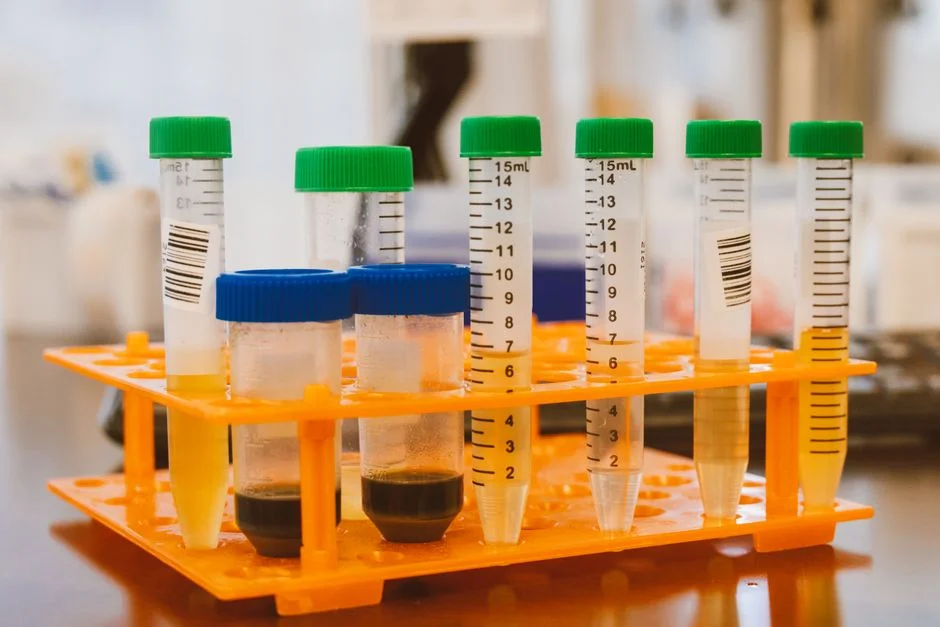
Law 48/1982 remains the controlling discharge framework, and Decree 92/2013 modifies the enforcement schedule and tiered ceilings for industrial free zones with sea outfalls. The numbers below are the engineering targets a 2026 plant must hit at the discharge sampling point, and each one ties directly back to the influent fingerprint in the prior section.
| Parameter | Law 48/1982 ceiling (Law 48/1982, as enforced under EEAA review) | Driver in a battery plant |
|---|---|---|
| pH | 6–9 | Sulfuric acid carryover from lead-acid forming; LiPF₆ hydrolysis from lithium lines |
| COD | ≤110 mg/L | NMP solvent carryover from electrode coating |
| BOD | ≤60 mg/L | Residual organics after MBR polish |
| TSS | ≤60 mg/L | Electrode coating fines, plate-wash paste, DAF carryover (see our Egypt TSS compliance guide for the suspended-solids drill-down) |
| Total lead | 0.5 mg/L | Plate forming and grid casting in lead-acid lines |
| Copper | 1.0 mg/L | Tab welding and connector wash in lead-acid lines |
| Nickel | 1.0 mg/L | NiMH and some NMC-bearing streams |
| Zinc | 5.0 mg/L | Galvanized rack wash across all lines |
| Sulfate | 400 mg/L | Sulfuric acid neutralization endpoint in lead-acid trains |
| Fluoride | ≤8 mg/L (industrial discharge, EEAA enforcement practice) | LiPF₆ hydrolysis; calcium precipitation required |
| Total nitrogen | ≤30 mg/L | Limited; NMP contains no N, but rinse aids may |
Decree 92/2013 modifies the BOD and TSS tiers for industrial free-zone tenants discharging through a permitted marine outfall, allowing relaxed BOD (up to 100 mg/L in some zones) provided the receiving water body is classified for high-volume dilution. For an inland SCZONE tenant discharging to a sewer, the Law 48/1982 numbers above apply without relaxation. Engineers should verify the specific tier applicable to their plot with EEAA before sizing the biological stage.
The 2026 Process Train: From Acid Pit to Reuse-Quality Effluent
The defensible 2026 train for an Egyptian battery plant runs in the order a process engineer would draw it on a P&ID.
- Equalization and pH correction. A 6–24 hour HRT equalization basin damps pH swings from batch electrode-coating dumps and formation-line rinse peaks. Lime or NaOH dosing on a PLC-controlled chemical dosing skid lifts lead-acid influent from pH 1–2 to the 8.5–9.5 precipitation window; HCl or CO₂ trim is used on alkaline lithium streams to avoid pushing the mixed stream past the fluoride precipitation optimum.
- Coagulation/flocculation and Dissolved Air Flotation. Polymer and ferric chloride dosing followed by a dissolved air flotation system (4–300 m³/h, 13 standard models) removes the bulk of the lead and copper hydroxide floc, along with coating fines. Micro-bubble flotation at 30–50 m³/m²/h hydraulic loading is the workhorse for the metal-bearing sludge; recycle ratios of 20–30% are typical for 2026 designs.
- Fenton or advanced oxidation for NMP-laden lithium streams. NMP is biodegradable but slow, so a sidestream Fenton reactor (Fe²⁺ 50–200 mg/L, H₂O₂ 200–800 mg/L, pH 3–3.5) knocks COD down by 50–70% before the stream returns to the main equalization basin. Refer to the Fenton oxidation system guide for reagent stoichiometry and quenching practice.
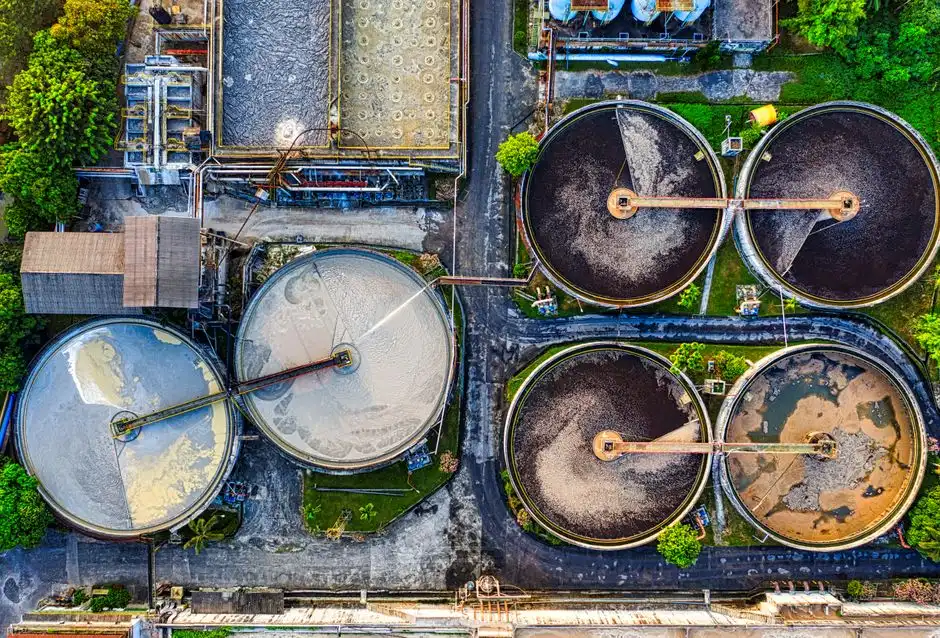
- MBR polishing. A submerged MBR membrane bioreactor (PVDF, 0.1 µm nominal pore) delivers sub-30 mg/L TSS and >95% organics removal at 10–2,000 m³/day, with a footprint roughly 60% smaller than conventional activated sludge at the same loading. The MBR is the single most important step for hitting the Law 48/1982 TSS and COD ceilings in a tight footprint.
- RO or UF for water reuse. When plant economics justify closed-loop operation, an industrial RO system (95% recovery, multimedia + cartridge prefiltration) polishes MBR permeate to <50 µS/cm for rinse-water reuse, cutting plant freshwater draw by 40–60%.
- Sludge handling. DAF float and biological waste are dewatered on a plate and frame filter press (1–500 m² filtration area) to a 25–35% dry solids cake suitable for licensed hazardous-waste shipment. Filtrate returns to the head of the plant.
This train is the minimum defensible scope for a 2026 SCZONE tenant. Plants targeting zero-liquid-discharge add a brine concentrator and crystallizer downstream of RO, but the equipment above is the configuration on which the EEAA reviewer will sign off.
Equipment Sizing for Egyptian Ambient Conditions
Egypt's Mediterranean and Upper-Egypt climate gives a real CAPEX advantage over Korean and European comparators. Coastal plants run 18–30 °C influent year-round, which keeps MBR biomass active without trace heating or heat-exchanger trim on the bioreactor — a 5–8% energy reduction on aeration versus a Korean winter baseline. The higher feed temperature also reduces DAF air-to-solids demand: a 25 °C influent saturates at roughly 60% of the air volume that a 10 °C Korean winter influent would carry, so the recycle pump and saturator can be sized down 15–20%.
For primary clarification upstream of the MBR, a lamella clarifier at 20–40 m³/m²/h surface loading handles the bulk TSS reduction on lead-acid streams; for lithium streams the DAF is usually the workhorse because the fines are low-density coating slurry rather than dense metal paste. Both unit operations are robust against Egyptian ambient conditions.
Plants sited inside or near the Suez Canal, the East Port Said free zone, or anywhere within reach of marine salt-water intrusion should flag brackish feed on the RO step early. A 2,000–5,000 mg/L chloride spike on the RO feed will push osmotic pressure past the design point and halve recovery; a high salinity wastewater treatment guide is the right place to start when brackish intrusion is in the water balance.
CAPEX, OPEX, and a Buyer Decision Matrix for 2026
Budget envelopes below are 2026 typical market ranges for turnkey skids and civil works in Egypt, not fixed vendor quotes. Confirm with a Class III estimate before any board commitment.
| Plant scale | Flow band | CAPEX band (2026 typical, USD) | Notes |
|---|---|---|---|
| Small component plant | ≤200 m³/day | $150K–$500K | Equalization, DAF, MBR, no RO; packaged skid |
| Mid-scale gigafactory auxiliary streams | 500–2,000 m³/day | $1.2M–$4M | Full Law 48/1982 compliance train with RO polish |
| Full ZLD build, mixed Li-ion/lead-acid | 2,000+ m³/day | Beyond $8M | Adds brine concentrator and crystallizer; civil works dominate |
OPEX is dominated by chemical dosing (NaOH, lime, polymer, Fenton reagents) and aeration energy for the MBR. A biological-plus-DAF train without RO typically runs $0.35–$1.40 per m³ of treated flow; adding RO polish raises the band to $0.55–$1.80 per m³, with energy as the swing variable.
| Criterion | MBR | Conventional activated sludge (CAS) |
|---|---|---|
| Footprint at 1,000 m³/day | ~60% of CAS footprint (per submerged MBR spec) | Larger aeration basin + clarifier |
| Effluent TSS | <30 mg/L, stable | 20–60 mg/L, depends on clarifier performance |
| Effluent COD | <60 mg/L | 60–110 mg/L (often at the Law 48/1982 ceiling) |
| Operator skill required | Higher; membrane cleaning discipline matters | Lower; well-understood activated sludge |
| CAPEX vs OPEX balance | Higher CAPEX, lower sludge OPEX, smaller civil | Lower CAPEX, higher sludge hauling OPEX |
| Best fit in Egypt 2026 | SCZONE inland sites with tight footprints and strict TSS targets | Large coastal sites with land and lower TSS targets |
For readers who have already decided on MBR and need to specify the membrane module, the flat sheet MBR membrane spec is the drill-down. For flows above 2,000 m³/day or for sites with seasonal temperature dips, a CAS + ultrafiltration hybrid is worth modeling against the MBR baseline.
Frequently Asked Questions
What are the Egyptian discharge limits for battery manufacturing wastewater in 2026?
Law 48/1982 as enforced by EEAA sets pH 6–9, COD ≤110 mg/L, BOD ≤60 mg/L, TSS ≤60 mg/L, total lead 0.5 mg/L, copper 1.0 mg/L, and sulfate 400 mg/L. Decree 92/2013 modifies the BOD and TSS tiers for free-zone tenants discharging to permitted marine outfalls; verify the specific tier with EEAA before sizing biological stages.
How is NMP solvent removed from lithium-ion battery wastewater?
NMP is typically recovered at source by vacuum distillation on the coating line, with the residual 5,000–20,000 mg/L COD stream sent to a Fenton reactor (Fe²⁺ 50–200 mg/L, H₂O₂ 200–800 mg/L) for a 50–70% COD knockdown, then polished in an MBR to below 60 mg/L.
What pH is required to precipitate lead and copper from battery wastewater?
Lead precipitates as Pb(OH)₂ above pH 8.5, with minimum solubility near pH 9.5–10. Copper precipitates as Cu(OH)₂ above pH 6.5, with minimum solubility near pH 8.0. A combined operating window of pH 9.0–9.5 is the standard DAF feed condition for mixed lead-acid streams.
Is MBR or conventional activated sludge better for Egyptian battery plants?
MBR delivers sub-30 mg/L TSS in roughly 60% of the footprint and tolerates Egyptian 18–30 °C feed temperatures without heating. CAS has lower CAPEX but produces 20–60 mg/L TSS and 60–110 mg/L COD, often right at the Law 48/1982 ceiling. For SCZONE inland sites with strict TSS targets, MBR is the safer 2026 choice.
What is the typical CAPEX for a battery plant wastewater system in Egypt?
2026 typical market range: $150K–$500K for small lines at or below 200 m³/day, $1.2M–$4M for mid-scale gigafactory auxiliary streams at 500–2,000 m³/day, and beyond $8M for full zero-liquid-discharge builds at 2,000+ m³/day. Treat these as budget envelopes, not vendor quotes.
Do lithium-ion and lead-acid lines need separate wastewater treatment trains?
In practice, yes. LiPF₆-bearing rinse water hydrolyzes to HF and creates a fluoride-removal problem; mixing it with alkaline NMP waste causes lithium phosphate precipitation and iron fouling in the Fenton reactor. Lead-acid acid (pH 1–2) destroys biology if combined with the lithium stream at the head of the plant. Source segregation is the cheapest engineering decision in a mixed-chemistry gigafactory.