What Makes a Hotel STP in Tbilisi Different from a Standard Municipal Plant
A packaged MBR STP for a Tbilisi hotel is a factory-built, containerized or skid-mounted membrane bioreactor sized to the property's peak wastewater flow (typically 150–250 L per occupied room per day, plus kitchen and laundry), configured to meet Georgian Ministry of Environmental Protection and Agriculture (Mta) discharge limits and Tbilisi water utility (GWP) discharge consent. For a 100–200 room hotel, design flow usually lands in the 25–50 m³/day range with an N+1 membrane cassette, 2–3 mm fine screening, an anoxic pre-zone for denitrification, and a heat-recovery or insulated tank option because winter sewer temperatures in Tbilisi drop to 5–10 °C and suppress MBR kinetics below ~10 °C.
Hotel loading is dominated by occupancy swings — design for a 100% occupancy banquet night, not annual average — and apply a 1.5–2× peaking factor, consistent with EPA MBR design guidance (per EPA fact sheet, peak design flows should be no more than 1.5 to 2 times the average design flow). Domestic sewage from guest rooms, kitchen FOG, and laundry lint behaves differently from residential sewage: laundry flows can push COD to 600–900 mg/L and BOD to 250–400 mg/L, versus typical domestic sewage at 250 mg/L COD and 150 mg/L BOD (HydropureWater field data, hospitality projects 2024–2025). Tbilisi's cold winters — December through February sewer temperatures of 5–10 °C — slow biological kinetics; nitrification rates roughly halve per 10 °C drop below 15 °C, so anoxic volume and SRT must be sized for the cold case, not the design average. Discharges in Georgia are governed by the Mta (Regulation on Water Quality Norms) and require consent from the Ministry of Environmental Protection and Agriculture, plus a separate discharge consent from the Tbilisi water utility (GWP) where the effluent enters the municipal sewer. For a working comparison of cold-climate hotel sizing in another Andean context, see the Medellín hotel MBR sizing guide.
Sizing the Packaged MBR: A Worksheet for 50–500 Room Tbilisi Hotels
Start with 150–250 L per occupied room per day as the domestic base; luxury and all-inclusive properties trend toward 250–350 L/room/day (HydropureWater field data, 2025). Add kitchen flow at ~15 L per cover per meal and laundry at ~10 L per kg of linen processed. Apply a peaking factor of 1.8–2.0 for the morning-peak + banquet-overlap window — per EPA, MBR design flow should equal or exceed 1.5–2× the average.
Worked example: a 180-room 4-star Tbilisi hotel at 220 L/room/day yields 39.6 m³/day average; at 2× peaking, design for ~80 m³/day — select a packaged MBR STP system rated 80–100 m³/day with N+1 redundancy (typically two 50 m³/day trains or one unit with an extra membrane cassette). The standard modular band covers 10–2,000 m³/day, so a single 80–100 m³/day train falls in the standard modular band with no custom build required (HydropureWater, 2026). For properties pushing past 300 rooms, model the kitchen and laundry as separate subprocess streams before adding them back to the room load — a banquet-heavy hotel can run 60–70% of daily flow in a 4-hour evening window, which is the figure the equalization basin must absorb.
| Hotel profile (Tbilisi, 2026) | Rooms | L/room/day | Kitchen + laundry add | Average flow (m³/day) | Peaking factor | Design flow (m³/day) | Recommended MBR train |
|---|---|---|---|---|---|---|---|
| Boutique 3-star | 60 | 180 | + 4 | 14.8 | 1.8 | ~25 | 1 × 25–30 m³/day train |
| Mid-scale 4-star | 120 | 200 | + 6 | 30.0 | 1.8 | ~55 | 1 × 55–60 m³/day train |
| Full-service 4-star (worked example) | 180 | 220 | + 8 | 39.6 | 2.0 | ~80 | 1 × 80–100 m³/day train, N+1 cassette |
| Luxury 5-star | 250 | 300 | + 12 | 75.0 | 1.8 | ~135 | 2 × 70 m³/day trains |
| Resort / all-inclusive | 400 | 320 | + 18 | 128.0 | 1.8 | ~230 | 2 × 120 m³/day trains |
The same worksheet logic applies in other highland cities — see the Bogotá hotel MBR sizing guide for a parallel worked example at 2,640 m elevation.
Packaged MBR vs Underground A/O vs Containerized MBR: Which Suits a Tbilisi Hotel
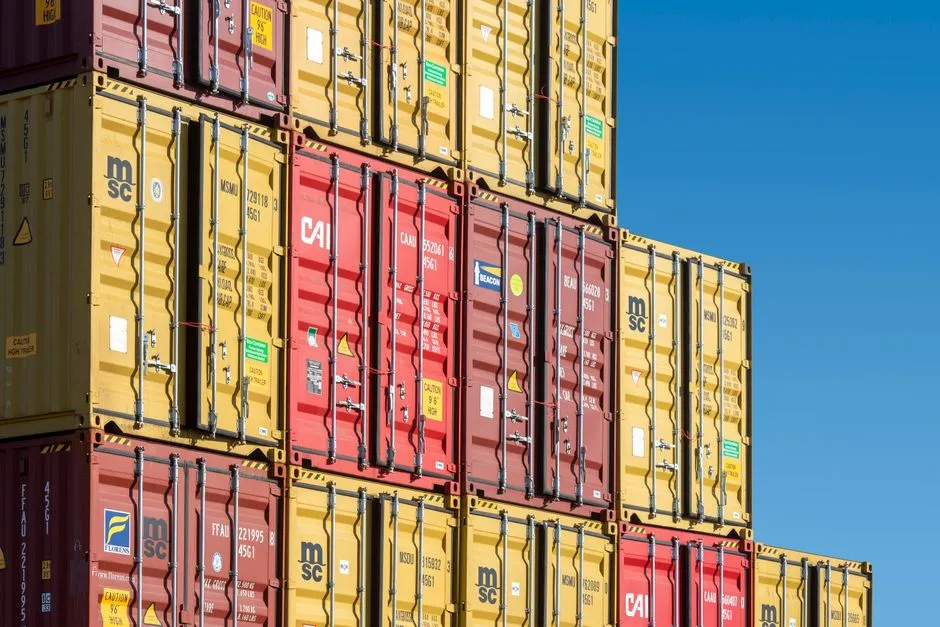
Three packaged formats compete for a Tbilisi hotel site: underground A/O units (WSZ series), skid MBR with concrete tank, and fully containerized MBR. Underground A/O units handle 1–80 m³/h, are buried with landscaping above, and run fully automatic with no on-site operator, but the effluent is conventional secondary, not reuse-grade — adequate for discharge to GWP sewer but not for irrigation or toilet flushing. Skid MBR with concrete tank is the cheapest CAPEX route that still delivers reuse-grade effluent, but it requires civil works — often the right answer for a new-build Tbilisi hotel where the plant room is already on the drawing. Containerized MBR — built around a flat-sheet MBR cassette in an ISO frame, 80–225 m² membrane area per module, 32–135 m³/day per module — gives sub-1 μm effluent suitable for landscape irrigation or toilet flushing, and is the better choice for any hotel pursuing water reuse or LEED/BREEAM points. Decision rule: if the hotel is pursuing reuse, choose containerized MBR; if space is the only constraint and reuse is not on the table, an underground A/O packaged STP is enough; if a plant room exists and CAPEX is tight, skid MBR with concrete tank is the default. Procurement teams comparing region-specific STP manufacturing should also reference the Dubai STP manufacturer buyer's guide for cross-market vendor evaluation criteria.
| Parameter | Underground A/O (WSZ) | Skid MBR + concrete tank | Containerized MBR (DF) |
|---|---|---|---|
| Flow range per unit | 1–80 m³/h | 10–500 m³/day | 32–135 m³/day per module |
| Effluent quality | Secondary (BOD ~20–30 mg/L, TSS ~20 mg/L) | Reuse-grade (BOD <5 mg/L, TSS <1 mg/L) | Reuse-grade (BOD <5 mg/L, TSS <1 mg/L) |
| Footprint | Buried; zero above-grade | Plant room required | Standalone ISO footprint |
| Operator skill | Low (fully automatic) | Moderate (membrane CIP) | Moderate (membrane CIP) |
| Civil works | Excavation only | Full tank + building | Minimal (pad + connection) |
| Reuse-ready | No | Yes | Yes |
| Best-fit Tbilisi hotel | ≤ 80-room, no reuse target | New-build with plant room | Retrofit, reuse, LEED target |
Seven Engineering Gates Before You Sign the Tbilisi Supplier Contract
Gate 1 — Equalization. Hotel flow is lumpy; insist on a 6–8 hour equalization basin sized for 1.5–2× average flow (per EPA MBR design guidance). Without it, the morning peak combined with a banquet evening will slam the membranes with twice their nominal hydraulic load. Gate 2 — Screening. Install a rotary bar screen plus a 2–3 mm fine screen immediately upstream of the membranes. Hair, lint, and kitchen FOG are the three membrane killers in a hotel — cut-off matters more than brand at this stage. Gate 3 — Membrane configuration. Hollow-fiber (1–2 mm screen, higher packing density) vs flat-plate (2–3 mm screen, easier cleaning, more debris-tolerant); flat-plate is usually the safer pick for hotels with active kitchens and laundries. Gate 4 — Anoxic zone. Per commercial MBR designs, include a dedicated anoxic pre-chamber where total nitrogen or nitrate discharge limits apply; for Tbilisi, the Mta nitrogen limit is the reference threshold. Gate 5 — N+1 redundancy. EPA recommends installing one membrane cassette beyond the nominal design (per EPA fact sheet, the N+1 concept blends conventional activated sludge and membrane process design); for a 100 m³/day Tbilisi hotel this typically means two parallel cassettes at 60 m³/day each rather than one at 120 m³/day. Gate 6 — Temperature. A 5–10 °C winter sewer will halve nitrification; specify either (a) tank insulation/burial, (b) a small heat-exchanger loop, or (c) a longer SRT of 30–40 days to keep biomass active. Gate 7 — Controls and CIP. Insist on a PLC with remote telemetry, automatic backwash, and a factory-supplied clean-in-place system using sodium hypochlorite and citric acid — chemical cleaning is the main membrane-life lever, and an automatic chemical dosing skid makes the difference between 3-year and 7-year membrane life in a hospitality setting.
Membrane Life, Sludge, and OPEX: What a Tbilisi Hotel Operator Should Budget
Membrane life is the single biggest OPEX driver. The EPA fact sheet reports typical guarantees of 3–5 years, with some vendors offering 5–10 years (per EPA, longer guarantees are typically tied to smaller pre-screen sizes — a 1–2 mm screen supports longer membrane life than a 3 mm screen). Sludge production from an MBR is lower than conventional activated sludge because of higher SRT; expect wasting every 2–4 weeks rather than daily, with chemical conditioning often needed for dewatering (per EPA, waste MBR sludge can have decreased settling ability due to colloidal particles and filamentous bacteria). Energy cost: MBRs run higher aeration than CAS because of air scour demand; for a 100 m³/day Tbilisi hotel, plan 1.5–2.5 kWh per m³ treated (HydropureWater field data, 2025). Sludge handling: pair the MBR with a small sludge dewatering filter press to reduce hauling volume from Tbilisi to the licensed disposal site — without dewatering, a 100 m³/day plant generates roughly 4–6 m³ of liquid sludge per week.
Vendor Evaluation Checklist for 2026 Tbilisi MBR Procurements
Confirm the vendor has documented hotel or hospitality references — not just municipal plants — because laundry and kitchen FOG behave differently from residential sewage. Require membrane guarantee terms in writing: length (5–10 years preferred), prorating schedule, screen-size conditions, and CIP protocol responsibility. Ask for factory test certificates, performance curves (flux vs TMP at 5 °C, 10 °C, 15 °C, 25 °C), and a winter operating case for Tbilisi climate. Verify local support: does the supplier have a service partner in Georgia or the Caucasus region, or is commissioning done remotely? On-site commissioning is strongly preferred for a first hotel MBR. Cross-check spare-parts lead time for membrane modules, diffusers, and dosing pumps — keep critical spares (membrane cassette, dosing pump head) on-site.
| Checklist item | Pass criterion | Reject if |
|---|---|---|
| Hotel / hospitality references | ≥ 3 operating sites, ≥ 2 years runtime | Only municipal or industrial references |
| Membrane guarantee (written) | 5–10 years, prorata schedule stated | ≤ 3 years or no written terms |
| Winter performance data (5–10 °C) | Flux & TMP curves supplied | Only 20–25 °C data |
| Local commissioning | On-site engineer in Georgia/Caucasus | Remote commissioning only |
| Spare-parts lead time | Critical spares ≤ 7 days, on-site stock | ≥ 30 days from factory |
| Anoxic zone option | Offered as standard or option | Not available |
Frequently Asked Questions
What flow rate should a packaged MBR STP be sized to for a Tbilisi hotel?
For a 50–500 room Tbilisi hotel, size the MBR to 1.8–2.0× the average daily flow. A 180-room 4-star property at 220 L/room/day averages ~40 m³/day, which becomes an ~80 m³/day design flow — select a packaged MBR STP system rated 80–100 m³/day with N+1 membrane redundancy.
How cold does Tbilisi's winter get, and what does it do to MBR performance?
Tbilisi winter sewer temperatures drop to 5–10 °C from December through February. Nitrification rates roughly halve per 10 °C drop below 15 °C, so the anoxic zone and SRT must be sized for the cold case — typically 30–40 days SRT, with tank insulation or a heat-recovery loop as the standard winter specification.
What screen size is required upstream of an MBR for a hotel with kitchen and laundry?
EPA MBR design guidance requires 1–3 mm fine screening immediately before the membranes. For a hotel with active kitchen and laundry streams, specify 2 mm fine screening on a rotary bar screen followed by a 1–2 mm band screen for flat-plate membranes, or 1 mm for hollow-fiber configurations — hair, lint, and FOG are the three leading causes of premature membrane fouling.
Do hotel MBRs in Tbilisi need a GWP discharge consent?
Yes. Discharges to the Tbilisi municipal sewer require consent from the Georgian Ministry of Environmental Protection and Agriculture under the Mta (Regulation on Water Quality Norms) plus a separate discharge consent from the Tbilisi water utility (GWP) where the effluent enters the GWP collection system.