Egypt's Suspended Solids Discharge Limit in 2026: The Quick Answer
Egypt's suspended solids (TSS) discharge limit in 2026 is set by Ministerial Decree 92/2013, issued under Law 48/1982. The exact number depends on the receiving body: 30 mg/L for treated industrial wastewater discharging to the Rosetta or Damietta branch of the Nile, 50 mg/L to public sewer, and 60 mg/L to marine/coastal waters under EEAA enforcement. Industrial facilities must collect a 24-hour flow-weighted composite sample, with TSS measured by APHA Method 2540D (dried at 103–105 °C) — the same protocol EEAA inspectors use during unannounced audits. A facility discharging to the Nile that reports under the 50 mg/L sewer limit instead of the 30 mg/L Nile limit is non-compliant and exposed to daily penalties under Law 9/2009 amendments.
For multinational projects financed by the World Bank, EBRD, or IFC, the binding number is often stricter: the IFC EHS Guidelines for Wastewater and Ambient Water Quality set a 10 mg/L TSS benchmark, which forces an additional polishing stage. The El Atf/Spundix facility monitoring form (January 2022) shows an actual measured SS of 8 mg/L against the 50 mg/L national limit and the 10 mg/L Rosetta/Damietta-specific limit — proof that the 10 mg/L figure is technically achievable but only with tertiary treatment and consistent sludge management. A compliance officer who quotes 50 mg/L without checking the receiving body will fail the EEAA permit review.
Legal Framework: Law 48/1982, Law 4/1994, and Decree 92/2013 Explained
Three legal layers govern industrial wastewater in Egypt, and confusing them is the single most common cause of permit rejection. Law 48/1982 is the umbrella statute titled "Protection of the Nile and Waterways from Pollution." It establishes the principle that no industrial effluent may be discharged to the Nile or its branches without treatment to specified limits. Ministerial Decree 92/2013 is the implementing regulation, and its Article 50 contains the parameter table that inspectors actually enforce — the El Atf monitoring form cites this article by name: "Article 50 – Ministerial Decree 92/2013 Law 48/1982 concerning the discharge of treated industrial wastewater to Rosetta and Damietta branches of the Nile River."
Law 4/1994 created the Egyptian Environmental Affairs Agency (EEAA) as the enforcement body, and Law 9/2009 amended the penalty schedule: fines up to EGP 500,000 plus a daily non-compliance penalty of EGP 1,000–5,000 for continuing violations. Public sewer discharges add a fourth layer — Holding Company for Water and Wastewater (HCWW) approval — and coastal discharges may require additional sign-off from the Ministry of Defense in zones near military installations or maritime navigation lanes. When a permit application is returned "incomplete," the reason is almost always that the engineer cited Law 48/1982 alone instead of Article 50 of Decree 92/2013, or omitted the HCWW letter for sewer discharges. Cite all three documents, in order, on every compliance submission.
Full 2026 Egypt Wastewater Discharge Parameter Table (Nile vs Sewer vs Coastal)
The table below consolidates the parameter limits from Article 50 of Decree 92/2013, with the IFC EHS benchmark as a third column for projects that must satisfy World Bank or EBRD financing conditions. All values are in mg/L except pH (pH units) and temperature (°C). Where the Decree gives two numbers, the lower is the binding limit for discharge to the Rosetta/Damietta branches of the Nile, and the higher applies to public sewer and coastal discharges. For chromium, the Decree splits total Cr (0.5/1.0) from Cr⁶⁺ (0.1/0.2); both are shown for completeness.
| Parameter | Nile (Rosetta/Damietta) | Sewer / Coastal | IFC EHS Benchmark |
|---|---|---|---|
| pH | 6–9 | 6–9 | 6–9 |
| Temperature (°C) | < 3 °C above receiving body | < 3 °C above receiving body | < 3 °C above receiving body |
| BOD₅ | 30 | 50 | 30 |
| COD | 30 | 50 | 125 |
| Suspended Solids (TSS) | 30 | 50–60 | 10 |
| Oil & Grease | 5 | 10 | 10 |
| Total Residual Chlorine | 0.1 | 0.5 | 0.2 |
| Chromium (Total / Cr⁶⁺) | 0.5 / 0.1 | 1.0 / 0.2 | 0.5 / 0.1 |
| Copper (Cu) | 1.0 | 1.0 | 0.5 |
| Iron (Fe) | 1.0 | 1.0 | 1.0 |
| Zinc (Zn) | 0.5 | 0.5 | 1.0 |
| Lead (Pb) | 0.1 | 0.1 | 0.2 |
| Cadmium (Cd) | 0.005 | 0.005 | 0.05 |
| Mercury (Hg) | 0.5 | 0.5 | 0.01 |
| Arsenic (As) | 0.5 | 0.5 | 0.1 |
Note the SS column: the El Atf form lists both a 50 mg/L "Egypt" national ceiling and a 10 mg/L "Rosetta/Damietta" specific limit on the same row. The binding number for a Nile-discharging plant is the lower of the two — 30 mg/L per Article 50 for general parameters, with the 10 mg/L value applying when a facility-specific permit cites the stricter branch-protection clause. For a more detailed metals comparison across jurisdictions, see the 2026 heavy metals discharge standard comparison.
As of 2026, EEAA cross-checks self-reported quarterly data against remote satellite turbidity measurements of the receiving body, so a TSS value that looks plausible on the lab report but inconsistent with downstream turbidity trends will trigger an inspection.
Receiving-Body Decision Tree: Which Limit Applies to Your Plant?
Selecting the wrong receiving body is how plants get fined even when their effluent meets the numerical limit on paper. Use the four scenarios below to confirm which standard applies before sizing any equipment.
- Scenario A — Rosetta or Damietta branch of the Nile: 30 mg/L TSS, BOD 30 mg/L, COD 50 mg/L. Binding under Article 50 of Decree 92/2013. Applies to most Delta industrial zones, 6th of October, and any plant with a direct pipeline to a Nile branch.
- Scenario B — HCWW public sewer (e.g., Greater Cairo wastewater network): 50 mg/L TSS nationally, but HCWW commonly imposes stricter local clauses — 30 mg/L TSS and 0.5 mg/L oil & grease — in the discharge permit for specific catchment areas. Always request the HCWW-specific annex before final design.
- Scenario C — Coastal discharge (Mediterranean or Red Sea): 60 mg/L TSS under Law 4/1994 environmental quality regulations for coastal waters, with additional temperature (< 30 °C) and salinity controls. EEAA plus Ministry of Defense sign-off is required in zones near Suez Canal approaches or military installations.
- Scenario D — Agricultural drain reuse for irrigation: TSS typically ≤ 50 mg/L plus pathogen controls (fecal coliform < 200 CFU/100 mL) under Ministry of Agriculture Decree 213/2016. Salinity < 2000 µS/cm is also commonly imposed; a textile plant reusing its own effluent for landscape irrigation must design for both.
Document the receiving body on Form 1 of the EEAA permit application with GPS coordinates of the discharge manhole — inspectors verify this against the HCWW network map during the site visit.
Treatment Technology Roadmap: How to Hit 30 mg/L TSS in 2026
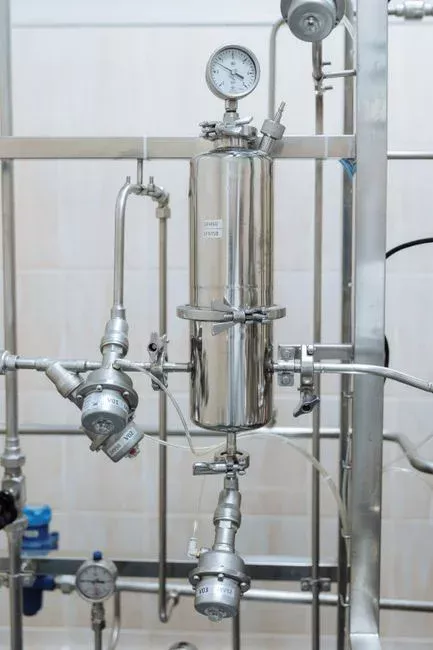
Meeting 30 mg/L TSS reliably for a mixed industrial effluent (textile, food, or petrochemical) requires a four-stage process train, with each stage handling the fraction of solids the downstream stage cannot. The table below maps each stage to its typical TSS removal contribution, energy demand, and the 2026 capital cost range for a 500 m³/day plant in Egyptian EGP terms, converted to USD at the prevailing 2026 rate.
| Stage | Technology | Residual TSS (mg/L) | Energy (kWh/m³) | 2026 CAPEX (USD) |
|---|---|---|---|---|
| 1 — Primary | Rotary mechanical bar screen (6 mm aperture) + grit chamber | 150–250 | 0.05–0.10 | 18K–32K |
| 2 — Physicochemical | DAF (dissolved air flotation) with polymer dosing | 20–40 | 4–6 | 120K–180K |
| 3 — Biological | A/O or SBR (carbon/nitrogen removal) | 15–30 | 0.6–1.2 | 140K–220K |
| 4 — Polishing | Lamella clarifier with sludge recirculation, or MBR | ≤ 5 (MBR) / 5–10 (lamella) | 0.3–0.8 | 60K–110K (lamella) / 180K–260K (MBR) |
For the primary stage, a rotary mechanical bar screen at 6 mm aperture removes 60–70 % of settleable solids and protects downstream pumps from ragging — a frequent cause of unplanned downtime in Egyptian textile plants. For the physicochemical stage, a dissolved air flotation system is the workhorse for food, textile, and oil & gas influents with high emulsified solids, reliably reaching 20–40 mg/L residual TSS at 4–6 kWh/m³. Do not rely on biological treatment alone for TSS compliance: biomass washout during hydraulic shock events routinely pushes residual TSS above 30 mg/L for 24–72 hours after a flow spike. For polishing, a lamella clarifier with sludge recirculation handles the 30 mg/L target at modest cost, while an MBR membrane bioreactor system is the safest 2026 choice for mixed industrial effluents subject to hydraulic shock or variable influent — it holds ≤ 5 mg/L TSS regardless of MLSS concentration. Reserve MBR for IFC 10 mg/L projects or water-reuse applications where the extra USD 180K–260K pays back through eliminated tertiary filtration.
2026 Cost Benchmark and Enforcement Outlook
Budget requests to plant owners need defensible numbers, not vendor quotes. The benchmarks below come from 2025–2026 project data for Egyptian industrial plants in the textile, food, and petrochemical sectors, normalized to a 500 m³/day design flow.
| Compliance Target | CAPEX Range (USD) | OPEX (USD/m³) | Configuration |
|---|---|---|---|
| 30 mg/L (Decree 92/2013, Nile) | 380K–620K | 0.18–0.34 | Bar screen + DAF + A/O + lamella |
| 10 mg/L (IFC EHS benchmark) | 560K–880K | 0.42–0.68 | Bar screen + DAF + A/O + MBR |
| 60 mg/L (coastal, Law 4/1994) | 180K–320K | 0.10–0.22 | Bar screen + DAF only |
EEAA increased inspection frequency by approximately 40 % between 2024 and 2026 and now requires online TSS meters at the discharge point of any facility discharging more than 500 m³/day. Compliance officers should budget for a turbidity sensor with an NTU-to-TSS correlation curve (typically R² > 0.85 for stable effluents) installed at the compliance sampling port. The 2026 turbidity sensor buyer's guide covers probe selection for high-COD and oily effluents, where standard 880 nm near-infrared sensors drift. For OPEX modeling, the 2026 industrial wastewater OPEX breakdown itemizes chemical, energy, sludge handling, and labor for each technology train. Plants that do not install continuous monitoring by mid-2026 will find permit renewals delayed by 3–6 months while EEAA insists on manual composite sampling during the review period.
Frequently Asked Questions

What is the exact TSS limit for discharge to the Nile versus public sewer in Egypt?
30 mg/L for treated industrial wastewater discharging to the Rosetta or Damietta branch of the Nile, and 50 mg/L for discharge to HCWW public sewer, both per Article 50 of Ministerial Decree 92/2013 under Law 48/1982.
Which analytical method does EEAA use to measure TSS during inspections?
APHA Method 2540D — total suspended solids dried at 103–105 °C. The lab must hold Egyptian Accreditation Council (EGAC) ISO 17025 accreditation for the inspector to accept the result.
Does Decree 92/2013 supersede the older Law 48/1982 limits?
Decree 92/2013 is the implementing regulation of Law 48/1982 and provides the current numerical limits; Law 48/1982 remains the parent statute that Decree 92/2013 cannot override. Both must be cited in permit applications.
Do foreign-investor-funded projects have to meet IFC EHS instead of Egyptian limits?
Yes, projects financed by the World Bank, EBRD, IFC, or EBRD-aligned lenders must meet the stricter IFC EHS benchmark of 10 mg/L TSS, which is more stringent than the Egyptian 30 mg/L Nile limit.
What penalties apply for non-compliance in 2026?
Fines up to EGP 500,000 plus daily non-compliance penalties of EGP 1,000–5,000 under Law 9/2009 amendments, plus administrative action including suspension of the operating permit and mandatory plant shutdown until the violation is remediated.