What a Packaged MBR STP Actually Does for a Lyon Hotel
A packaged MBR (Membrane Bioreactor) sewage treatment plant is a skid- or container-built unit that combines activated-sludge biology with submerged PVDF (polyvinylidene fluoride) ultrafiltration in a single tank, eliminating the secondary clarifier used in conventional activated sludge. The membrane's 0.03–0.1 µm pore size provides a physical barrier that retains suspended solids, bacteria, and most viruses, producing a clarified effluent suitable for non-potable reuse. Operating envelopes typically run at MLSS (Mixed Liquor Suspended Solids) of 8,000–12,000 mg/L and HRT (Hydraulic Retention Time) of 6–8 hours, which is why MBR footprints are roughly 30–50% smaller than a conventional activated-sludge plant of the same capacity.
Independent data from the Trident Nariman Point, Mumbai, an 800 KLD (kilolitres per day) submerged UF-MBR serving a 550-key hotel, reports 98.13% TSS removal, 96.34% BOD₅ removal, 88.63% COD removal, 77.38% total nitrogen removal, 84.80% total phosphorus removal, and complete elimination of Total and Fecal Coliforms (ScienceDirect 2025). That same study documents a stable operating flux of 27–31 L/m²·h after chemical cleaning, with the permeate reused for non-potable applications. For Lyon's hotel market, the same envelope delivers discharge compliance under the Arrêté du 21 juillet 2015 and provides reuse-quality water for toilet flushing, landscape irrigation, and cooling-tower make-up, often a permitting requirement in tight central-Lyon basements. The technology is particularly well suited to hotel loads because it tolerates occupancy-driven hydraulic peaks and the FOG (fats, oils, and grease) plus surfactant spikes typical of kitchens and on-premise laundries. A standard packaged MBR system arrives factory-tested, which is what most Lyon permitting authorities expect when reviewing an SPANC dossier.
Lyon, France: The Regulatory Frame You Must Design Around
Every Lyon hotel STP must satisfy the EU Urban Waste Water Directive 91/271/EEC as transposed into French law, with the Arrêté du 21 juillet 2015 setting the national discharge thresholds and reuse criteria for packaged units. The 2024–2026 amendments tightened the watchlist for micropollutants and added PFAS reporting obligations, so any 2026 spec should include a sampling access point for emerging contaminants even if quantitative limits are not yet binding. In practice, a Lyon hotel must hit BOD <5 mg/L, TSS <2 mg/L, NTK (Kjeldahl nitrogen) <10 mg/L, and E. coli ≤10 CFU/100 mL on the reuse loop to satisfy Arrêté reuse limits; designers should also leave headroom for ammonia spikes after cold-week startup.
At the local level, the Métropole de Lyon SPANC (Service Public d'Assainissement Non Collectif) controls packaged installations above the 30 PE (Population Equivalent, where 1 PE = 60 g BOD/day) threshold, and any project of 80–400 keys will exceed it once F&B and laundry are added. SPANC requires a mandatory control visit before commissioning, a conformité report before discharge into the Rhône or its tributaries, and an annual self-monitoring file covering flow, pH, temperature, and TSS. The Rhône-Méditerranée-Corse water board sets the final discharge permit volume and the rejection point; if the hotel is in the Confluence or Part-Dieu basement zone, the high water table (often within 1–2 m of the slab) drives the tank buoyancy design and the chosen excavation method, and heritage-noise limits in Vieux Lyon typically cap blower noise below 45 dB(A) at the façade. None of the international hotel STP guides you will find online address these local constraints, which is why a Lyon-specific spec list is non-negotiable.
Sizing the Packaged MBR: A Worksheet for a Lyon Hotel
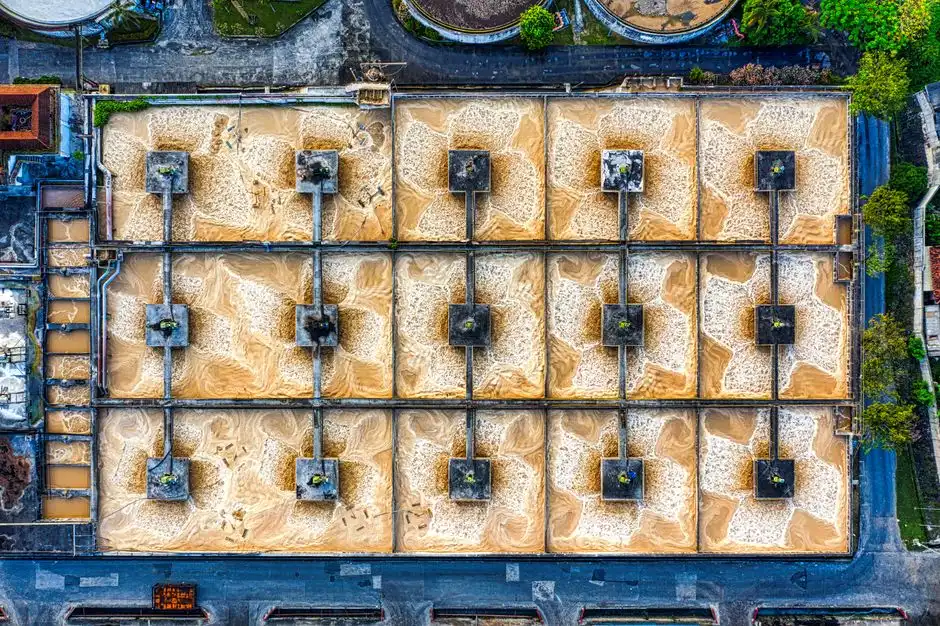
Start with the room-based flow, then layer F&B, laundry, and a peaking factor, then translate the result into MBR envelope parameters. The base flow is 0.20–0.30 m³ per available room per day, with 0.20 m³ for a 3-star business hotel and 0.30 m³ for a 5-star property with high amenity consumption. Add restaurant loading at 0.05–0.10 m³ per cover per day (fine dining at the upper end), spa and pool backwash at 0.05–0.10 m³ per guest-day, and on-premise laundry at 0.015 m³ per kilogram of linen processed. Most 4-star Lyonnais hotels run an in-house laundry of 0.5–1.0 kg linen per key-day, which is why a separate greywater loop or pre-filter is often the cheapest path to compliance. Apply a 1.2–1.4 peaking factor to absorb late-checkout, breakfast, and conference peaks before sizing the biological and membrane tanks.
The MBR operating envelope sits at HRT 6–8 h and MLSS 8,000–12,000 mg/L, with a typical flux of 15–25 L/m²·h and F/M (food-to-microorganism) ratio of 0.05–0.15 kg BOD/kg MLSS·day, which is what protects the membranes from fouling under hotel load swings. Work the numbers before calling suppliers: for a 150-key 4-star hotel with 80 covers and 80 kg of daily linen, the calculation is 150 × 0.25 + 80 × 0.07 + 80 × 0.015 = 43.2 m³/day, multiplied by a 1.3 peaking factor gives 56 m³/day, so you would specify the next standard skid, 60 m³/day. The 30% oversize trap is real: many procurement-grade quotes come in 20–40% over the duty flow because the supplier's safety factor stacks on top of the designer's.
| Parameter | 3-Star Hotel | 4-Star Hotel | 5-Star Hotel |
|---|---|---|---|
| Per-key base flow (m³/key·day) | 0.20 | 0.25 | 0.30 |
| Restaurant add-on (m³/cover·day) | 0.05 | 0.07 | 0.10 |
| Laundry add-on (m³/kg linen) | 0.010 | 0.015 | 0.020 |
| Recommended peaking factor | 1.2 | 1.3 | 1.4 |
| HRT envelope (h) | 6 | 7 | 8 |
| MLSS envelope (mg/L) | 8,000 | 10,000 | 12,000 |
MBR vs SBR vs MBBR vs Conventional ASP for a Hotel
MBR is the most affluent and effective method for hotel wastewater because it produces reuse-grade permeate in a single tank, while SBR, MBBR, and conventional activated-sludge (ASP) each force a downstream polishing stage that a Lyon basement cannot accommodate. The decision turns on six engineering parameters: removal efficiency, footprint, reuse suitability, CAPEX (capital expenditure), OPEX (operating expenditure) per m³ including skilled labour, and sensitivity to FOG spikes. Reference data from a 250 m³/day hollow-fibre MBR serving a 200-bed 5-star hotel (Imemflo) confirms stable reuse-compliant operation since startup, with MBR removing 90–95% of harmful substances in a single pass. SBR is cheaper in CAPEX but rarely hits non-potable reuse limits without a tertiary filter; MBBR is a middle option that still needs a polishing UF or sand-filter stage to meet a 4-star reuse target; ASP needs a separate clarifier and roughly 60% more footprint, which is the inner-Lyon blocker.
| Criterion | MBR | SBR | MBBR | Conventional ASP |
|---|---|---|---|---|
| Removal efficiency (BOD/COD/TSS) | 96–98 / 88–95 / 98–99% | 85–95 / 75–88 / 90–95% | 80–92 / 70–85 / 80–90% | 85–95 / 75–90 / 90–95% |
| Footprint (relative) | 1.0× | 1.2× | 1.1× | 1.6× |
| Reuse-ready effluent | Yes (direct) | No (tertiary needed) | No (tertiary needed) | No (tertiary needed) |
| CAPEX (20–200 m³/day, France 2026) | €25k–€180k | €20k–€140k | €22k–€150k | €30k–€200k |
| OPEX (€/m³ treated, incl. membrane amort.) | 0.18–0.30 | 0.12–0.20 | 0.14–0.22 | 0.15–0.25 |
| Sensitivity to FOG spikes | Low (UF barrier) | Medium | Medium-High | High |
For a Lyon hotel with on-site reuse, MBR is the only technology that removes the clarifier and produces toilet-flush and irrigation-grade water in one step. A skid-mounted WSZ underground integrated sewage treatment based on MBR is therefore the typical procurement route; for a Colombian sister case, the Medellín hotel MBR guide uses the same six-criterion logic, which is useful when comparing supplier references across regions.
Membrane Module Selection: Hollow Fiber vs Flat Sheet for Lyon Duty
Membrane module choice is where hotel MBR projects go wrong: a hollow-fibre (HF) unit optimises flux and footprint, while a flat-sheet (FS) unit tolerates FOG and surfactant fouling better and is easier to clean in place. For a Lyon hotel kitchen with intermittent oil loading, the FS option is usually the conservative pick. Koch PURON HF modules (Koch MBR Brochure 2016) use reinforced PVDF hollow fibre at 0.03 µm nominal pore size, in 330 / 660 / 1,800 m² standard frames, operating at pH 2.0–10.5 and 5–40 °C, with an 8–10 year service life and a 2-year warranty. FS PVDF modules (HydropureWater DF Series) run at 0.1 µm nominal pore, 80–225 m² area, and 32–135 m³/day per cassette, with lower aeration demand and on-site wash-down access. Hotel duty typically sees flux of 15–25 L/m²·h, a backwash every 8–12 minutes, and CIP (clean-in-place) every 1–3 months depending on FOG load; design the aeration blower at 0.3–0.5 m³ air per m³ permeate to keep scour within spec.
| Parameter | Hollow-Fiber PVDF (Koch PURON) | Flat-Sheet PVDF (DF Series) |
|---|---|---|
| Nominal pore size | 0.03 µm | 0.1 µm |
| Standard module area | 330 / 660 / 1,800 m² | 80 / 150 / 225 m² |
| Operating temperature | 5–40 °C | 5–40 °C |
| pH range | 2.0–10.5 | 2.0–11.0 |
| Service life (per Koch claim) | 8–10 years | 8–10 years |
| Relative aeration energy | Baseline (1.0×) | 0.05–0.10× (10–20× lower) |
| Best-fit Lyon hotel scenario | Variable occupancy, space-constrained, surfactant-controlled | High FOG / surfactant exposure, easier CIP |
For datasheets and pricing on the FS cassette, see flat-sheet PVDF MBR modules; for polishing UF after the MBR, a separate PVDF UF system can be specified on the reuse loop.
Pretreatment, Sludge, and Disinfection: The Equipment You Still Need
No MBR quote is complete without headworks, dewatering, and post-disinfection; these are separate budget lines and separate failure modes, and SPANC will inspect each. Pretreatment starts with a 2 mm fine screen (Koch PURON recommendation) to protect the hollow fibres from rag fouling; for hotels with high cotton and paper content, a rotary bar screen (GX series) upstream is the standard line of defence. FOG management sits between the screen and the bioreactor: a DAF system removes 70–90% of emulsified oils and is the only way to keep a downstream MBR stable when a hotel runs a 200-cover brasserie. Sludge handling is the line most quotes underweight: at 0.3–0.5 kg DS/kg BOD removed, a 50 m³/day hotel STP generates 8–15 kg dry solids per day, which means a plate and frame filter press (1–500 m²) on a weekly or monthly cake-out cycle. Disinfection on the reuse loop is best handled by a chemical-free UV sterilizer sized to 30–40 mJ/cm², which is sufficient for E. coli and coliphage and avoids chlorine by-products in cooling-tower make-up. Online ammonia instrumentation closes the loop and is described in the online ammonia analyzer guide for 2026 spec drafting.
CAPEX, OPEX, and a 10-Point Supplier Checklist for Lyon
Indicative 2026 packaged-MBR pricing in France, in euros, runs from approximately €25,000–€60,000 for 20–50 m³/day skid units, €80,000–€180,000 for 50–200 m³/day containerised systems, plus 25–40% on top for Lyon-specific installation, civils, and ATEX (explosive-atmosphere) zoning in basement plant rooms. OPEX is typically 0.18–0.30 €/m³, of which energy accounts for 0.05–0.10 €/m³ and membrane replacement is amortised at 0.08–0.15 €/m³ over the 8–10 year life (per Koch PURON lifetime claim). Civil works dominate on a tight Lyon site: a high water table requires a buoyancy-resistant tank, often a poured-concrete pit, and heritage-noise limits force acoustic enclosures on blowers that add 8–12% to the mechanical bill. The 10-point checklist below filters out suppliers whose reference list and after-sales footprint will not survive an SPANC audit.
| # | Checklist Item | Why It Matters for Lyon |
|---|---|---|
| 1 | PVDF membrane origin (Koch, Toray, Suez/Dupont, Mitsubishi) verified in writing | Cheaper PES (polyethersulphone) membranes fail at 3–5 years under hotel FOG |
| 2 | EN 12255-9 compliance (European MBR standard) | Required for SPANC conformity file |
| 3 | ATEX zoning documentation for basement plant rooms | Compulsory for CH₄/H₂S environments under EU Directive 1999/92/EC |
| 4 | French-language HMI and operating manual | SPANC inspectors and on-site operators require FR |
| 5 | On-site commissioning by manufacturer engineer (not local agent) | Validates 2-year warranty and start-up conformity |
| 6 | Minimum 2-year mechanical and membrane warranty | Industry baseline; below this signals margin-driven build |
| 7 | 24/7 service coverage in Auvergne-Rhône-Alpes | Reactive response <8 h for 200-key hotel |
| 8 | Spare membrane stock held in France or EU | Avoid 6–10 week lead times on Far-East supply |
| 9 | CE marking on skid and control panel | Mandatory under EU machinery and EMC directives |
| 10 | Reference list of ≥3 French hotel installations ≥2 years old | Live performance data beats catalogue claims |
Use this list as a tender scoring sheet; reject any quote that does not address all ten items in writing. For a buried-installation cost benchmark relevant to Lyon basements, the buried wastewater treatment system cost breakdown is a useful cross-check. The full MBR datasheet and French-relevant reference list live on the packaged MBR system product page.
Frequently Asked Questions
What is the right m³/day per hotel key for a packaged MBR in Lyon?
Use 0.20 m³/key/day for a 3-star business hotel, 0.25 m³/key/day for a 4-star with F&B and on-site laundry, and 0.30 m³/key/day for a 5-star with spa and pool backwash, then apply a 1.2–1.4 peaking factor to absorb occupancy and breakfast peaks. A 150-key 4-star with 80 covers typically sizes to 50–60 m³/day packaged unit.
Does a packaged MBR meet the Arrêté du 21 juillet 2015 reuse limits for hotel water?
Yes, MBR effluent typically delivers BOD <5 mg/L, TSS <2 mg/L, NTK <10 mg/L, and E. coli ≤10 CFU/100 mL after a UV polishing stage, satisfying the Arrêté's reuse criteria for toilet flushing, irrigation, and cooling-tower make-up. The Trident Nariman Point 800 KLD reference (ScienceDirect 2025) confirms complete coliform removal at hotel scale.
How much does a packaged MBR cost for a 100–200 m³/day hotel in France in 2026?
Expect €80,000–€180,000 for a containerised 50–200 m³/day unit, plus 25–40% for Lyon installation and civil works driven by high water table and heritage-noise limits. OPEX typically runs 0.18–0.30 €/m³ including amortised membrane replacement over the 8–10 year service life.
Do I need SPANC approval for a packaged MBR STP in the Métropole de Lyon?
Yes, any installation above 30 PE (which every 80–400 key hotel exceeds once F&B and laundry are counted) must go through Métropole de Lyon SPANC for a conformité report and annual self-monitoring. A French-language HMI and EN 12255-9 compliance documentation are the two items that most often delay approval.
How does Lyon's MBR sizing compare to a Colombian hotel project?
The unit flows and MBR envelope are very similar; the differences are ambient temperature, which is more stable in Medellín, and the FOG load, which runs higher in Lyon's brasserie-style kitchens. For a direct cross-reference, see the Medellín hotel MBR guide and the Lyon vs Bogotá MBR sizing comparison, or the Brisbane hotel wastewater treatment guide for a Southern-Hemisphere baseline. Datasheets, membrane specs, and a Lyon-ready reference list are available on the HydropureWater packaged MBR system product page.