UAE Lead Discharge Limit: What the 2026 Standard Actually Says
The lead discharge limit in the UAE is 0.1 mg/L Pb for industrial wastewater discharged to inland or territorial waters, set under Federal Law No. 24 of 1999 and the current MOCCAE Implementing Regulations (Ministerial Decision 77/2024, effective for the 2024–2026 inspection cycle). Discharges into marine special-control zones must meet a stricter 0.05 mg/L lead ceiling, and pH must be maintained between 6.0 and 9.0 at the point of discharge. The combined heavy-metals cap (Pb + Cd + Hg + Cr + Ni + Cu + Zn) sits at 1.0 mg/L, and total suspended solids are limited to 50 mg/L for inland outfalls and 15 mg/L for marine outfalls per MOCCAE Decision 77/2024.
The marine special-control zone is not a theoretical boundary — it is a defined discharge corridor used by offshore oil & gas operators (ADNOC offshore fields, Zakum), desalination outfalls along the Abu Dhabi and Fujairah coast, and coastal industrial parks such as KIZAD's marine outfall and the RAK Maritime City. Operators discharging into any of these corridors must design for 0.05 mg/L Pb, not 0.1 mg/L, and should confirm zone classification with MOCCAE before finalizing P&IDs.
Sampling protocol under MOCCAE inspection guidance (2024 revision): 24-hour flow-weighted composite samples, collected twice monthly for industrial emitters discharging more than 50 m³/day, with grab-sample confirmation during unannounced inspections. Chain-of-custody must be preserved, and the lab must be ISO 17025-accredited. Any single exceedance triggers a non-compliance event under Federal Law No. 24/1999 Article 60, regardless of the rolling average.
Regulatory Hierarchy: Federal Law, MOCCAE, and Free-Zone Overrides
Federal Law No. 24 of 1999 (Concerning the Protection and Development of the Environment) is the umbrella statute. MOCCAE — the Ministry of Climate Change and Environment — issues the implementing regulations, currently Ministerial Decision 77/2024, which sets the numeric limits and the inspection framework. On the ground, local municipalities (Dubai Municipality, Abu Dhabi Municipality, Sharjah City Municipality) handle routine inspections and free-zone authorities enforce MOCCAE-aligned standards within their jurisdictions. For a practitioner comparing regional compliance framework comparisons, the UAE structure is a three-tier cascade: federal law → ministerial decision → local enforcement.
Free-zone authorities — JAFZA, KIZAD, DAFZA, SAIF Zone, Hamriyah Free Zone — typically adopt MOCCAE limits verbatim, then layer sector-specific addenda. KIZAD, for example, requires quarterly third-party sampling for any lead-acid battery tenant under its 2024 environmental operating license template. SAIF Zone in Sharjah requires monthly self-monitoring reports uploaded to the authority portal for any electroplating or metal-finishing tenant discharging more than 20 m³/day. These addenda are not optional; they are part of the operating license and any breach is treated as a license violation, not just an environmental one.
The National Environmental Standard for Industrial Wastewater (latest revision cycle 2024, expected update Q3 2026) is the consolidated reference document most engineers quote when defending limits to procurement or to a parent company's global EHS team. It restates the 0.1 mg/L Pb limit, the 6.0–9.0 pH window, and the heavy-metals cap in a single annex. Non-compliance penalties under Federal Law amendments (2023 update) range from AED 50,000 to AED 500,000 per violation, with operational shutdown authority granted to MOCCAE for repeated or willful exceedances — a tool the agency has used twice in the electroplating sector in 2024–2025.
Where Lead Comes From in UAE Industrial Wastewater
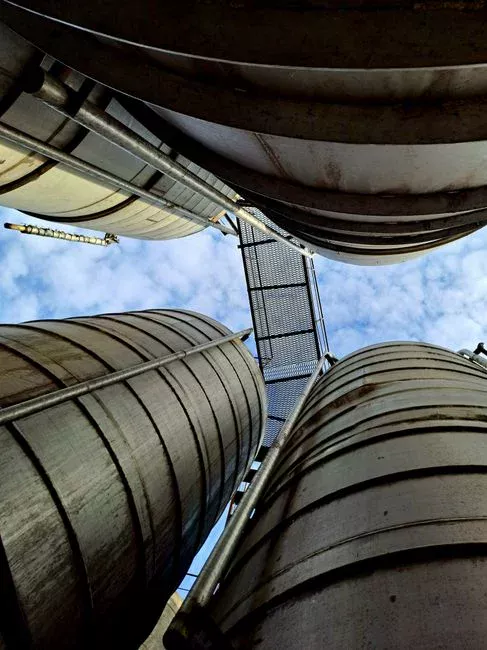
Lead enters UAE industrial streams from a defined set of sectors. The highest emitters in 2024–2025 were lead-acid battery recycling and manufacturing (Sharjah Industrial Area, RAK Industrial Zone, KIZAD), electroplating and metal finishing (Al Quoz, Sharjah Industrial Area, Ajman), oil & gas produced water (ADNOC onshore and offshore, ENI operations), and glass, ceramics, and leaded-brass manufacturing. Typical influent concentrations to the lead-removal stage: 5–50 mg/L for electroplating rinse water, 20–200 mg/L for battery-cracking and paste-mixing operations, and 0.5–10 mg/L for oil & gas produced water after primary oil-water separation (HydropureWater field data, 2025–2026).
Lead is unusually hard to remove by simple chemistry because it is amphoteric: its solubility rises sharply below pH 6 and again above pH 9. The MOCCAE compliance window of 6.0–9.0 is therefore also the operational window for hydroxide precipitation — and operating near either edge collapses removal efficiency. Practical design sits at pH 8.5–9.5 for hydroxide systems and pH 7.0–8.0 for sulfide systems, both well inside the regulatory band. Operators targeting 0.05 mg/L for marine outfalls should design at pH 9.0–9.5 and add a polishing step.
Electroplating and metal-finishing streams also contain chelating agents — EDTA, citrate, gluconate, ammonia, and proprietary brighteners — that hold lead in solution and defeat simple hydroxide precipitation. A facility running EDTA-bearing rinses will typically see residual lead of 2–8 mg/L after lime precipitation alone, versus 0.3–1.5 mg/L for a non-chelated stream at the same pH. The fix is either a chelate-break step (Fenton's oxidation or strong-acid destruction at pH <2 followed by re-precipitation) or a polishing technology that is not chelate-sensitive — sulfide precipitation, ion exchange, or RO. For Sharjah and Al Quoz plating shops, sulfide polishing or ion exchange is now standard. If you're scoping Sharjah industrial wastewater treatment engineering specifics, influent chelate loading is the first number to confirm with the client.
Treatment Technologies to Hit 0.1 mg/L Lead: Process Comparison
No single technology reliably takes a 20 mg/L lead stream to 0.1 mg/L — every working UAE installation in 2025–2026 uses at least two stages, usually three. The table below compares the realistic effluent performance of the technologies a process engineer would actually specify, with cost indicators drawn from UAE project benchmarks. The PLC-controlled chemical dosing for pH and sulfide control that ties these stages together is the most under-specified component in retrofits — and the one most often responsible for compliance failures during influent swings.
| Technology | Influent Pb (mg/L) | Effluent Pb (mg/L) | CAPEX indicator (USD, 100 m³/day) | OPEX indicator (USD/m³) | Sludge yield (kg/kg Pb removed) |
|---|---|---|---|---|---|
| Chemical precipitation (lime/NaOH, pH 9–10) | 5–200 | 0.3–1.5 | 40,000–80,000 | 0.4–0.9 | 8–15 |
| Sulfide precipitation (Na₂S, pH 7–8) | 5–200 | 0.05–0.3 | 60,000–110,000 | 0.6–1.4 | 3–6 |
| Dissolved air flotation (DAF) for precipitate removal | 0.3–1.5 (post-precipitation) | 0.1–0.5 | 70,000–130,000 | 0.15–0.3 | Float layer, 1–3 |
| Ion exchange (cation resin, Na⁺/H⁺ form) | 0.1–2.0 | <0.05 | 90,000–180,000 | 0.25–0.6 (excl. resin replacement) | Resin regeneration brine, 0.2–0.5 |
| Reverse osmosis (RO) | 0.1–5.0 | <0.02 | 180,000–320,000 | 0.5–1.1 | Brine, 5–8 |
| Electrocoagulation (Fe/Al electrodes) | 5–100 | 0.05–0.2 | 110,000–200,000 | 0.4–0.8 | 2–5 |
Chemical precipitation with lime or NaOH at pH 9.0–9.5 is the universal first step. It is cheap, well-understood, and handles the bulk of the lead load — but it alone does not meet 0.1 mg/L on a chelated stream. Adding a DAF system for lead-precipitate removal after the precipitation tank cuts residual suspended lead and protects downstream equipment from fouling. Sulfide precipitation using Na₂S at pH 7–8 achieves lower residual lead (0.05–0.3 mg/L) and lower sludge volume, but requires H₂S monitoring, sealed reactors, and emergency scrubbers — and is incompatible with copper streams because of cross-precipitation. Ion exchange with strong-acid cation resin is the standard polishing step in UAE battery and plating facilities; it brings effluent below 0.05 mg/L routinely and handles influent swings that chemical precipitation cannot. Reverse osmosis is used when the treated stream is destined for reuse — boiler feed, cooling tower makeup, or irrigation — and a RO polishing for lead and reuse train can deliver <0.02 mg/L Pb while producing permeate suitable for non-potable reuse per local municipality reuse guidelines. Electrocoagulation is the emerging option in UAE retrofit projects, particularly in Sharjah, with lower sludge yield than chemical precipitation but higher electrode replacement cost.
Recommended Treatment Train for a Typical UAE Lead-Bearing Stream
For a 100 m³/day stream at 20 mg/L influent Pb targeting <0.1 mg/L effluent — the design basis most UAE plating and battery recycling plants in 2025–2026 are built on — the working train is:
- Equalization — 8–12 hour HRT, with aeration for iron oxidation and flow/load dampening.
- pH adjustment to 8.5–9.0 via NaOH dosing (lime if sludge dewatering is already in place).
- Coagulation / flocculation — cationic polyelectrolyte at 2–5 mg/L to grow settleable floc.
- Dissolved air flotation — removes bulk lead precipitates and reduces TSS to <30 mg/L, protecting downstream resin.
- Polishing precipitation — hydroxide or sulfide stage to drop residual soluble Pb below 0.3 mg/L.
- Multi-media filter — anthracite/sand/garnet, 10–15 m/hr, drops TSS to <5 mg/L. A standalone multi-media filter as RO pretreatment is the configuration most retrofits use.
- Ion exchange — strong-acid cation resin in Na⁺ form, 20–30 BV/hr, brings Pb to <0.05 mg/L.
- Final pH trim — to 7.0–8.0 using CO₂ or HCl before discharge.
The order matters. DAF before ion exchange prevents resin fouling by suspended precipitates; the polish precipitation step handles chelate-resistant soluble lead that DAF cannot touch; ion exchange last ensures compliance even with 2× influent swings. If the stream is blended with sanitary wastewater for landscape irrigation under a local municipality reuse permit, add chlorine dioxide disinfection (1–2 mg/L residual, 30 min contact) after the ion exchange stage — chlorine itself is avoided upstream to protect the resin. For facilities discharging to a marine outfall, the same train delivers <0.05 mg/L Pb on a single-pass basis; for fluctuating loads, a polishing RO polishing for lead and reuse stage is the safer choice. The integrated MBR configuration is preferred when the lead stream is co-mingled with organic load from battery cracking or paint line rinse.
2026 CAPEX and OPEX for Lead Compliance in the UAE
For a 100 m³/day lead-bearing stream, the realistic 2026 CAPEX range in the UAE is USD 280,000–420,000 for a precipitation + DAF + ion exchange train (no reuse), and USD 550,000–900,000 if an RO polishing stage is added for reuse (HydropureWater field data, 2025–2026). The variance is driven by influent variability, automation scope, and whether the project is a greenfield install or a tie-in to an existing treatment plant. The Sharjah Industrial Area 2024 retrofit benchmark came in at USD 295,000 for a 100 m³/day train on an existing foundation; an ADNOC onshore produced water retrofit in 2025 came in at USD 410,000 with full SCADA integration and redundant ion exchange skids.
OPEX is dominated by chemicals and sludge disposal. NaOH/lime consumption runs USD 0.4–0.9/m³; Na₂S for sulfide polishing USD 0.2–0.5/m³; ion exchange resin replacement every 2–3 years at USD 8,000–15,000 per vessel. Sludge disposal is the line item that consistently surprises UAE operators — lead-bearing sludge is classified as hazardous waste, and licensed disposal in the UAE runs AED 800–1,500 per ton as of 2025. Total OPEX for a 100 m³/day train lands at USD 1.2–2.2/m³ treated depending on influent load and whether sludge is dewatered on-site. For context, the industrial wastewater treatment cost benchmarks for comparable UAE sectors track within ±15% of these numbers. Non-compliance fines of AED 50,000–500,000 per event, plus the operational and reputational cost of a MOCCAE shutdown order, mean that the OPEX delta between a compliant train and a marginal one is almost always smaller than the financial exposure of failing an inspection.
Compliance Checklist for UAE Industrial Facilities
- Confirm the applicable authority: MOCCAE plus the local municipality, plus the free-zone authority (JAFZA, KIZAD, SAIF, Hamriyah) if the facility sits inside a free zone.
- Verify the last 12 months of analytical results against 0.1 mg/L Pb for inland/territorial discharge, or 0.05 mg/L Pb for marine special-control zone discharge.
- Document the 24-hour composite sampling protocol and chain of custody for every reported value, and ensure the lab is ISO 17025-accredited and on MOCCAE's approved lab list.
- Confirm pH compliance: every recorded value within 6.0–9.0, and combined heavy-metals cap within 1.0 mg/L.
- Confirm sludge is classified as hazardous under UAE Federal Law and routed to a licensed disposal facility; retain disposal manifests for a minimum of five years.
- Ensure operator training records cover chemical handling for sulfide precipitation (where used), H₂S monitoring, and emergency shutdown — especially in KIZAD and SAIF Zone facilities subject to sector-specific addenda.
Frequently Asked Questions
What is the lead discharge limit for marine outfalls in the UAE?
The lead limit for industrial wastewater discharged into a marine special-control zone in the UAE is 0.05 mg/L Pb, stricter than the 0.1 mg/L inland limit. This applies to offshore oil & gas, desalination outfalls, and coastal industrial parks in Abu Dhabi and Fujairah, per MOCCAE Ministerial Decision 77/2024.
Do free zones in the UAE follow different lead limits than the mainland?
No. Free zones — JAFZA, KIZAD, DAFZA, SAIF, Hamriyah — enforce MOCCAE-aligned limits of 0.1 mg/L Pb for inland discharge and 0.05 mg/L for marine. However, they layer sector-specific addenda, such as KIZAD's quarterly third-party sampling for battery tenants and SAIF Zone's monthly self-monitoring reports for electroplaters above 20 m³/day.
What is the typical lead concentration in battery manufacturing wastewater in the UAE?
Lead-acid battery cracking and paste-mixing operations in the UAE typically generate influent lead concentrations of 20–200 mg/L before treatment (HydropureWater field data, 2025–2026). These streams almost always require sulfide or hydroxide precipitation plus ion exchange polishing to meet the 0.1 mg/L standard.
How long does a typical lead-compliance retrofit take in the UAE?
A 100 m³/day precipitation + DAF + ion exchange retrofit typically takes 5–8 months from design kickoff to commissioning, including MOCCAE permit amendments. Greenfield installations run 8–12 months. Free-zone authority review adds 4–6 weeks on top of MOCCAE approval.
Does the UAE lead discharge standard apply to wastewater reused for irrigation?
Yes. Wastewater reused for landscape irrigation under a local municipality reuse permit must meet the same 0.1 mg/L Pb limit at the point of discharge, plus additional reuse-specific parameters (BOD, TSS, E. coli). RO polishing is the standard way to meet both the lead and reuse criteria simultaneously.