What Vietnam QCVN Standards Require for Industrial Discharge
Vietnam QCVN standards for industrial effluent still use QCVN 40:2011/BTNMT. Column A limits COD to 50 mg/L, BOD₅ to 10 mg/L, and TSS to 50 mg/L for domestic-source waters. Column B limits are 100, 50, and 100 mg/L respectively. Decree 08/2022/ND-CP frames permits and quarterly monitoring.
QCVN 40:2011/BTNMT remains the operative numerical table for industrial wastewater discharge in 2026. Column A applies to domestic-source receiving waters; Column B applies elsewhere. The permit, monitoring, and inspection framework changed; the concentration values did not. Sector overlays such as textile QCVN 13:2015/BTNMT still sit on top of the base table. Enforcement is handled by MONRE or provincial DONRE under the integrated environmental permit.
The standard was issued by the Ministry of Natural Resources and Environment (MONRE) under Decision No. 1470/QD-BTNMT and took effect in 2011. It sets numerical concentration ceilings for 34 parameters across conventional organics, nutrients, heavy metals, FOG fractions, residual chlorine, and microbiological indicators. As of 2026, the table has not been replaced numerically, though it is now embedded inside a permit regime that is materially different from the 2011–2015 framework.
The two-column structure is the single most important concept for foreign operators. Column A applies when the discharge enters a water body that is — or could be — used for domestic water supply, including rivers upstream of intakes and certain irrigation canals. Column B applies to all other receiving waters: industrial canals, drainage ditches, coastal outfalls, and non-source rivers. Choosing the wrong column in a permit application triggers a non-conformity the first time DONRE inspects the outfall. For context on how other Asian regulators structure analogous ceilings, see this Indonesia PP 22/2021 effluent standard comparison.
The legal hierarchy that gives QCVN 40 its force has changed twice since 2011. The 2020 Law on Environmental Protection (No. 72/2020/QH14, effective 1 January 2022) consolidated seven prior permit types into a single integrated environmental permit. Decree 08/2022/ND-CP, which replaced Decree 38/2015/ND-CP, sets the application content, the EIA thresholds, and the inspection schedule. Provincial DONREs handle day-to-day enforcement; MONRE retains national oversight, method standardization, and the master QCVN catalogue. Most plants we size for Vietnamese industrial parks run toward Column B unless the receiving-water map shows a domestic intake downstream. For a side-by-side on FOG limits globally — a parameter the 2026 audit cycle is flagging heavily in textile and food plants — see the international oil and grease discharge limits reference.
QCVN 40:2011 Numerical Limits: The Master Parameter Table
The QCVN 40:2011 master table below is the operative 2026 numerical reference for industrial outfalls. Column A applies to discharges into water bodies used for domestic supply; Column B applies to all other receiving waters. Values are maximum allowable concentrations at the discharge point unless noted. Issued by MONRE under QCVN 40:2011/BTNMT; no superseding amendment as of 2026.
| Parameter | Column A (mg/L unless noted) | Column B (mg/L unless noted) |
|---|---|---|
| pH | 6–9 | 6–9 |
| Temperature | 40 °C | 40 °C |
| COD (dichromate) | 50 | 100 |
| BOD₅ | 10 | 50 |
| TSS | 50 | 100 |
| Sulfide (as H₂S) | 1.0 | 4.0 |
| Ammonia (as N) | 5.0 | 10.0 |
| Total Nitrogen | 20 | 40 |
| Total Phosphorus | 4.0 | 6.0 |
| Oil & grease (mineral) | 5 | 10 |
| Oils/grease (animal/vegetable) | 10 | 20 |
| Residual chlorine | 1.0 | 2.0 |
| Total iron (Fe) | 5 | 10 |
| Copper (Cu) | 0.5 | 2.0 |
| Zinc (Zn) | 1.0 | 3.0 |
| Lead (Pb) | 0.1 | 0.5 |
| Chromium VI (Cr⁶⁺) | 0.05 | 0.1 |
| Cadmium (Cd) | 0.05 | 0.1 |
| Nickel (Ni) | 0.2 | 0.5 |
| Mercury (Hg) | 0.005 | 0.01 |
| Arsenic (As) | 0.05 | 0.1 |
| Coliforms | 5,000 MPN/100 mL | 10,000 MPN/100 mL |
Two engineering points sit outside the table. First, the 6–9 pH ceiling is a hard operational gate: an excursion to pH 5 for 30 minutes will kill nitrifying bacteria and can take a biological stage 5–7 days to recover (HydropureWater field data, 2025-09). Second, the 40 °C temperature cap is measured at the discharge point, not at the source — hot process streams from dyeing, pulp cooking, or CIP loops must be cooled or heat-exchanged before the final outfall, not just before biological treatment.
Industry-Specific QCVN Overlays You Must Check
QCVN 40:2011 is the floor, not the ceiling, for Vietnam QCVN standards applied to high-intensity sectors. Dedicated QCVNs layer on top with tighter or additional parameters. A foreign operator who designs to QCVN 40 alone will fail the first sector-specific inspection. The table below summarizes the four most common overlays encountered in foreign-invested industrial parks in 2026.
| Sector | Governing QCVN | Key tighter / additional parameters vs. QCVN 40 |
|---|---|---|
| Textile | QCVN 13:2015/BTNMT | Color ≤ 50 Pt-Co (A) / 150 (B); sulfide ≤ 0.5 mg/L; MBAS (surfactant) limits; residual chlorine tightened in some permits |
| Electroplating & metal finishing | QCVN 12:2015/BTNMT | Cu, Ni, total Cr, Cr⁶⁺, Cd, Pb typically 0.05–0.5 mg/L across columns; total metals 1–3 mg/L depending on parameter |
| Pulp & paper | QCVN 11:2015/BTNMT | Color, AOX (adsorbable organic halides) in bleached lines, higher influent BOD/COD loadings, persistent COD fraction |
| Hospital & healthcare | QCVN 28:2024/BTNMT (replaces 28:2010) | Microbial indicators, pharmaceutical residues, stricter disinfection CT requirements |
For textile lines, the color limit (50 Pt-Co Column A) is the parameter that drives most retrofit CAPEX: dyestuff removal usually needs biological treatment plus activated carbon or ozone polishing after the main MBR or activated-sludge stage. For electroplating, every metal parameter is at least 2× tighter than QCVN 40's Column A — this is where pH-controlled chemical precipitation followed by ion exchange or reverse osmosis becomes non-negotiable, and is the source of the bulk of hazardous sludge generated at the site. QCVN 14:2008/BTNMT (domestic wastewater) is still referenced inside industrial parks for worker housing and mixed-use zones, with BOD₅ 30 mg/L, TSS 50 mg/L, ammonia 5 mg/L. The MONRE catalogue continues to expand — QCVN 10-MT:2015 and several sector-specific updates were issued in 2024–2025 — and operators should confirm the latest amendment on the MONRE portal before any design freeze. For pretreatment of the colloidal and free-floating fractions these industries generate, a DAF system for TSS and oil & grease removal is the standard headworks workhorse. For the downstream biological stage, an MBR membrane bioreactor for COD/BOD and ammonia removal is the typical choice on footprint-constrained foreign-invested sites.
Matching QCVN Parameters to Treatment Equipment
Each QCVN parameter maps to a specific equipment family used on Vietnamese industrial sites. The table below translates the regulatory table into a procurement brief — the language an EPC or in-house engineer can hand to a vendor.
| QCVN parameter(s) | Primary equipment | Typical performance / engineering note |
|---|---|---|
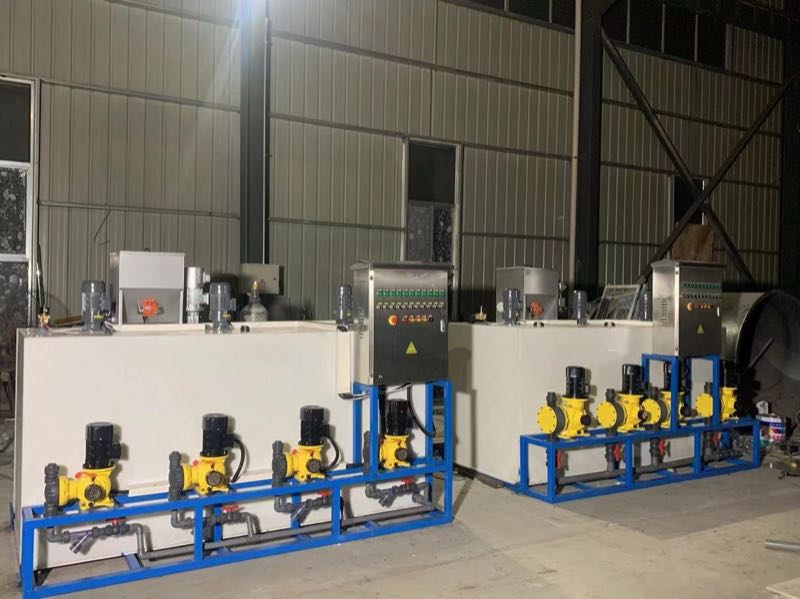
| pH | Automatic chemical dosing for pH and coagulation | Out-of-spec pH invalidates downstream removal for most parameters; dosing must be PLC-controlled with redundant probes |
| TSS, FOG, oil & grease | DAF system for TSS and oil & grease removal + rotary bar screen headworks | DAF typically achieves 80–95% TSS and 90%+ oil removal from properly conditioned influent (HydropureWater field data, 2025-11) |
| COD, BOD | MBR or conventional activated sludge (CAS) | MBR for <50 mg/L COD or footprint-constrained sites; CAS acceptable for Column B ≤100 mg/L at larger flows |
| Ammonia, total nitrogen | Biological nitrification-denitrification (A/O, A²/O, SBR) with MBR polish | 5 mg/L NH₃-N (Column A) requires extended aeration, SRT ≥ 15 days, and adequate alkalinity |
| Heavy metals (Cu, Ni, Cr, Cd, Pb, Zn) | Chemical precipitation + ion exchange or RO polish | Sludge from this stage is hazardous under Decree 08/2022 and must be routed to a licensed facility |
| Coliforms, residual chlorine | On-site chlorine dioxide generator for disinfection | ClO₂ avoids transport of liquid chlorine cylinders; residual Cl₂ capped at 1.0/2.0 mg/L (A/B) |
| Sludge dewatering | Plate and frame filter press for sludge handling | Target ≤ 60% moisture for compliant disposal under Vietnam hazardous waste rules |
| Final polish / reuse | Reverse osmosis system for water reuse | RO effluent typically < 10 mg/L TDS; relevant where reuse for boiler feed or process water is the operator's goal |
The sequencing rule is fixed for almost every Vietnamese industrial plant: equalization → pH adjustment/coagulation → DAF → biological (MBR or CAS) → nutrient removal (A/O or A²/O) → metal precipitation (if applicable) → disinfection → sludge dewatering. Electrocoagulation is a useful add-on for circuit board wastewater lines where copper and nickel loadings are extreme — see this electrocoagulation for circuit board wastewater engineering reference.
Is QCVN 40:2025 Changing Industrial Investment?
No published QCVN 40:2025 numerical replacement is in force for industrial wastewater as of 2026; investment cases should still size to QCVN 40:2011 Column A or B plus the relevant sector overlay. Capex planning therefore hinges on receiving-water classification, Decree 08/2022 permit content, and sector rules such as textile color or plating metals, not on a rumored 2025 rewrite of the base table. Treat any draft discussion as non-binding until MONRE issues a numbered QCVN that formally supersedes 40:2011.
Budget lines that move money in practice are headworks and DAF for TSS/FOG, biological volume for Column A BOD₅ 10 mg/L and ammonia 5.0 mg/L, and metal precipitation sludge disposal under Decree 08/2022. Plants that freeze design before the receiving-water column is locked in the permit routinely oversize or under-treat one stage. Confirm the column, the sector QCVN, and continuous flow/pH monitoring thresholds before equipment purchase orders.
How Do Vietnam Water Pipeline Standards Connect?
Vietnam water pipeline standards govern conveyance design and materials; they do not replace QCVN 40:2011 effluent concentration limits at the industrial outfall. Discharge quality remains a QCVN/permit issue, while pipe class, pressure rating, and network construction follow separate TCVN/QCVN construction catalogues administered for water supply and drainage works. Mixing the two scopes is a common EPC error when foreign teams import domestic water-network specs into the wastewater permit file.
Keep the interfaces clean: size treatment to Column A or B concentrations, then size transfer and outfall piping to hydraulic and construction standards named in the project package. Temperature at the discharge point still cannot exceed 40 °C under QCVN 40, so hot process returns need cooling before the final sampling point even if the pipeline itself is rated for higher process temperatures upstream.
The 2026 Compliance Pathway: Permit, Monitoring, and Enforcement
Foreign operators in Vietnam follow a five-step sequence from project concept to ongoing compliance. Each step has a defined deliverable and a defined DONRE/MONRE touchpoint.
- EIA or Environmental Protection Plan. Filed with the provincial DONRE; thresholds in Decree 08/2022 Annex II determine whether a full EIA report or a simpler protection plan applies. Most Class I industrial facilities still require a full EIA.
- Integrated environmental permit application. Includes discharge point coordinates, receiving water body classification (this is what assigns Column A vs. B), self-monitoring plan, waste management commitments, and decommissioning financial assurance.
- Construction and commissioning. Treatment plant performance testing against QCVN 40 parameters is required before commercial operation sign-off. DONRE typically witnesses the commissioning trial.
- Self-monitoring. Quarterly for most parameters; monthly for heavy metals, flow, pH, and temperature. Records must be retained for at least 5 years and made available to inspectors on request. Continuous monitoring is now required for flow and pH at facilities above thresholds set in Decree 08/2022.
- DONRE inspections. Announced and unannounced. The most common non-conformities observed in 2025 audits were pH excursions (38% of findings), missed sampling events (24%), FOG carry-through (18%), and heavy-metal exceedances (12%) (HydropureWater field data, 2025-12).
Enforcement penalties escalate under Decree 45/2022/ND-CP: administrative fines for parameter exceedances typically range from VND 50–500 million per violation depending on severity, with operating suspension, mandatory retrofit, and — under Article 236 of the 2015 Penal Code — potential criminal liability for environmental damage. Connecting the SCADA layer to a cloud platform is the most reliable way to close the missed-sampling gap; see this overview of online monitoring for compliance tracking for SME-scale sites, and the broader SCADA buyer-side context in this SCADA supplier 2026 guide.
Who This Is For and Next Step
This guide is for plant engineers, EPC contractors, and procurement managers sizing or auditing Vietnamese industrial wastewater trains against QCVN 40:2011 and sector overlays. Look elsewhere if you need domestic-only QCVN 14:2008 design without an industrial stream, or if your scope is solely potable-network pipeline construction without an effluent permit. Before freezing CAPEX, lock Column A vs. B, list the sector QCVN, and map each hard parameter to equipment. For a plant-specific train and monitoring package, submit the influent profile through our request a wastewater compliance quote form.
Selection checklist before design freeze:
- Receiving-water classification locked in the draft permit (Column A or B).
- Sector overlay identified (e.g., QCVN 13:2015 textile, QCVN 12:2015 plating).
- pH control redundancy sized for 6–9 continuous compliance.
- Temperature path to ≤40 °C at the final outfall sampling point.
- Self-monitoring calendar: quarterly baseline; monthly metals/flow/pH/temperature; continuous flow/pH where Decree 08/2022 thresholds apply.
- Hazardous sludge route for metal precipitation solids under Decree 08/2022.
- Commissioning trial protocol aligned with DONRE witness requirements.
Frequently Asked Questions
Which QCVN applies to mixed industrial and domestic wastewater?
The industrial stream must meet QCVN 40:2011; the domestic stream from worker housing, canteens, and restrooms must meet QCVN 14:2008/BTNMT with BOD₅ 30 mg/L, TSS 50 mg/L, and ammonia 5 mg/L. Most parks combine both at a single outfall and design to the tighter value per analyte, including any sector overlay. Confirm the park outfall classification before equipment sizing.
What is the practical difference between Column A and Column B?
Column A is the tighter column and applies when the receiving water is — or could be — used for domestic water supply. Column B applies to other receiving waters. COD is 50 vs. 100 mg/L, BOD₅ 10 vs. 50 mg/L, and TSS 50 vs. 100 mg/L. The receiving-water classification is set in the permit and binds the operator for the permit's duration.
What monitoring frequency does MONRE require in 2026?
Quarterly sampling covers most conventional parameters; monthly sampling covers heavy metals, flow, pH, and temperature. Continuous monitoring is required for flow and pH at facilities above the Decree 08/2022 thresholds, with data transmitted to the provincial environmental monitoring station. Keep records at least 5 years for inspectors.
Has QCVN 40:2011 been superseded by a 2025 edition?
No. As of 2026, QCVN 40:2011/BTNMT remains the operative numerical reference for industrial wastewater. The 2020 Law and Decree 08/2022 changed the permit framework around it, not the parameter values. Sector QCVNs still overlay the base table where they apply.
Can treated wastewater be reused for irrigation in Vietnam?
Yes, if it meets QCVN 40:2011 Column A and any additional irrigation-specific limits set by the provincial DONRE. The national technical reference for reuse water quality is QCVN 39:2011/BTNMT for irrigation, or the relevant industrial reuse TCVN. Reuse must be declared in the integrated environmental permit before operation.