What 'pretreatment' means for a mining or metals plant near Cuba, MO
Under 40 CFR Part 403, an "industrial user" is any non-domestic source that discharges to a publicly owned treatment works (POTW); once a facility falls under a federal categorical standard such as 40 CFR Part 437 — Ore Mining and Dressing, the categorical numerical limits preempt and override anything weaker in the local Sewer Use Ordinance. EPA classifies mining, ore dressing, metal finishing, battery manufacturing, and similar operations as "categorical industrial users," and per 40 CFR 403.6 a POTW cannot issue an exemption from a federal categorical limit no matter how small the discharger (per EPA, NPDES industrial wastewater framework, 19january2017snapshot.epa.gov).
The two regulatory pathways look similar from the plant floor but bind differently. A direct discharger holds an individual NPDES permit and is responsible for full-scale biological treatment to surface-water standards. An indirect discharger — the more common case in the Cuba, MO area for hard-rock and mill operations that connect to a municipal sewer — instead holds a POTW pretreatment permit layered on top of the local Sewer Use Ordinance. The categorical limits in 40 CFR 437 act as a federal floor, and the POTW's ordinance can (and routinely does) impose stricter metal ceilings, pH windows, and surcharges.
For Missouri hard-rock and mill wastewater the regulated analytes cluster around lead, copper, zinc, nickel, arsenic, cadmium, total suspended solids (TSS), and oil & grease (O&G). A single process upset that pushes dissolved lead from 0.2 mg/L to 1.0 mg/L can put a categorical user out of compliance in one shift, and the POTW is required to report that excursion to EPA Region 7 in Kansas City.
The 2026 limit set a Cuba-area plant must actually hit
The canonical 40 CFR 437 daily-maximum limits for the Ore Mining and Dressing point source category (subparts B–G, current 2026 eCFR text) are: TSS 50 mg/L; O&G 20 mg/L; lead 0.6 mg/L; copper 1.0 mg/L; zinc 1.0 mg/L; nickel 1.0 mg/L; cadmium 0.1 mg/L; total chromium 1.0 mg/L; and arsenic 0.1 mg/L (per 40 CFR 437.40–437.47, 2026). The matching monthly-average limits are typically 50–70% of the daily-max values; for a TSS daily-max of 50 mg/L the 30-day average sits at roughly 25 mg/L.
On top of the federal floor, a typical Missouri POTW Sewer Use Ordinance tightens one or more analytes. Most ordinances in the region cap lead at ≤0.5 mg/L, copper and zinc at ≤1.0 mg/L, arsenic at ≤0.1 mg/L, enforce a pH window of 6.0–9.0 standard units, and prohibit any visible sheen or slug loads above 2× the daily-max for more than 15 minutes. The "more stringent rule wins" principle is not optional — the local limit applies when it is stricter than the federal categorical number.
A 2026 contextual note: the U.S. State Department sanctioned Empresa de Níquel Comandante Ernesto Che Guevara in Moa, Holguín, and the trading firm MetalCuba on 2026-08-20, explicitly targeting Cuba's nickel-cobalt complex (per Miami Herald, 2026-08-20). That action shifts U.S. buyers toward alternative nickel and cobalt feedstocks, which can tighten domestic supply and lift metal prices for downstream fabricators — but it does not change any pretreatment limit a U.S. facility must meet before it can discharge.
| Parameter | 40 CFR 437 daily max | Typical MO POTW local limit | Monthly average target |
|---|---|---|---|
| TSS | 50 mg/L | 200 mg/L (POTW headworks) but categorical 50 mg/L governs | ~25 mg/L |
| Lead | 0.6 mg/L | 0.5 mg/L | 0.3 mg/L |
| Copper | 1.0 mg/L | 1.0 mg/L | 0.5 mg/L |
| Zinc | 1.0 mg/L | 1.0 mg/L | 0.5 mg/L |
| Nickel | 1.0 mg/L | 1.0 mg/L | 0.5 mg/L |
| Cadmium | 0.1 mg/L | 0.1 mg/L | 0.05 mg/L |
| Arsenic | 0.1 mg/L | 0.1 mg/L | 0.05 mg/L |
| O&G | 20 mg/L | 100 mg/L headworks / 20 mg/L categorical | 10 mg/L |
| pH | 6.0–9.0 (categorical) | 6.0–9.0 | — |
The 2026 treatment train that actually passes
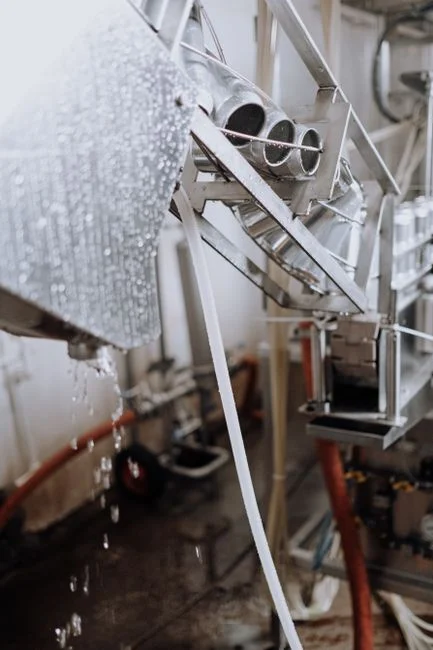
The unit operations below are listed in the order an engineer should specify them; each stage assumes the previous one is performing to design. Skipping equalization, for example, guarantees downstream chemistry upset and is the single most common cause of failed DAF skimming in 2026 retrofit audits (HydropureWater field data, 2026).
- Equalization / flow balancing. An 8–24 hour HRT basin, 4,000–10,000 gal FRP or concrete tank, with mechanical mixing and pH/temperature probes. Damping inflow spikes to within ±0.5 pH units and ±20% flow is the cheapest compliance insurance on the train.
- pH adjustment and sulfide precipitation. Dose NaOH or hydrated lime to pH 8.5–9.5, then NaHS or FeS to drive the tight metals (Pb, Cu, Cd, Ni, Zn) below 0.1 mg/L each. The chemistry is governed by the metal-sulfide solubility product (Ksp) — PbS at 8.0×10⁻²⁸, CuS at 6.3×10⁻³⁶, ZnS at 1.6×10⁻²⁴, CdS at 8.0×10⁻²⁷ — which is why sulfide routinely beats hydroxide for cadmium and mercury (per standard inorganic-chemistry references).
- Dissolved air flotation. A properly sized industrial DAF system at 4–25 m/h hydraulic loading with a 20–30% recycle ratio and automatic skimming removes the precipitated metal sludge, FOG, and floating oils in a single stage. Hydraulic underload causes cloudy effluent; overload causes carryover — both are easy to spot in a 24-hour composite.
- Multi-media filtration. Anthracite over sand over garnet drops residual TSS to <10 mg/L and protects the membrane stage from fouling. A well-operated multi-media filter typically removes 60–80% of remaining particulate metals by mass.
- Polishing. Either a submerged MBR polishing stage (MLSS 8,000–12,000 mg/L) or a 0.03 µm PVDF ultrafiltration skid to deliver the <1 NTU turbidity that most Sewer Use Ordinances require before the sample reaches the POTW's own composite.
Designing for the metals, not the generic BOD
A textbook biological design is the wrong starting point for hard-rock and mill wastewater for two reasons: dissolved heavy metals inactivate biomass at concentrations as low as 1–5 mg/L, and many of these streams have BOD₅:COD ratios well below 0.3 — there simply is not enough biodegradable carbon to sustain a conventional activated-sludge system. The engineering answer is a chemistry-led train, not a biology-led one.
The recommended approach is a "two-stage" precipitation scheme. First raise pH to ~8.0 with NaOH or lime to drop iron, manganese, and most of the lead and copper as hydroxides. Then dose NaHS at a controlled ORP set-point of roughly −50 to −150 mV to polish cadmium, nickel, and zinc down to the 0.05–0.1 mg/L band without over-stoiching sulfide and creating an H₂S odor or worker-exposure problem. A PLC-controlled chemical dosing skid with redundant pH and ORP probes is the only way to hold the set-points within the tight band the chemistry requires.
For arsenic, sulfide is not always cost-effective because As(V) does not precipitate cleanly as a sulfide; the standard alternative is co-precipitation with FeCl₃ at pH 7.5–8.5, which forms a ferric-arsenate floc that DAF can float and the filter press can cake.
Sludge handling and the back end of the compliance story

Precipitated metal hydroxide and sulfide sludge from a 40 CFR 437 plant almost always fails the Toxicity Characteristic Leaching Procedure (TCLP) for lead, cadmium, or arsenic and is therefore classified as a RCRA hazardous waste under 40 CFR 261.24. That classification turns the back end of the train into a regulated disposal operation, and the EPA inspector's first question on a Category 1 audit is rarely about the effluent — it is about the manifests.
A 1–500 m² plate-and-frame filter press with automatic PLC cycles is the standard dewatering choice. Operating at 7–15 bar with a feed-conditioned polymer, the press delivers a 25–45% dry-solids cake; compared with a 2–5% sludge feed, that 70–80% volume reduction directly cuts hauling cost and shrinks the operator's annual disposal OpEx. One real trade-off: a higher dry cake means lower hauling volume but also a higher TCLP concentration in the leachate, so the waste profile does not change even when the tonnage does.
Some smelters and mills route the pressed cake back into the smelter feed if the customer permit and metal balance support it, turning a hazardous-waste liability into recovered value. Most operations, however, send the cake to a RCRA Subtitle C landfill under a uniform hazardous-waste manifest, and the press is sized to make that manifest count as small as possible.
Sampling, self-monitoring, and the documentation that holds up in an audit
40 CFR 403.12 requires every categorical industrial user to install a 24-hour flow-proportional composite sampler, refrigerated, on the effluent side of treatment. A non-refrigerated sampler is a guaranteed audit finding in EPA Region 7 because metals continue to sorb onto suspended solids in the bottle and biased-low results mask real excursions. The chain-of-custody form must be filled in ink, signed at every transfer, and retained for at least three years.
The Self-Monitoring Report (SMR) cadence ranges from monthly to quarterly depending on the control authority's rating of the user (significant noncompliance history pushes frequency up). A categorical industrial user must also file a Baseline Monitoring Report (BMR) within 180 days of becoming subject to the standard and a 90-day compliance report within 90 days of the categorical limit's effective date. Reportable noncompliance — any excursion that lasts more than 48 hours, any discharge that causes POTW pass-through, or any slug load above 5× the daily-max — must be reported to the control authority within 24 hours of detection.
The most common 2026 audit findings from EPA Region 7 categorical inspections in Missouri and Kansas are: (1) a non-refrigerated or improperly preserved sampler, (2) a missing or broken chain-of-custody seal on the field blank, and (3) pH-probe drift because the probe was last calibrated six months ago instead of weekly. None of these are effluent-quality failures; they are all documentation failures, which is why a 30-minute weekly calibration log is worth more than a second polishing stage in the audit room.
2026 specifics the procurement team should know
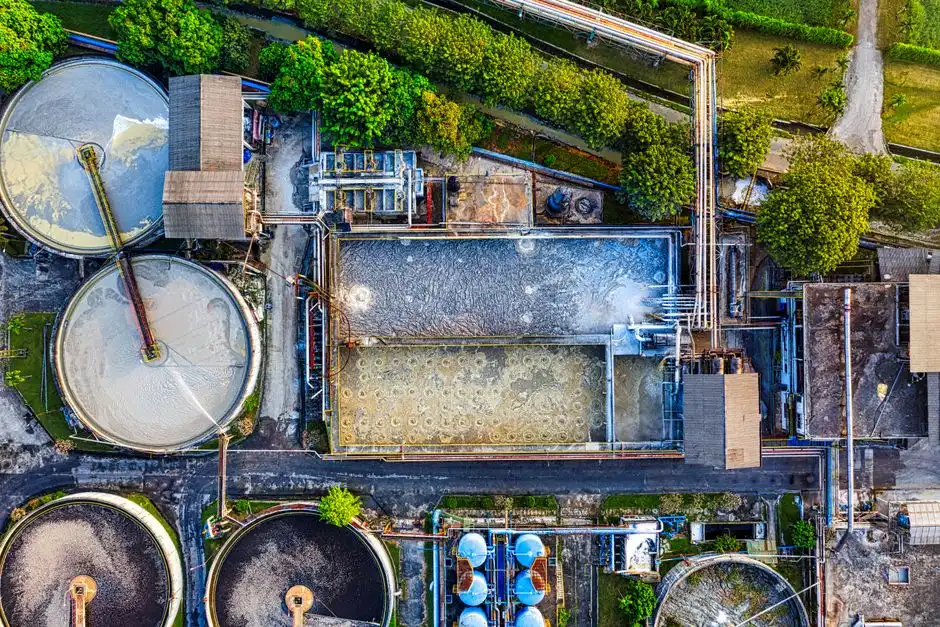
A 2026 RFQ that does not name flow, influent metals, pH range, footprint, and target effluent is incomplete. Concretely, a vendor needs: average and peak flow in gpm or m³/h, influent concentrations for each regulated metal (Pb, Cu, Zn, Ni, Cd, As, Cr), pH range and temperature, available skid footprint and ceiling height, target effluent under the 40 CFR 437 daily-max, and the local Sewer Use Ordinance text or the POTW's discharge permit limits. A typical mid-sized metals plant RFQ sits in the 50–200 m³/h skid envelope (HydropureWater project data, 2026).
2026 lead times are 10–18 weeks for skidded DAF + MMF packages and 16–26 weeks for an MBR or UF polish skid; FRP vessels and pressure filters can run 20–30 weeks from order to commissioning because of filament-winding capacity. A missed POTW permit renewal date does not pause the EPA inspection schedule, so the procurement lead time is part of the compliance critical path, not a separate workstream.
Finally, a commercial note for 2026: with U.S. sanctions on the Moa nickel-cobalt complex and MetalCuba now in force as of 2026-08-20, U.S. metal-finishers and battery plants are sourcing from alternative producers at higher unit cost. A non-compliance shutdown in that environment is the wrong time to absorb a margin hit — building the treatment train correctly is cheaper than a stop-work order.
Frequently Asked Questions
What categorical standard applies to a mining or metals plant near Cuba, MO?
A hard-rock or mill operation that discharges to a POTW is a categorical industrial user under 40 CFR Part 403 and, if it processes or beneficiates ore, is governed by 40 CFR Part 437 — Ore Mining and Dressing. Federal categorical limits (TSS 50 mg/L daily max; Pb 0.6 mg/L; Cu 1.0 mg/L; Zn 1.0 mg/L) act as a floor; the local Sewer Use Ordinance can — and usually does — impose stricter metal ceilings (per 40 CFR 437.40–437.47, 2026).
What is the standard 2026 treatment train for 40 CFR 437 compliance?
The canonical train in 2026 is equalization (8–24 h HRT) → pH adjustment and sulfide precipitation (pH 8.5–9.5, NaHS or FeS) → dissolved air flotation at 4–25 m/h with 20–30% recycle → multi-media filtration (anthracite/sand/garnet) → either an MBR (MLSS 8,000–12,000 mg/L) or a 0.03 µm PVDF ultrafiltration polish. Each stage protects the next and produces a <1 NTU effluent compatible with a typical Sewer Use Ordinance (HydropureWater field data, 2026).
How often does a categorical industrial user have to sample and report?
Under 40 CFR 403.12 a categorical user must run a 24-hour flow-proportional refrigerated composite sampler and submit a Self-Monitoring Report (monthly to quarterly) to the control authority. New categorical users must also file a Baseline Monitoring Report within 180 days of becoming subject to the standard and a 90-day compliance report within 90 days of the limit's effective date. Reportable noncompliance must be reported within 24 hours of detection (per 40 CFR 403.12).
Is precipitated metal sludge a hazardous waste?
Yes, in most cases. Metal hydroxide and sulfide sludge from a 40 CFR 437 plant typically fails TCLP for lead, cadmium, or arsenic and is classified as a RCRA hazardous waste under 40 CFR 261.24, which means it must be dewatered (commonly in a plate-and-frame filter press to 25–45% dry solids) and shipped under a uniform hazardous-waste manifest to a Subtitle C landfill, or returned to the smelter feed if the chemistry and the customer permit allow it.